
Best E-commerce Platforms in
Are you looking for E-commerce Platforms for your Business in ? SaaS Adviser brings you the best E-commerce Platforms to ease your worries. In order to make your work smooth and swift, SaaS Adviser has compiled a list of the best software available. Compare the Best software features, pricing, free demo, and trial to select the best E-commerce Platforms for your organization.
 Researched and Written by Nikita Rao
Top 3 Featured Softwares


List of Top E-commerce Platforms
Get Free Consultation


doola

doola is for Do’ers.
Doola's "Business-in-a-Box™" solution provides entrepreneurs with a comprehensive suite of tools to establish and operate a business in the United States. The platform as...
View Profile

Shopify Plus Enterprise eCommerce software is a cloud-based ecommerce platform that offers a multi-channel platform and does not involve an expensive build. With this software, you...
View Profile

BigCommerce is an eCommerce platform that helps all sizes of merchants to build, innovate, and grow their businesses. It is an open SaaS platform that ignites growth in businesses ...
View Profile

Wix is a leading website builder that empowers users to create stunning, feature-rich websites with ease. As a cloud-based platform, Wix removes the need for manual coding and ...
View Profile

Squarespace is a website builder that helps developers turn their ideas into reality. With Squarespace, users can select from any of the available designer fronts, website template...
View Profile

WooCommerce is the best ecommerce platform that provides extensive ecommerce solutions and is also one of the most preferred platform for ecommerce website development and design. ...
View Profile

Big Cartel is an easy online store builder for artists and makers, helping them generate unique online store designs on the go. Businesses can also utilise the particular to sell t...
View Profile

Volusion is a shopping cart software and eCommerce website store that helps brands expand their online presence. Volusion is a great choice for companies because it is easy to use ...
View Profile

Shift4Shop
By Shift4Shop
Shift4Shop is the perfect platform for anyone wanting to sell online. Our turnkey eCommerce solution includes a feature-rich website builder, product and order management, customer...
View Profile

Ecwid is an e-commerce website that helps you set up an online store to sell a large number of products at affordable prices. It gives customers the ability to control everything f...
View Profile

Salesforce is a cloud-based customer relationship management (CRM) platform that helps businesses manage sales, customer interactions, marketing campaigns, and customer service pro...
View Profile

ikas software
Launch Your Online Store
Ikas is a comprehensive e-commerce platform designed to help businesses build, manage, and grow their online stores with ease. It offers a range of tools that simplify everythi...
View Profile

PrestaShop is one of the most widely used eCommerce platforms in the world. It allows you to quickly create and configure products, as well as associate them with suppliers and man...
View Profile

OpenCart is a great platform for anyone looking to start an online store. It's easy to use and scale, and comes with an administrator dashboard that provides all the important info...
View Profile

Zoho Commerce
Do business in the world's busiest market, the internet.
Zoho Commerce is a complete ecommerce platform designed to help businesses build, manage, market, and grow their online store with ease. This cloud-based solution offers a range of...
View Profile

NetSuite
By NetSuite
NetSuite is one of the top accounting software platforms on the market. It is known for its flexibility, which allows users to scale up, spin-off, or adopt new business models with...
View Profile

Magento 2 Mobile App Builder
Build native Android & iOS shopping mobile app for your Magento 2 website. No coding or set up required. One time payment. 3 months of Free Support.Magento 2 Mobile App Builder can easily turn your online website into a Mobile App. The store admin can easily create & manage the app without having any technical knowledge.
View Profile
Walmart WooCommerce Integration
List your WooCommerce products on WalmartWalmart WooCommerce Integration by Cedcommece helps in integrate your WooCommerce store with the Walmart marketplace. Through this extension, you can automate the ordering process ...
View Profile

Weebly is a website builder that helps you create professional-looking websites, blogs, and virtual stores. It further helps popularize the website with its integrated marketing ta...
View Profile

Miva is a popular e-commerce platform that makes it easy for businesses to manage B2B and B2C sales. Miva helps you convert site visitors into customers with its secure and well-ma...
View Profile

Table of Content
The best eCommerce tools helps companies in streamlining online operation, increasing sales and providing smooth customer experiences. These solutions ease every step of your online journey, whether it involves product management and secure payments, or marketing automation and analytics. Explore the Top eCommerce tools in USA designed for scalability and efficiency, and choose the best eCommerce management software to grow your store, improve customer satisfaction, and stay ahead in the competitive online marketplace.
1. Conclusion
The choice of the best eCommerce tools allows the business to grow, achieve business efficiency, and be scalable. Be it a startup or an established business, sales and customer experience can always be enhanced by a good strategic platform investment. SaaS Adviser offers unparalleled support to businesses looking for perfect eCommerce management tools tailored specifically to their requirements.
2. What are the Key Features of E-Commerce Tools?
 (1).jpg)
1. Marketing Tools
The professional eCommerce tools are loaded with functions such as email marketing, social media, and SEO tools. These characteristics multiply traffic and sales to the business because they contribute to customer acquisition and enhance the conversion rates.
2. Central Database
The powerful features of a centralized eCommerce management tools stores product details, customer information, and order history in one place. This assures effortless inventory management, expedite data access, enhanced decision making.
3. Website Builder
A user-friendly Custom Drag-and-Drop Interface enables businesses to develop appealing ecommerce sites that are responsive on mobile devices. Brand consistency and the user experience is enhanced with custom templates alongside easy navigation.
4. Automated Checkout Process
Automated streamlined checkout assists in lowering the loss of sales due to abandoned shopping baskets. Customer satisfaction and sales assist with features such as multiple and secure payment methods, one-click checkout, and SSL secured payment gateways.
5. Data Analytics
E-commerce tools has the capability to monitor in real-time customer analytics, sales and marketing stats, and other activities. This allows businesses to make changes to the stock, campaign, set prices, and alter plans for greater profit.
3. Top 5 Best E-Commerce Tools in USA (Features, Pros, Cons, Pricing)
1. Shopify
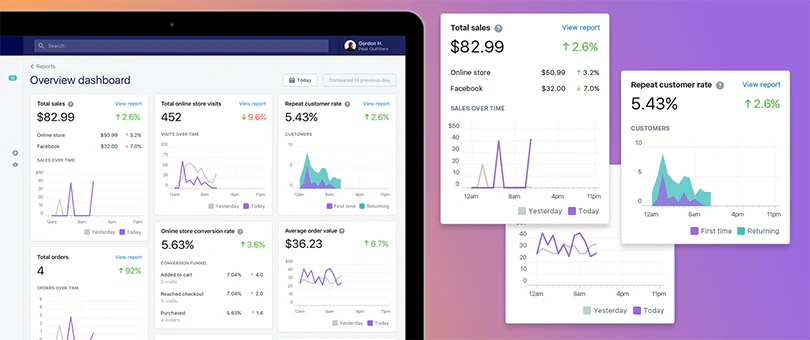
Shopify is perhaps the most widespread eCommerce tools solution in the US, with their easy user interface. Its comprehensive nature enables users to develop, build, and run an online store by offering services that are fundamental like marketing, hosting, inventory control, taking payments, and many more. The powerful functions of Shopify can be used by both start-up and enterprise brands. You don't need to have another inventory management software if you have Shopify.
Features:
-
Drag-and-drop website builder with fully customizable templates
-
Multiple currencies and payment options are accepted through a secure payment gateway
-
Advanced inventory and order management tools ensure smooth operations
-
Customer experience boosts with mobile-responsive store design
Pros:
-
No coding or technical skills needed which makes the system simple to use
-
Hundreds of add-ons and functionalities offered through an extensive app marketplace
-
Equally suitable for small and large businesses as they are highly scalable
Cons:
-
Use of other payment processors incur higher transaction fees
-
Customization flexibility is limited compared to open-source competitors like WooCommerce
Pricing:
-
Basic: $39/month
-
Shopify: $105/month
-
Advanced: $399/month
2. Wix
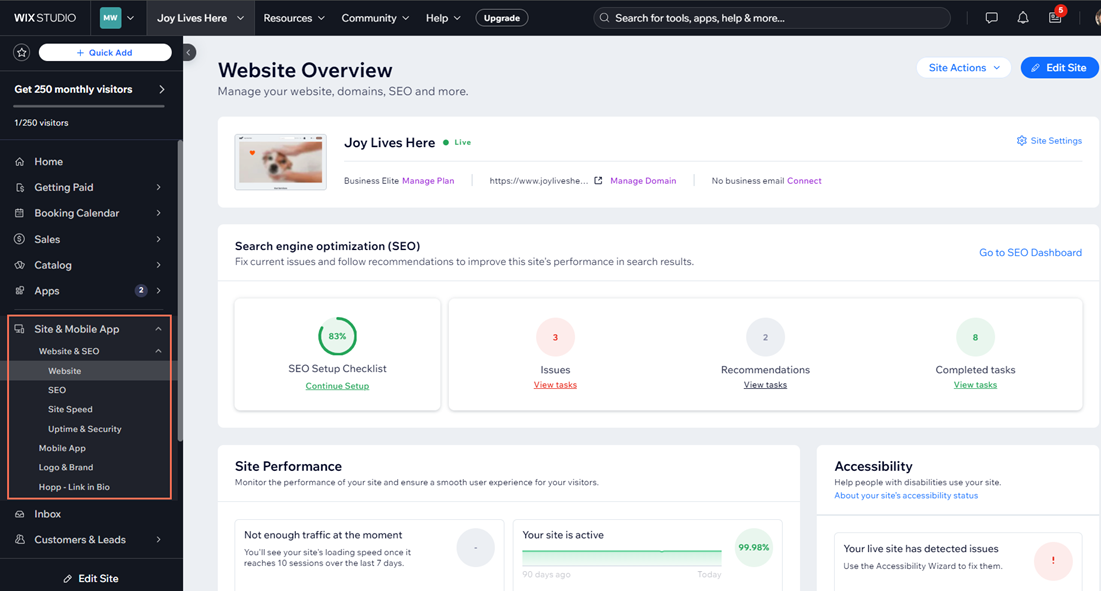
Best described as eCommerce tool for beginners, Wix allows businesses to create professional online stores within a matter of minutes. It features an AI-driven drag-and-drop website builder, which makes it suitable for small businesses and startups wanting a sophisticated store without any coding knowledge.
Features:
-
With the use of artificial intelligence, a custom website can be created using one of the hundreds of available templates.
-
Various modes of payment can be accepted through the website as payment integration is included.
-
An inventory and shipping management system helps improve the control of logistics.
-
The mobile version of the store is adjusted to be user-friendly.
Pros:
-
It is effortless for someone with no computer or programming skills to create an online store.
-
Pricing plans are reasonable, making it ideal for cost-conscious companies.
-
An abundant selection of design templates and customization options is offered.
-
There is advanced blogging and integrated marketing tools available to help attract visitors and increase sales.
Cons:
-
Less advanced features compared to other eCommerce tools mandates like Shopify.
-
Additional transaction costs are incurred when using third-party payment service providers instead of Wix Payments.
Pricing:
-
Business Basic: $27 a month
-
Business Unlimited: $32 a month
-
Business VIP: $59 a month
3. BigCommerce
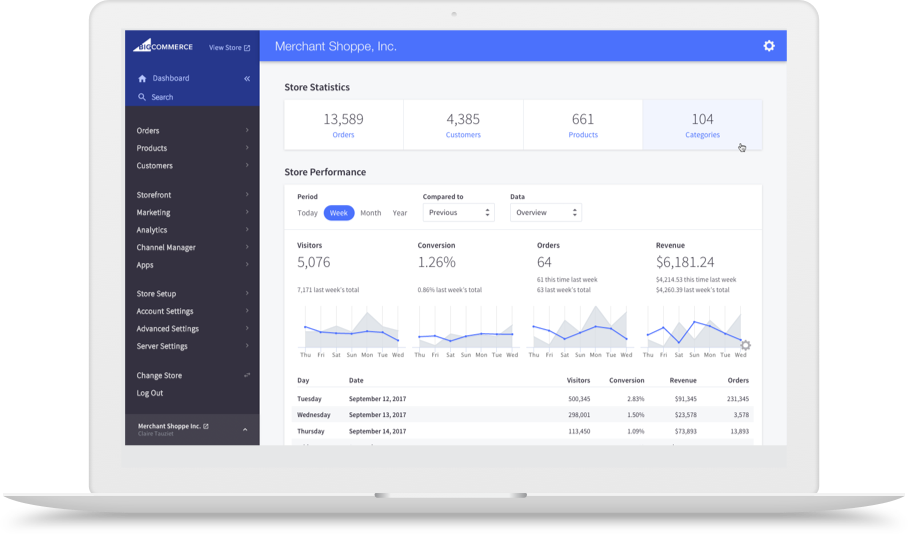
BigCommerce is tools designed to manage eCommerce for both established enterprises and businesses looking to grow. Businesses that are looking to scale tend to favor it because it has powerful customization options, multi-channel selling capabilities, and enterprise-grade features without incurring extra costs per transaction.
Features:
-
Storefronts are fully customizable and include responsive and mobile friendly templates.
-
Sales can be done on multiple channels such as Amazon, eBay, and Instagram
-
For every plan selected, there are no transaction fees which increases profitability for businesses.
-
Advanced analytics are available along with full SEO options, marketing automation, and other built in tools.
Pros:
-
All-in-one features are available which lessen the need for third-party applications.
-
All major credit cards are accepted with no additional transaction fees per payment, per order.
-
Companies that are medium or large would greatly benefit because it is highly scalable.
Cons:
-
Compared to some competitors, premium features are available at a higher price.
-
Compared to Shopify and Wix, there are free theme options that are much more limited.
Pricing:
-
Standard: $39 a month
-
Plus: $105 a month
-
Pro: $399 a month
4. WooCommerce
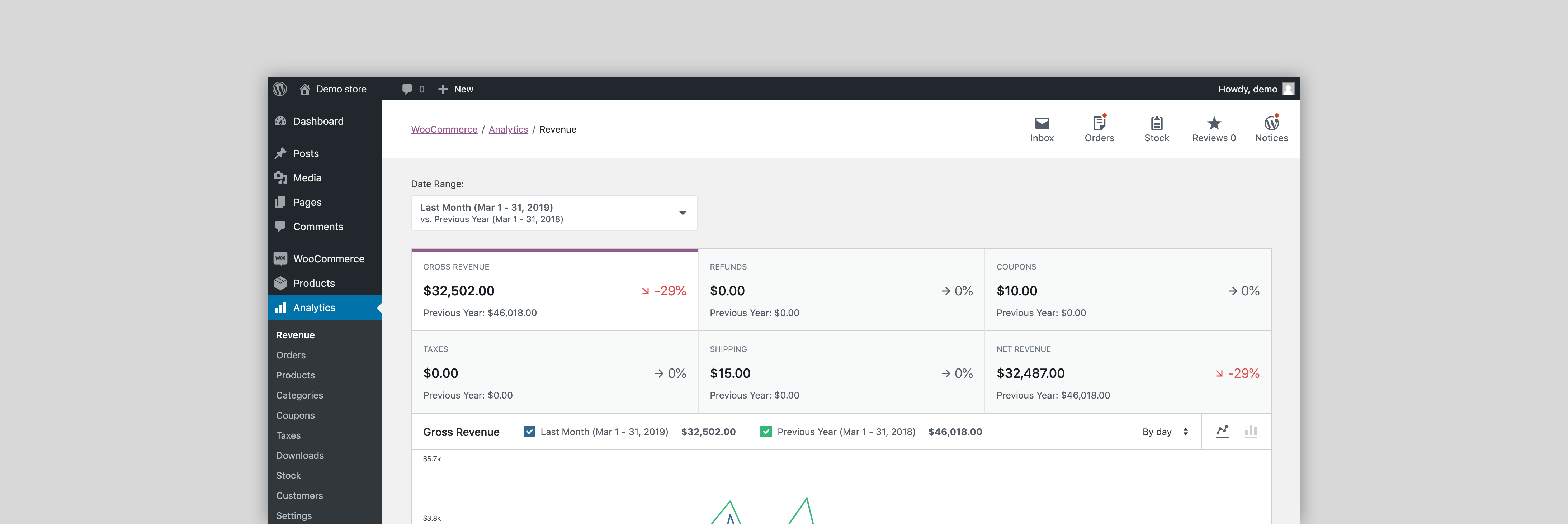
WooCommerce is amongst the most sophisticated eCommerce systems designed uniquely for users of WordPress. As a flexible solution, it enables full access to store layout, product catalog, and customer relations, which makes it an outstanding choice for any business. It is tailored for businesses seeking a hosted eCommerce solution that is easily modifiable and has no limitations on scaling.
Features:
-
Allows full customization and advanced design flexibility as an open-source platform.
-
It has effortless integration with WordPress which supports thousands of themes and plugins.
-
Includes PayPal, Stripe, and direct bank transfers of multiple payment gateways.
-
Has an extensive plugin library with additional features for marketing, analytics, and automation.
-
Users have access to basic eCommerce SEO tools which help in improving search visibility.
Pros:
-
Installation is free and there are many low-cost extensions available.
-
Complete control over the design, functions, and features of a website is granted.
-
Web based stores of any size from starting startups to large enterprise level are all supported.
Cons:
-
Management and setup of the tools requires prior knowledge of WordPress.
-
The costs of hosting, domain registration, and premium extensions may become expensive.
-
Responsibility for security, backups, and maintenance of the website lies on the owner.
Pricing:
-
Installation of the core tool is free of charge.
-
Premium plugins are available from free up to $299+ and themes start at the same price.
5. GoDaddy
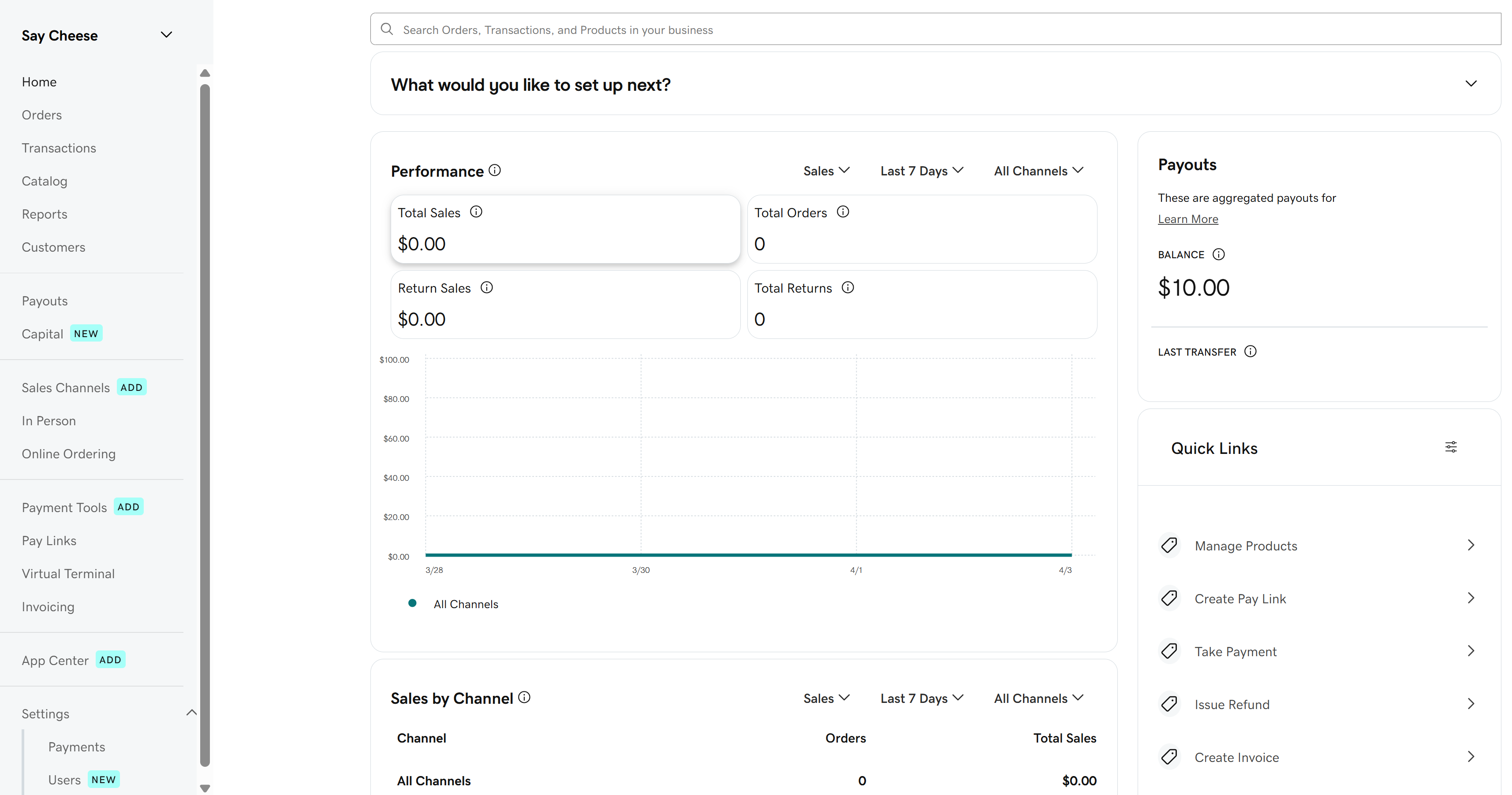
The eCommerce tools from GoDaddy serves users with an all-in-one option which is perfect for those looking for a complete online store solution. For small business owners and beginners, GoDaddy's advanced AI website builder alongside built-in marketing tools and secure payment processors make it an ideal choice.
Features:
-
Highly intuitive website creation tool using AI technology that allows drag and drop features
-
Payment processing made easy with integrations from PayPal, Stripe, and Square
-
Enhanced outbound marketing capabilities through integrated social media, email marketing, and built-in SEO tools
-
Quick Mobile Optimized page designs to provide an effortless shopping journey
-
Effective order tracking and fulfillment through inventory and shipping management tools
Pros:
-
An extremely easy setup is guaranteed making this ideal for those who are not technologically inclined
-
All business owners can take advantage since no coding skills are needed
-
Flexible pricing options suitable for small businesses/startups at low-cost
-
Convenience is also improved since it includes hosting, domain registration, and SSL security
Cons:
-
Customizability is limited in comparison to WooCommerce and Shopify
-
Lacks more advanced tools for businesses looking to scale
-
Some third party payment gateways may incur transaction costs
Pricing:
-
Basic: $9.99/month
-
Standard: $14.99/month
-
Premium: $19.99/month
-
ECommerce: $29.99/month
4. What Are The Benefits Of E-Commerce Tools?
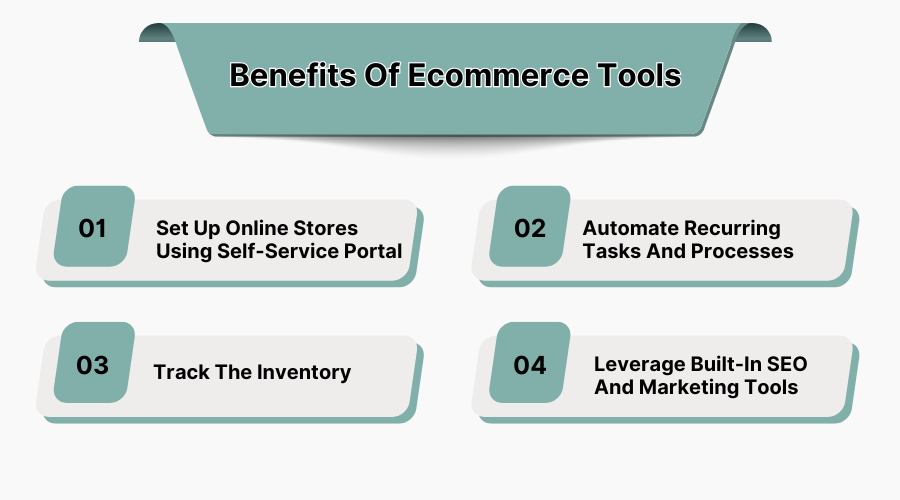
1. Set Up Online Stores Using Self-Service Portal
Online stores can be created without any prior knowledge of web design courtesy of the drag and drop user interface electronic commerce tools provides alongside set templates and dashboards. This is the ideal low to no code knowledge endsolution.
2. Automate Recurring Tasks And Processes
Recurring work such as notifying customers, order processing and payment is handled through ecommerce management tools. Manual work is reduced through automation which helps boost efficiency and most importantly the customer experience.
3. Track The Inventory
The integrated ecommerce tools help businesses to be in-touch with stock levels after they have been sold, thus doing away with chances of overstocking associated with time-consuming manual restocking. This feature will guarantee that the business operations are not affected and the purchase orders are not overlooked.
4. Leverage Built-In Seo And Marketing Tools
Specialized eCommerce tools services provide support in SEO related tasks, assists in advertising via emails, and allows the linking of social media accounts. These features give businesses tools to boost their online presence, improve website or page traffic, and increase the number of sales picked.
5. What Are The Different Types Of E-Commerce Tools?
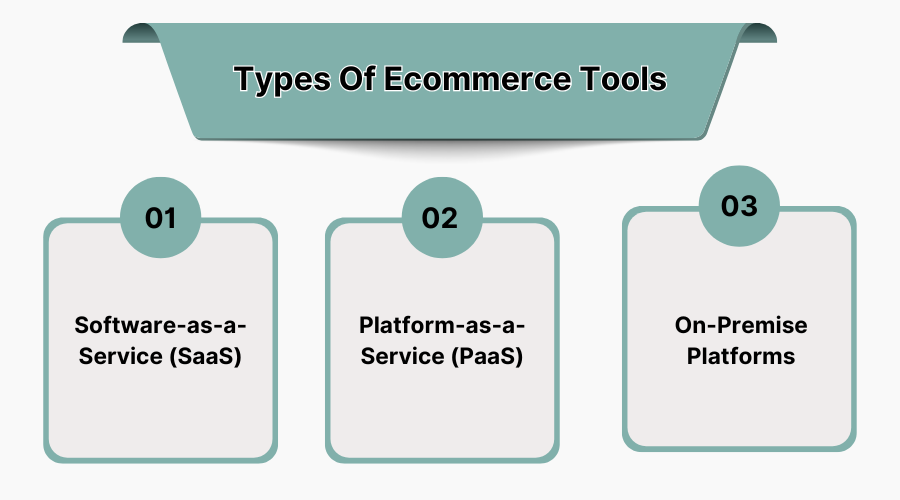
1. Software-as-a-Service (SaaS)
SaaS e-commerce solutions allow businesses to design and operate online stores assuming they have no technical knowledge through e-commerce hosted tools. They offer inclusive hosting, automatic security and updates which is very appealing to a SME business.
2. Platform-as-a-Service (PaaS)
PaaS e-commerce solutions offer a more flexible approach through customizable frameworks which help businesses build and scale their online stores. Unlike SaaS solutions, they offer the ability to use other applications and customize working parts to suit the business needs.
3. On-Premise Platforms
On-Premise Platforms are installed in the company servers where a business can have complete control in customization, security and performance. It fits best with large businesses and enterprises that require greater security, scalability and tailored business processes.
6. What are ECommerce Tools?
An eCommerce tool is a platform that allows companies to electronically sell their goods and services. It contains a website builder, stock management, payment processing, and a customer relationship management system. With the right e-commerce tools, selling goods and services online can be made efficient as all processes are streamlined.
Most ecommerce companies have a self-hosted solution or offer it in the cloud for ease of access. Marketing, analytics, and logistic functionalities combine with electronic commerce tool to improve sales strategies. From small businesses to large enterprises, ecommerce management tools enables automation, scalability, and efficient transaction management for online stores.
The E-Commerce Platform Market was valued at USD 8.47 billion in 2025 and is expected to attain USD 26.50 billion by 2034.
