
Best Remote Support Tools in
Are you looking for Remote Support Tools for your Business in ? SaaS Adviser brings you the best Remote Support Tools to ease your worries. In order to make your work smooth and swift, SaaS Adviser has compiled a list of the best software available. Compare the Best software features, pricing, free demo, and trial to select the best Remote Support Tools for your organization.
.jpg "Shubham") Researched and Written by Shubham
Researched and Written by Shubham
Top 3 Featured Softwares


List of Top Remote Support Tools
Get Free Consultation

What is Zoho Assist?Zoho Assist is a far off computer software program that permits you to get entry to and support devices from anywhere in the global. With features like unattend...
View Profile

Getscreen.me

Access Anywhere: Instant Browser-Based Remote Desktop Software
Getscreen.me is a browser-based remote desktop and screen sharing solution built for cross-platform, web-driven access. It allows users and administrators to connect to remote ...
View Profile

What is Freshservice? Freshservice is a cloud-based IT service management (ITSM) solution developed by Freshworks that enables organizations to modernize and streamline their IT...
View Profile
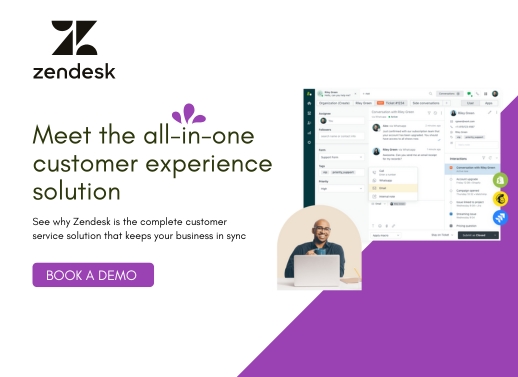
What Is Zendesk Remote ?Zendesk Remote is not a standalone Zendesk product like Support or Talk, but rather refers to remote support capabilities w Read More...
View Profile

TeamViewer is the world's leading remote desktop tool. It has the largest and fastest remote connection network, and is the only tool you need to keep all your computers, servers, ...
View Profile
Splashtop Business Access is a remote desktop solution that is hosted on AWS. It provides a secure network and computing environment with firewalls, data encryption, and DDoS mit...
View Profile

What is AnyDesk?AnyDesk is a popular and speedy faraway computer software that enables users to access and control computers from a far off vicinity. It lets in for secure and seam...
View Profile
ConnectWise Control is a remote support software that connects you to your customers anywhere in the world. It offers a layered approach to security, with features like role-based ...
View Profile

Users can also set up access permissions. RemotePC is an affordable remote access solution that offers a good set of features. With unattended access, remote printing, file trans...
View Profile
What is BeyondTrust Remote Support? BeyondTrust Remote Support is an enterprise-grade remote access and support solution that enables secure, efficient assistance to deskt...
View Profile
GoToMyPC remote access software provides a high-speed connection and user access control. It offers multi-platform remote support across multiple devices. Users can print documen...
View Profile
What is Atera?Atera is an all-in-one remote monitoring and management (RMM) platform designed for IT professionals and managed service providers. It integrates essential to...
View Profile
GoTo Resolve
By GoTo
What is GoTo Resolve? GoTo Resolve is an all-in-one IT support and remote management solution designed to help businesses troubleshoot, manage, and secure devices from anywhere....
View Profile
ISL Light
RemoteISL Online is regarded as one of the industry's forerunners in remote desktop assistance. ISL Online has offered remote control software to help desk and IT personnel in 100 nation...
View Profile
Remote Utilities
By Remote UtilitiesCheck How Remote Utilities can help to automate Indian Business. SaaSAdviser provide their list of features, pricing, Free demo and Comparison with the best alternative
View Profile
Web-based remote support that does not require pre-Installed software for PC's, Mac's and smartphones. The ability to securely connect to any PC, Mac or mobile device on any networ...
View Profile
Dameware Mini Remote Control is a remote control software that helps you with customer support and your help desk needs. You can remotely control Windows, Linux, and Mac OS X compu...
View Profile
.png "Ninjaone")
Ninjaone
Automate the hardest parts of IT
NinjaOne is a cloud-native IT management platform designed to streamline remote monitoring and management (RMM) for Managed Service Providers (MSPs) and IT departments. It o...
View Profile
What is Freshdesk? Freshdesk is a cloud-based helpdesk and customer support solution created by Freshworks that enables businesses to manage customer inquiries, complaints, and ...
View Profile
Slack is a communications and workflow solution designed for teams. Using Slack, you can set up channels, which can be around any theme, project, client or department. You can invi...
View Profile

Table of Content
What are Remote Support Tools?
Remote Support Tools (also known as remote tools) are dedicated software products that enable an IT technician to be connected, view, and control a remote device (usually a desktop computer, laptop, or mobile device) across a network connection, usually the internet.
Their essence is to identify and fix technical problems, maintain and install software, and support end-users, even though the technician does not have to be physically present. They are essential for both internal IT teams, providing remote troubleshooting tools for employees, and for companies offering cloud-based customer service software to clients.
1. The Best Remote Support Tools
Choosing the right platform is the single most important decision for enhancing your IT efficiency. Here is a comparison of some of the leading remote support tools available on the market, many of which integrate into a full ITSM software comparison suite.
|
Tool Name |
Key Focus |
Best For |
|
ManageEngine RMM Central |
Unified RMM, Endpoint Security |
MSPs and large internal IT teams need a central control point. |
|
Freshservice |
IT Service Management (ITSM) helps desk software. |
Firms that focus on a smooth employee experience and automation of ITSM. |
|
Atera |
Artificial intelligence automation MSP all-in-one software. |
MSPs and IT consultancies that want an all-inclusive, per-technician solution. |
|
NinjaOne (NinjaRMM) |
Remote Monitoring and Management Software |
MSPs focused on excellent service delivery and automation at scale. |
|
Zoho Assist |
Unattended Access, Standalone Remote Support. |
Budget and medium and small businesses (SMBs). |
1. ManageEngine RMM Central
ManageEngine RMM Central is a unified platform that combines Remote Monitoring and Management Software capabilities with security and patch management into a single console. It's designed to streamline IT operations for large internal teams and MSPs.
Features:
-
Unified endpoint management and security.
-
Automated patch management for third-party applications.
-
In-depth asset inventory and license compliance tracking.
-
Remote control with advanced features like wake-on-LAN.
-
Proactive remote monitoring and management software alerts.
Pros:
-
Centralized dashboard
-
Strong security focus
-
Excellent for desktop support tools.
Cons:
-
It can be complex for small teams
-
Pricing can be high for large-scale deployment.
Pricing: Quote-based licensing; typically tiered based on the number of endpoints.
2. Freshservice
Freshservice is a new, online-based customer service program based on the platform of IT Service Management (ITSM). It gives a new solution to the conventional help desk with emphasis on the employee experience and AI-based problem-solving efforts.
Features:
-
ITSM automation (e.g., ticket routing, self-service portals).
-
Incident, problem, change, and asset management modules.
-
Native remote support integration for quick session initiation.
-
Sleek, consumer-grade user interface for easy adoption.
-
AI-powered service desk bot for remote troubleshooting tools.
Pros:
-
Intuitive interface
-
Strong automation
-
Ideal for saas help desk software.
Cons:
-
The remote control feature is part of a larger suite
-
Pricing is per agent.
Pricing: Paid plans start around $23.67/agent/month (billed annually).
3. Atera
Atera is an all-in-one MSP software that is a pure play, and this is one that operates the Remote Monitoring and Management (RMM), Professional Service Automation (PSA), and remote support tools.
Features:
-
RMM and PSA in a single, integrated platform.
-
Network discovery and performance monitoring.
-
Integrated billing and reporting for MSP client management.
-
Remote troubleshooting tools with full administrative access.
-
AI-powered script library and patch management.
Pros:
-
All-in-one value
-
Per-technician pricing is scalable for MSPs
-
Strong automation.
Cons:
-
Less suitable for large enterprise-only IT teams
-
Some PSA features are basic.
Pricing: Starts around $149/technician/month (billed annually).
4. NinjaOne (NinjaRMM)
NinjaOne is a highly rated remote monitoring and management software platform, which leads to the identification of its performance, ease of use, and the ability to automate it. It is popular among MSPs that like proactive, efficient client service.
Features:
-
Enormous automation of patching, maintenance, and scripting.
-
The real-time tracking and notification of all endpoints.
-
Quick resolution through high-speed and reliable remote access.
-
Centralized IT asset management and reporting.
-
Extensive third-party software patching support.
Pros:
-
Excellent desktop support tools functionality
-
Intuitive user experience
-
Highly scalable.
Cons:
-
Pricing can be device-centric
-
Fewer native PSA features than Atera.
Pricing: Quote-based and dependent on device volume and modules.
5. Zoho Assist
Zoho Assist is a platform of specific remote support tools, which are suitable in situations when rapid and on-the-fly support and unattended access to remote devices are required. It is a cost-effective, standalone solution that is easy to integrate with other customer service management software.
Features:
-
On-demand and unattended remote access.
-
Voice and video chat within the support session.
-
Multi-monitor navigation and secure file transfer.
-
Session recording and audit logs for compliance.
-
Cross-platform support (Windows, Mac, Linux, mobile).
Pros:
-
Highly affordable
-
Simple to use for customer support
-
Good for quick remote troubleshooting tools.
Cons:
-
Lacks RMM/PSA features of all-in-one software for MSP
-
User experience is focused solely on the remote session.
Pricing: Paid plans start at $4.51/1 technician/month, billed annually.
2. How Remote Management Tools Are Transforming Modern Workplaces
The development of remote tools has radically changed the way businesses are conducted and how they maintain their IT infrastructure, especially in the United States. They are no longer a luxury but a fundamental pillar of the operations in the modern digital world, achieving the objectives of the working customer service management software.
-
Enabling Seamless Remote Work
Several remote support tools are used to make sure that employees who are in different geographic locations are able to access the same level of access and technical stability as they would in an office. This plays a crucial role in keeping productivity in your remote work software in the US deployment. If an employee has a problem, remote control support tools can be used to ensure the downtime is addressed directly through non-disruptive intervention.
-
Improved IT Support and Troubleshooting
The first direct advantage is the possibility to offer direct and specialized assistance immediately. Remote troubleshooting software enables IT units to reduce the travel time to a minimum, thereby minimizing the Mean Time To Resolve (MTTR). This is a fast response that is essential to a good employee and customer experience. The remote monitoring and management software used today does not just solve the problems but tends to foresee them beforehand.
-
Enhanced Employee Monitoring and Productivity Tracking
There is a wide variety of all-encompassing remote tools that provide the capability to monitor the health and performance of the system, which indirectly tells the management about the productivity bottlenecks. This surveillance through the articulate policies is necessary in ensuring compliance and security among the distributed teams.
-
Centralized Device and Software Management
The most effective desktop support solution has a single pane of glass to manage every endpoint. This involves the provision of updates, patches, and security settings that are planned centrally, which is a fundamental part of effective ITSM software comparison work. This is centralization, which is vital in operating a lean and effective IT operation.
-
Strengthened Security and Compliance
It is the security in the remote work environment. State-of-the-art remote support, software for remote monitoring and administration two-factor authentication, from beginning to end encryption, and recording of a session, which is not a bargain when it applies compliance requirements such as HIPAA or SOC 2.
3. Free vs. Paid Remote Support Tools: Which Is Right for You?
|
Feature |
Free Remote Support Tools |
Paid Remote Support Tools |
|
Primary Use |
Personal use, infrequent assistance to friends/family, or a very small-scale, basic assistance. |
Technical support is provided by professional service providers, managed service providers (MSPs), and internal IT departments. |
|
Commercial Use |
Severely limited or even forbidden (risk of being marked and blocked). |
Commercial license and all-in-one MSP license. |
|
Security & Compliance |
Simple encryption; no advanced capabilities, such as granular permissions, audit logs, and standards (HIPAA, SOC 2). |
High-grade encryption (e.g., AES-256), mandatory MFA, and detailed session logging are important for secure remote troubleshooting tools. |
|
Key Features |
Basic screen sharing, simple chat, and minimal file transfer. |
Unattended access, bulk deployment, real-time session monitoring, remote monitoring and management software features, white-labeling, and advanced diagnostics. |
|
Reliability & Performance |
It is susceptible to poor quality of service, disrupted connections, and time constraints of sessions. |
Fast performance, reduced latency, and reliability through service level agreements (SLAs). |
|
Support & Integration |
Very little to no use of community forums. |
Good customer service; easy integrations with SaaS help desk software and customer service management software. |
4. Choosing Between Remote Access Tools and Remote Support Software
Although the two terms are used interchangeably, it is important to know the difference between the two terms to choose the appropriate remote tools. It is one of the important steps to compare the ITSM software completely.
Purpose and Use Case
-
Remote Access Tools: These are created to provide unintended, 24X7 access to a machine by the same individual (e.g., an employee who needs to access his or her workstation at home). Persistent work is its main objective.
-
Remote Support Software: It is short-term, on-demand, and often attended sessions, which are typically used by an IT technician and aim to resolve a problem of another user. Remote troubleshooting tools and support are its main objectives.
User Base
-
Remote Access: Primarily used by the end-user themselves or IT admins managing servers (unattended).
-
Remote Support: Primarily used by the technician to assist an external customer or internal employee.
Access Method
-
Remote Access: Often requires pre-installation and specific security configuration for persistent access.
-
Remote Support: Usually involves a quick, one-time-code connection initiated by the user, making it a great cloud based customer service software solution.
Features
-
Remote Access: Focuses on desktop streaming, high-fidelity graphics, and persistent file transfer.
-
Remote Support: Focuses on session logging, chat, annotation, and in-session diagnostic tools, which are essential desktop support tools.
Deployment
If your need is ITSM software comparison and robust help desk functionality for clients, you need Remote Support Software. If your need is simply enabling employees to work from their office PCs at home, a basic Remote Access tool may suffice.
5. Advanced Support Tools Strategies to Streamline Remote IT Services
For companies that want to maximize profits, the value of their remote control support tools is something else an edge in the competitive USA market. Adopting advanced strategies is decisive. These plans will help make a help desk reactive for a proactive, efficient, and integrated service unit.
Automate Routine Tasks with AI and Scripts
Use the automation capabilities of your remote monitoring and management software to get the job done at low cost for repetitive duties. This involves patching, cleaning up of the disk, restarting of the services, and even diagnostics of some initial remote troubleshooting tools. This is where modern SaaS help desk software excels, freeing up technicians for complex work.
Implement Tiered Remote Support Structures
Use your cloud-based customer service software to establish a clear ticket routing system:
-
Tier 0: Self-service via knowledge base.
-
Tier 1: Live chat/AI bot for simple issues.
-
Tier 2: Remote session using remote support tools for expert resolution.
-
Tier 3: Advanced system administration or specialized vendor support.
Use Real-Time Session Monitoring and Co-Browsing
Go beyond simple screen sharing. Use co-browsing and session monitoring features to guide users through software issues without taking full control. This enhances the user experience and is a valuable training tool within your suite of desktop support tools.
Integrate Remote Support Tools with ITSM Platforms
Make sure that your remote tools will be well incorporated with your fundamental ITSM or customer service management application (e.g., Freshservice). It will enable technicians to start up a remote session directly off a support ticket, automatically record all session information (time, actions taken, and resolution) against the ticket, and have a full audit trail. This is the heart of an effective ITSM software comparison strategy.
6. Leverage Cloud-Based Remote Support for Scalability
For organizations operating across the remote work software in US market, choosing a robust, cloud-based platform is key to infinite scalability. It eliminates the need for on-premises infrastructure management and allows you to instantly scale up your all-in-one software for MSP capabilities during peak demand.
7. How to Build a Secure IT System Using Remote Tools
Security must be the cornerstone of any deployment of remote tools. In an era of increased cyber threats, especially in the remote work software in the US landscape, a robust security posture is non-negotiable.
-
Enforce Multi-Factor Authentication (MFA): MFA should be implemented by all technicians to gain access to the remote support tools platform.
-
Implement Least Privilege Access: Turn on the granular permissions inside your remote monitoring and management software to be sure that technicians can only know the devices and the tasks they must perform for their job (for example, desktop-only support tool access is allowed, not the server administration access).
-
Mandate Session Recording and Auditing: Use session recording capabilities for quality assurance and to maintain a verifiable audit trail for compliance and legal purposes. This is an essential requirement of any plausible SaaS help desk software.
-
Use End-to-End Encryption: Choose remote tools that use industry-standard and high-grade encryption (such as AES-256) of all the data used when having a support session.
-
Secure Patch Management: Instantly close the known vulnerabilities by automating the implementation of security patches and updates to all operating systems and third-party software through your remote monitoring and management software.
8. Top Trends in Remote Management and Remote Support Tools
In the future, as far as 2025, the market of remote support tools is changing fast. Remote Support Software Market Revenue is projected to be USD 2.09 billion in 2024 and is projected to reach USD 4.83 billion in 2031, and its CAGR is 9.71% between 2026 and 2033. The most important trends will determine the winning platforms and the way your IT offers are provided:
AI-Driven Automation and Triage
AI will move from simple chatbots to proactive assistants within the cloud-based customer service software, predicting device failure, automatically triaging tickets, and even running initial remote troubleshooting tool scripts without human intervention.
The Rise of Experience Management
ITSM software comparison will increasingly focus on the end-user experience. Remote tools will integrate with employee experience platforms to gauge the impact of IT support on employee satisfaction and productivity.
Extended Endpoint Management (XEM)
The scope of remote monitoring and management software will extend beyond traditional desktops to include IoT, industrial equipment, and more sophisticated mobile devices, moving closer to a true all-in-one software for MSP reality.
Zero-Trust Security Models
Access will not be granted simply because a user is on the network. Every connection and action initiated via remote support tools will require verification, enhancing security across all remote work software in US deployments.
9. Conclusion
The successful operation of any modern, distributed business in the USA hinges on the efficiency and security of its remote support tools. With a close consideration of features such as automation, security, and compatibility with your customer service management software, you will be able to choose the solution that will solve the current problems and at the same time move to meet the needs of tomorrow. You have just begun the process for safer and more accessible effective remote troubleshooting tools.
