
Best Open Source Project Management Software in
Are you looking for Open Source Project Management Software for your Business in ? SaaS Adviser brings you the best Open Source Project Management Software to ease your worries. In order to make your work smooth and swift, SaaS Adviser has compiled a list of the best software available. Compare the Best software features, pricing, free demo, and trial to select the best Open Source Project Management Software for your organization.
 Researched and Written by Nikita Rao
Top 3 Featured Softwares


List of Top Open Source Project Management Software

Get Free Consultation


Zoho Projects is the trusted project management software for over 200,000 users worldwide. With Projects, you can plan, track, collaborate and automate your way to successful proje...
View Profile

What is AFAS Software? AFAS Software is a Netherlands-based ERP (Enterprise Resource Planning) platform that helps organizations manage their essential business operations withi...
View Profile

Quickbase

Meet Quickbase AI! The future of dynamic work is now
Quickbase connects your current systems with important contributors to assist your team in minimizing risk, cutting down on waste, and minimizing unforeseen expenses. The appropria...
View Profile

What is Monday.com?Monday.com is a cloud-based Work Operating System (Work OS) designed to help teams plan, track, and manage their projects and workflows efficiently. Its high...
View Profile

What Is Clockwise? Clockwise is an AI-powered calendar management and scheduling platform designed to optimize how individuals and teams spend their time by intelligently organizi...
View Profile

ClickUp is a comprehensive, all-in-one productivity platform designed to streamline work management for individuals and teams across industries. It centralizes project planning...
View Profile
Cerri
Enterprise Project Portfolio Management Software
Cerri provides simple yet powerful team collaboration and project management solutions to improve project workflow, and align teams towards common goals.
View Profile
.jpg "Profit.co")
Profit.co
OKR Software to Execute Your Strategy with Precision
What is Profit.co?Profit.co is a comprehensive OKR (Objectives and Key Results) and performance management platform designed to align organizational goals with measurable outco...
View Profile

Wrike is a powerful cloud-based project management and collaboration software designed to streamline workflows, improve team productivity, and enhance visibility across project...
View Profile

Smartsheet is a cloud-based work control and automation platform designed to help businesses plan, tune, and execute tasks successfully. It combines assignment control, collaborati...
View Profile

Taiga is a free and open source project management tool that is designed for agile developers, designers, and project managers. Taiga uses the Scrum, Kanban, and Epics project mana...
View Profile
Projectlibre
By ProjectlibreCheck How Projectlibre can help to automate Indian Business. SaaSAdviser provide their list of features, pricing, Free demo and Comparison with the best alternative
View Profile
What is Exact?Exact is an integrated business management software that streamlines accounting, ERP, CRM, HRM, and project management into one unified platform. Designed to supp...
View Profile

OpenProject is a versatile project management software that offers a classic, agile, and hybrid project management network. It is designed to make users' work simple, productive, a...
View Profile

Odoo Website Builder is the perfect tool for easily achieving all your branding needs. With Odoo, you can create a website and then add features as your business grows. Jobs, eComm...
View Profile

What is GitLab?GitLab is a complete AI-powered DevSecOps platform designed for software creation, allowing users to collaborate and develop software. It helps organizations boost d...
View Profile

Tuleap
By EnaleanCheck How Tuleap can help to automate Indian Business. SaaSAdviser provide their list of features, pricing, Free demo and Comparison with the best alternative
View Profile

Leantime is an all-in-one solution that offers lean project management and business development tools in a single software. It combines the best practices in design thinking when...
View Profile

What is Atera?Atera is an all-in-one remote monitoring and management (RMM) platform designed for IT professionals and managed service providers. It integrates essential to...
View Profile

What is Freshservice? Freshservice is a cloud-based IT service management (ITSM) solution developed by Freshworks that enables organizations to modernize and streamline their IT...
View Profile

Table of Content
The most suitable open source project management software in USA assists organizations to simplify projects through task management, scheduling, and collaboration using minimal costs. With the ability to access the source code, companies can experience the freedom of customizing workflows, third-party integration, and transparency using the best open source project management software. Open source management software allows teams to grow efficiently, increase accountability, and retain complete control over data security and compliance.
1. What are the Latest Trends in Open Source Project Management Software?
The open source online project management landscape is changing rapidly, and new technologies are transforming the way teams work, monitor their developments, and produce outputs. This growth is also reflected in the global open source project management market, which was estimated to be worth around $1.5 billion in 2023 and is expected to grow to $4.1 billion by 2032 with a robust CAGR of 12.5%. These trends highlight the rising adoption and importance of modern, flexible project management tools.
1. Integration with AI and Machine Learning
AI-driven features are becoming common in IT project management software open source platforms. From automating scheduling to predicting risks, AI improves efficiency while reducing human error. Intelligent assistants can even analyze past projects to forecast resource needs and timelines.
2. Enhanced Collaboration Features
As remote and hybrid work expands, modern management project software open source now includes built-in chat, video conferencing, and document collaboration. These features help distributed teams stay aligned and engaged—similar to the best collaboration tools in USA.
3. Blockchain for Transparency
Some project management software open source solutions are adopting blockchain to ensure accountability. By logging updates in tamper-proof ledgers, blockchain adds trust and transparency, especially for industries handling sensitive or regulated projects.
4. Scalability and Customization
The best open source project management software is increasingly designed for scalability. Modular structures let businesses add or remove features as needed, while customization ensures workflows fit industry-specific requirements.
5. Ecosystem Expansion
Many open source project management system platforms now support integration marketplaces. This allows seamless connections with CRM, ERP, HR, and communication tools, improving workflow automation and reducing departmental silos.
6. Continuous Development and Updates
Backed by strong communities, open source tools often release updates more frequently than proprietary software. Users benefit from ongoing innovation, faster bug fixes, and reliable security patches.
7. Hybrid Project Management Approaches
Teams today rarely stick to a single methodology. Modern project management software open source supports hybrid approaches—blending agile sprints with milestone-based tracking to give businesses more flexibility.
2. Top 5 Best Open Source Project Management Software in USA
When it comes to choosing the best open source project management software, businesses in the USA have several excellent options. Below are five standout platforms, each with unique strengths that cater to different industries and team needs.
1. OpenProject
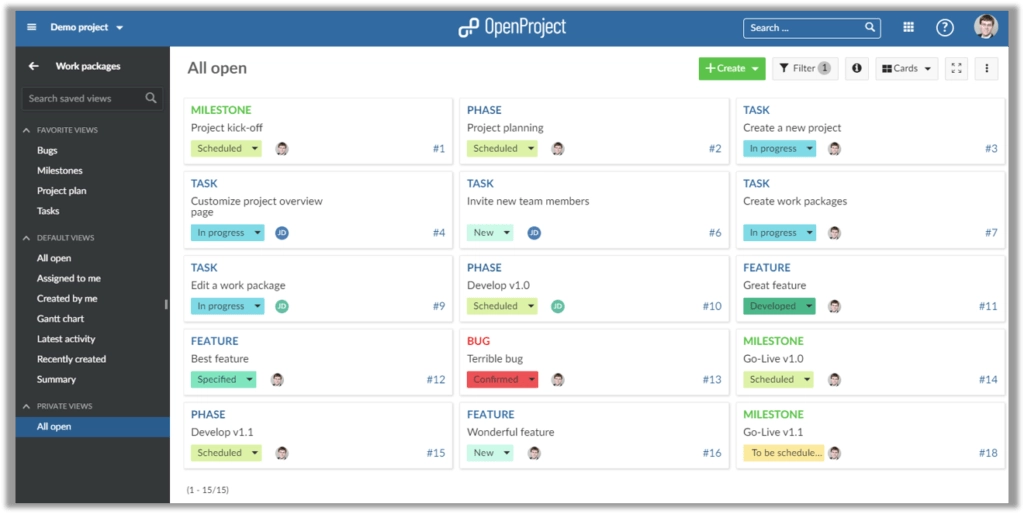
OpenProject is an open source project management software with Gantt charts, agile boards, and timelines. It is often considered among the top workflow management software because of its ability to streamline processes and support large teams handling complex projects.
Features:
-
Powerful Gantt charts and project scheduling tools
-
Agile boards (Scrum & Kanban)
-
Time tracking and cost reporting
-
Document sharing and wiki features
-
Strong role-based user permissions
Pros:
-
Excellent for hybrid project management
-
Strong security and self-hosting options
-
Active global community with frequent updates
Cons:
-
Interface can feel complex for new users
-
Advanced features require technical expertise to customize
Pricing: Pricing starts at $7.25 per user per month
2. GitLab
GitLab is an open source project management software that unites code management with task tracking. It is not only a management project software open source tool but also doubles as a DevOps powerhouse, making it a great choice for development-heavy organizations.
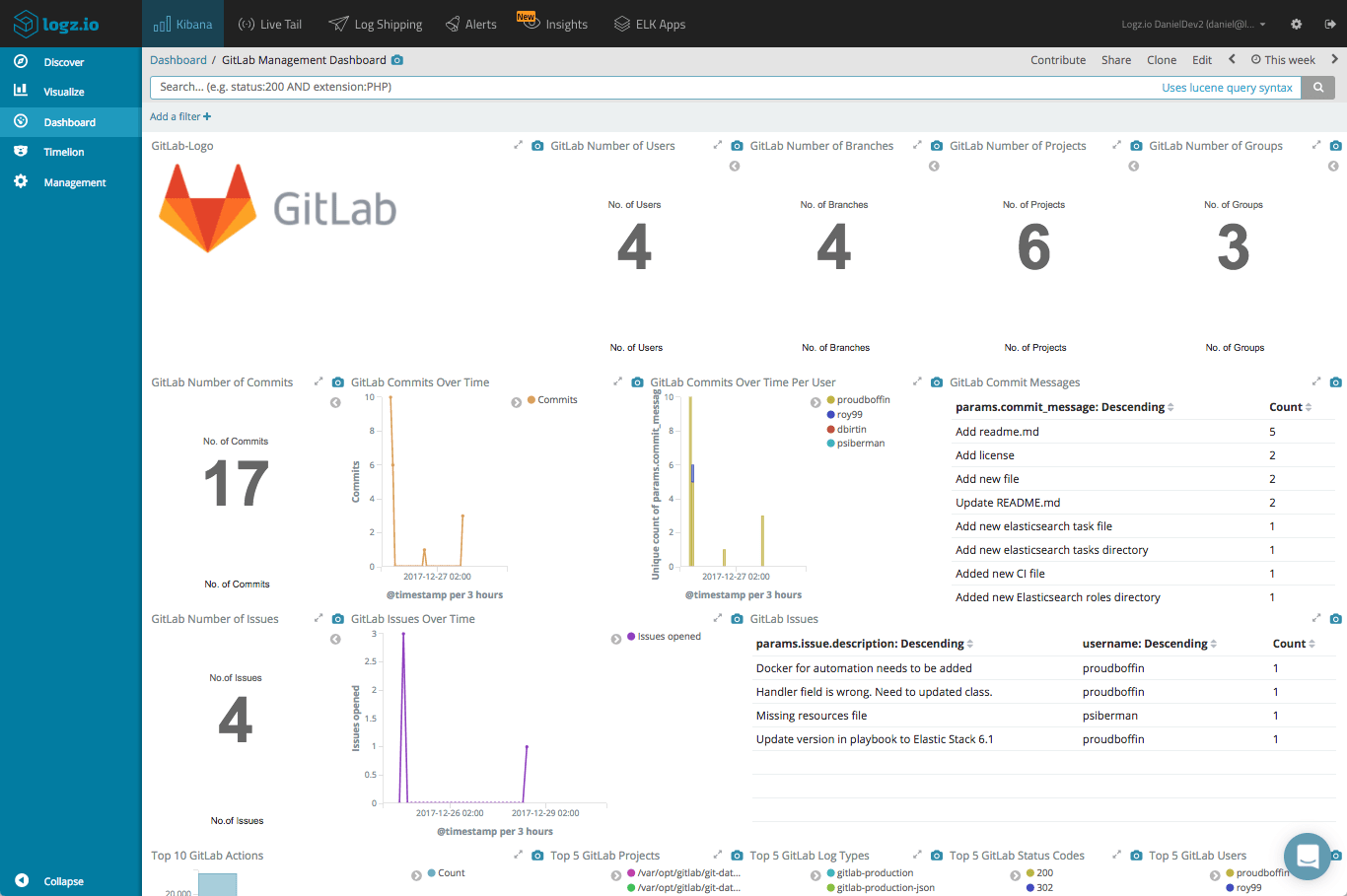
Features:
-
Integrated version control and DevOps pipelines
-
Agile boards for sprint planning
-
Issue tracking and code review workflows
-
Continuous integration/continuous deployment (CI/CD)
-
Robust reporting and project visibility
Pros:
-
Ideal for IT and software development projects
-
Combines project management with DevOps tools
-
Large and active developer community
Cons:
-
Overkill for non-technical teams
-
Steeper learning curve compared to simpler tools
Pricing: Free to use. For customized pricing, talk to sales
3. Tuleap
Tuleap is an open source project management software built for agile, hybrid, and regulated environments. Because of its versatility, Tuleap is recognized as one of the best SaaS project portfolio management solutions when hosted and scaled in enterprise settings.
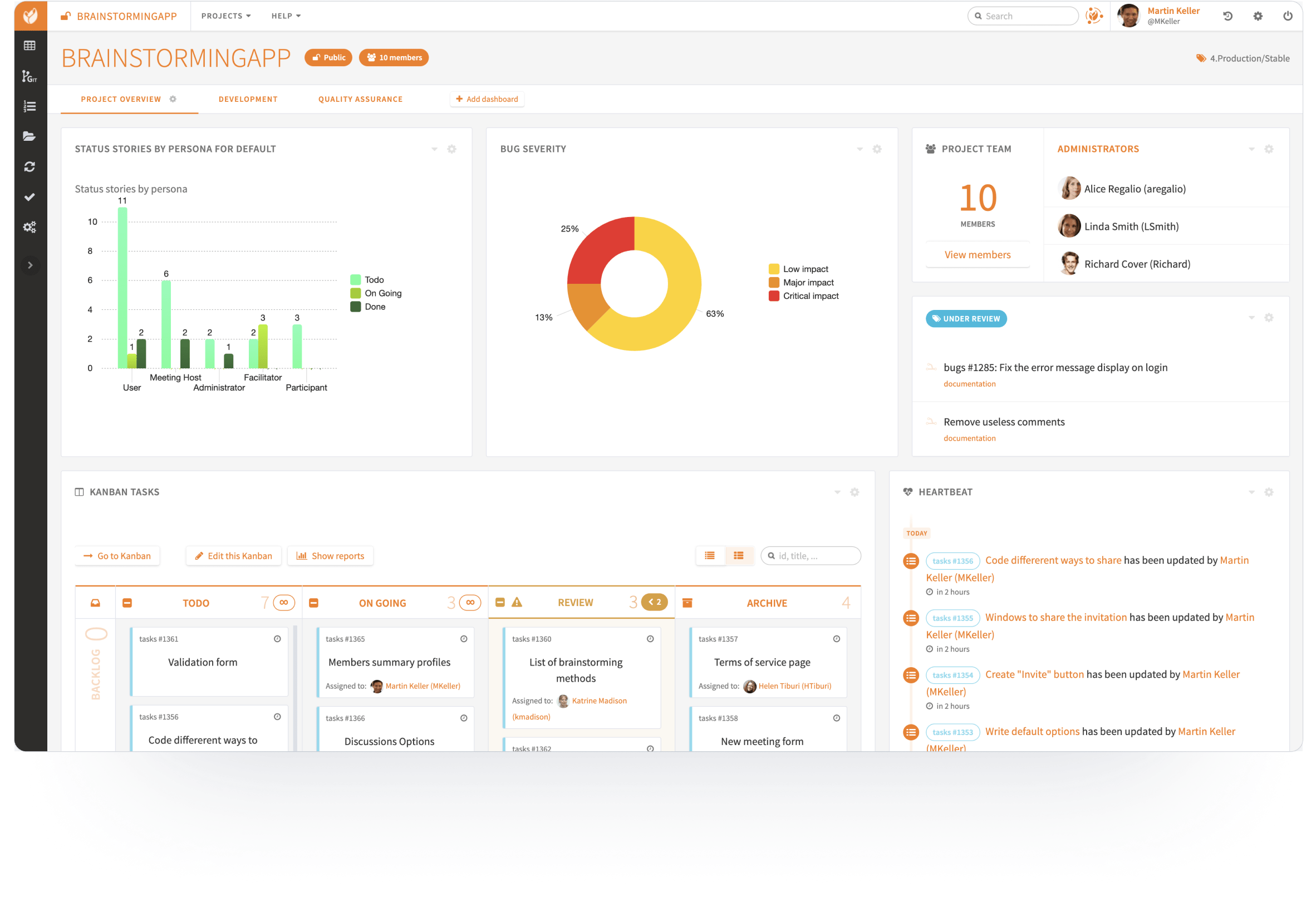 Features:
-
Agile, Scrum, and Kanban support
-
Document and requirement management
-
Workflow automation for complex projects
-
Bug and issue tracking
-
Custom dashboards for reporting
Pros:
-
Great for regulated industries (finance, healthcare, defense)
-
Strong support for compliance and audits
Cons:
-
User interface looks outdated compared to modern tools
-
Requires technical expertise to deploy at scale
Pricing: Visit the website for detailed pricing
4. Taiga
Taiga is an open source project management software for agile teams. It is a favorite among small teams seeking the best task management software, thanks to its simple interface and agile-focused features.
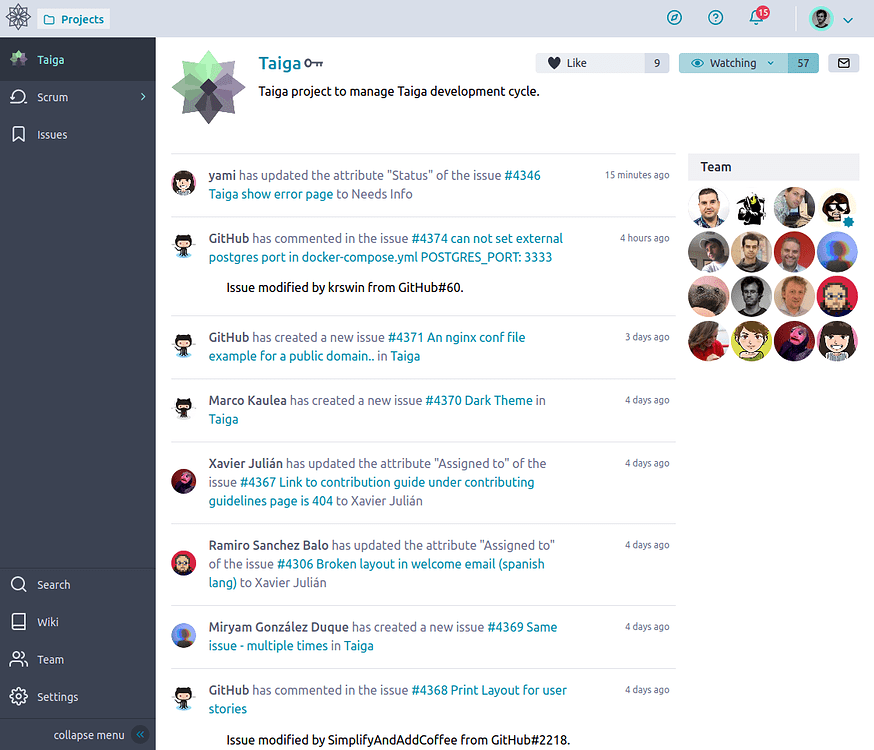
Features:
-
Intuitive Kanban and Scrum boards
-
Sprint planning and backlog management
-
Simple issue and bug tracking
-
API integrations with other business apps
-
Supports both technical and non-technical projects
Pros:
-
Very user-friendly and visually appealing
-
Lightweight and fast setup for small to mid-sized teams
-
Strong focus on agile teams
Cons:
-
Limited advanced reporting
-
Not as scalable as other enterprise-level tools
Pricing: Starting from €6 per user/month.
5. Orangescrum
Orangescrum is an open-source project management software focused on task tracking and collaboration. It is well-regarded as one of the best time management software in USA alternatives, with strong task and time tracking features that boost team productivity.
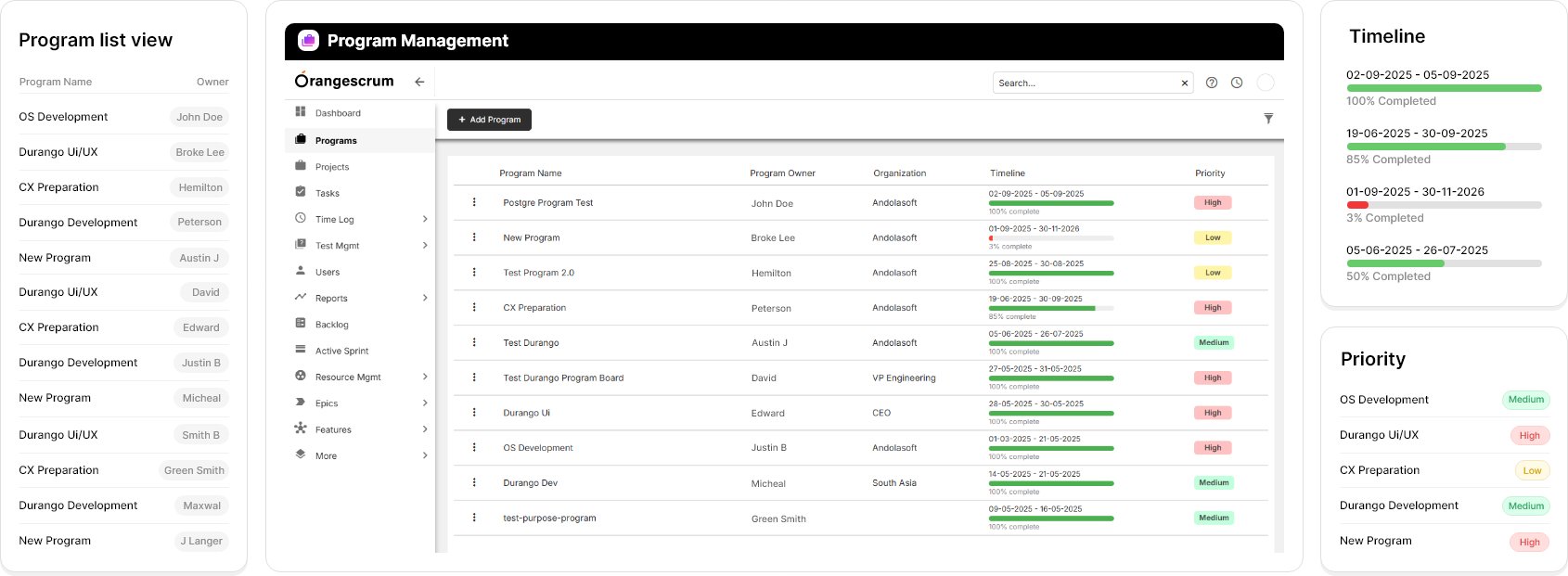 Features:
-
Task and time tracking
-
Gantt charts and project templates
-
File sharing and collaboration tools
-
Role-based access and permissions
-
Mobile-friendly interface
Pros:
-
Easy to use, even for non-technical teams
-
Great for small to medium businesses
Cons:
-
Free version has limited integrations
-
Community support is smaller than other platforms
Pricing: It offers a free version. Pricing starts at $4.09per user/month
3. How to Choose Open Source Project Management Software?
There are numerous open source project management tools out there, and it can be a daunting task to choose the appropriate one. The point is that a systematic strategy will help you not spend money on a program that is irrelevant to your business ambitions, processes, and expansion strategies.
1. Define Your Project Management Needs
The first step is to define what your team actually requires of a project management software open source solution. Do you deal with IT projects, creative processes, or cross-departmental projects?. A clear list of essential features helps you stay focused during your search.
2. Research Open-Source Project Management Options
Next, explore different management project software open source platforms.
Measure maturity and reliability by reviewing feature sets, release notes, and community activity. More developed tools that have active contributors are safer bets as they usually have better support, updates more often, and are more sustainable.
3. Practical Evaluation
Don’t just read about tools—test them. Many open source project management system platforms let you demo or self-host. Run pilot projects to evaluate usability, performance, and workflow fit. Getting feedback from project managers and team members ensures the chosen software will be adopted.
4. Compare Costs and Choose
Though IT project management software open source is usually open source and thus free, installation is associated with costs in hosting, customization, training, and maintenance. Compare them with options and weigh them against the benefits delivered. This ensures there are no financial surprises later.
5. Technical Considerations
Last but not least, evaluate the technical aspect of the open source online project management solution. Is it connected to your CRM, HR, or accounting systems? Can it scale with growing users and projects? Is it highly secure, user-permitted, and compliant? T For U.S. enterprises, they are determinants of success in the long run
These steps will help businesses to make sure they have chosen the best open source project management software that is affordable, flexible, and scalable. Some of these tools outperform even the best SaaS project portfolio management solutions by providing portfolio-level data and state-of-the-art tracking to organizations with complex program management needs.
4. What are the Key Features of Open Source Project Management Software?
When evaluating the best open source project management software, businesses should look beyond cost savings. Here are the essential functions buyers should expect from open source project management tools:
1. Task Management
Strong task management is the centre of all open source project management systems. These tools enable teams to delegate, rank, and track activities with functionality such as Kanban boards, checklists, and deadlines. Many platforms even serve as the best task management software, helping teams stay organized and focused.
2. Project Scheduling
Effective planning is an assurance that teams deliver on time and workloads. With management project software open source, a business can utilize Gantt charts, milestone trackers, and a calendar to visualize the timelines. This assists managers in making good resource allocation decisions and prevents bottlenecks.
3. Collaboration Features
Distributed teams depend on effective communication. Most of the open source online project management systems come with chat, forums, document sharing, and real-time updates. These features make them comparable to the best collaboration tools in USA, ensuring projects run smoothly with strong teamwork.
4. Visual Boards
Visual boards make workflows easy to track. With IT project management software open source, teams gain at-a-glance clarity into project progress, task ownership, and sprint planning. Flexibility allows support for agile, hybrid, and traditional approaches.
5. Time Tracking
Time-tracking features let managers see how effort is spent across tasks. Many project management software open source tools include detailed logs for billing, productivity analysis, and workload management. Some rival the best time management software in USA, integrating with payroll and invoicing systems.
6. Basic Reporting
Reports present information about performance, use of resources, and overall project health. Open-source does not offer highly sophisticated analytics, but most of them have dashboards, charts, and an export option. This provides leaders with data that can be put into action without the use of costly add-ons.
7. File Sharing
Sharing of files is centralized, keeping project files in check. An open source project management system means that teams are able to post, archive, and share files on the system. This eliminates the use of third-party tools and makes data safe.
8. User Permissions
Role-based access protects data and is accountable. Management project software open source can enable administrators to assign roles and permissions to users and to control sensitive data visibility. This ensures privacy without compromising transparency across teams.
5. What is Open Source Project Management Software?
Open source project management software is a software platform that users have access to view and modify open-source code and distribute it. Rather than being restricted to vendor-specific limitations like proprietary tools, open-source options allow businesses to have more control and flexibility.
The systems are used as digital centers in the planning, implementation, and monitoring of projects. They will assist teams in monitoring activities, allocating duties, setting time limits, and have an easier time communicating. Practically, this kind of management project software open source has all the features of paid platforms, including task boards, Gantt charts, reporting, and integrations, but with the added advantage of customisation and community-based improvement.
Open source online project management solutions are particularly attractive with the increasing popularity of distributed teams and remote work in the USA. They enable companies to operate projects on their servers or in the cloud, ensure the security of data, and adjust the workflow to meet the needs of particular business operations. Project management software open source allows the flexibility to meet individual needs, whether you are a small company and need affordability or a large organization and need scalability.
6. Criteria for Choosing the Best Open Source Project Management Software in USA
The choice of project management software open source is not just a matter of features but rather a matter of whether you can find an open source project management tool that aligns with your objectives, tasks, and employee count. With numerous open source project management tools out there, the best bet is to use clear criteria to sift through and identify the best one.
1. Define Your Project Management Needs
Select whether you need it for small agile teams, enterprise initiatives, or IT cycles. A defined list of requirements will make sure that the open source project management system adopted complements your processes rather than restricting them.
2. Scalability and Flexibility
Select a management project software open source that can expand with your business, with more users, more complex projects, or new workflows. The ability to be flexible and customized is a key to long-term success.
3. Community and Support
A strong community behind open source online project management solutions ensures regular updates, bug fixes, and shared knowledge. Check if professional support is available when your team needs extra help.
4. Ease of Use and User Experience
The most powerful project management software open source won’t work if it is too complex. Find easy navigation, drag-and-drop boards and easy scheduling that promotes easy adoption.
5. Integration Capabilities
The best open source project management software must be linked to CRM, HR, and cloud apps. Integration is seamless, silos are avoided, collaboration is enhanced, and manual work is minimized.
6. Security and Compliance
In U.S. companies dealing with sensitive data, open source secure IT project management software open source is needed. Find trusted hosting, updates, and adherence to standards such as GDPR or HIPAA.
7. What are the Benefits of the Best Open Source Project Management Software?
In the USA, the use of open source project management tools is rapidly increasing as companies are seeking affordability, flexibility, and transparency. The best open source project management software has, compared to proprietary systems, distinctive benefits such as:
1. Cost-Effective
Unlike traditional licensed platforms, IT project management software open source is usually free to use. This has made it appealing to startups, small businesses, and even larger enterprises willing to reduce overhead expenses. Hosting, maintenance, or optional support are the only costs to consider--still much less than long-term software downloads.
2. Customisation
Each company handles projects differently, and a strict tool is usually not enough. Using management project software open source, a team can adjust workflows, dashboards, and integrations to fit their actual processes. Customization allows the tool to expand as your business needs change, whether it is tweaking task boards or adding new modules.
3. Community Support
One of the largest strengths of an open source project management system is a strong community. Bugs, development, and common resources are contributed by users and developers all over the world. It is an active ecosystem and can offer fast solutions, eliminating reliance on vendors and speeding up innovation as it is updated repeatedly.
4. Transparency and Security
With open source online project management, organizations gain full access to the source code. This openness allows one to audit vulnerability, reinforce compliance, and establish trust in the system. Open-source tools have the benefit of enabling businesses to test security instead of trusting the claims of vendors, unlike closed solutions.
5. No Vendor Lock-in
Vendor restrictions are a common issue in proprietary platforms. When organizations choose project management software open source, they can fully control their data and settings. Its freedom allows it to be easily migrated to new systems, switch hosting providers, or even scale without being locked into the terms of a single vendor.
6. Flexibility and Agility
Contemporary teams adopt an agile, hybrid, and traditional approach. The best open source project management software is adaptable to any approach and allows a choice of Kanban boards, Gantt charts, and sprint planning. Such flexibility implies that teams can work the way they prefer without reducing productivity.
7. Collaboration and Innovation
Community-based innovation implies that open-source platforms are developed in a fast manner. Most of them also serve as the best collaboration tools in USA, enabling shared workspaces, live updates, and communication app integration. This leads to improved teamwork, accelerated project delivery, and the ability of cross-functional teams to remain on track.
8. What are the Challenges of POpen Source Project Management Software?
Although the best open source project management software can offer cost reductions and flexibility, it is not without its set of challenges, which must be considered by the purchaser.
1. Accountability Issues
Proprietary tools typically have a vendor who does updates, fixes, and new features. In comparison, management project software open source relies on community input, which may lead to the absence of accountability. Organizations might require internal skills or third-party assistance when dealing with technical problems.
2. Limited Support
Commercial platforms often include dedicated 24/7 helpdesks, but open source project management system tools usually rely on forums, documentation, or volunteers. While helpful, responses aren’t always immediate or guaranteed. Many businesses end up buying premium support or building internal expertise.
3. Integration Complexities
CRM, HR, accounting, and communication systems are used by modern teams daily. Not all open source online project management software has ready-to-use integrations, leaving businesses with no option but to customize their software. This may add time, costs, and complexity to the process of interconnecting various platforms.
4. Customisation and Maintenance Costs
Tailoring IT project management software open source to unique workflows is powerful but resource-heavy. The system usually requires the services of skilled developers to set up, customize, and maintain the system. Updates, patches, and troubleshooting may also increase the costs of operations over time, particularly when a good IT team is lacking.
5. Security Concerns
Open source has advantages and disadvantages associated with transparency. Because the code project management software open source is public, hackers can take advantage of the vulnerabilities unless updates are made. Organisations should remain vigilant on patches, security controls, and best practices in order to protect data.
6. Quality Variations
Not every open source project management tool is built equally. Some flourish under active communities and regular updates, and others languish or fade out. Buyers need to take time to examine the history of releases, the activity of the developer, and sustainability before investing in a platform.
7. Documentation and Training
There are numerous IT project management software open source which do not include quality training material or documentation. This complicates the onboarding process, particularly for non-technical teams. To make the adoption seamless, organizations might have to develop internal manuals or training programs.
8. Community Management
The success of open source tools often relies on active communities. When participation is strong, updates and support are frequent. But if engagement is low, fixes and improvements may be slow, reducing reliability for businesses.
9. User Interface and Experience
Many open source project management system platforms are not as well-designed and usable, but they are functional. Complex designs, outdated graphics, or high learning curves may deter adoption. The interface should be easy to use, particularly by non-technical personnel.
9. Conclusion
Choosing the right Open Source Project Management Software can transform how your team collaborates, manages tasks, and delivers results. With options like OpenProject, GitLab, Tuleap, Taiga, and Orangescrum, businesses in the USA can find tools that balance flexibility, affordability, and scalability. The key is to evaluate your needs carefully, test the tools, and select an open source management software that truly aligns with your long-term goals.
