
What we'll cover
Share with your community!


Get Free Consultation
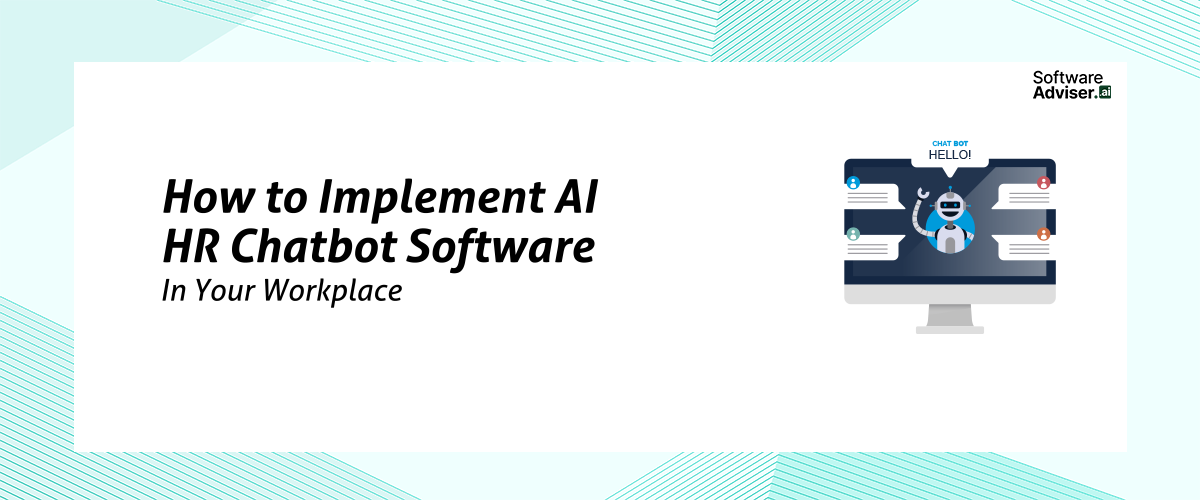
How to Implement AI HR Chatbot Software in Your Workplace
 David N. Wilks
Putting an HR chatbot powered by Artificial Intelligence (AI) into a U.S. workplace is kinda, at this point, pretty normal, especially for a lot of today's businesses. Business operations are more efficient across the board, and the employee experience is more refined. Remote and hybrid work is reshaping corporate America’s travel practices from New York City to Silicon Valley. That shift is why human resources (HR) teams are getting a steady stream of employee requests on benefits, compliance, and payroll processing nearly every day. When an organization puts in place an artificial intelligence chatbot, it can take over the automation of many of those same repetitive, high-volume jobs. Then employees can either get help or at least fast guidance 24/7 without needing to wait for anybody. And HR team members get to work on higher-value work more, like growing people and shaping a strong, healthy culture.
What is AI HR Chatbot Software?
AI HR chatbot applications are modeled to imitate intelligent digital assistants that help to manage and improve workplace communications between an employer and employees, with a view to exceeding what is usually found in conventional, rigid, rules-based chatbots, which usually follow strict if-then style logic. No, these chatbots use generative AI plus Natural Language Processing to pick up on real spoken, everyday English, and also interpret what a user is actually trying to ask. Then they answer right away and (mostly) with the right kind of precision, even for those more tangled questions employees have about the job, the policies, or day-to-day operations, all day long, 24/7.
AI HR chatbots can be embedded directly into the existing software that is already used in an American workplace for daily internal communication, including employee database systems and key AI HR software databases. So if an employee asks a question such as How many days of Paid Time Off do I have left? Or, where can I get the 401(k) Employer Match form? The AI HR chatbot pulls from the corporate backend systems of the organization and provides an instant, concrete answer to that scenario. Thus, the AI HR chatbot serves as a 24/7 digital front door to many common personnel questions, without the need for the employee to wait.
Automation is entering AI HR Chatbots, and internal departments are having a lot less workload. There are things that these HR chatbots automate, such as new hire paperwork for onboarding, payroll questions, and benefits enrollment, too. AI HR chatbots are not meant to replace human talent, not really; they’re more like a tool that weeds out the repetitive inquiries that end up creating email overload. Companies can use HR chatbots to save money, increase employee satisfaction, and free up their HR teams to focus on more meaningful and strategic work (think: workplace diversity, mental health, and developing leaders) instead of getting stuck in the same questions all day.
Why Should US Businesses Use AI HR Chatbot Software?
AI HR chatbots are a great option for American businesses looking to meet the digital-first needs of today’s workforce in the fight against increased costs associated with administrative overhead. Human Resources departments receive many high-volume, repetitive inquiries daily from their employees about healthcare options, company policies, AI payroll software schedules, etc. HR Chatbot gives employees instant answers to routine questions, removing the bottleneck of email ticketing systems and providing accurate and timely responses to employees, no matter if they work from the office, remotely, or in a hybrid work environment.
AI HR chatbots also help organizations mitigate compliance and legal risks by providing consistent and compliant baseline/advisory information regarding various state and federal labor regulations, family and medical leave laws, and employment rules and regulations governing the workplace and employees. The AI chatbot delivers the same experience to every person in the organization by providing a variety of standard information that is available to all employees. At the baseline level, companies may use technology and methods for automating responses to routine inquiries in their communications. As companies grow quickly, they will be able to provide more HR support because they will have improved their employee retention rate, which will free up time for HR professionals to come up with and execute innovative and distinctive solutions to complex employee problems that demand true empathy and inventive, deliberate strategic problem-solving skills.
How Does AI HR Chatbot Software Work in the Workplace?
Once it is embedded in the U.S. workplace, AI HR chatbot software becomes a secure bridge between employees and the internal data systems of their company. The chatbot will be able to understand the intent of the message using natural language processing when an employee types a question into their company’s day-to-day messaging platform or internal portal, even if there are typos in the message or if it is in slang. The chatbot retrieves the appropriate answer from pre-approved company policy documents, handbooks, and back-end payroll/benefits databases. The chatbot will give the employee an accurate answer within seconds based on the information it retrieves, whether the employee is looking for a tax form, remaining vacation balance, or healthcare coverage
These smart platforms will not just give workers answers to their everyday questions but will also be learning and changing in the background to improve workplace productivity. All interactions will be anonymized and aggregated into data dashboards that will provide leadership with a real-time snapshot of current workforce trends, such as trending questions about a forthcoming healthcare plan or confusion about recently updated company policies. This will help HR departments proactively identify and address any gaps in company communications before those gaps have the potential to become larger problems.
What Are the Key Features of AI HR Chatbot Software?
- Natural Language Processing (NLP): Enables machines to understand how humans really speak in daily life, not just words.
- Omnichannel Integration: Connects several systems (email, communication portal) in the same organization directly to each other so that nothing is lonely.
- Backend System Integration: secure integration with payroll, benefits & personnel tools to send personalized information to employees (e.g., their current PTO total).
- Automated Document Retrieval: Rapidly retrieves and delivers specific documents employees may need to read (tax forms, compliance materials, employee handbooks, etc).
- Intelligent Escalation Pathing: When an employee is having trouble with something complex, sensitive, or emotionally loaded and can’t find the automated response, the question is automatically escalated to a human specialist for assistance.
- Anonymized Analytics Dashboards: Gathers and shares real-time data related to employee questions/activities to assist leadership in pinpointing trends and breakdowns in communication within organizations.
How Can You Choose the Right AI HR Chatbot Software for Your Company?
1. Check for integration compatibility: You want to know if the software can natively integrate with your existing internal communication channels and your primary human resources databases without costly custom coding.
2. Review Data Security and Compliance: Ensure the software meets strict data privacy requirements (i.e., it has a SOC 2 Type II certification) and can securely process sensitive personal information such as payroll data and W2s.
3. Test Natural Language Understanding: The software should understand advanced natural language. This means that it should understand all forms of written English, including misspelled words. It should also be able to understand a variety of ways of asking the same question, instead of using strict keyword-based logic for matching.
4. Customization and Control of Reviews: Choose a solution that lets your team easily upload and edit their business handbooks, custom company policies, and brand voice without needing help from your IT department.
5. Test for the Human Hand-off Capability: When the automation breaks down, the chatbot should be able to pass along all complex, sensitive, or emotional AI employee database to a human person related to employees or benefits in a timely and secure manner.
6. Analyze Reporting and Analytics: Select a software with a centralized backend dashboard where you can view a summary of anonymized employee questions in real-time to identify gaps and trends in employee communication.
What Are the Steps to Implement AI HR Chatbot Software?
Step 1: Goals and Use Cases
The first thing is to decide what problems you want to solve with a chatbot. Will it mostly be answering questions about PTO and pay dates? Will it help employees fill out onboarding paperwork? “Will it pull unique data for employees from internal systems?
Step 2: Audit and Clean Your Knowledge Base
The smarter the knowledge the chatbot gets data from, the smarter it gets. Review, revise, or reorganize all your company’s handbooks, policy documents, and FAQs to ensure the conversational platform has access to the most up-to-date data.
Step 3: Security and Access Controls
Define strict data security issues with your IT team and legal department. What confidential data does the chatbot have access to? Which permission settings will restrict employees to seeing only their own tax rate and payroll information?
Step 4: Integration and Setup
Incorporate the chatbot platform into the organization’s internal communication and core personnel database. Set the tone: Set the chatbot’s tone according to the organizational culture. Define routing paths to transfer to a human.
Step 5: Testing and Training
Pilot the study with a small, diverse group of employees. Feed the chatbot different kinds of phrasing, spelling mistakes, and complex questions so that it gets better at interpreting, understanding, and responding in a natural way.
What Challenges Come with AI HR Chatbot Software Adoption?
1. Security/Privacy: Employees are sensitive to their personal information. And connect a chatbot to payroll, social security numbers, and AI employee mental health. But use strong encryption and strict access permissions to avoid any data breaches.
2. Garbage In; Garbage Out: An AI chatbot knows only what is in the documents it can access. If your company’s handbooks & policy manuals are conflicting & outdated, it is giving wrong answers to its employees.
3. Employee Resistance: Some employees feel the HR chatbot is cold, impersonal, and means fewer human beings to provide support. If the AI is not accurate or if employees don’t want to cut themselves off from human contact, then they won’t use it, and the user adoption rate will be poor.
4. Emotional/Complex Issues: AI can answer simple questions like “When is payday?” but can’t show empathy. It can’t respond appropriately to workplace harassment, mental health, or complex family leave issues where human judgment and a human touch matter most.
5. Compatibility/Integration: Upgrade internal systems to connect the new chatbot with legacy HR systems and daily communication platforms.
Is AI HR Chatbot Software the Future of US Workplaces?
1. Hybrid and remote work becomes the Norm: As the workforce becomes more distributed across time zones, companies can no longer rely on just a physical human resources (HR) department, keynote presentation work from 9 to 5. AI (artificial intelligence) chatbots provide instant answers to HR questions for both remote and office-based employees, wherever and whenever they are.
2. Reduce HR Burnout: HR burnout levels in the U.S. have been historically high in recent years. HR teams. By automating up to 70 to 80 percent of repetitive, low-tech inquiries, such as getting tax forms or checking holiday schedules, organizations can help protect their internal HR teams from the adverse effects of administrative work.
3. Consumer-Grade Services and Employee Expectations: Today's employees are used to the same instant gratification from their consumer applications that they expect from their workplace tools every day. For a digitally native workforce, waiting 2 to 3 days for an email response to a benefits-related question will feel like ancient history.
4. Data to drive Decisions: Predictive data analytics will be a core pillar for future corporate leaders. AI chatbots will give organizations real-time insight into employee satisfaction as well as common employee pain points, such as sudden jumps in questions around parental leave or mental health. Corporate leaders can take proactive measures to spot trends before they become an issue.
Conclusion
When using AI Chatbot Software for your Human Resource department, developing an advanced and effective workplace culture is a great step towards In the United States, companies can bridge the gap between what workers want and what the company can deliver through management by automating routine questions and merging databases. Visit softwareadviser.ai when you are considering purchasing and deploying the appropriate technology for your business’s workflows. Softwareadviser is a business-to-business (B2B) software marketplace where businesses can find, compare, and purchase all types of software they need to run their operations.
FAQ's
Costs vary based on company size, the number of integrations, and feature depth. Many vendors offer tiered subscriptions, so small businesses can start affordably and scale up. Pricing continues to drop as the technology becomes more accessible.
With clean documentation, many organizations deploy a working chatbot in just a few weeks. The bigger time investment is auditing your content and running a pilot, both of which pay off in accuracy and adoption.
No, and it shouldn't try. Sensitive matters like harassment reports, accommodations, and disciplinary actions require human empathy and judgment. Well-designed software recognizes these topics and escalates them to a person.
Yes, when you choose the right vendor. Look for SOC 2 certification, strong encryption, role-based permissions, and GDPR or HIPAA readiness if applicable. These safeguards keep employee data protected.
Mid-sized and large US businesses with high volumes of repetitive HR questions see the biggest gains. That said, small businesses with lean HR teams also benefit from offloading routine inquiries.
Ask a room of managers to name their least favorite responsibility and performance reviews win without a recount. Employees dread receiving them. Mana [...]
David N. Wilks
Scale matters, but smart marketing teams refuse to sacrifice quality to get there. The old way, losing half your week to writer's block or babysitting [...]
David N. Wilks
In the current rapidly developing digital world, it is not sufficient for traditional file cabinets and cluttered cloud folders to provide what busine [...]