
What we'll cover
Share with your community!


Get Free Consultation
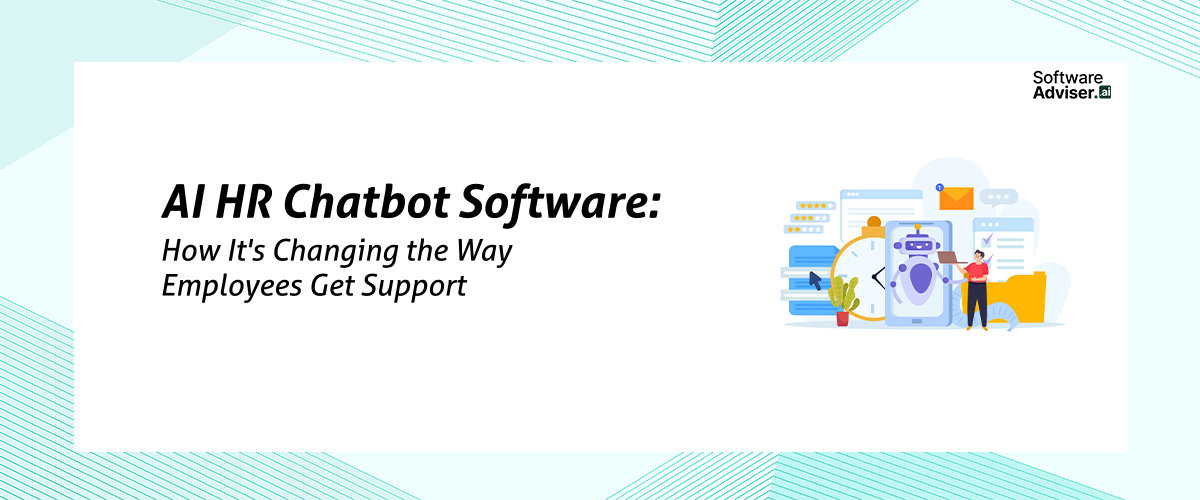
AI HR Chatbot Software: The Modern Solution for Enterprise Workforce Support
 Dokas mile
Managing staff requests for an expanding company sometimes seems like going against an ongoing stream of messages. Often, HR directors waste time answering repeated questions about salary breaks, medical coverage, and regulatory guidelines. Employees delaying days to receive a simple wage slip or rule revision halt work and create annoyance across the firm. Modern companies want flexibility, perfect digital connections, and quick responses.
 Looking for AI HR Chatbot Software? Check out Softwareadvisor’s List of the Best AI HR Chatbot Software in USA for Your Business.
Internal processes are hereby transformed by AI HR chatbot software. These systems answer frequent inquiries in seconds by integrating intelligent automation straight into your everyday communication tools. This change lets HR managers concentrate on strategic people development rather than continuous administrative responsibilities.
What Is AI HR Chatbot Software?
An enterprise tool designed to help with activities all along the employment life cycle and so simplify workplace contacts is artificial intelligence HR chatbot software.
Unlike older, hard decision-tree bots that only grasp precise button clicks, advanced conversational AI systems interpret freeform natural language. They read employee questions, grasp the underlying context, and deliver immediate answers pulled from secure company files and policies.
These tools do not sit on an island. Reliable software links directly into core HR system integrations, such as payroll software, attendance trackers, and enterprise resource tools. Because of this connectivity, team members can check their remaining holiday hours, request official documents, or verify tax statements through a simple text message.
Do You Know?
Almost half of all incoming requests forwarded to business human resources departments consist of recurring administrative inquiries. Installing specialized AI HR chatbot software can automatically answer up to 75% of these daily requests free from human manager intervention.
The Operational Strain on Traditional HR Teams
In many traditional workplaces, human resource professionals act as manual search engines for the company. They field constant calls and email chains covering basic operational questions. This manual approach creates several significant problems:
1. Slow Response Times
An employee who inquires about maternity leave policies or dental benefits on a Friday afternoon usually waits until midweek for an answer. This delay affects staff happiness and slows down personal planning.
2. Information Inconsistencies
Various team members could somewhat differently interpret company policies. This could cause problems with remote work permissions, expense claims, or sick leave tracking.
3. Wasted Technical and Administrative Hours
Highly valuable HR people spend a significant portion of their week searching unconnected databases for data. That time may be much better spent handling internal issues, running cultural programs, or organizing strategic hiring.
By giving one dependable point of contact for the whole staff, installing specialized artificial intelligence HR chatbot software helps to address these friction issues.
Core Operational Capabilities of Modern Systems
Deploying AI HR chatbot software brings a full suite of features designed to modernize daily business operations.
-
Instant Policy and FAQ Support
An internal policy helpdesk powered by conversational technology can process handbooks, insurance PDF files, and safety documentation instantly. Employees get clear, accurate answers immediately, no matter when they ask.
-
Smooth Candidate Screening
Automated candidate screening helps recruiting teams manage initial contacts with job candidates. The system can check basic requirements, go through preliminary screening questions, and arrange interviews automatically.
-
Guided Employee Onboarding
First impressions matter. Onboarding digital assistants guide new hires through their initial weeks step by step. They send friendly check-ins, share setup guides, remind workers to submit tax forms, and track completed orientation tasks without manual oversight.
-
Self-Service Requests
Through employee self-service tools, workers handle their own personal profile data; they may change home addresses, modify emergency contacts, or send time-off requests straight through chat apps such as Microsoft Teams or Slack.
How AI HR Chatbot Software Drives Enterprise Value
Moving to conversational tools is about real financial and operational benefits, not only about staying current with technological developments.
|
Feature Area |
Manual Operations |
AI HR Chatbot Software |
|
Availability |
Standard office hours only |
24/7 continuous access |
|
Response Speed |
Hours or days |
Instantaneous |
|
Task Handling |
Manual lookup & manual email drafts |
Automated execution via system API links |
|
Information Accuracy |
Dependent on individual staff memory |
Synced directly to verified central documents |
|
Scalability |
Requires hiring more support staff |
Handles thousands of chats simultaneously |
-
Continuous Employee Support
Hybrid schedules and many time zones characterize contemporary businesses. Real-time employee help guarantees that remote or night-shift personnel get help as they need it, free from waiting for morning office hours.
-
Boosting Workforce Management Efficiency
Automating repetitive chores helps to maximize operational capacity. Lowering repeat tickets lets HR units save time making classes, better culture, and fixing hard staff problems.
-
Data-Driven Operational Insights
Conversational platforms collect anonymized usage trends over time. Leadership teams can review these reports to see what topics confuse employees most, revealing where policy text needs updating or where managers need to offer extra training.
Implementation Steps for HR Systems
Integrating AI HR chatbot software requires thoughtful planning to align technology with existing business rules.
Step 1: Audit Frequent Queries
Gather six months of support tickets and email records. Identify the most common questions about benefits, leave rules, and system setups to build your core knowledge library.
Step 2: Establish Secure Software Integrations
Connect your chatbot application directly to your central workplace software. Ensure HR system integrations support secure authorization so sensitive personal data remains protected at all times.
Step 3: Define Clear Hand-off Rules
Automation works best alongside human teams. Design clear escalation paths so that sensitive personal issues or complex disputes route smoothly to a human team member with full conversation context attached.
Step 4: Run Targeted Testing
Before complete implementation, test the system with a small staff from several departments. Adjust natural language rules based on actual input to guarantee answers seem useful and concise.
Step 5: Train and Launch
Present the new tool to your staff using simple directions. Show staff how simple it is to submit queries straight inside the messaging tools they use daily.

Pro-tip
Never try to launch your digital assistant with every single company policy on day one. Focus your initial launch purely on high-volume routine HR automation tasks like leave checks, holiday schedules, and basic benefit lookups. Once your workforce trusts the tool, gradually add complex workflows like performance review updates and career development guides.
Overcoming Key Adoption Challenges
While modern digital assistants simplify office workflows, implementing them comes with a few considerations:
-
Preserving Privacy and Security
Employee records include confidential financial, personal, and medical information. Select instruments with strong encryption, restricted access, and clear regulatory compliance safeguards.
-
Avoiding Rigid Interactions
Employees quit using a chatbot if it provides standard or generic answers unable to solve the problem. Make sure your AI HR chatbot tool connects to live data sources so it offers unique, particular responses instead of just website links.
-
Maintaining the Human Touch
Automation should handle administrative heavy lifting, not replace human empathy. Ensure sensitive matters, such as health emergencies or workplace grievances, route immediately to human representatives.
Future of AI HR Chatbot Software
The upcoming generation of HR chatbot software is progressing from merely responding to inquiries to genuinely finishing HR chores end to end, updating records, starting processes, flagging compliance concerns before they become issues. HR is among the last business lines to catch up as staff members are growing used to quick responses everywhere else in their lives. Companies that get their chatbot deployment right now will have a significant head start on employee experience over the next few years, and it's far less expensive to develop that habit early than to fit it back into a workforce management already unhappy.
Nothing implies the tech has stopped developing. Sellers continue figuring out how much freedom a bot requires before a human approves it, and that boundary likely moves as programs improve reading context. Currently, the best method allows AI HR chatbots to manage standard, frequent queries effectively, while sending strange, private, or feeling-heavy matters to people. This equilibrium gains worker faith, and faith remains the single item a chatbot cannot pretend to possess.
Conclusion
In current business, depending on gut feeling for people management is not enough. Modern HR analytics solutions close the gap by transforming disorganized administrative data into organized, useful staff information. Using a platform suited to your particular recruiting and retention issues can help leaders to make quicker, data-driven decisions that enable long-term organizational growth and actively drive staff retention.
FAQ's
The main purpose is to immediately handle administrative chores, answer policy questions, and automate regular employee assistance inquiries via conversational interfaces.
The software identifies complex context or sensitive topics and escalates those conversations directly to human team members along with the previous chat history.
Yes, modern systems use standard system connectors to safely access basic databases and retrieve real-time information such as pay history and leave balances.
It connects with job prospects on career pages, gathers basic information, checks minimum requirements, and sets interviews without human supervision.
Modern administrative dashboards let team members review usage statistics, add fresh response guides, and change policy wording without coding knowledge.
HR professionals can easily be overwhelmed by the questions they receive from employees, which results in delayed replies and unsatisfied employees. A [...]
Dokas mile
Modern email marketing moves too fast for manual drafts. Whether you are running a lean startup or scaling an enterprise enterprise, writing unique co [...]

David N. Wilks
The rope walk today in the hyper-competitive US startup environment is to scale swiftly without burning up precious funds. Meet the AI-powered CRM, a [...]