
What we'll cover
Share with your community!


Get Free Consultation
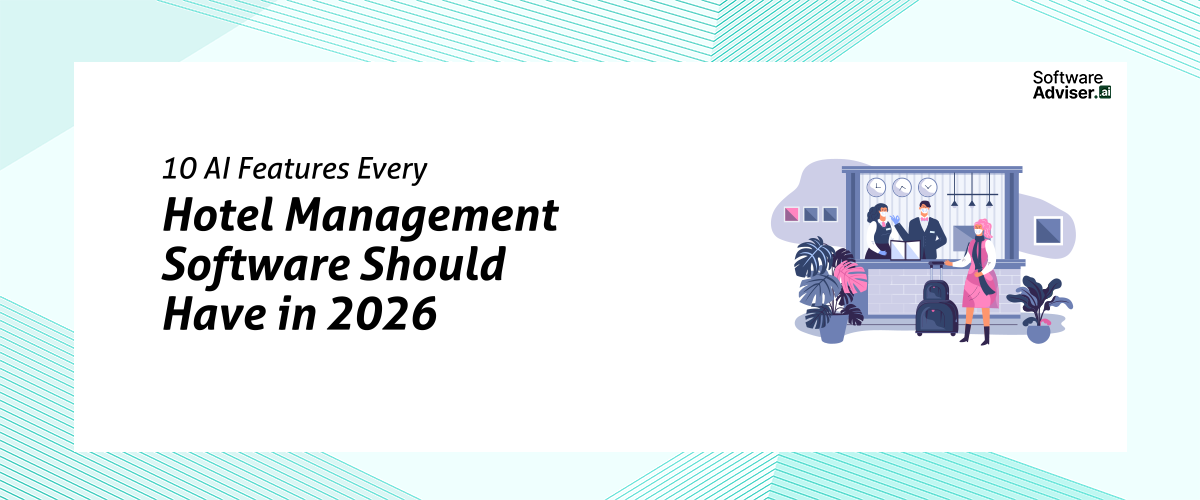
10 AI Features Every Hotel Management Software Should Have in 2026
 Dokas mile
Managing a modern hotel is a complex endeavor, with hundreds of details that must be constantly monitored and controlled to ensure that both operations and guest satisfaction remain on track. In today’s hospitality-driven economy, there is simply no room for error when it comes to tracking day-to-day statistics and ensuring smooth operations. Fortunately for modern hotel administrators, the previously necessary practice of manually entering or cross-referencing data has been significantly streamlined by the evolution of property dashboards. If you have ever found yourself scrambling to accommodate sudden cancellations or rushes of new arrivals, then an AI Hotel Management Software is the perfect tool for you.
 Looking for AI Hotel Management Software? Check out SaaS Advisor’s List of the Best AI Hotel Management Software in USA for Your Business
 Modern management solutions offer specialized classes of AI Hotel Management Software that allow properties to stay ahead of the curve with automated scheduling practices, dynamic pricing adjustments, and proactive customer relations. Just like companies deploy specialized AI Event Management Software to automate complex attendee tracking and coordinate hospitality logistics seamlessly, setting up an intelligent hotel platform removes the friction from guest administration. Let us examine the essential features that define modern hospitality tech.
Why Hotels Are Adopting AI
Old-school hospitality systems are entirely passive. They record all transactions and save room bookings, but they keep hotel managers in the dark about shifting market trends, unforeseen price cuts from competitors or room cleaning schedules. Next-generation Hotel Management Software redefines the entire set of features, offering to bring automated analytics into the heart of your daily hotel operations.
- The software helps optimize housekeeping, front desk operations, and maintenance while also reducing overall costs.
- Proactive Shift Scheduling The front desk procedures are optimized as the management can plan the staff schedule based on historical check-in/check-out data.
- No More Queues Guests do not have to wait to ask anything as all the recurring questions are handled by the bots.
- Rooms are Turned Over Faster: Housekeeping staff gets alerted to vacant rooms instantly after checkout, which helps them respond faster.
- Wastage is Minimized The inventory management feature ensures that there are no shortages or wastage at the kitchen or other utility units, thus saving costs.
Let’s suppose, as a hotel owner in Goa, you want to change your room tariffs during a long weekend holiday. If they use a regular legacy property management system, they have to manually watch competitor travel sites and edit rates row by row. By switching to an automated AI Hotel Management Software suite, the system scans local airline patterns, tracks rival pricing, and updates the hotel booking engine instantly. This extreme speed is why hoteliers universally prefer intelligent platforms over basic tracking apps.
10 Must-Have AI Features
To stay competitive in the modern travel industry, your property platform must do far more than just store reservation dates. The software needs to actively work behind the scenes to maximize profits and delight visitors. Let us look closely at the ten essential features every modern hotel management software should include.
1.Smart Dynamic Pricing
This technology allows your hotel PMS software to adjust room rates automatically based on real-time market changes. The software continuously evaluates local event schedules, weather alerts, and regional competitor updates. It raises prices during high-demand rushes and drops them slightly during slow periods to ensure your property hits maximum occupancy and optimal profit margins every night.
2.AI Chatbots
AI Chatbots: Answering identical questions about check-out timings, parking availability, or breakfast menus wastes precious front desk time.Smart chat interfaces help process tens of thousands of incoming requests on WhatsApp, SMS, and website portals. This makes sure that guests can get answers to their questions in no time at any point of the day without overwhelming your night reception desk.
3. Predictive Booking Analytics
Instead of looking backward at old reservation sheets, predictive models look forward to anticipate future occupancy trends. By evaluating historical travel trends and broader macroeconomic factors, this feature tells you exactly which weeks will see a surge in room bookings. It allows you to order kitchen supplies and coordinate staff counts weeks in advance.
4. Contactless Check-In
Modern guests are willing to pay any price for the ability to avoid the slow and annoying process of registering and checking-in upon arrival. Contactless check-in systems allow arriving guests to scan their documents, pay for their stay, and get a digital key to their room on their phones. This transforms the arrival process into a completely seamless, self-guided experience.
5. Personalized Guest Recommendations
Driving secondary revenue requires understanding what your guests actually want. This feature looks at a traveler's past trip choices and room requests to pitch targeted add-ons. If a corporate traveler regularly books evening spa sessions or late-night room deliveries, the hotel booking software sends personalized offers straight to their device during their stay.
6. Housekeeping Automation
Paper cleaning lists are highly inefficient and get outdated quickly. Modern guests are no longer willing to waste time waiting in long lines to check in after a tiring flight. Innovative contactless check-in systems allow arriving guests to scan identification documents, make payments, and obtain a digital key to their hotel room, enabling them to experience a truly self-check-in process using only their smartphone.
7. Revenue Forecasting
Long-term financial planning requires reliable, numbers-driven estimates. Revenue forecasting tools consolidate food sales, room clean costs, and cancellation metrics into simple financial reports. This gives hotel management clear, data-backed insights to plan major property renovations or expansion budgets without any guesswork.
8.Fraud Detection
Chargebacks and stolen credit cards cause massive financial headaches for modern property owners. Integrated security layers study digital booking behaviors to flag suspicious transactions instantly. If an automated system spots a high-risk reservation profile, it pauses the booking and requests multi-factor verification before any room is blocked.
9. Review Sentiment Analysis
Manually reading through thousands of reviews on Google, TripAdvisor, and Booking.com takes forever. Sentiment tools make all of those reviews easy to analyze in one place, sorted by topics such as 'cleanliness of the pool' or 'attentiveness of the staff'.It tells managers exactly what guests love and what parts of the resort need attention.
10. Smart Inventory Management
Keeping a hotel stocked with linens, premium toiletries, and kitchen goods requires constant vigilance. Smart inventory tracking monitors daily usage rates across all departments. When supplies drop below a specific limit, the hospitality software automatically generates purchase orders, preventing sudden shortages during busy holiday weekends.
Benefits for Hotels
Upgrading to an automated property management system brings massive advantages to everyday hotel workflows.The primary benefit is a major reduction in overall operational costs through AI Expense Management Software. Because smart bots manage the monotonous messages to guests while all the other modules take over modules for housekeeping, your crews are at liberty to leave the boring paperwork and concentrate on ensuring guests have a fantastic time.
Another advantage is the eradication of pricing errors. Manual pricing models often miss sudden market spikes, causing hotels to sell rooms too cheaply during major city events. Modern hotel software updates rates every few minutes across all booking portals simultaneously. This constant adjustment protects your revenue and increases your average daily room rates effortlessly.
Finally, these advanced platforms keep your digital guest files perfectly secure. They safely organize contact histories, payment preferences, and room requests under strict data protection rules. By merging secure booking paths, smart room pricing, and automated room tracking, this technology ensures a smooth, highly profitable hospitality operation.
Small Hotel vs Large Hotel AI Needs
The ideal technology package will be largely dictated by the scale of your enterprise, your customer base, and the number of rooms. What you need for a small-scale Bed and Breakfast in the mountains would be inappropriate for a large-scale hotel in the city. Let us look at how property size changes software priorities:
- Small Boutique Hotels: For small properties, the focus is on time-saving automation. Owners want easy-to-use hotel software that would handle channel management and reply to chats in real-time so that housekeeping, front-desk, and payments are taken care of with a small team of only three or four people.
- Large Resorts and Chains: Hotel owners in this category focus on heavy data processing and department coordination.They rely on heavy-duty hotel PMS software to link multiple restaurant kitchens, spa databases, and internal laundry systems together. They use predictive modeling to track food waste and rely on AI Workforce Management Software to handle shift schedules for hundreds of contract employees across multiple locations.
Best Hotel Management Software with AI
Finding the right utility can get tricky with so many platforms available. In order to save your precious time, we have compiled this list of the best modern solutions in the sphere of hotel management software. All of them are considered to be the most prominent systems in terms of performance, variety of functions, and ease of use.
1.Cloudbeds
Cloudbeds has been recognized worldwide as an innovative technology platform for independent and boutique hotels, hostels, and other hospitality SMEs. The software offers a cloud-based property management system, channel manager, and booking engine. One of the biggest advantages of this solution is the powerful automated room distribution function. The application can make your business more competitive by automatically adjusting room rates in real-time while maintaining availability across all channels.
Cloudbeds can help you to maximize revenue with its specific pricing algorithm. It ensures that your property achieves a balanced supply-demand across all online travel agencies without overselling.It is widely considered an excellent, highly dependable property management system for growing hospitality businesses.
2.Opera Cloud by Oracle
For major international hotel chains, luxury resorts, and multi-location hospitality groups, Opera Cloud represents the industry gold standard. This incredibly secure enterprise platform is engineered to handle dense corporate data flows and deep guest tracking.
Opera uses advanced data layers to sync guest preferences across different properties worldwide. If a guest requests a specific pillow type in London, the system flags that choice for their upcoming stay in Mumbai automatically. It remains the top choice for complex, high-volume resort networks.
3.Mews
Mews is celebrated for its incredibly modern design and its unique, mobile-first approach to guest management. It treats guest check-ins like an online shopping checkout, completely doing away with old-fashioned front desk constraints.
The platform relies heavily on cloud automation to cut down administrative work. Mews has got a great application marketplace offering to connect hoteliers' self-learning locks, automated accounting software, and specific local tour platforms with just a click of a button. It is perfect for progressive hospitality innovators.
4.RMS Cloud
RMS Cloud has delivered reliable property tracking solutions for over thirty years, specializing in hotels, serviced apartments, and holiday RV parks. Its modern cloud dashboard combines deep channel management with robust guest profiling.
RMS uses automated triggering to send targeted text alerts and email updates to travelers before they arrive. Its smart scheduling grid makes it easy for front desk managers to shuffle room allocations, handle early check-ins, and track outstanding bills, making it a highly reliable hotel booking software solution.
Conclusion
Traditional property tracking has transformed from a basic reservation grid into an active business manager. For the vast majority of independent hotel owners and boutique properties who need to save time and boost room sales, tools like Cloudbeds and Mews provide the perfect balance of an easy interface and smart pricing features. They manage daily bookings and channel links beautifully, making them great assets for modern hoteliers.
FAQ's
Most modern hospitality platforms are built with flexible integration layers that connect with existing electronic door systems, payment gateways, and keycard scanners easily. You do not need to tear out your current hardware to upgrade your system.
Smart pricing modules monitor local news sources and travel tracking networks constantly. If a major city concert gets canceled or severe rain causes flight delays, the software registers the sudden drop in local search volumes immediately.
Trusted software developers use enterprise-grade encryption pathways and comply fully with strict payment security standards like PCI-DSS to handle card transactions safely.
Yes, small properties often gain the most from automation because they operate with very limited staff numbers.
Putting an Artificial Intelligence AI Employee Assistance Program (EAP) into a workplace can, like, really modernize the way your organization support [...]
Dokas mile
A typical pharmacy will experience a massive shift to digital by 2026. The changing needs for healthcare and the continued decline in margins are lead [...]

David N. Wilks
Retail in the United States is undergoing a huge transition as brick-and-mortar establishments and e-commerce platforms battle to suit the wants of th [...]