
What we'll cover
Share with your community!


Get Free Consultation
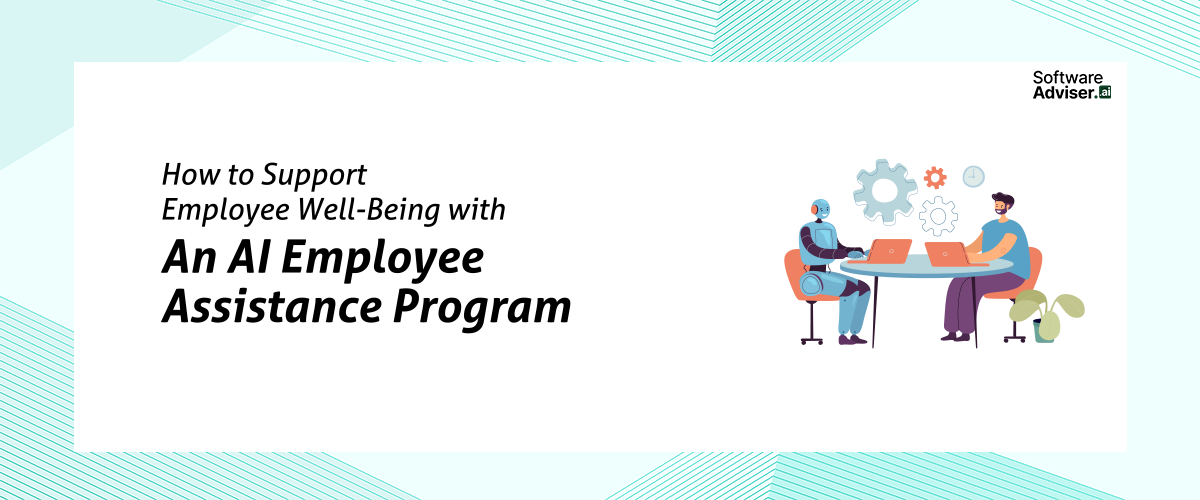
How to Support Employee Well-Being with an AI Employee Assistance Program
 Dokas mile
Putting an Artificial Intelligence AI Employee Assistance Program (EAP) into a workplace can, like, really modernize the way your organization supports the team's mental, emotional, and also the practical parts. Many older Employee Assistance Programs (EAPs) are significantly underused, both due in part to the stigma that still exists about EAPs and because people tend to wait far too long to reach out. AI-powered systems serve a crucial role in bridging the gap, insofar as they offer employees immediate access that is private, convenient, and feels more like a pal than a formal point of contact. Instead of generic brochures, employees can get personalized mental health resources, useful stress management routines, and step-by-step guidance when they need it. Then, when machine learning is used to interpret employee sentiment, and organizations can nudge proactive, tailored wellness interventions, it creates a culture of care that is unusually reachable. In other words, it meets modern workers right where they are, not somewhere farther away that they have to search for.
What is an AI Employee Assistance Program?
An AI employee assistance program is a type of digitally advanced version of a conventional employer-provided program intended to address employees’ well-being, although the name of the program is somewhat of a misnomer. In the U.S., where burnout and mental health issues are being increasingly connected to retention and productivity at work, these programs often update or build new systems using digital interfaces that cover the formerly used phone counseling service. The AI EAP utilizes AI and natural language processing technologies and personalized algorithms and provides American employees with fast and completely confidential access to various mental health services, stress reduction solutions, financial wellness solutions, and life balance practices through their laptops and smartphones.
From a compliance and day-to-day operations angle inside the US corporate world, these platforms are set up so they can move through demanding regulatory terrain, including HIPAA privacy expectations and ERISA requirements. Rather than waiting for days while an intake coordinator catches up, an employee who’s dealing with urgent stress or trying to find childcare options can talk to an intuitive AI interface that basically gauges what they need right away. If the system spots high-risk signals or if the user asks for human help, the AI escalates the situation in a secure, seamless way, routing the employee to licensed American clinicians, specialized counselors, or corporate HR benefits, without exposing their identity to the employer.
Why do US employers need an AI Employee Assistance Program?
US employers are running into this kind of workplace AI employee mental health thing that feels, honestly, unprecedented, like burnout, anxiety, and chronic stress are pushing absenteeism and costly employee churn to levels people can’t really remember. The old-style EAPs, sure, they sound good on paper, but in the American corporate reality, they are pretty broken. They end up with dismal use numbers usually somewhere under 5%—and it’s mostly because employees worry about privacy, and there’s also this stubborn social stigma around getting mental health help through work. If a company puts in an AI-powered EAP, it can get past those barriers and give American workers this fully anonymous, low-friction path to support that removes the worry of HR “watching” and still offers instant care, 24/7.
And from a dollars-and-sense angle, the business case looks strong for US organizations, especially with self-insured healthcare premiums climbing, and productivity loss getting more expensive every quarter. In the usual US benefits setup, brick-and-mortar EAPs often depend on slow, manual intake, so someone might wait weeks before they even see a counselor. During that time, a small mental health problem can morph into something worse, like a costly short-term disability claim or a sudden resignation. AI EAPs help reduce those financial risks by stepping in early, with immediate automated, evidence-based interventions—think CBT-style exercises, plus tailored stress-reduction routes—so workers stay healthier, more engaged, and actually at work.
Today’s fragmented, multi-generational US workforce, it really spans remote, hybrid, and frontline environments, so it needs a benefits framework that keeps up with the on-demand speed of modern life. An AI EAP can act as a smart central hub that ties employees together not only with mental health help, but also with those more complicated, underused US employer benefits such as 401(k) support, financial wellness coaching, plus HSA and FSA guidance, and even specialized childcare or eldercare finders. If leaders use data-driven sentiment checks to spot overall workplace stress signals without exposing personal identities, American executive teams can finally move past the reactive crisis loop and start leaning into proactive, strategic organization-wide wellness.
How does an AI Employee Assistance Program support mental health?
An AI Employee Assistance Program sort of supports mental health by taking the whole employee experience, and turning it from reactive, crisis-based searching for help into something more proactive, kind of continuous, like an ecosystem of care, the platform behaves like an intelligent, first line digital companion that is available 24/7 and it gives American workers immediate relief when the moment feels really acute, like high stress, anxiety, or even panic without all the annoying friction of waiting weeks for AI employee scheduling work. The method of implementation is through interactive chatbots, which are developed using clinical methods like Cognitive Behavioral Therapy (CBT) as well as mindfulness techniques, to assist users with their unique practices, mood tracking, and processes to alleviate stress right from their devices. Due to the ease of access, it lowers the entry barrier for many users who might otherwise shy away from seeking help because of the stigma related to mental health in the workplace.
Beyond standalone digital tools, the AI improves clinical outcomes by sort of tightening that gap between automated support and real, live human involvement. It uses advanced natural language processing and machine learning algorithms to watch user interactions in real time, then it screens for early clues of severe distress or cognitive overload. If the system spots high-risk signals or the clinical situation looks complicated, it immediately kicks in built-in safety protocols and, in a kind of dynamic way, triages the person to the right care level. That might mean routing them to 988 crisis lines, or linking them with specialized, licensed American therapists, based on demographic preferences and acuity. And also, for employees who are going through normal counseling, the AI works like ongoing care reinforcement, providing between-session tracking and administrative summaries that help curb clinician burnout. Overall, it should lead to a more responsive and more integrated mental healthcare experience, even when everything is happening fast.
What Features should a good AI Employee Assistance Program include?
An all-encompassing, compliant EAP specifically designed to operate within the boundaries of US law needs to be centred around the principles of accessibility, reliability, and intelligence. For a fully functional solution that greatly enables an increase in employee satisfaction, it should comprise the six essential components:
1. 24/7 Conversational AI and Digital first aid
The platform should have a natural language processing (NLP) interface that feels intuitive, almost human. It needs to deliver immediate, round-the-clock mental health support, like truly right now. Instead of employees waiting for business hours or dealing with complicated, repetitive phone menus, they can talk with an AI that’s been tuned using clinically validated approaches. Think Cognitive Behavioral Therapy (CBT) and mindfulness, not vague advice. In practice, this becomes a kind of digital first-aid response for real-time stress, anxiety, or burnout management. And yes, it helps avoid that multi-week delay where someone is waiting on an intake coordinator.
2. High-Acuity Triage with Smooth Human Escalation
Even though AI works really well for day-to-day strain, the system has to include clear guardrails for higher-severity situations. So the program should use advanced semantic analysis to notice high-risk wording or other crisis signals as they happen. Once those risk thresholds are crossed, the AI must quickly start an automated warm handoff to real, live, licensed American clinicians, or to emergency services (including the 988 lifeline). The idea is to skip the usual automated script when human empathy is the most important piece.
3. Absolute Anonymity and Ironclad HIPAA Compliance
Since the biggest barrier to a more standard EAP rollout is usually the anxiety around HR watching, the AI platform really has to lean into a privacy-by-design setup. For US employers, that translates into full HIPAA compliance and a stack of rigorous encryption protocols. The AI should make sure every person's interaction stays strictly confidential, and it should fully isolate any personal health signals from the employer’s HR databases, even if someone tries to look around for them.
4. Holistic Work-Life Benefit Integration (The Unified Hub)
Mental health struggles don’t usually happen in a vacuum; they often get fueled by outside stressors like money pressure or childcare situations. A good AI EAP works like a thoughtful dispatcher across the employer’s whole US benefits ecosystem. It should ingest corporate benefits documentation, so it can steer employees toward underused supports, and in the middle of all that, it can answer questions about 401(k) financial planning, HSA/FSA allocations, or emergency eldercare locator options, without sounding too rigid.
How can an AI Employee Assistance Program boost workplace productivity?
1. Cuts down Unexpected Absenteeism
With always-on, 24/7 access to stress-management tools, the AI keeps small mental health issues from turning into pricey short-term disability cases or random, sudden sick days.
2. Reduces the Quiet Cost of Presenteeism
The system gives quick digital relief for anxiety and cognitive overload, so employees can sort their head out, come back to focus, and remain mentally involved while they're still at work.
3. Gets Back Hours Wasted on Benefits Confusion
The AI works like an instant helper for confusing US benefits, handling those annoying personal logistics faster, like finding childcare locators or figuring out 401(k) and HSA guidelines right during the workday.
4. Speeds Up Recovery With Better Triage
When real human support is needed, the AI sidesteps the typical American healthcare delays by matching employees immediately with the appropriate licensed therapists, so people spend less time offline or stuck in crisis.
5. Helps Managers Prevent Burnout Before It Spirals
By looking at aggregate, anonymous workplace mood signals, the AI HR software teams spot localized operational snags and workload imbalance sooner, before it starts ruining team delivery and output.
Is an AI Employee Assistance Program Right for your US-based Team?
An AI Employee Assistance Program (EAP) is proving to be a highly effective solution for many modern US workplaces, but it isn’t a one-size-fits-all fix. Determining if it is the right match for your organization requires evaluating your specific workforce makeup, current benefits engagement, and operational goals.
- Low traditional EAP use, kind of Tragic: In the US, the national average for traditional EAP utilization is sitting around 3% to 5%. If your firm is paying flat PEPY (Per Employee Per Year) fees for an older service that most people just tune out, then an AI platform can lower the entry friction in a big way and pull people into active engagement.
- A Workforce spread across places, not just Buildings: If you’re dealing with remote, mixed, or 24/7 shift teams across different US time zones, those traditional brick-and-mortar office hours really don’t match reality. An AI EAP can deliver the same support right away at 2:00 AM in New York, as easily as it does at 2:00 PM in California, no juggling schedules or waiting around.
- Stigma and Confidentiality worries, constantly in the Background: Many American employees are pretty reluctant to tap employer-provided mental health benefits, because they worry HR will somehow learn. A true “privacy-by-design,” HIPAA-compliant AI EAP builds a tight barrier between what users say or do in-session and company leadership. That kind of trust is what helps employees actually reach out, rather than just thinking about it later.
- Healthcare costs are climbing, not politely: When premiums are rising, absenteeism is spiking, or there’s a noticeable uptick in mental health-related short-term disability claims, an AI EAP works like an early-response mechanism. It catches the small stressors sooner, before they snowball into expensive clinical claims.
How do you successfully roll out an AI Employee Assistance Program?
Deployment is where well-intentioned programs succeed or stall. A structured approach matters.
1. Assess organizational Readiness: Before picking a platform, do a quick audit of your data security protocols, your current wellness offerings, and the workforce demographic. Run anonymous surveys to see how employees feel about AI-based tools and yes, take the results seriously, even if they’re not perfect.
2. Select a clinically validated Platform: Go with a vendor that has a transparent methodology, third-party clinical validation, and solid data governance. Confirm HIPAA compliance and make sure you understand how employee data is stored, anonymized, and safeguarded. If something is fuzzy, ask again.
3. Communicate early and clearly: Spell out what the program actually does, what data it collects, and what happens with it after. Use multiple channels, such as town halls, emails, manager briefings, and even short internal updates. People who understand the system are usually far more willing to engage it; in one Vantage Fit survey, 47.4% of employees said they valued the autonomy that anonymity provides.
4. Integrate with existing Benefits: Frame the AI Employee Assistance Program as an add-on to your wellness program, not as a swap. Coordinate with your existing counselors, benefits portals, and HR systems, so it feels familiar, not forced.
5. Train managers, not just Employees: Managers are often the first ones noticing shifts in behavior. Give them ready language and a basic playbook for steering team members toward supportive resources, without crossing boundaries or getting too involved.
6. Measure, then iterate: Set baseline metrics before launch, things like utilization rates, absenteeism signals, and engagement scores. Revisit quarterly, and adjust based on observed usage patterns rather than guesses, or what might happen scenarios.
Conclusion
Going with an AI Employee Assistance Program isn't some far-off dream anymore it has turned into a smart, almost required move for US employers that want a workforce that can keep going and stay productive. When you chip away at the usual obstacles, like that stigma people carry around and the slow wait times, these platforms start offering quick, private help that actually protects your team's well-being. And once you feel it’s time to upgrade your workplace benefits infrastructure, take a look at softwareadviser.ai. It works as a strong B2B marketplace, so you can smoothly browse high-quality options, compare important capabilities, and lock in the right technology stack to sharpen your organization's overall wellness direction.
FAQ's
No, it serves as an immediate first line of support that handles everyday stress while seamlessly triaging high-acuity or crisis cases to live, licensed human professionals.
Leading platforms utilize strict "privacy-by-design" architectures, end-to-end encryption, and full HIPAA compliance to ensure individual employee data is never visible to HR or company leadership.
Yes, by intervening early with automated mental health tools, it prevents minor personal stressors from escalating into expensive medical claims, emergency room visits, or short-term disability leave.
It eliminates friction by offering completely anonymous, instant 24/7 access through everyday workplace tools like Slack or Microsoft Teams, removing the stigma and scheduling delays of legacy hotlines.
HR teams receive completely anonymized, high-level aggregate sentiment data that highlights macro-level workplace trends, helping leadership identify departmental burnout without exposing individual identities.
For years, sales teams were stuck using CRMs they grumbled about daily. Meant to simplify tasks, these tools too often piled on chores, typing endless [...]

David N. Wilks
The social media world is changing. As experienced by many agencies, managing multiple brand handles involves a lot of manual management of content ca [...]
David N. Wilks
A major promotional campaign needs to go live tomorrow morning. The internal design team is fully booked with long-term product releases, the standard [...]