
What we'll cover
Share with your community!


Get Free Consultation

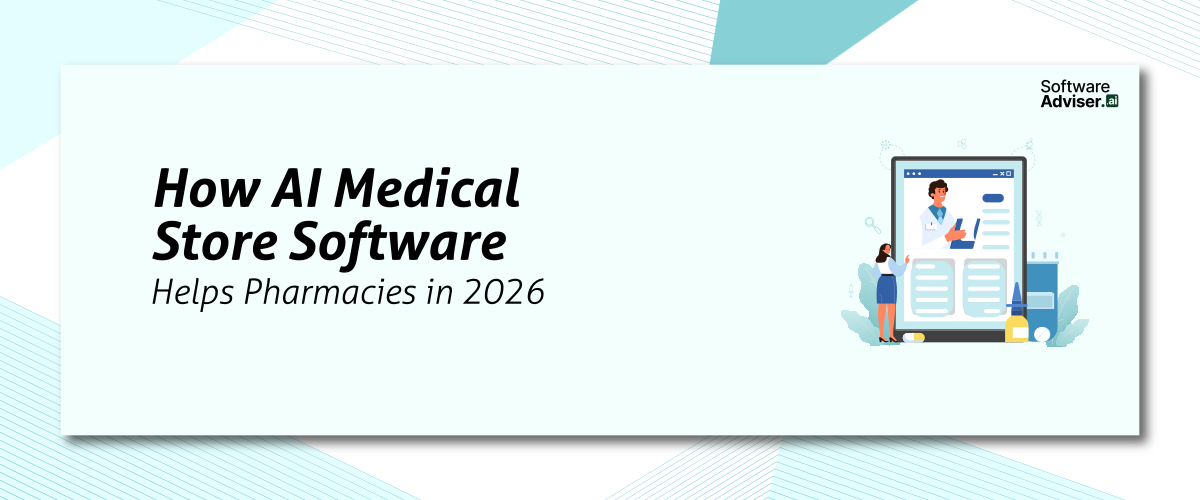
How AI Medical Store Software Helps Pharmacies in 2026
 David N. Wilks
A typical pharmacy will experience a massive shift to digital by 2026. The changing needs for healthcare and the continued decline in margins are leading pharmacies across the US, to move beyond just dispensing pills into health hubs for their communities. Artificial intelligence-based pharmacy point-of-sale systems are the new technology of the moment because they provide a way to take chaotic, daily practice procedures and turn them into predictive workflows. By using artificial intelligence for a lot of the administrative burden that comes from managing data on patients, pharmacy owners will, in turn, decrease overhead, protect their margins while reclaiming valuable clinical time; therefore allowing more time for patient care.
What Is AI Medical Store Software?
AI Medical Store Software, often known in the US Market as an AI-powered Pharmacy Management System (PMS), is a cloud-native platform that automatically manages, optimizes, and secures everyday pharmacy operations. This isn’t old, reactive software that tracks sales and prints prescription labels. This smart ecosystem brings machine learning, natural language processing (NLP), and powerful computer vision straight into the pharmacy workflow. It’s a self-contained digital technician that manages high-volume administrative tasks, integrates natively with electronic health records (EHRs), and delivers real-time clinical information to preserve patient health.
This software is the backbone of operational survival for individual pharmacies and huge retail chains alike in the heavily regulated United States healthcare scene. The platform prevents massive margin compression and staff burnout by automating repetitive and error-prone processes such as insurance adjudication, sophisticated medical coding, and rigorous inventory demand forecasting. Ultimately, AI medical store software transforms the modern American pharmacy from a highly stressed, transactional dispensing storefront into a highly efficient clinical hub focused on proactive patient care and optimum clinical results.
How Does AI Medical Store Software Improve Inventory Management?
Pharmacy inventory management across the US has always been a high-wire act – with overstocking tying up vital working capital and understocking translating into lost income and disturbed patient care. Embedding artificial intelligence directly into an enterprise AI pharma ERP substantially changes this challenge with Predictive Demand Forecasting. AI engines don’t only use basic, backward-looking reorder points. They mix dynamic data sources, including detailed past sales trends, fluctuating seasonal illness patterns, and local demographic health changes. The program can estimate consumption weeks in advance so that the right fast-moving generics and the right high-cost specialty medications are ordered at the right time to reduce dead stock and provide the on-hand amounts needed.
“Modern platforms also greatly improve financial health through automated Inventory Turn Optimization and the elimination of waste. AI-driven systems dynamically monitor drug shelf-life and expiry dates in real time, automatically detecting goods as they approach their 30-, 60-, and 90-day windows to trigger automated return-to-vendor processes for maximum credit. Pharmacies may easily defend their dwindling margins by leveraging Intelligent AI document management to scan wholesale invoices and validate incoming supplies against negotiated prices. The program operates as a watchful guardian of stock velocity, delivering a lean cash flow cycle that frees up capital without sacrificing on ensuring the shelves are perfectly stocked to community demand.
This smart inventory loop is intimately interwoven in the whole clinical and financial ecosystem inside the US healthcare sector. With strong Electronic Health Record (EHR) Integration, the system sees what therapies are being prescribed at nearby clinics in real time and can adjust ordering patterns before the customer ever walks into the store. As prescriptions are processed through Real Time Adjudication and Automated Prior Authorization, the program cross-references immediate stock changes with Medication Adherence Analytics to predict future refills. The whole architecture is a HIPAA-Compliant Secure Software Architecture that collaborates with a complete Clinical Decision Support System (CDSS) to allow safe therapeutic alternatives during medication shortages. This multi-layered connection guarantees that the best inventory management translates into safer, uninterrupted patient care and less administrative friction.
How Does AI Medical Store Software Reduce Prescription Errors?
Prescription errors are one of the biggest risks and dangers to patient safety in U.S. healthcare, resulting in the deaths of 7,000 to 9,000 Americans per year from drug blunders. AI medical store software is an absolute clinical safety net with deep data integrations and pattern recognition algorithms to prevent human errors before a drug leaves the pharmacy counter.
1. Cutting Out Manual Transcription & Intake Slip-Ups
In the past, the ingestion phase of a prescription has been the fertile ground for numerous manual mistakes to be rooted in. When paper scripts, faxes, or non-standard electronic orders come in, tired workers have to decode handwriting and key in extremely detailed data. Today, Intelligent Document Processing (IDP) in software totally automates this intake loop.
Advanced optical character recognition (OCR) and natural language processing (NLP) rapidly extract accurate medicine names, precise doses, and patient instructions. The program cross-references the data with standardized National Drug Code (NDC) directories and highlights illegible or statistically unlikely doses, thereby reducing data entry errors.
2. Context-Aware Alarming and Interventions
Old pharmacy management systems use inflexible rule-based warnings that trigger for every small cross-reaction indiscriminately. Pharmacists, by mere habit, override important alerts, eventually leading to alert fatigue. AI redefines the safety layer via a contextual Clinical Decision Support System (CDSS).
With extensive Electronic Health Record (EHR) Integration, the AI engine dynamically evaluates the patient’s longitudinal medical history and does not only look at the immediate medicine bottle. It looks at test findings as they happen in real time (kidney function, liver function, etc.), demographics, and past adherence habits. If a medicine is technically prohibited, but safe for this particular patient’s unique lab profile, the system reduces the noise, so when an alarm does fire, it is extremely accurate, contextually relevant, and impossible to ignore.
3. Accuracy of Visual Checking and Dispensing
The final area of vulnerability is at the actual dispensing counter, where look-alike, sound-alike (LASA) drugs (hydrocodone vs hydroxyzine, for example) might be readily misconstrued by a rushed technician. The AI does this using camera-aided computer vision that is embedded into the workflow.
During the counting and bottling stage, high-speed imaging gear captures the form, color, imprint, and text of the pills on the tray as well as the barcode printed on the bulk manufacturing container. The program then compares those physical visual qualities to an identical representation in the database. The workstation instantly goes into lockdown if a technician mistakenly draws a 50mg dose instead of a 25mg dose, or if two similarly shaped white pills are confused. The container is not allowed to move ahead until a manual double-verification is conducted.
How Is AI Medical Store Software Changing US Pharmacy Operations?
1. Demand & Stock Replenishment Forecasting
AI models fully automate the retail supply chain by aggregating changing seasonal illness cycles and localized EHR demographic data.
The program estimates the best inventory turnover rates automatically, eliminating dead stock, while avoiding unexpected shortages of important pharmaceuticals.
2. Automated Outreach & Interactive Communication Tiers
Integrated voice and text channels manage routine refill requests, order updates, and patient questions autonomously.
The technology handles basic phone functions and digital communications, cutting overhead expenses and eliminating huge administrative bottlenecks for workers.
3. Intelligent Document Processing for Prescription Intake
Advanced machine learning algorithms scan and absorb untidy handwritten, faxed, or digital medical documents immediately.
The technology pulls in accurate medicine codes, doses, and patient details, substantially cutting down verification times while also reducing data-entry errors.
How Does AI Medical Store Software Help with Regulatory Compliance?
In the highly regulated US pharmacy ecosystem, AI-powered medical store software is a crucial compliance barrier, safeguarding pharmacies from catastrophic audit failures, heavy government penalties, and possible loss of operating licenses. One of the key compliance pillars the software addresses is final phase enforcement of the Drug Supply Chain Security Act (DSCSA). The newest in AI software uses intricate serialization repositories and electronic tracking of data files to keep a constant, legally compliant paper trail of every prescription drug package that comes through the pharmacy.
The platform uses machine learning algorithms to instantly validate National Drug Code (NDC) information, lot numbers, and transaction statements against approved trading partner registries, automatically flagging, quarantining, and recording suspicious or potentially counterfeit drug shipments so the business is fully protected in the event of a sudden FDA track-and-trace audit. AI solutions provide perfect compliance with the stringent federal Drug Enforcement business administration rules governing restricted drugs.
The program uses specialized AI monitoring tools that cross-reference real-time dispensing records with wholesale purchase data via Controlled Substance Ordering System (CSOS) digital processes instead of paper logbooks that may be easily altered or spreadsheets that can be lost. This permits automatic ongoing perpetual inventory reconciliation of Schedule II through V drugs. It works as a super-sensitive internal watchdog, using behavioral analytics to identify any aberrant drug diversion trends or unlawful employee access in real time. The platform also offers the assurance that all transactions are compliant with federal oversight, easily managing the required identity proofing, biometric two-factor authentication, and tamper-resistant digital signatures for Electronic Prescription of Controlled Substances (EPCS) within a secure, HIPAA-compliant framework.
How Does AI Medical Store Software Enhance Customer Experience?
Instant Refill Notifications: Automated predictive analytics monitor patient medication cycles and proactively deliver multi-channel refill reminders before a prescription even expires.
Reduce Checkout Wait Times: Automated prescription input and faster insurance processing mean that orders are waiting the minute a patient gets to the counter.
Fewer Unexpected Copay Surprises: Real-time billing engines check insurance formularies to provide precise out-of-pocket expenses and immediately offer cost-saving manufacturer discounts.
Personalized Health Communications. Interactive AI messaging technologies provide immediate responses to common drug and side-effect questions, offering customized healthcare advice to a patient’s smartphone.
No more delays due to out-of-stock situations: thanks to smart inventory tracking, high-demand treatments and specialty chronic drugs are always accessible on the shelves at exactly the right moment when patients need them.
What Are the Top Features of AI Medical Store Software in 2026?
1. Demand Planning & Automated Replenishment
AI algorithms dynamically adapt stock arrangement by continually monitoring localised epidemiological trends, seasonal weather changes, and live clinic data.
This feature removes the potential for manual entry errors, automating reorder frequencies for high-cost specialty biologics altogether, but keeping low inventory overhead.
2. Intelligent OCR-based Invoice Processing
High-resolution optical character recognition (OCR) scans supplier invoices from paper or digital to rapidly complete inventory entries.
The technology pulls item names, individual lot numbers, manufacturer discounts, and accurate expiration dates without the need to type data in on a single line.
3. Biometric Smart-Cabinet & Locker Synchronization
Cloud-connected locker units that can only be opened with facial or fingerprint identification for secure storage or dispensing of high-risk controlled drugs.
All item access events are logged in real-time to a centralized regulatory dashboard that provides an immutable audit trail for federal compliance.
4. Contextual Prior Authorization Automation
Real-time checks against insurance rules and formulary lists by integrated medical networks speed complicated authorization operations.
The software pulls in essential clinical information from electronic health files to enable speedy coverage approvals for critical treatments.
Conclusion
AI medical store software is no longer a forward-looking competitive advantage for US pharmacies in 2026, but a must-have for operations, battling margin compression and labor shortages. The system automates high-friction administrative chores like insurance adjudication and compliance tracking, allowing pharmacists to practice at the top of their professional licenses as essential community health hubs. SoftwareAdviser.ai is a must-have SaaS marketplace for pharmacy owners who want to safeguard their bottom line and elevate patient care by being able to find, evaluate, and buy the right AI-powered management software for their specific company infrastructure easily.
FAQ's
Costs vary widely based on pharmacy size, features, and deployment. Many platforms use subscription pricing that scales with your needs. Cloud-based options often lower upfront costs, and prices continue to fall as the technology becomes more accessible.
It depends on the platform. The smoothest rollouts come from software that integrates with your existing pharmacy management system. Tools that require staff to switch between separate systems tend to slow adoption, so prioritize seamless integration.
No. The software automates repetitive tasks and flags risks, but pharmacists make the final clinical decisions. AI frees up their time for patient counseling and high-value services rather than replacing their expertise.
Leading platforms are built to support US requirements, including DSCSA traceability and serialization. Always confirm a vendor's compliance features and data security measures before adopting.
Independent pharmacies facing staffing shortages, tight margins, or compliance pressure often see the fastest returns. That said, pharmacies of any size can benefit from reduced waste, fewer errors, and better patient engagement.

The digital design scene is totally different now because creative work has gone from time-consuming hand rendering to instant visualization. The mark [...]

Dokas mile
Putting an HR chatbot powered by Artificial Intelligence (AI) into a U.S. workplace is kinda, at this point, pretty normal, especially for a lot of to [...]
David N. Wilks
Production houses face a severe computational and creative bottleneck. Traditional polygonal sculpting, topology mapping, and asset rigging consume hu [...]