
What we'll cover
Share with your community!


Get Free Consultation
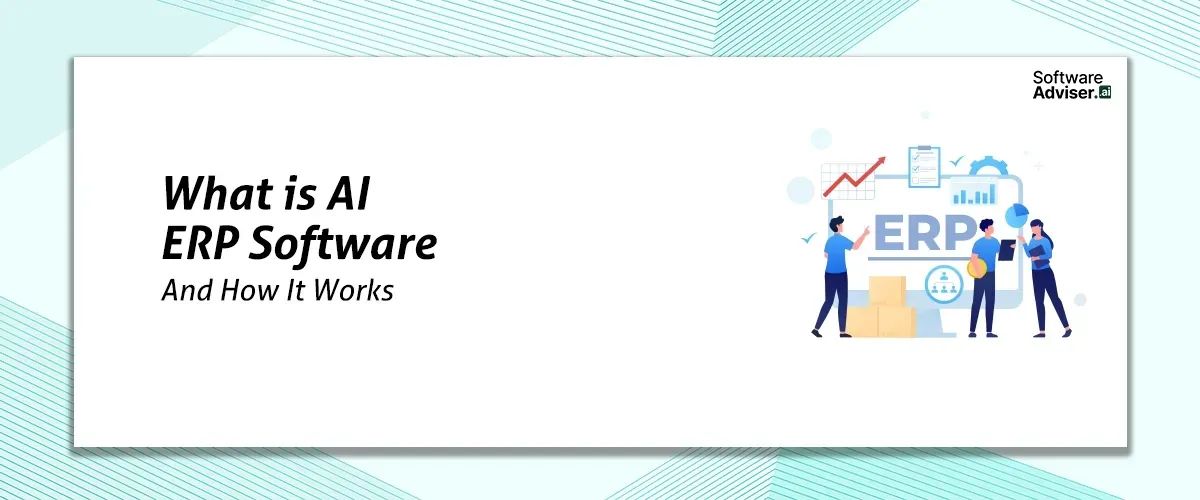
What is AI ERP Software and How It Works
 David N. Wilks
The introduction of AI ERP (Artificial Intelligence Enterprise Resource Planning) is changing the way that organizations function in the modern world. ERP systems have historically been used as a central location to manage business functions such as finance, HR, and supply chain daily, but they have been heavily dependent on manual data entry and static reports. Through Machine Learning (ML), Natural Language Processing (NLP), and sophisticated analytics, AI ERP software makes data actionable by changing old ERP systems to become agile and self-optimizing. Automated repetitive processes will be possible as enterprises can create predictive market analytics and receive immediate insight into market activity, and replace reactive management of the company with proactively managing the business. The days of tracking data are over; enterprises must understand what this data means.
What is AI ERP Software?
AI ERP software provides the next level of advancement in technology that aids in managing businesses through better automation and tracking of activities. Standard ERPs have served as a database where manual entry for financial management, human resources, and supply chain was completed. By incorporating advanced technology such as machine learning, natural language processing, and predictive analytics, AI ERP software is changing this traditional static way of doing business by converting what was primarily an inactive source of business data into an active source of data capable of optimizing itself.
With the ability to constantly analyze data throughout the entire enterprise, AI ERP software will continually analyze data across an enterprise and help to reduce human error through continuous improvement and process efficiency. Rather than simply capturing past events, AI ERP will forecast future historical trends, automate repetitive manual activities that are administrative in nature, provide real-time actionable insights, and allow for a transition from reactive response to proactive strategy for modern U.S. businesses, thereby increasing the speed and efficiency of business while simultaneously reducing overhead.
How does AI ERP Software Work?
AI ERP software serves as the hub for a company's central nervous system, intelligently aggregating real-time data from all departments, including finance, human resources, inventory, and sales, into a single database. Traditional ERPs depend on manual data entry and use static time restrictions to record information, but AI ERPs use automated data pipelines to ingest data in real time. Once the combined data is stored together, machine learning algorithms and natural language processing engines immediately begin their work, scanning the entire operational landscape for any previously hidden patterns, anomalies, and inefficiencies, which human analysts may have missed.
As soon as all data has been ingested, AI ERP Software moves from analysis to action via predictive modeling and AI workflow automation. The AI compares real-time operational statistics against historical trends as well as external market trends in order to make predictions about future performance (such as predicting equipment failure, anticipating stock shortages, or identifying trends in consumer behavior).At the same time, RPA technology performs repetitive tasks such as automatically matching supplier invoices with their relevant documents; generating complex finance reports; and automatically triggering reorder requests when inventory levels fall below set threshold values without needing human intervention on the task being done.
With AI-enabled ERP, business owners now can connect with their enterprise data as an engagement partner in their decision-making processes versus having to write complex SQL queries or create spreadsheets from scratch, instead they can pose a question to the ERP system (e.g. how will delays in shipping to Asia affect our margins for 3rd quarter?) and then receive an immediate response as well as actionable and measurable results with prescriptive recommendations provided by the ERP system.
What are the Benefits of AI ERP Software for US businesses?
1. Drastically Reduce Operational Expenses: AI-powered ERP software automates high-volume repetitive administrative processes, including data entry, invoice matching, and compliance reporting. By using RPA (Robotic Process Automation), businesses can greatly reduce the cost of labor and decrease the costly human errors created by manual work processes.
2. Hyper-Accurate Demand Forecasting: The software analyzes a huge (terabyte-level) amount of historical sales data, in addition to real-time US market conditions as well as economic indicators, using machine learning algorithms. To optimize inventory levels, lower inventory carrying costs, and avoid stockouts, businesses can predict customer demand with great accuracy.
3. Improved Cash Flow & Financial Management: AI ERP technology provides automated accounts receivable and AI accounting software, maximizing a business's working capital and speeding up billing cycles. The software will help businesses identify delayed payments before they cause harm to the business operation, and use predictive analytics to create future scenario cash flow projections under various economic conditions.
4. Robust Supply Chain Optimization: The unpredictability of logistics has changed how businesses must manage their supply chains, both globally and domestically. AI ERP technology continuously monitors both global and domestic supply chains. The software automatically identifies any potential shipping delays, evaluates the performance of suppliers and vendors, and enables the business to determine the best method of delivery or change to a different supplier in order to continue operations without interruption.
5. Proactive Machine/Asset Maintenance: In the US manufacturing, distribution, and logistics industries, unplanned downtime is extremely costly. AI ERP solutions assist businesses in managing unplanned downtime through the use of analytics that help them assess and anticipate equipment and/or asset failures and issues. By using predictive analytics to anticipate the failure of a machine and/or asset and then develop a solution to manage and mitigate unplanned downtime, businesses can avoid losing significant financial resources due to downtime.
How is AI ERP Software different from Traditional ERP?
AI ERP software completely redefines business management by moving from a passive data repository to an active, intelligent partner. Here is a direct, point-by-point comparison of how AI ERP differs from traditional ERP systems. Information is dispersed throughout the multiple menus and screens of a standard ERP, and much time is spent looking for and entering that information. However, you can simply ask an AI ERP for any information you may need and receive it in a matter of seconds.
- It may take days or weeks for your staff using standard ERP systems: To collect the information necessary for them to make timely decisions; however, an AI ERP will provide information when requested, allowing your staff to make timely decisions in much shorter amounts of time.
- Rigid User Experience vs. Flexible User Experience: Most traditional ERP system interfaces are difficult to use and require a great deal of training before employees can effectively utilize the system. AI ERP systems are designed for easy use and require little or no training to effectively navigate the system.
- Lack of Mobility vs. Mobility: Employees must be physically present at work or use VPNs in order to access their ERP systems. With an AI ERP system, you can access your data remotely using a wide variety of internet-enabled devices like a smartphone or tablet.
How do US Companies Implement AI ERP Software?
A phased, strategic approach is essential in implementing AI into ERP Systems for US companies; therefore, moving towards smaller deployments compared to the previous "big bang" deployments that were no longer reliable. First, organizations typically start by performing a comprehensive Digital Readiness Assessment, which includes reviewing their legacy Data Infrastructure and how the Software's capabilities will fit with their Enterprise Operational Goals. Since most of the AI capabilities rely on high-quality data as a foundation, cleansing and structuring large volumes of disparate data into one consolidated, cleansed place (modernized Cloud Repository) is essential to an organization's success when beginning to build an AI Enterprise Resource Planning System.
Therefore, once the organization has created a foundation for its AI ERP implementation, companies typically implement a modular rollout that entails implementing one high-impact AI Function per department at a time (e.g., Automating Accounts Payable or Predictive Forecasting in the Warehouse) to reduce operational disruption. A strong and comprehensive change management strategy associated with cross-functional teams and identifying and implementing robust, diverse connections processes with the AI ERP platform is essential to a successful implementation of AI ERP systems by US companies.
Most US companies will heavily rely on specialized IT consultants and vendor implementation teams to assist in connecting the AI ERP platform to existing technology stacks, IoT devices, and/or Proprietary Software through advanced API's. Additionally, senior leadership teams will invest heavy resources into upskilling their employees to work with Natural Language Interfaces, manage Automated Workflows, and interpret Predictive Analytics results at each phase of the project. Ultimately, US Companies will ensure that AI ERP implementations are successfully deployed using sound Data Governance practices, Continuous Auditing on Security Compliance, and focusing on Employee Training programs.
What is the Future of AI ERP Software in the US?
1. The Evolution of Self-governing AI: As the ERP software system becomes more effective at doing things than the user, it will begin to operate as an autonomous agent and accomplish complex tasks on its own as opposed to being a passive copilot. It will now identify potential fraud cases by scanning various financial reports, adapt the company’s procurement strategy across multiple offices at different points in time to meet market demands, and order products from suppliers with whom it does not work without human interaction or clicking.
2. Traditional Rigid Software User Interface: As traditional rigid and inflexible user interfaces are replaced by hyper-personalized conversational UI, the average user will be able to use natural language (typed) to make requests of the software within the system. This will allow for the instantaneous creation of unique cross-functional dashboards in order to visualize and analyze data, custom financial models, and unique automated workflows without coding experience.
3. Hyper-Localized and Industry Specific AI Customization: As a result, instead of a single platform that fits all businesses, future AI-enabled ERP systems will feature multiple industry-specific modules that are integrated at the software level. US businesses in highly regulated areas such as pharma manufacturing, defense contractors, and aerospace will see enhanced benefits from AI trained specifically for the industry’s compliance framework, supply chain, and operational information.
4. Sustainability and ESG Implementation: Environmental regulations and consumer demand for environmentally friendly products will only increase. As a result, AI-enabled ERP systems will begin to integrate ESG data collection into the core of their operational model. As a result, AI will be able to help the company ensure it has real-time access to ESG performance data in order to identify potential performance gaps and how to close them.
Conclusion
AI ERP software represents a monumental shift from static data logging to proactive enterprise intelligence. By transforming standard business databases into self-optimizing ecosystems, these platforms allow modern organizations to cut costs, forecast accurately, and make strategic decisions in real time. Navigating this rapidly evolving landscape requires the right evaluation tools. To find the ideal system tailored to your unique operational needs, explore softwareadviser.ai. As a comprehensive SaaS marketplace, it allows you to effortlessly discover, compare, and purchase the industry-leading business software driving today's corporate innovation.
FAQ's
Traditional ERP acts as a static data repository that records past events, while AI ERP actively analyzes information to automate workflows and predict future trends.
No, many modern AI ERP solutions are modular and can be integrated directly on top of existing legacy databases via cloud APIs.
It automates routine accounting tasks like invoice matching and uses predictive analytics to accurately forecast future cash flow and revenue.
Yes, users can interact with the system using natural language interfaces, allowing them to ask questions and generate reports without knowing how to code.
It tracks real-time logistics data to automatically adjust inventory levels, predict shortages, and identify alternative suppliers during domestic or global delays.
By 2026, hospitality technology must migrate away from labor-intensive legacy platforms and move towards flexible, AI-based automated solutions that d [...]
David N. Wilks
A typical pharmacy will experience a massive shift to digital by 2026. The changing needs for healthcare and the continued decline in margins are lead [...]
David N. Wilks
There is a lot of operational pressure on corporate event teams. Audiences want customized, seamless experiences, but coordinators battle disorganized [...]