
What we'll cover
Share with your community!


Get Free Consultation
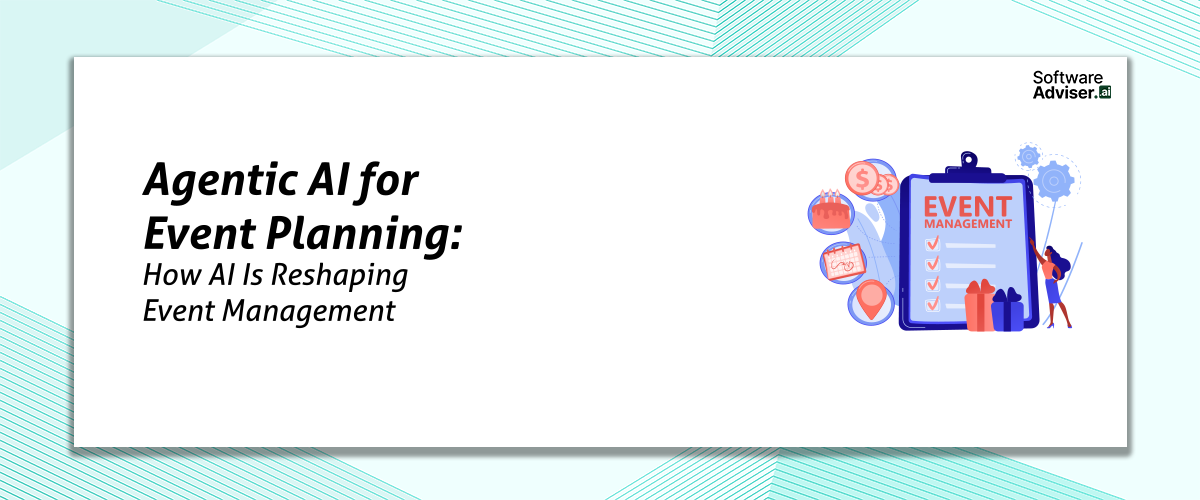
Agentic AI for Event Planning: How AI Is Reshaping Event Management
 David N. Wilks
There is a lot of operational pressure on corporate event teams. Audiences want customized, seamless experiences, but coordinators battle disorganized marketing, changing registrations, and limited budgets throughout disconnected platforms. This conflict costs income and delays administrative work. To scale corporate gatherings without growing overhead, forward-looking companies integrate structural intelligence into their systems.

Looking for AI Event Planning Software? Check out Softwaradvisor’s List of the Best AI Event Planning Software in USA for Your Business.
Implementing a consistent event management plan enables operational teams to move from passive tracking to proactive coordination. Using specialized digital platforms helps businesses to simplify supplier selection, provide real-time bespoke agendas, and therefore maximize audience participation. This turns complex logistics into a predictable engine for brand growth and business pipeline expansion.
What Is Agentic AI and Why Is It Transforming Event Management?
An enterprise event management software framework represents a major architectural leap past traditional workflow scripts. Historically, basic event tools functioned on rigid rules: a user filled out a registration form, and the system pushed a standard confirmation email.
While this saved manual labor, it remained entirely reactive. It could not handle unexpected schedule changes, custom logistical variables, or real-time attendee requests without direct human intervention.
Agentic systems introduce independent decision-making capabilities into the operational loop. Autonomous digital agents examine incoming event data streams, assess contextual objectives, and carry out multi-step processes on their own instead of waiting for preset manual triggers.
For example, an automatic event management system doesn't just display a mistake dashboard if a speaker abruptly cancels a keynote session. Within minutes and without human involvement, it aggressively searches the speaker registry for an available internal executive, updates the multi-track digital agenda, changes the mobile app push notification schedule, and redistributes the venue room arrangement.
Corporate teams adopt these networks to manage core logistics across four primary operational areas:
- Dynamic Event Scheduling: Systems map session blocks automatically, matching speaker topics with historical room capacities and real-time attendee interest tallies to maximize crowd flows.
- Smart Registration Pathways: Based on the user's company profile, seniority, and business intention, digital forms change question fields to match.
- Constant Attendee Communication: Messaging engines manage hundreds of thousands of different questions on parking, hotel blocks, or badge printing to provide quick answers.
- Complex Logistics Management: Smart agents manage back-end supplier tracking and match real-time registration changes against catering estimates to avoid food waste and lower unforeseen vendor surcharges.
How Agentic AI Improves Every Stage of the Event Lifecycle
Modern business meetings call for careful coordination across different pre-event, onsite, and post-event phases. A single Event Planning Software suite helps data to flow easily across the full lifecycle, therefore eliminating blind spots and preventing data fragmentation.
Pre-Event Planning
The foundational stage of any large conference involves heavy coordination that can overwhelm small production teams. Autonomous Event Planning Software modules shorten this phase by acting as intelligent research layers. When sourcing a location, the software crawls venue database management, filtering properties based on spatial specifications, regional travel access, hotel occupancy rates, and carbon footprint scores.
Simultaneously, predictive financial models analyze past transactional records alongside current market inflation metrics to generate accurate budget forecasts, flagging overspending risks before contracts are signed. For speaker and sponsor management, the platform automates the intake pipeline by checking biography assets, verifying technical stage requirements, and cross-referencing contract terms against digital schedule blocks.
During the Event
Once guests show up on location, the operational difficulty becomes one of maximizing involvement and maintaining seamless coordination of movement. Enterprise systems use live data to enable tailored, attendee-led trips. Instead of forcing visitors to wade through a generic, static list of sessions, mobile interfaces deliver custom recommendations based on actual interactions and real-time peer networking trends.
This personalization extends directly to business matchmaking. Wearable smart badges record real-time booth visits and session attendance, therefore enabling automated networking engines to recommend validated peer-to- peer contacts within the mobile app. Background monitors follow crowd density in real-time to alert operators to change cooling levels or reroute crowds using digital signs before corridors get choked.
Post-Event Analysis
The final metric of a corporate event's success is its ability to deliver clear, auditable business impact. Post-event analysis modules replace slow, manual spreadsheet reviews with instantaneous performance dashboards. Natural language processing engines crawl through thousands of post-session surveys, digital chat logs, and public social mentions to deliver structured audience sentiment reports, isolating exactly which presentation tracks connected best with attendees.
Crucially, the system links registration details directly with corporate CRM software, tracking subsequent pipeline velocity and deal accelerations to calculate true financial return on investment (ROI). This analysis enables corporate executives to justify total event expenditures and forecast future revenue potential with statistical clarity.
Top 5 AI Event Planning Software and Event Management Platforms in 2026
Selecting a modern experimentation and coordination toolkit requires matching your specific corporate infrastructure with a vendor's core capabilities. These five enterprise solutions lead the industry in embedding functional intelligence directly into daily event operations.
1. Cvent
As a major force in corporate event technology, Cvent embeds intelligence across its entire product portfolio. The platform excels at handling high-volume, multi-track enterprise conferences where data security and administrative governance are absolute priorities.
- Key Capabilities: Autonomous venue sourcing engines, automated request-for-proposal (RFP) routing, and live attendee behavior analytics.
- Best Use Case: Large-scale worldwide business conventions, yearly user summits, and hybrid events are the best uses.
- Industries Served: Technology, worldwide finance, medicines, and healthcare administration.
- Attendee Engagement: Personalized session recommendations given through live-updating digital calendars and smart badges contribute to engaging attendees.
- Marketing Automation: Based on past registration data, automatically generate target audience lists and plan multi-channel email campaigns.
2. Bizzabo
Bizzabo’s architecture centers on its Event Experience Operating System, designed to turn live physical interactions into structured, actionable digital data. The platform stands out for its modern user interfaces and deep on-site hardware integrations.
- Key Capabilities: Important features include autonomous administrative helpers, live behavioral mapping, and smart badge data tracking.
- Best Use Case: High-growth B2B corporate conferences, field marketing roadshows, and interactive tech events.
- Industries Served: SaaS & Software Enterprise, Creative Media, and Financial Technology.
- Attendee Engagement: Matchmaking loops recommending peer connections depending on professional background data.
- Marketing Automation: Deal acceleration tracking through immediate sync with big pipeline systems, including Salesforce, HubSpot, and Marketo.
3. Eventbrite
Eventbrite remains a primary choice for consumer-facing gatherings, local events, and self-service ticketing setups. Its system relies on vast global consumer datasets to maximize public ticket distribution.
- Key Capabilities: Automated event recommendation systems, self-service ticketing dashboards, and smart social ad targeting.
- Best Use Case: Public seminars, business networking happy hours, and medium-sized ticketed music or social events are best utilized.
- Industries Served: Target markets are entertainment, small business consulting, professional training, and non-profits.
- Attendee Engagement: Location-based application alerts suggesting popular local events matching user preferences.
- Marketing Automation: Integrated Event Marketing Software modules that write, optimize, and distribute targeted social media promotions based on historical click patterns.
4. Hubilo
Hubilo focuses extensively on driving measurable pipeline returns from virtual webinars, digital broadcasts, and hybrid corporate presentations. The framework prioritizes deeply engaging digital broadcast environments.
- Key Capabilities: Immediate chat feedback evaluation, mechanical highlight creation for media, plus investor return analysis reports.
- Best Use Case: Internal company web conferences, international release sessions, and mixed-style educational skill workshops.
- Industries Served: Phone systems businesses, remote instruction facilities, staff personnel management groups, and worldwide publishing companies.
- Attendee Engagement: Instant rank charts, public questioning systems, plus social internet meeting chambers.
- Marketing Automation: Electronic follow-up messaging creates tailored training file delivery following full-length media playtime records.
5. Whova
Whova earns a high reputation due to performance for increasing group interaction during neighborhood meetings, college seminars, and professional circles, without heavy technical development costs.
- Key Capabilities: Important features include automatic session check-in tracking, mobile attendee directory indexing, and smart document sharing pipelines.
- Best Use Case: Multi-vendor trade shows, local business conferences, and academic research meetings.
- Industries Served: Higher Education, Government Assemblies, Scientific Associations, and Regional Commerce Councils.
- Attendee Engagement: Interactive community message boards, picture-sharing contests, and user-led meetings help to keep guests involved.
- Marketing Automation: Simplified marketing automation tools let event planners create branded event websites with one click and change schedules.
Future Trends Shaping AI Event Planning and Event Marketing
The relationship between operations teams and logistics software is becoming deeply collaborative. Systems are moving toward configurations where an operator can launch and manage a regional corporate event from a single command structure.
This structural evolution changes promotional timelines completely. Specialized event marketing software will evaluate historical attendance data to build unique invitation paths for high-value target accounts. Predictive analytics models will allow management teams to stress-test their ticket pricing strategies against live economic variables before the registration portal goes live.
|
Operational Capability |
Technical Impact on Event Infrastructure |
|
Predictive Logistics Sourcing |
Software books optimal venues by cross-referencing flight trends and weather data. |
|
Dynamic Personalization |
The platform generates unique, non-identical schedules for every individual attendee. |
|
Voice Command Operations |
Coordinators control venue lighting, AV feeds, and seating layouts via secure voice links. |
What Businesses Should Look for When Choosing an AI Event Planning Software
When reviewing possible event platform suppliers, give long-term system dependability over cosmetic feature descriptions top priority. Make sure your chosen supplier satisfies these three minimal needs:
- Deep API Stack Integration: The technology has to naturally sync fresh event data straight with your main business CRM, data storage repositories, and corporate marketing automation systems without the need for intricate bespoke coding.
- Strict International Privacy: Standards should be met by the system, which should include transparent user tracking tools, safe login mechanisms, and data encryption at the business level.
- Low-Latency Performance Infrastructure: Mobile event apps and registration servers have to load right away under heavy, high-volume use spikes to prevent page crashes or checkout delays when hundreds of people try to log in at once.
Conclusion
Modern event management software is now a business-critical pipeline engine rather than only basic ticketing and registration. Organizations have to reevaluate their complete strategy to execution as operational difficulty grows, attendance expenses grow, and audience expectations soar. Companies that early on invest in modern, independent platforms, linked cross-stack integrations, and data-driven personalization will be ideally positioned to run continuous, very lucrative events that grow corporate pipelines and foster brand loyalty.
FAQ's
Agentic architecture refers to highly intelligent systems that autonomously analyze event variables, make independent logistics decisions, and execute multi-step event operational workflows without requiring manual human commands.
These platforms run live user context, historical registration profiles, and operational parameters through advanced machine learning models to automate vendor sourcing, predict total expenditures, and design optimal multi-track presentation schedules.
Integrating intelligence loops into your event system removes repetitive data entry tasks, cuts down venue operational costs, improves attendee networking interactions, and delivers deep analytics to prove clear financial return on investment.
Yes, specialized marketing modules continuously track audience click patterns and historical registrations to optimize promotional copy, automate outbound email timing, and maximize ticket sales velocity across specific user segments.
Long live the pulse of real-time data; the typical annual staff survey is dead. With workplaces transitioning to hybrid models and the rise of quiet r [...]
David N. Wilks

Modern advertising and marketing departments are facing an onerous struggle against content fatigue. Teams mechanically lose their innovative spark be [...]

Dokas mile
For small businesses that want to grow, managing cloud infrastructure can feel like that nonstop juggling thing between costs that creep up and techni [...]