
What we'll cover
Share with your community!


Get Free Consultation
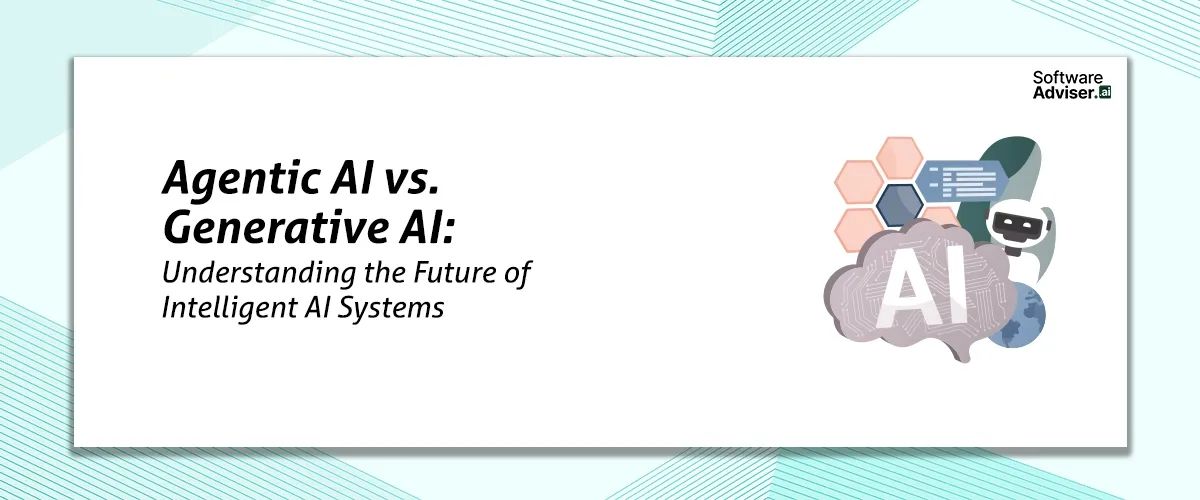
Agentic AI vs. Generative AI: Understanding the Future of Intelligent AI Systems
 Dokas mile
The organizational panorama has moved beyond primary chat bins that actually solve questions. Over the last few years, corporate automation has shifted from simple, set off-based totally tools towards systems that truly execute tasks. This transition has put the debate of agentic AI vs generative AI at the center of modern-day business planning. While most teams began their digital journey by using smart models to write emails or draft reports, the modern standard now demands end-to-end execution. Relying on an employee to manually prompt a tool all day long creates massive operational bottlenecks. Organizations are upgrading their structures to install equipment that can plan, reason, use internal software, and perform entire multi-step workflows without regular human monitoring. Understanding the core structural differences between these two methodologies is crucial for building an agile, automated workspace.
What Is Agentic AI? Definition and Key Concepts
To truly understand the difference between agentic ai and generative ai, you must look at how each system handles a goal. When exploring the agentic AI definition and key standards, it refers to autonomous structures that use large language models as central reasoning engines to complete complex, multi-step workflows with minimal human oversight. Instead of looking ahead to someone to type a command, an agent seems at a mission, builds a logical plan, selects the proper software program tools, and works until the job is executed.
The defining characteristic here is pure agency. A standard conversational tool is reactive; it only moves when a person gives it a direct prompt. An agentic system is proactive. It monitors its assigned digital environment, handles sudden errors without crashing, and makes independent choices based on its training boundary. This moves technology away from being a basic tool that assists your staff to being an autonomous assistant that works right alongside them.
Agentic AI vs. Generative AI: Core Differences
The primary split between generative vs agentic AI comes down to creation versus action. A traditional generative AI vs agentic AI evaluation shows that generative tools focus entirely on content production. They take user text, analyze training data, and generate response content like text blocks, custom code, or visual layouts.
[Generative AI] ──► Reactive Response ──► Outputs Content (One-Shot)
[Agentic AI] ──► Proactive Execution ──► Uses Tools & Autonomously Completes Workflow
When comparing agentic vs generative AI, the agentic model acts as an execution engine. It does not just describe an answer; it uses application programming interfaces (APIs) to change your database fields, update client profiles, and verify its own work. The framework loop runs repeatedly in the background, allowing the system to self-correct its logic paths until it reaches the final business target.
How Generative AI and Agentic AI Work Together
These two architectures are not competing software silos. They actually form a highly powerful, integrated ecosystem where gen AI agents use generative models as their internal brain. The generative layer handles the language understanding and content drafting, while the agentic framework handles the memory layers, software connections, and decision loops.
In a practical corporate setting, this unified combination is incredibly effective. The agentic system acts as the project manager that decides which files to update and which software paths to run. When it needs to write a formal summary or draft a technical email during an automation sequence, it calls the generative model to create that specific text. This clear team-based relationship turns basic machine learning into an enterprise-ready workforce.
Key Components of Intelligent AI Systems
Building a reliable autonomous framework requires combining several core technical layers inside a unified AI Agent Platform:
- The Reasoning Engine: Central language models that read ambiguous inputs, break down goals, and plan the required workflow steps.
- Memory Management Systems: Shared database layers that preserve information across long processes, ensuring the system remembers what it did in step one when it reaches step ten.
- Tool and API Integration Hubs: Software pathways that allow your digital assistants to log into cloud spreadsheets, query internal databases, and send web tracking alerts.
- Orchestration Nodes: The central control layer that manages communication between multiple specialized models to prevent system lag or infinite task loops.
To hold those distinct portions prepared, businesses set up company-grade AI Machine Learning Software to monitor machine balance, take a look at information speeds, and display algorithm paths from a single display screen.
Real-World Use Cases and Business Applications
Deploying Gen AI vs agentic AI architectures looks very different depending on the specific operational pipeline you want to automate:
-
Customer Service Operations
A standard generative system reads a complaint ticket and drafts a polite response explaining a shipping delay for a human manager to approve. An agentic platform automatically opens your logistics tracking database, locates the delayed package, updates the delivery status, issues a standard refund, and alerts the customer directly.
-
Enterprise Data Processing
Instead of an employee copying information between multiple legacy windows, an autonomous setup logs into your internal software, scrapes incoming supplier data, flags accounting mismatches, and files the final records cleanly.
Managing these advanced connections requires linking your digital helpers with modern AI Workflow Automation Software channels. This setup ensures your automated tools can easily hand off file updates to your human staff whenever an unexpected error requires a manager’s personal approval.
Benefits of Transitioning to Agentic AI Systems
The biggest advantage of shifting from simple content tools to autonomous agent networks is the massive boost in operational efficiency. Your human staff no longer has to spend hours executing repetitive digital data transfers or coordinating simple software updates. Instead, your team can focus entirely on high-level corporate growth strategies.
Another major benefit is total scalability. Autonomous platforms run continuously without experiencing mental fatigue or speed drops. They process hundreds of database requests simultaneously, minimize manual entry mistakes, and generate clean analytics reports that help leadership teams optimize daily business operations.
Challenges and Risks of Agentic AI Implementation
Despite the extremely good electricity of those structures, transferring toward complete autonomy introduces unique commercial enterprise risks that require cautious making plans. The most unusual pitfall is operational hazard. Because these tools can take real actions inside your live databases, a single logic error or bad connection can cause widespread file corruption.
To prevent these issues, companies must avoid setting up unmonitored systems. You must build clear corporate guardrails, establish strict permission profiles, and keep your human staff in the loop for high-risk decisions. Taking these safety steps prevents system loops and ensures your data stays completely secure.
Choosing the Right Platform for Your Organization
Selecting the best software program framework relies closely on your current data infrastructure and engineering resources. If your primary purpose is sincerely to hurry up textual content creation or help your design group brainstorm layouts, investing in fundamental generative gear is perfectly excellent.
However, in case you need to run cease-to-quit business operations on autopilot, you should install a comprehensive AI Agent Platform. Look for companies that offer robust data encryption, flexible API connections, and smooth developer dashboards. Ensuring your new tools integrate smoothly with your existing AI Machine Learning Software setups prevents system fragmentation and keeps your corporate records safe.
The Future of Intelligent AI Systems
Workforce automation is moving fast. If you track the latest enterprise software trends, you will see a massive industry shift toward fully autonomous, multi-agent business operations. We are rapidly moving away from isolated chatbots toward complete digital departments that manage client billing, inventory tracking, and compliance alerts inside a single framework.
To prepare for this shift, modern organizations are upgrading their back-end systems with advanced AI Workflow Automation Software layers. This allows brands to connect their specialized models seamlessly, protect their internal records, and handle massive data scaling without breaking their existing corporate software frameworks.
Conclusion:
Choosing between generative and agentic systems is not about picking one tool over another. It is about understanding how to layer these technologies together to build a highly efficient corporate workflow. Moving past simple chat responses and embracing autonomous agent networks allows your brand to handle complex business processes with absolute precision.
Whether your primary operational goal this quarter is to upgrade your tech stack using an advanced AI Agent Platform, run secure data processes via modern AI Workflow Automation Software, or track your analytics using AI Machine Learning Software, the ultimate target remains the same. You need a workspace that runs smoother, quicker, and smarter. Taking that first easy step today guarantees your business stays competitive, resilient, and completely prepared to win.
FAQ's
Agentic AI is an autonomous AI system that can plan, reason, and complete tasks with minimal human intervention.
Generative AI creates content such as text, images, code, and videos based on user prompts.
Generative AI creates content, while Agentic AI autonomously performs tasks and executes workflows.
Yes, Agentic AI often uses Generative AI to create content while independently managing actions and decisions.
For American small business owners, managing their data can be as challenging as trying to wrestle an octopus in the water. There’s so much informat [...]

David N. Wilks
Here's an miserable number: the average agent takes over 15 hours to respond to a new lead. By then, that buyer has already talked to three other agen [...]
David N. Wilks
The corporate world is changing, and AI data management software is leading the way. For decades, traditional document Forecasting systems have been s [...]