
Best POS Software in
Are you looking for POS Software for your Business in ? SaaS Adviser brings you the best POS Software to ease your worries. In order to make your work smooth and swift, SaaS Adviser has compiled a list of the best software available. Compare the Best software features, pricing, free demo, and trial to select the best POS Software for your organization.
 Researched and Written by Nikita Rao
Top 3 Featured Softwares


List of Top POS Software

Get Free Consultation


MoneyCache POS

By MoneyCache POS
MoneyCache is a free, cloud-based point-of-sale system for small businesses. It has a POS-style user interface for managing product and inventory searches by category, subcategor...
View Profile
IncoPOS
By IncoPOS
IncoPOS allows you to take orders directly at the table using an Android tablet. All orders go directly to the Kitchen Displays and printers. The Kitchen Display module lets your...
View Profile

AccountPe
By AccountPe
AccountPe is a billing assistant platform that helps businesses manage all their products, prices, and customer data. It connects with popular point of sale equipment and hardwar...
View Profile

Cygen POS
By Cygen POS
Cygen POS software makes online ordering easy and manageably. With tools to control admin, kitchen, waiter and user panel, as well as a reservation and buying system, customers c...
View Profile

POS Online
By POS Online
POS Online is a web-based management tool for businesses that provides a flexible system with dedicated features to run operations. Users can easily run online or offline POS, get ...
View Profile

Linga is a highly demanded all-in-one restaurant management system software that provides cross-platform compatibility and provides tools for a business that aspires to succeed. ...
View Profile

Tablevibe
By Tablevibe
Tableview is a popular platform for restaurants to collect feedback, increase customer happiness, and elevate direct sales. It assists restaurateurs in gaining a better understan...
View Profile

CloudWaitress is an online ordering and reservation system for food businesses that allows users to accept and manage deliveries, pick-ups, table reservations and dine-ins. Food ...
View Profile

MarginEdge
By MarginEdge
MarginEdge is an automated restaurant invoicing and real-time reports management software that makes it easy for users to keep track of their back-office paperwork. All users nee...
View Profile

Canaveri
By Canaveri
CANAVERI is the perfect business management solution for the cannabis industry. Our Point of Sale, Seed to Sale, Accounting and Ecommerce modules offer a fully integrated solutio...
View Profile

eatPOS
By eatPOS
eatPOS is an all-in-one app that has been designed to streamline contactless ordering, be it order at home, order at the table, room service, click and collect or takeaway. The s...
View Profile
SHOHOZPOS
By SHOHOZPOS
The SHOHOZPOS software platform is used to manage and monitor the workflow of store and showroom inventory, sales, profits and losses, and to transfer products between stores. Th...
View Profile

Katalyst POS
By Katalyst POS
What is Katalyst POS? Katalyst POS is a contemporary point-of-sale service built to simplify invoicing, stock control, and client management for retail and hospitality enterpris...
View Profile

O-Live
By O-Live
O-Live is a POS system that is the center of your business, online and in store. It has all the technology you need to succeed in today's fast-paced environment. You can manage a...
View Profile

accelPay
By accelPay
accelPay is an e-commerce platform that enables you to sell beverages and alcohol online with ease and comfort. It helps you sell your items directly to consumers, on marketplace...
View Profile
Nukkad Shops
By Nukkad Shops
The Nukkad Shops e-commerce solution allows retailers to deploy a hyperlocal mobile app platform with real time inventory. This allows our merchants to take their stores online in ...
View Profile

iFlexPOS
By iFlexPOS
iFlexPOS is easily accessible on all devices, is fully secured, highly optimized, and provides a reporting system where you can see monthly & yearly reports. iFlexPOS is easy to ...
View Profile
Fastab
By Fastab
With Fastab, there is no need to download an app or create an account. You can open a tab and place an order in seconds. Fastab also allows you to drive business with targeted sp...
View Profile
Revel Systems is a point-of-sale system that optimizes your company operations, from inventory management to online purchasing and customer relationship management. The platform of...
View Profile

Loyverse POS software is highly beneficial to owners and or managers of food retail outlets, coffee shops, bars, restaurants and any type of eateries. The software is available bot...
View Profile

Table of Content
With the use of POS (Point of Sale) software, companies are now able to process transactions, manage inventory, and track sales in a more efficient manner. With the automation of billing processes, receipt generation, and payment integration, all financial activities are simplified. Retail businesses, restaurants, and service firms stand to benefit from cloud-based POS systems which offer real-time data access.
Today's point of sale (POS) systems incorporate Customer Relations Management (CRM), employee management, and business reporting under a single symbolic umbrella. The suitable POS software enhances payment security, customer interaction, and business intelligence. Analyze the possible alternatives POS systems in the USA in relation to your business requirements.
1. What is POS Software?
Before cherishing the POS Software in the USA, let’s first understand its core purpose. With the advent of technology, customers can now interact with businesses effortlessly through their systems using point of sale (POS) software.
Cash registers have been transformed into modern-day POS systems that automate payments, sales, and even inventory management. Businesses seek enhanced productivity and superior customer service, which is why they depend on POS systems.
Such systems help streamline processes and remove errors simultaneously. Remote accessibility is possible with cloud-based systems, enabling users to monitor in-store sales at any time. Integral features of POS systems comprise of CRM software, reporting analytics, multi payment methods, and barcode scanning.
Restaurants, e-commerce businesses, retail shops and many other types of businesses utilize POS software to achieve improvement in efficiency. In regards to securely managing transactions, employing a reliable POS system will undoubtedly enhance the performance of any business.
2. How to Choose the Best POS Software?
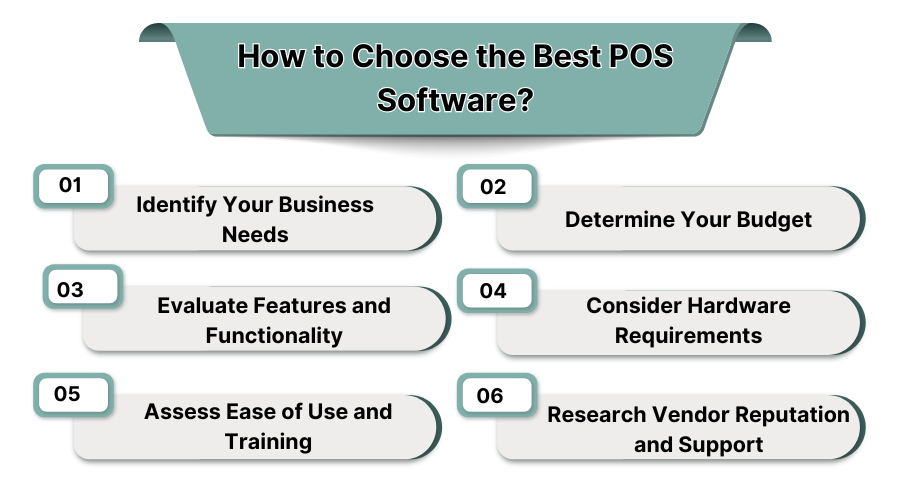
1. Identify Your Business Needs
Evaluate systems, sales methods, and customer touchpoints and pick a POS software tailored to your business sector e.g., retail, hospitality, or service industry. There is also Ipad POS software.
2. Determine Your Budget
Have a work plan that covers software payment, transaction, and hardware budget. Value plan comparisons to guarantee balanced payment plans.
3. Evaluate Features and Functionality
Establish the level of service required for all-inclusive payment plan coverage: credit card processing, inventory control, reporting, and managing other employees.
4. Consider Hardware Requirements
Determine if additional peripherals such as touchscreen, barcode scanners, and receipt printers are needed. Check if the new software will work with the old hardware and peripherals.
5. Assess Ease of Use and Training
An intuitive POS interface offers less training custodians spend greater time owning the system. Use advanced powered software with instructional documentation.
6. Research Vendor Reputation and Support
Review reviews, rankings, check client comments concerning particular providers. Settle on a POS service vendor with an even value for money guarantee and allocate direct client assistance for optimized performance over their lifetime.
3. How Much Does a POS Software Cost?
The cost of POS Software in the USA differs based on features, hardware, and the size of the business. Basic POS software plans often start at $0 to $29 per month, typically with some transaction fees.
Mid-tier solutions charge $50 to $150 per month and offer advanced features such as inventory management and Customer Relationship Management (CRM) tools. Advanced tier enterprise business POS systems are usually $200-$500+ per month, and often include custom integrations and multi-location support.
Card readers are the most basic hardware at $50-$200, and complete POS terminals range from $300 to $1,500. Basic hardware bundles cost $2000 or more, which adds to the overall expenses. While selecting a POS system, businesses must also keep in mind the subscription fee to software, the cost of the hardware, and fees for each transaction done using the system.
4. What are the Key Features of Using POS Software?
1. Inventory Management
Many POS Companies in the USA offer sophisticated systems that track inventory and avoid stock shortages. Product levels are updated automatically and their inventory is also updated in real time. It ensures businesses manage stock without putting in effort manually, thereby, reducing errors in inventory management software.
2. Customer Relationship Management (CRM)
The integration of CRM keeps track of customer's purchases and their preferences. It automates loyalty programs to increase customer interactions. It helps businesses develop effective relationships and retention by serving customers tailored services.
3. Employee Management
With the POS software, the scheduling of shifts and attendance tracking is automated for employees. It tracks employees' productivity and has a secured access control system. Such measures enable safer transaction processes and enhanced employee management to improve productivity.
4. Flexible Payment Option
Payments by cash, credit card and digital wallets are accepted by POS systems. They facilitate easier payment transactions by customers. With contactless payment, these systems speed up checkout and improve user convenience.
5. Reporting and Analytics
Sales report generation and revenue tracking is done by the POS software thanks to its sales monitoring capabilities. Customer behavior is also analyzed for better decision making. Insight into performance in real time is facilitated to help businesses spot trends and opportunities.
6. Marketing Tools
POS systems do customer outreach, manage discounts and also promote them. Marketing efforts are automated to increase interaction and engagement. These systems help businesses promote their products, capture new markets, increase brand awareness and ultimately increase revenue through targeted advertising techniques.
7. Omnichannel Selling
The integration of offline and online sales channels is achieved through POS system software. Inventory is monitored and updated at all sales points, ensuring accurate stock levels at all times. This greatly enhances the quality of service delivery and customer satisfaction.
5. What are the Types of Best POS Software?
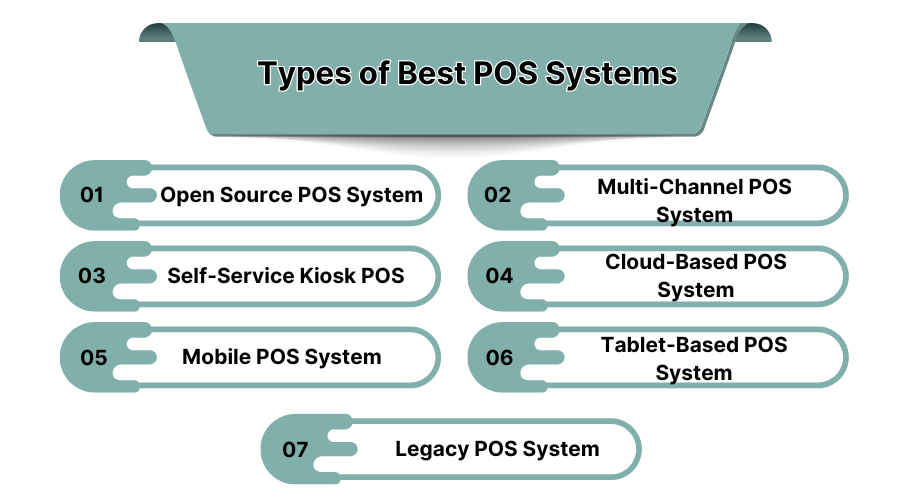
Only 19% of businesses are using POS systems in current times that are less than two years old. Modern POS systems offer many new stunning features. So, it’s worth knowing the types to understand what all is there on offer!
1. Open Source POS System
Open source POS systems allow businesses to edit the software as per their requirements. They can save money, integrate with other industry tools, and have more flexibility; however, they need tech skills for storage, upkeep, and security.
2. Multi-Channel POS System
Multi-channel POS systems allow merchants to control sales from physical stores, the internet, and mobile devices. These systems maintain coherent communication between the state of the inventory, customers, and business operations as a whole which makes them best suited for merchants who sell in-store and online.
3. Self-Service Kiosk POS
This type of system permits customers to order and pay without the need for human interaction. Commonly used in fast food restaurants, these kiosk-style systems considerably reduce waiting times for customers, improve efficiency, and give help to staff with a lowered workload.
4. Cloud-Based POS System
A cloud-based POS system allows users to store their transaction data over the internet. Businesses can view sales reports, inventories, and customer data from different locations. It gives information updates in real-time, backup, and management of business systems remotely. More than one operational location is an advantage.
5. Mobile POS System
Mobile POS systems operate through a smartphone or handheld device, enabling businesses to accept payments wherever necessary. They are mostly used by small businesses, pop-up shops, and delivery services. These systems also help in improving customer satisfaction by providing them with more options while improving mobility and speed of service.
6. Tablet-Based POS System
Tablet POS Systems are a portable, smaller version of cash registers. They provide touch screens, mobility, and effortless interfacing with payment processing, inventory, and customer management through tracking systems; which is why they are popular in restaurants and retail stores.
7. Legacy POS System
An On-Premise Legacy POS System runs an entity’s software on local servers and offers more reliable protection against data breach. It puts more emphasis on security and reliability, but because it has no access to the cloud, remote monitoring is impossible. Businesses that are highly concerned with security, or have a weak internet connection tend to prefer this system.
6. Popular POS Software with Features, Pricing, Pros, and Cons
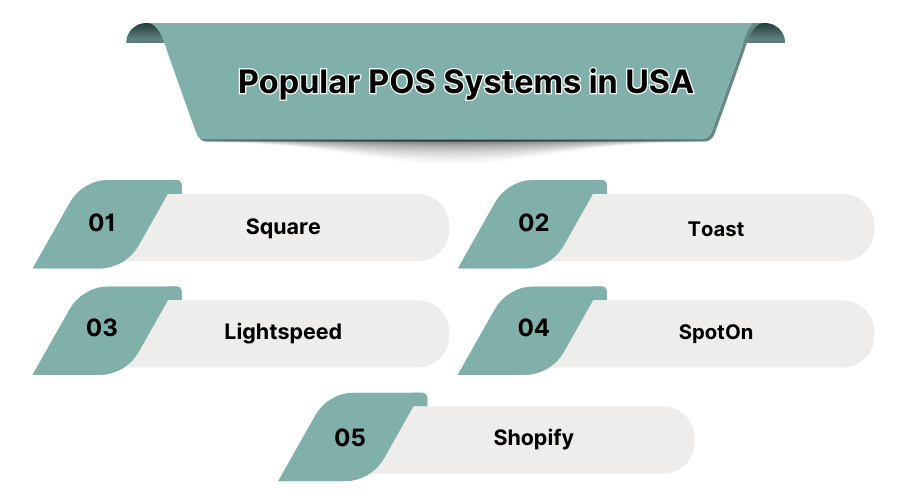
1. Square – Best for Small Businesses
Small businesses, retailers, and restaurants will find Square’s highly adaptable features appealing. It provides them with a free POS app that enables credit card processing, sales tracking, and inventory management. It also helps mobile businesses because of its payment processing and mobile features.
Businesses are better able to plan with Square’s advanced analytics. It provides insights about sales trends. The system’s wide accessibility will help you do easy setup without costly hardware, which makes it ideal for growing companies and startups. Square integrates with third-party apps, providing better customer management and marketing tools.
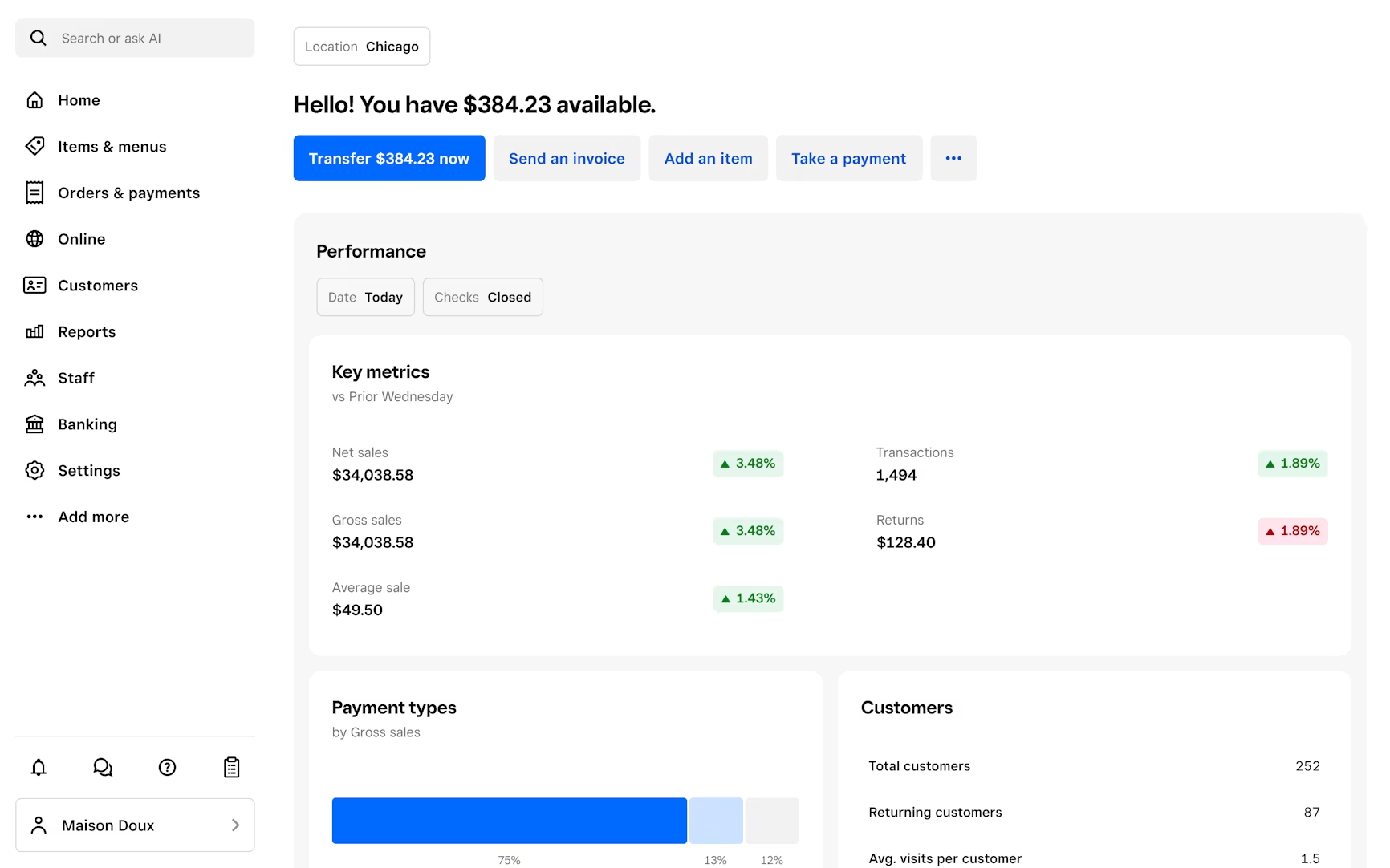 Features:
- Contactless and chip card payments
- Inventory and sales tracking
- Free mobile POS app
- Built-in customer management and analytics
Pros:
- No monthly fees for basic plan
- Easy to set up and use
- Works on mobile devices
Cons:
- Higher transaction fees compared to competitors
- Limited advanced inventory features
Pricing:
- Free basic plan
- 2.6% + 10¢ per transaction
- Custom pricing for large businesses
2. Toast – Best for Restaurants
Toast is a POS system made specifically for restaurants to optimize order processing, customer interactions, and kitchen workflow. It includes features like menu management, digital payments, tableside ordering, and more that promote smoother workflows in restaurants.
Managers can track sales and measure employee productivity with real-time reporting made possible by the cloud infrastructure. Restaurants can also access online ordering and delivery integrations to increase their client pools. Solutions are available for both small cafes and large restaurant chains, making the system very customizable.
Although it comes with proprietary hardware, its tools make it Toast of the industry for food service businesses seeking operational efficiency.
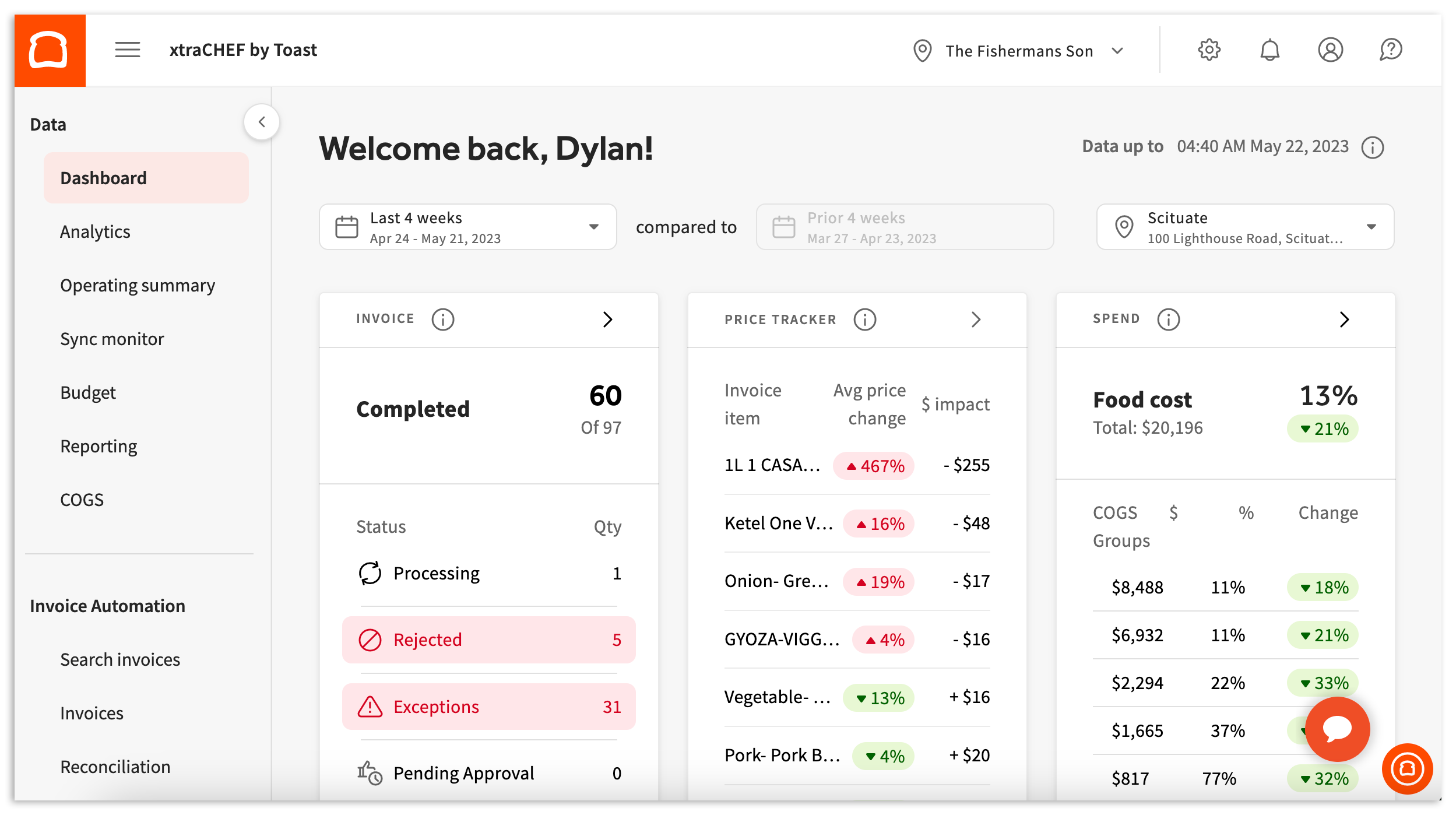 Features:
- Restaurant-specific order and table management
- Online ordering and delivery integration
- Employee scheduling and payroll tracking
- Customer loyalty and marketing tools
Pros:
- Designed specifically for restaurants
- Strong reporting and analytics tools
- Advanced menu customization
Cons:
- Requires Toast hardware
- Higher pricing for premium features
Pricing:
- Starts at $69/month per terminal
- Custom pricing for enterprise solutions
3. Lightspeed – Best for Retail Businesses
As an integrated POS system, Lightspeed caters to the retail sector exclusively. It greatly simplifies the tracking of inventory for different outlets and the customer relationship through automation.
Business operations are streamlined with visibility of real-time inventory levels improving vendor management, purchasing, and stock automation. Retailers are able to manage their stores and their online shops, thus facilitating easier stock management across sales channels. Comprehensive business analytics empower enhanced insights for improved pricing and sales strategies.
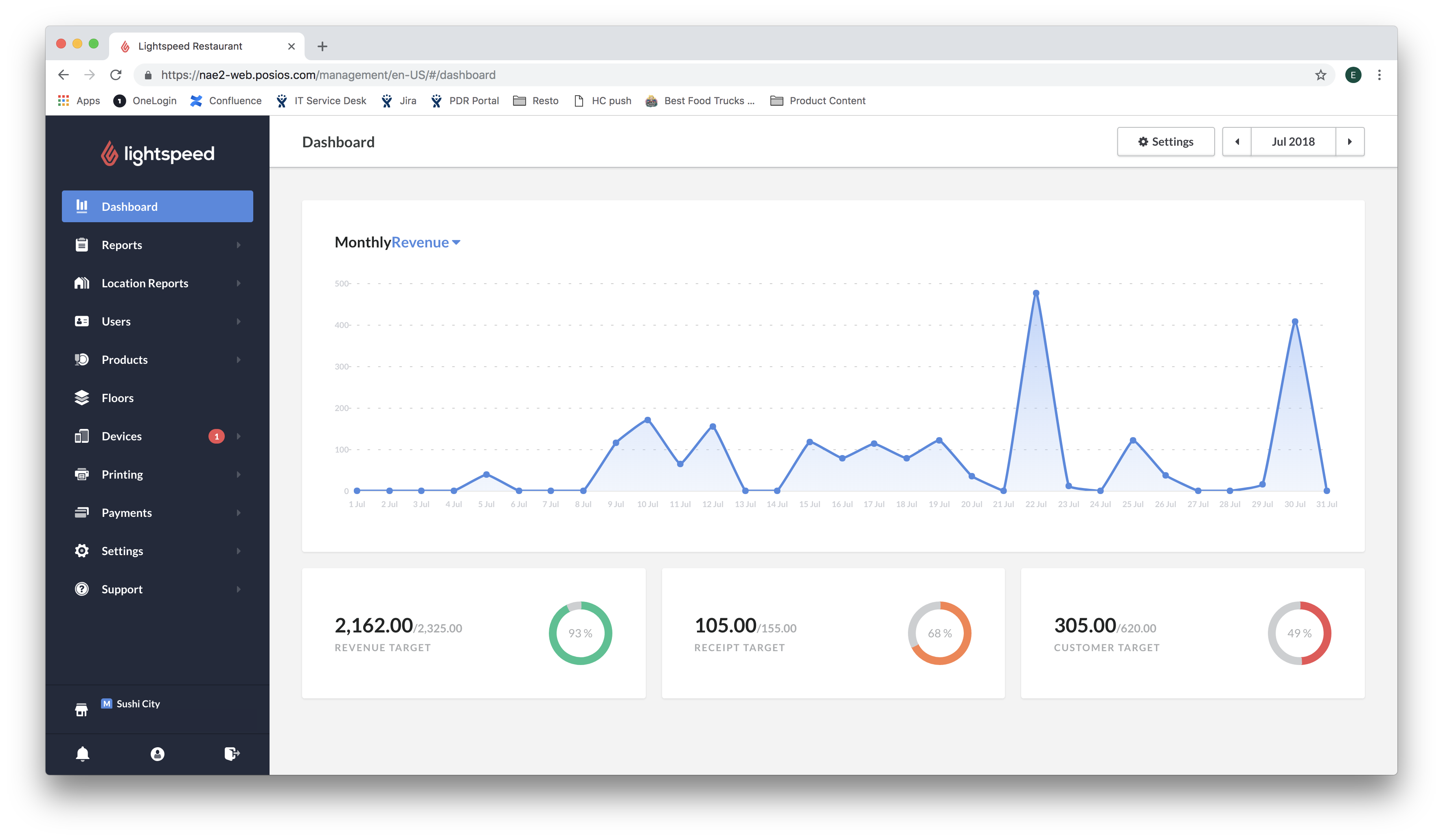 Features:
- Advanced inventory and supplier management
- Built-in e-commerce integration
- Customer relationship management (CRM)
- Real-time analytics and reporting
Pros:
- Strong inventory management tools
- Multi-store and online sales integration
- Customizable reporting features
Cons:
- Can be expensive for small businesses
- Learning curve for new users
Pricing:
- Starts at $89/month per terminal
- Custom pricing for larger enterprises
4. SpotOn – Best for Service-Based Businesses
With features for handling payments, marketing, and customer loyalty, SpotOn exceeds expectations as a hospitality business POS system. It aids services businesses in customer retention and organizing appointments.
For small and mid-sized businesses, it is a cost-efficient option since it offers competitive transaction fees as well. Its payroll and employee management integration further makes workflow seamless. Businesses can track sales, customer interactions, and appointments in real time through the cloud system.
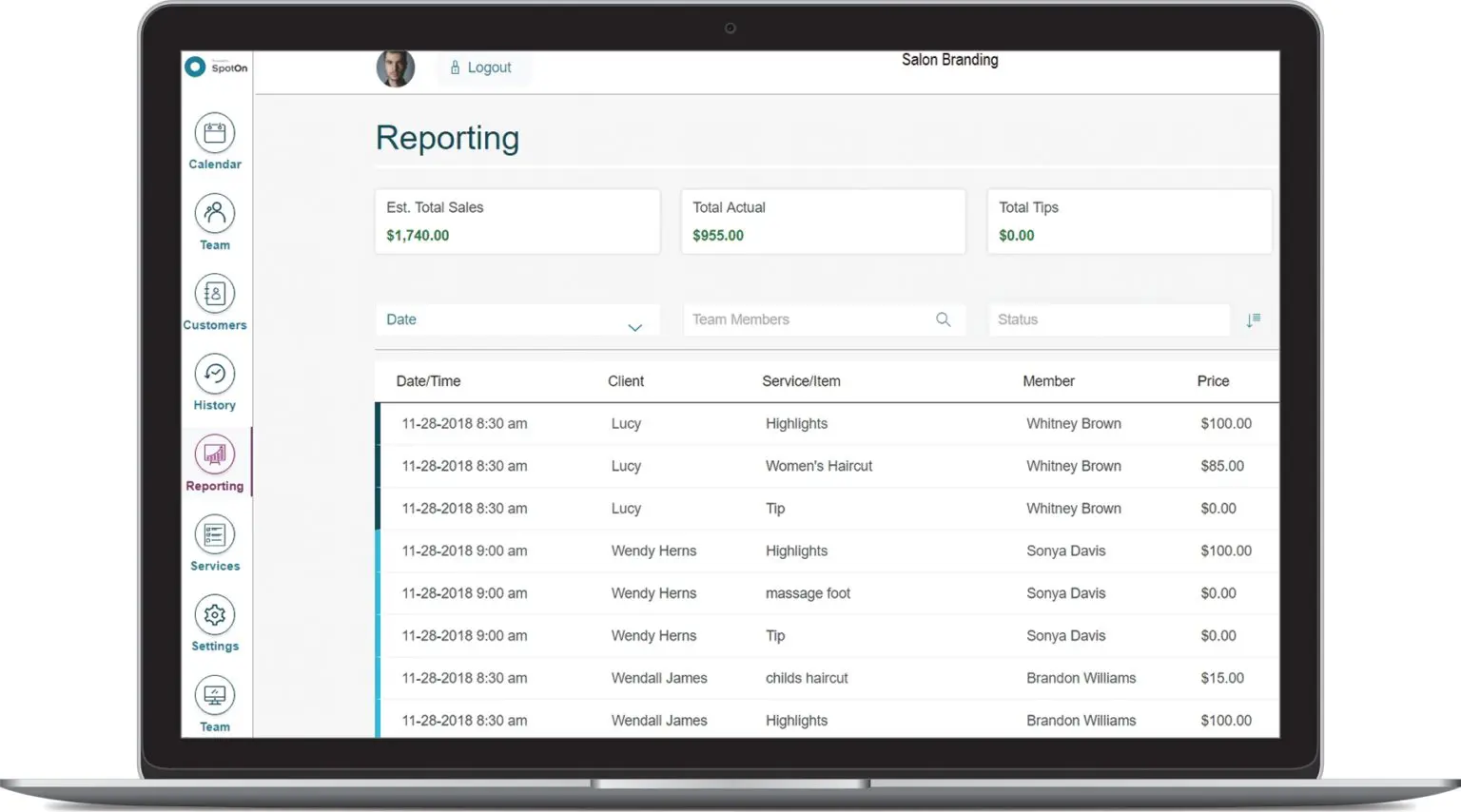 Features:
- Customizable appointment scheduling
- Marketing and loyalty programs
- Secure payment processing
- Employee time tracking and payroll integration
Pros:
- Competitive pricing with low transaction fees
- Strong customer engagement tools
- Easy-to-use interface
Cons:
- Requires a long-term contract for best pricing
- Some advanced features cost extra
Pricing:
- Starts at $25/month
- Custom pricing for additional features
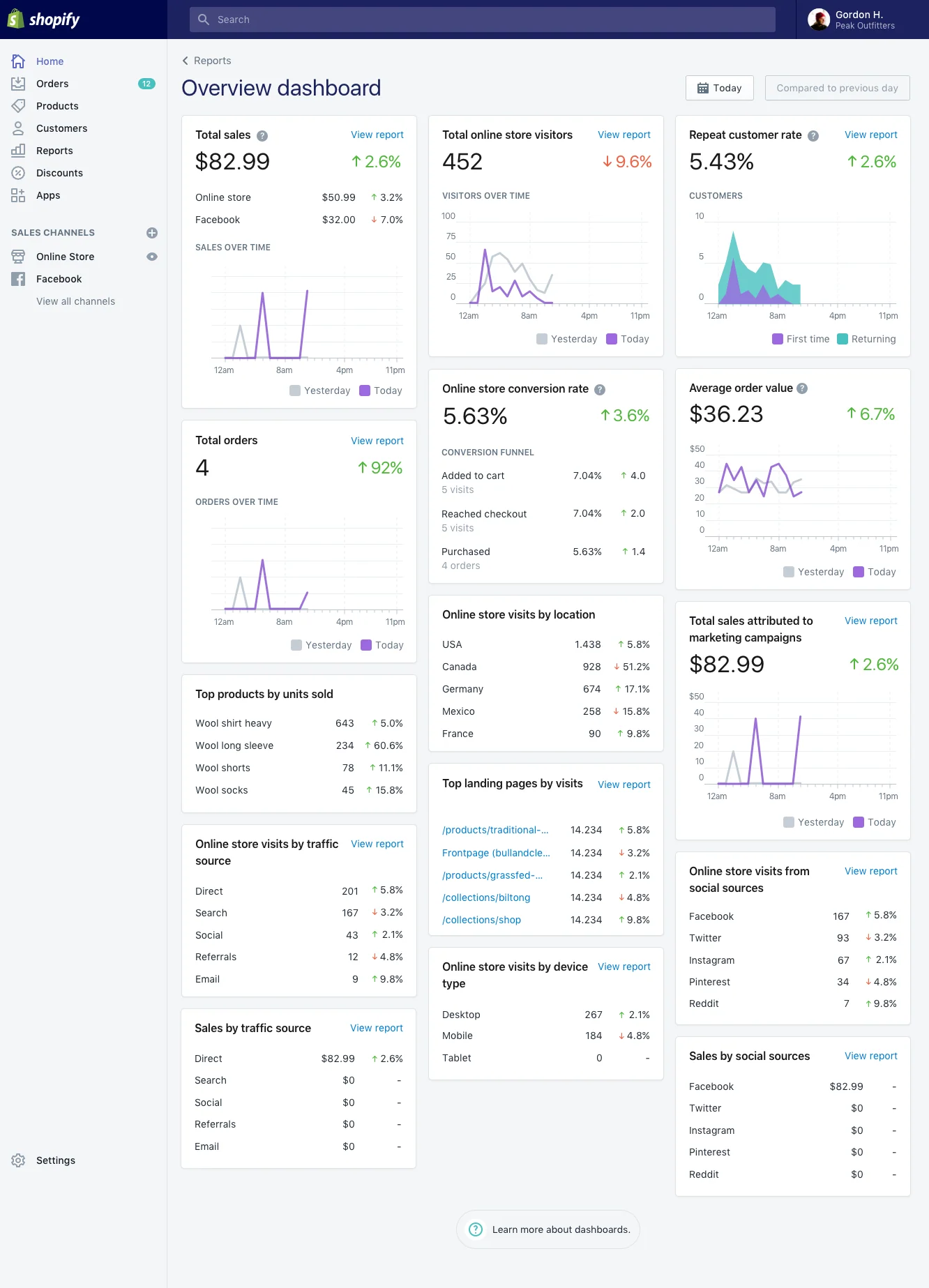
5. Shopify – Best for E-commerce and Retail
By integrating in-store sales with the Shopify ecosystem, an advanced omnichannel retail experience is achieved. Synchronization of inventory alleviates the difficulty of stock management over multiple locations.
Payment can be made using mobile, online, or in-person methods. Tailored emails and targeted promotions to specific customers are part of customer engagement offered by Shopify POS. It is merged with Shopify e-commerce and therefore perfect for merchants planning to increase their sales.
 Features:
- Unified online and in-store inventory tracking
- Built-in marketing and discount tools
- Secure multi-channel payment processing
- Real-time sales analytics
Pros:
- Ideal for businesses with online and offline sales
- Easy integration with Shopify eCommerce platform
- Flexible payment options
Cons:
- Requires a Shopify subscription
- Limited offline functionality without an internet connection
Pricing:
- Starts at $29/month (Shopify subscription required)
- Advanced plans for high-volume businesses
7. Conclusion
Modern transactions and inventory management as well as interaction with customers are taken to a whole new level with the right POS software, making sure that everything runs smoothly. At SaaSAdviser, we help you compare and choose the most favorable ones with the best pricing, features, and customer reviews provided. Find and try the best-rated POS solutions and get a free demo, and go through the ideal software designed for your business today.
