
Best Business Software Deals in
Are you looking for Business Software Deals for your Business in ? SaaS Adviser brings you the best Business Software Deals to ease your worries. In order to make your work smooth and swift, SaaS Adviser has compiled a list of the best software available. Compare the Best software features, pricing, free demo, and trial to select the best Business Software Deals for your organization.
 Researched and Written by Akash Patel
Top 3 Featured Softwares


List of Top Business Software Deals
.jpg "Category Image")
Get Free Consultation


Block A is an AI-powered self-touring and leasing automation platform designed to modernize the residential rental experience. It enables renters to schedule and complete apart...
View Profile
What is Exact?Exact is an integrated business management software that streamlines accounting, ERP, CRM, HRM, and project management into one unified platform. Designed to supp...
View Profile
.jpg "Visma-eAccounting")
Visma eAccounting is ideal for small businesses that need a scalable, user-friendly, and cost-effective accounting solution. Whether you’re a sole trader or running a growing ent...
View Profile

SAP Business One is an enterprise resource planning(ERP) solution that helps small businesses with their regular tasks. It reduces errors, improves margins and drives more profits ...
View Profile

Workday Financial Management helps organizations reduce financial risk in this ever-changing market. The software helps users focus more on action and analysis and less on transact...
View Profile

Clienteer
By Dynamo SoftwareCheck How Clienteer can help to automate Indian Business. SaaSAdviser provide their list of features, pricing, Free demo and Comparison with the best alternative
View Profile
Infor Sales & Catering
By InforCheck How Infor Sales & Catering can help to automate Indian Business. SaaSAdviser provide their list of features, pricing, Free demo and Comparison with the best alternative
View Profile

Investor Deal Room
By Investor Deal RoomCheck How Investor Deal Room can help to automate Indian Business. SaaSAdviser provide their list of features, pricing, Free demo and Comparison with the best alternative
View Profile
Dealcode
By DealcodeCheck How Dealcode can help to automate Indian Business. SaaSAdviser provide their list of features, pricing, Free demo and Comparison with the best alternative
View Profile
Microsoft Dynamics 365 Business Central
The new era of AI-powered businessWhat is Microsoft Dynamics 365?Microsoft Dynamics 365 is a cloud-based platform that combines CRM and ERP tools. It helps businesses manage sales, customer service, finance, op...
View Profile

XeroChat is a multichannel marketing software that allows you to easily and quickly create fully interactive and highly responsive chatbots. A full-featured eCommerce platform is i...
View Profile

What is Hotmart?Hotmart is a global cloud-based platform that helps creators, educators, and entrepreneurs sell and distribute digital products such as online courses, eBooks, ...
View Profile

dealfront

Your fast-track to a high-quality pipeline
Dealfront is a cloud-based go-to-market intelligence platform designed for B2B sales and marketing teams that want to identify, target and engage high-intent accounts. Its offering...
View Profile

Table of Content
What Are Business Software Deals?
Fundamentally, a business software deal is a time-limited, specially priced proposal from a software vendor meant to encourage new customers to purchase or upgrade an existing product. These transactions travel beyond the conventional list pricing to offer major financial and strategic benefits.
Types of business software deals take many different forms, all of which involve financial incentives:
-
Discounted Subscriptions: A reduced monthly or annual rate for cloud-based CRM software or top SaaS project management software (e.g., 20% off the first year or three months free).
-
Feature Bundles: Grouping multiple software products—such as a sales CRM, a marketing automation platform, and a service desk—into a single discounted suite.
-
Tiered Pricing Specials: Providing super high-tier functionality (such as advanced reporting or unlimited users) normally available to large organizations at a cost that small and medium-sized businesses (SMBs) can afford.
-
Startup/Non-Profit Programs: Premium, hugely-discounted, or even free levels that seek to provide a strong launch to a new business venture or charitable enterprise.
1. What Are the Must-Know Features of Business Software Deals for Businesses Today?
Price is one of the areas that should not be considered when making a deal with any possible business software. What is more valuable is the set of features that solves your operational headaches and expansion goals directly. The software that is modern has to not only digitalize a process but also improve it.
1. Customizable Pipelines
Your computer program should fit your specific phases of selling or operations. Find drag-and-drop interfaces that help you outline and adjust your sales funnel or project stages. This cannot be compromised in order to have an effective business process management software comparison.
2. Activity Tracking
All the interactions should be automatically captured by the system to provide details about all the interactions: the emails, calls, meetings, and notes. This is crucial to sales teams that are based on cloud-based CRM software.
3. Deal Prioritization
The ability to highlight the opportunities or tasks that need immediate attention using AI and scoring systems is one of the primary features that has a direct influence on revenue generation and efficiency of the teams.
4. Team Collaboration Tools
In-app chat, mentioning, and shared documents, as well as real-time collaboration, render the best workflow management software highly collaborative because there is no longer a necessity to make frequent email exchanges.
5. Document Management
Contracts, quotes, and project asset storage, which is often centralized and secured, and is frequently paired with applications such as Google Drive or SharePoint. This guarantees version control and easy accessibility.
6. Task Automation
One of the basic functions of the most effective workflow management software is the possibility to automate repetitive, prescriptive operations (e.g., a follow-up email after a deal has reached the Closed-Won stage or assigning tasks automatically based on a request form).
7. Streamlined Workflows
This is in addition to mere automation, but it also implies visual, no-code/low-code builders, where you can design and enforce certain sequential steps to complex operations, which will promote efficiency throughout the organization.
8. Data-Driven Insights
The tools should be able to convert the raw data to easy-to-understand visual dashboards so that you can immediately have an insight into how you are performing in relation to Key Performance Indicators (KPIs).
9. Advanced Reporting
The ability to design tailored reports of any data in the system. This enables thorough analysis, which involves digging more than canned reports to get answers to certain business questions.
10. Sales Forecasting
Predicting the future revenue based on historical data and pipeline metrics. This is an important component of the leading cloud based CRM software.
11. CRM Integration
Regarding non-CRM tools, the capacity to integrate easily with the main cloud-based CRM software (such as Salesforce or HubSpot) is the most important to have one source of truth regarding customer data.
12. Integration Capabilities
The software is not a silo because it will be supported by an extensive ecosystem of third-party integrations (e.g., with accounting software companies in the USA, communication apps, or marketing tools).
13. Customizability
Find the capacity to adjust fields, objects, views, and entire layouts to reflect your unique business language and business processes. This secures high user adoption and is a very critical element to any business process management software comparison.
2. Why Should Organizations Care About the Benefits of Business Software Deals?
Business Software Deals is not just a strategic maneuver to save a couple of dollars; it is a strategic concept that has an impact on an organization in terms of money, processes, and its future survival. These deals are important to organizations since they have a direct effect on the bottom line and competitive advantage.
1. Financial Benefits
-
Reduced Upfront Costs: A deal causes high-end, complex software to be instantly available without requiring any initial investment or even reducing the initial investment to a minimum, releasing cash flow to serve other operational purposes. This is more essential to small companies and startups.
-
Predictable Budgeting: The reason is that many deals will offer a reduced price over a specified time (usually a year or longer), which gives you a predictable, fixed line in your technology budget, which is the major strength of the SaaS inventory management software model.
-
Cost-Effectiveness: By getting a deal, you get a robust toolset that will perform much better in terms of efficiency and sales which will make it worth the discounted price, which will guarantee a high Return on Investment (ROI).
-
Value in Bundles: Bundles offer, like one combining the most popular billing and invoicing software with CRM, are offered as a complete solution at a much lower price than buying the individual parts separately.
2. Operational Benefits
-
Increased Efficiency and Productivity: The new technology will contribute to the automation of routine task management and repetitive data entries and allow the employee to focus on work of high quality and strategies, which will add to the overall output.
-
Enhanced Collaboration: The centralized systems break silos within the departments. The CRM software is cloud-based, which places the sales, marketing, and service teams on a single page as the customer is better comprehended and thus, the handoffs are easier and the service offered is much better.
-
Data-Driven Decisions: Software deals have built-in analytics that give decision-makers real-time data about business performance, which allows them to adjust strategy much more quickly and improves businesses with facts, not intuition.
-
Improved Customer Experience: New workflow management software enables making the processes more arranged and more reactive, and also a complete overview of the customer history, which is directly converted into customer satisfaction and loyalty.
3. Strategic and Long-Term Benefits
-
Scalability: The majority of recent business software transactions are founded upon the SaaS framework, which implies that it is readily scalable to adding new users, new features, and new data volume as your company expands and without the need to engineer an entirely new IT infrastructure.
-
Accessibility: Cloud-based solutions can enable teams to do their work safely in any location and on any device, which guarantees business continuity and assists with remote working models, and enables flexibility.
-
High-Level Security: A business software deal includes reputable software vendors who are handling the security, compliance, and data protection, and their level of security is far better than what most small businesses can afford to implement themselves.
-
Automatic Updates and Maintenance: The vendor takes care of all patching, bugs, and feature updates. This will take a major administrative load off the internal IT department, and you will always have the latest and most secure version of the platform.
3. What Types of Business Software Deals Should Companies Explore for Growth?
Depending on the type of software license, your business software deal's financial and operational structure is what determines it. It is important to know the two major models to ensure effective business process management software comparison and long-term planning.
1. Subscription (SaaS) Model
The SaaS (Software as a Service) model is currently used as the industry standard for business software deals. Under this model, the vendor hosts the software on the cloud, and the end-user has the software via a web browser or mobile app.
-
Pricing Based on Usage: This is usually an ongoing payment, monthly or annual, or a substantial amount related to the number of people using it, the tier of features chosen, or even the amount of data being utilized. This enables the businesses to be in control of how much their software costs them based on their operation size.
-
Pay-as-You-Go Pricing: This removes the huge initial capital outlay (CapEx). However, it is considered an operating expense (OpEx), which allows cash-conscious startups to gain access to extremely powerful tools such as cloud based CRM software.
-
Operational Advantages: It is all maintained, updated, and infrastructured by the vendor. This will guarantee high availability and will enable your internal workforce to work on higher-level work as opposed to IT maintenance. The majority of business software deals are going to be made on this SaaS model.
2. Perpetual License Model
The classical, more and more obsolete model is used by specialized or legacy software or some accounting software vendors in the USA that provide on-premise software.
-
On-Premise Installation: This is a complete software bought on a per-use basis and installed on the company servers and hardware. The firm has the right to use that particular version permanently.
-
Maintenance and Updates: As long as you are the license owner, continuity of maintenance, support, and version upgrades (e.g., version 10 to version 11) involves separate annual charges, which are low on the pocket but may soon eat into the perceived initial savings of the business software deal.
-
Long-Term Control: This model is fully controllable in the infrastructure, security, and customization, which is why it is a choice of big companies that have their own IT teams and need to comply with stringent regulations. Although the first deal is a one-time, high-cost deal, which is quite different as compared to the savings involved in a SaaS deal that is recurrent.
4. What Are the Key Challenges of Business Software Deals You Must Know Before Investing?
As much as Business Software Deals have great benefits, a witty purchaser should be alert about possible pitfalls. Any new best workflow management software or cloud-based crm software must be carefully planned and the obstacles looked at realistically in order to implement it successfully.
1. Strategic and Operational Challenges
-
Unrealistic Expectations: There is no one software deal that will solve all your problems overnight. Make sure you base your expectations on a good implementation plan and understanding of the capabilities of the software, particularly in a business process management software comparison.
-
Poor Communication: The most common reason for low adoption is the lack of communicating the why of the new software and its benefits to end-users. Implementation is a collective activity.
-
Inadequate Risk Assessment: Be prudent before committing to a deal, considering the risk of vendor lock-in, the complexity of data extraction out of the system, and the scalability of the platform to support future growth (scalability).
-
Integration Incompatibilities: It may sound very good, but it soon may become bad when the software does not work with your current tools, like the best billing and invoicing software or HR solution. API access and pre-built connectors should always be checked.
-
Unforeseen Costs: The unexpected costs may include reaching storage or user quotas, having to pay premium support, or paying add-ons to key features (e.g., advanced reporting). Beware of the fine print of any business software deal.
-
Lack of Clear Goals: You have not even begun to seek a deal, yet you know what success is. Do you want to decrease the sales cycle by 20%? A 15% decrease in the management of manual tasks? With no clear goals, the software will be an expense and not an investment.
2. Technical and Security Challenges
-
Security Risks: Cloud security is a collective responsibility. You need to check into the security certifications that the vendor has and have best practices in the internal team concerning user access and passwords.
-
Scalability Issues: Entry-level packages of SaaS inventory management software or even the best SaaS project management software may be feature-rich but are limited in hard capacity in terms of the size of data or transactions that you could easily surpass.
-
Dependency Management: Over-dependence on a vendor ecosystem (e.g., purchasing all products of one vendor) may cause dependency, and then its vendor becomes extremely difficult to change to a more advantageous business software deal.
3. Vendor and Partnership Challenges
-
Vendor Misalignment: A wonderful price offered by a vendor whose customer service is a nightmare or a vague product road map will cost you in the long run. Search offers of sellers with a good reputation, particularly within the accounting software firms in
-
Quality Assurance: Custom workflows that require quality assurance (QA) should not be in a hurry with deals that are supposed to be deployed fast. You should make sure your team comprehensively tests all the new workflows and integrations before complete deployment.
-
Cultural and Time Zone Differences: For global remote teams, ensure your top SaaS project management software vendor offers support and service-level agreements (SLAs) that align with your major operating time zones.
5. What Are the Top 5 Business Software Deals That Businesses Are Choosing?
These sites reflect some of the most well-known and versatile business solutions in various functions, which are often subject to great deals on business software for new users.
1. Zoho
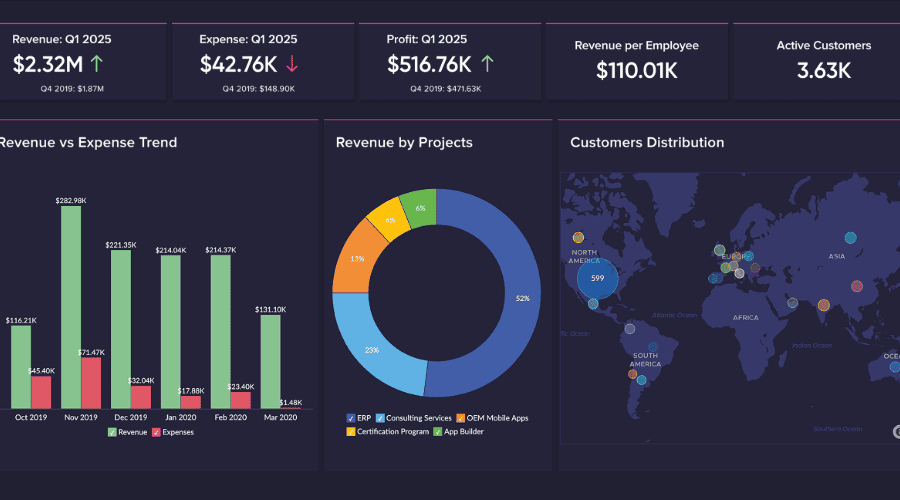
Zoho is an end-to-end system of cloud-based applications that is targeted at small to large businesses with immense emphasis on CRM and an integrated environment. It is a great representation of cloud-based CRM software, which is value-driven.
Features
-
Automated lead capture, conversion, and task management.
-
Zia AI assistant provides lead prediction and process automation.
-
Customizable interface via Canvas for CRM design studio.
-
Omnichannel communication logged in one place.
-
Seamless integration with the entire Zoho Suite.
Pros
-
Highly cost-effective with a generous free plan for up to three users.
-
Offers a vast, fully integrated ecosystem for nearly all business functions.
-
Strong customization capabilities to align with unique business processes.
Cons
-
The sheer volume of applications can be overwhelming for new users.
-
Advanced features (e.g., premium analytics) are restricted to high tiers.
-
Customer support response times can be slow on lower-priced plans.
Pricing: A plan starts at $29/month.
2. HubSpot
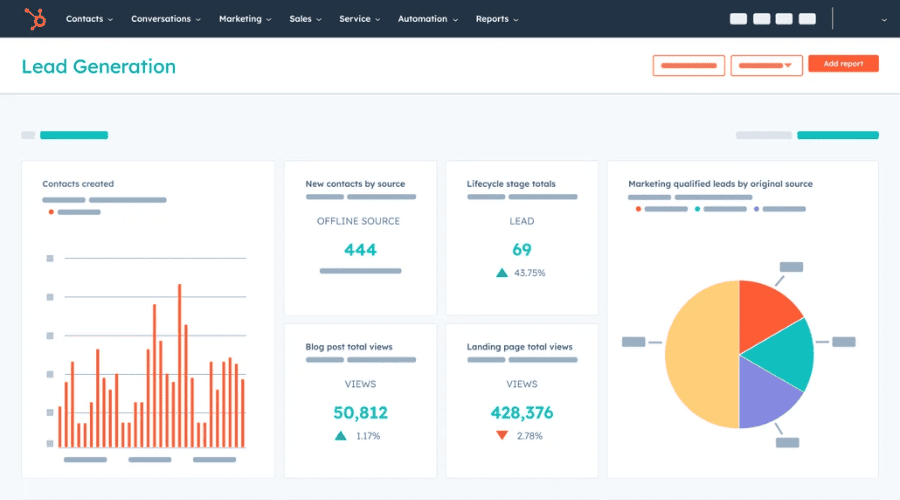
HubSpot is a robust and highly accessible platform, the most well-known components of which are the CRM software base in the cloud and powerful inbound marketing tools. It is a market leader in the flexible and growth-driven software.
Features:
-
Free-forever CRM with contact and deal pipeline management.
-
Built-in inbound marketing tools (blogging, SEO, landing pages).
-
Sales engagement tools like email tracking and meeting scheduling.
-
Professional service desk with ticketing and knowledge base.
-
Customizable automation for sales, marketing, and service workflows.
Pros
-
Extremely intuitive interface with a minimal learning curve for quick adoption.
-
Modular pricing allows users to only buy the "Hubs" they need (Sales, Marketing).
-
Extensive and reliable integration capabilities with third-party applications.
Cons
-
Pricing scales quickly and becomes very expensive for large teams or advanced features.
-
Advanced automation is strictly limited to the costlier Professional/Enterprise plans.
-
The free plan offers limited customer support options.
Pricing: A plan starts at $840.45/month.
3. Asana
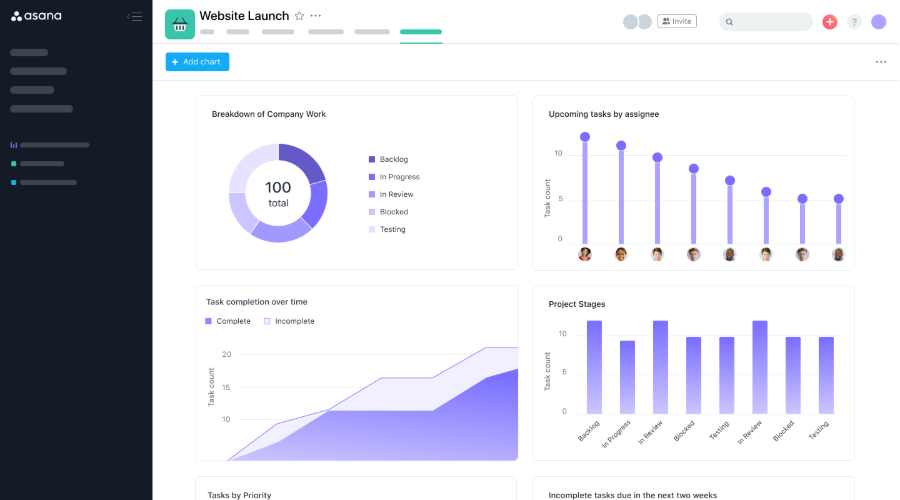
Asana is one of the top SaaS project management software products in the management of multifaceted projects, workload within a team, and routine tasks. It is very popular in teamwork between and outside the company.
Features:
-
Multiple project views: lists, Kanban boards, and Gantt charts.
-
Workload management for managers to prevent team burnout.
-
High-level portfolio management to track multiple initiatives.
-
Automation rules to reduce manual effort on repetitive tasks.
-
Goal tracking feature to connect tasks to strategic company OKRs.
Pros
-
Excellent user experience and a clean, visually intuitive design.
-
Flexible enough to handle both simple tasks and complex, multi-phase projects.
-
Offers a generous free plan for small teams (up to 15 users).
Cons
-
Can feel overwhelming for individuals with very simple project needs.
-
Only allows one assignee per task, complicating shared responsibility.
-
Advanced features like Workload are restricted to the most expensive tiers.
Pricing: A plan starts at $10.99/month.
4. Deel
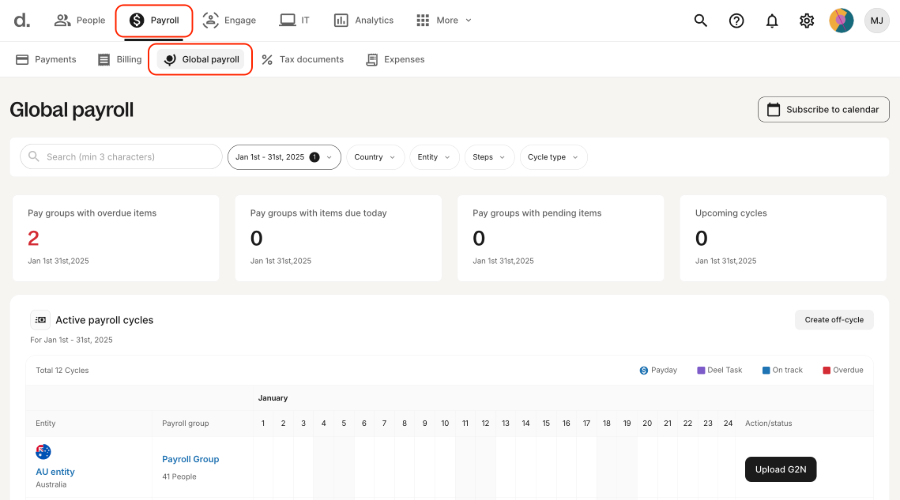
Deel is a small company that specializes in global HR, payroll, and compliance and allows businesses to hire and pay employees and contractors internationally in a compliant manner. It is one of the essential instruments of companies interested in expanding across the world.
Features:
-
Automated global payroll and compliance in over 150 countries.
-
Employer of Record (EOR) services for hiring without a local entity.
-
Simplified onboarding and payment management for contractors.
-
Assistance with administering localized global benefits packages.
-
Free core HRIS for managing basic employee data.
Pros
-
Massively simplifies the complexity and compliance risk of global hiring.
-
Provides a single, streamlined platform for all international payments.
-
Offers a fully functional core HRIS available for free.
Cons
-
Pricing for EOR services is significantly high, reflecting the managed compliance risk.
-
Some advanced HR tools require additional, separate add-ons (like Deel Engage).
-
Not all countries are covered with an equal depth of features or services.
Pricing: A plan starts at $599/month.
5. Salesforce
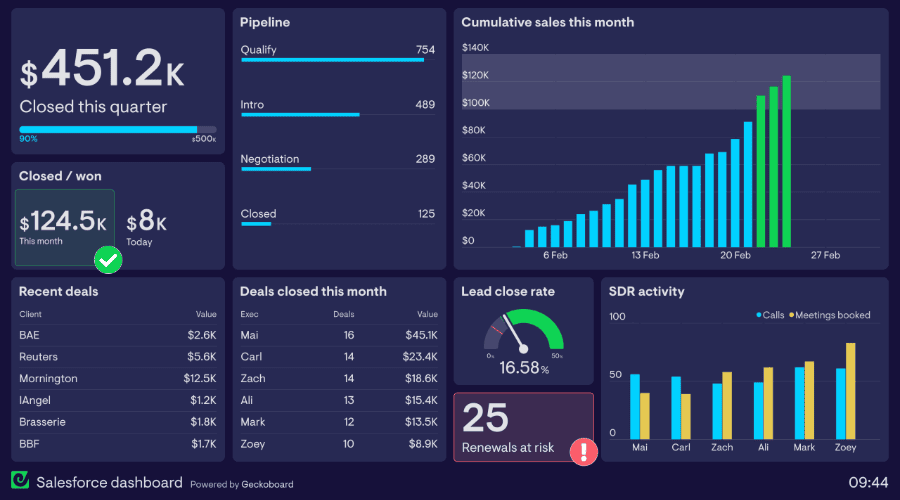
Salesforce is the best known and broadest global cloud-based CRM software and a key competitor to Business Process Management Software Comparison. It is a very personalizable enterprise platform.
Features:
-
Advanced sales automation for lead, opportunity, and pipeline management.
-
Highly accurate and customizable sales forecasting models.
-
Massive AppExchange ecosystem with over 5,000 partner applications.
-
Robust workflow automation via Process Builder/Flow for complex tasks.
-
Fully functional mobile applications for on-the-go pipeline management.
Pros
-
The most powerful and scalable CRM available, ideal for complex enterprise needs.
-
Unmatched level of customization for unique business processes and data models.
-
Vast ecosystem of global support, training, and consulting partners.
Cons
-
Highest total cost of ownership and a steep learning curve for new users.
-
Often requires a dedicated administrator or consulting partner for complex setup.
-
Licensing costs are high and typically require an annual upfront payment.
Pricing: A plan starts at $25/month.
6. How Do Business Software Deals Work and Benefit Your Organization?
The business software deal operates on the principle of filling the gap between the requirement of a business to have a high-technology system and the budgetary limitations of such a system. This is a long-term and short-term advantage. This enables your organization to procure advanced cloud-based CRM software or workflow management software of the finest kind without using the colossal start up capital cost and therefore enables strategic investment in enterprise grade tools to be available instantly.
The most important advantages are two: cost saving and speed up of operation. This means that by making a deal, you not only liberate instant capital but you are also putting into practice tools that have task automation and simplified workflows. This operational improvement generates efficiency, better decision-making based on the data by the enactment of sophisticated reporting, a powerful competitive advantage, and a high Return on Investment (ROI) of the discounted price.
7. How Can Business Software Deals Help Your Business Stay Ahead of Competitors?
A business software transaction offers a key competitive advantage whereby your organization is able to roll out high-end, enterprise-level technology, which in other cases would be cost prohibitive. The strategic investment leads to expedited processes, better decision making and agility.
These transactions provide direct entry to the most current features, such as task automation and reporting so that you can take advantage of them to optimize operation and get a better insight about customers at a quicker pace than competitors who are using manual or old systems. With the business accounting software market size, which is estimated to be USD 15.33 billion in 2024 and is projected to hit USD 37.41 billion in 2032, with the demand of the robust tools still growing, landing good business software deals will help a business to reap the benefits of this digital growth and remain innovative.
8. How Do You Choose Business Software Deals That Truly Fit Your Needs?
Selecting the right business software deal requires a disciplined, step-by-step approach focused on your actual needs, not just the advertised discount.
Step 1: Define Need & Quantify Goals
Start by clearly identifying the core problem, such as scattered software for task management or lack of pipeline visibility. Quantify success (e.g., "Reduce project delivery time by 15%").
Step 2: Audit Features & Integrations
Create a non-negotiable list of required features, like team collaboration tools. Crucially, verify integration capabilities with existing systems, including your financial software from accounting software companies in USA.
Step 3: Evaluate Model & Scalability
Prioritize the flexible SaaS (Subscription as a Service) model. Test if the deal's pricing tier supports your projected growth for the next 18–24 months without causing a massive, unplanned price increase.
Step 4: Compare Total Cost of Ownership:
Look beyond the initial discount. Calculate the full cost, including implementation, training, renewal price, and potential hidden costs like fees for exceeding API call limits. This holistic view is vital for a meaningful business process management software comparison.
Step 5: Prioritize User Adoption & Support
Use free trials to confirm the software is intuitive. Even the best deal will fail if the software is too complex; high user adoption and strong vendor reputation are the final metrics of success.
9. Conclusion
The current scene of business software deals has a lot of potential and the opportunity to find complex, enterprise-level technology at low prices is being presented before organizations of any magnitude. Starting with the leverage of a cloud-based crm software deal to integrate your customer data, to the enforcement of streamlined workflows with a top SaaS project management software, which will become your Future to an efficient, profitable, and competitive future.
