Life insurance has long been viewed as a traditional, paperwork-heavy sector where:
-
Policies were sold across desks
-
Applications took weeks
-
Claims were managed through manual processes
In the digital age, insurers face a new set of demands for:
-
Faster services
-
Transparent communication
-
Personalised coverage
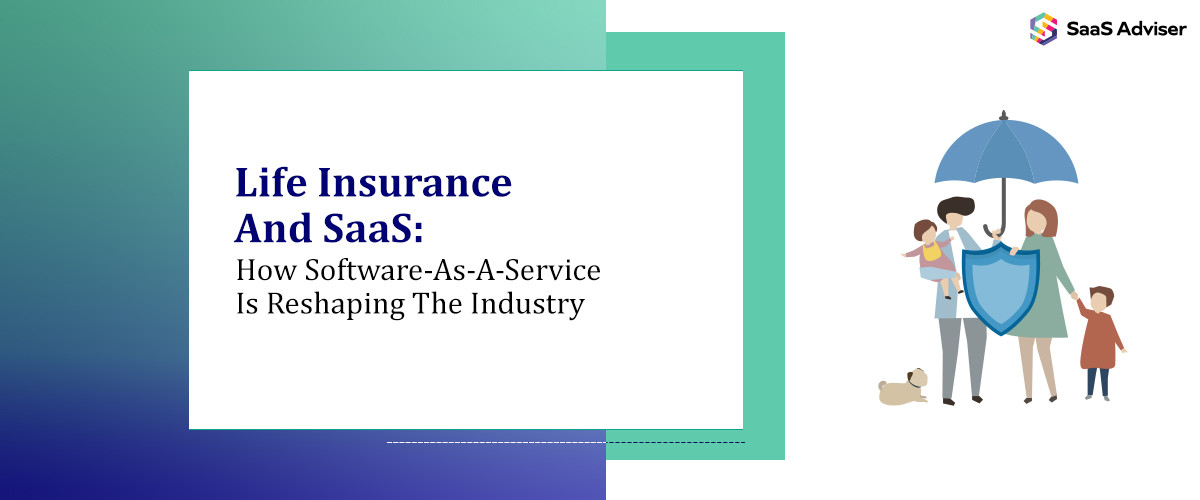
This is where SaaS (Software-as-a-Service) reaches the fore. By utilising insurance operations within cloud-based, flexible platforms, SaaS technology is massively changing the customer experience and how insurers operate. This detailed article offers an overview of life insurance and the ground-breaking impact of SaaS.
The Role of SaaS in Financial Literacy
Life insurance is often misunderstood, with many Australians finding themselves underinsured or entirely unaware of the cover available to them. SaaS platforms can help bridge this gap by embedding educational tools directly into the client’s journey, including:
-
Interactive calculators that estimate protection needs
-
Personalised learning modules explaining complex policy terms
These features empower customers to make more informed, astute, and confident decisions. By building financial literacy into the very fabric of the insurance process, SaaS doesn’t just sell policies — it helps create confident, well-protected policyholders.
Beyond improving operational efficiency, SaaS also reduces reliance on energy-heavy data centres maintained by individual insurers. By leveraging shared, cloud-hosted infrastructure, companies take a proactive approach to lowering carbon emissions while achieving economies of scale — a win for both the bottom line and the environment.
What SaaS Means for Life Insurance
SaaS refers to:
-
Cloud-hosted software that companies can access through subscription models instead of investing in expensive infrastructure.
For life insurance providers, SaaS platforms are the ideal tool to handle everything from underwriti
ng to claims management and customer service to policy administration.
Instead of being tied to legacy IT systems that are inflexible, outdated, and costly, insurers now benefit from software that:
-
Updates in real time
-
Scales as their business grows
-
Integrates easily with digital tools customers already use
This technological breakthrough is significant because, due to its very nature, life insurance is, or should be, data-driven. Every step of the process, from calculating risk to setting premiums, relies on information, and the more information, the more accurate the policy. SaaS platforms provide all the tools required to make this data work smarter and faster.
SaaS and the Modern Customer Journey
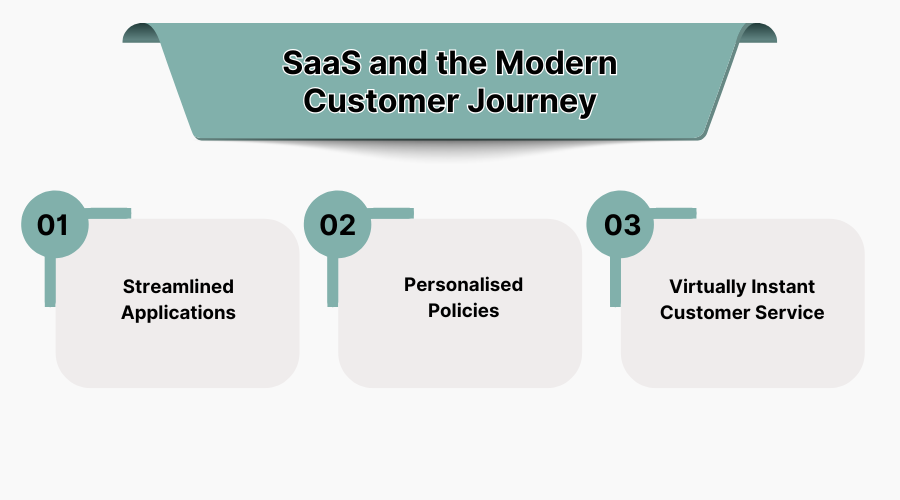
1. Streamlined Applications
In previous years, applying for life insurance entailed filling in countless forms and waiting weeks or even months for final approval. Advanced SaaS platforms eliminate a large proportion of this tedious process and streamline applications by utilising:
-
Dynamic questionnaires
-
Electronic signatures
-
Instant submission
For time-deficient consumers, this equates to superior convenience. For insurers, it creates a smoother onboarding experience and reduces the number of abandoned applications.
2. Personalised Policies
SaaS solutions can integrate with analytics tools that draw on:
-
Lifestyle
-
Health
-
Financial data
With accurate predictive modelling, insurers can now design policies that are more attuned to an individual's risk profile and offer policies that are aligned with the individual rather than referring to broad averages in order to make a decision.
An example of this personalised modelling can be illustrated by something as seemingly innocuous as a fitness wearable. Insurers who have access to this personal information may be inclined to lower premiums or reward customers with other incentives based on their personal data. SaaS platforms have the potential to incorporate vast swathes of information, allowing specific adjustments to be automated and even referred to in real time.
3. Virtually Instant Customer Service
Customers are no longer satisfied to wait for a call back at a later date and now demand 24/7 instant support. SaaS-powered virtual assistants and chatbots allow insurers to answer the following types of queries in minutes, if not seconds:
-
Policy questions
-
Premium queries
-
Claims updates
Behind the scenes, SaaS tools also give human agents a single, user-friendly dashboard view of a customer’s history. This allows them to provide a faster, more informed service when needed.
SaaS for Insurers: Efficiency and Innovation
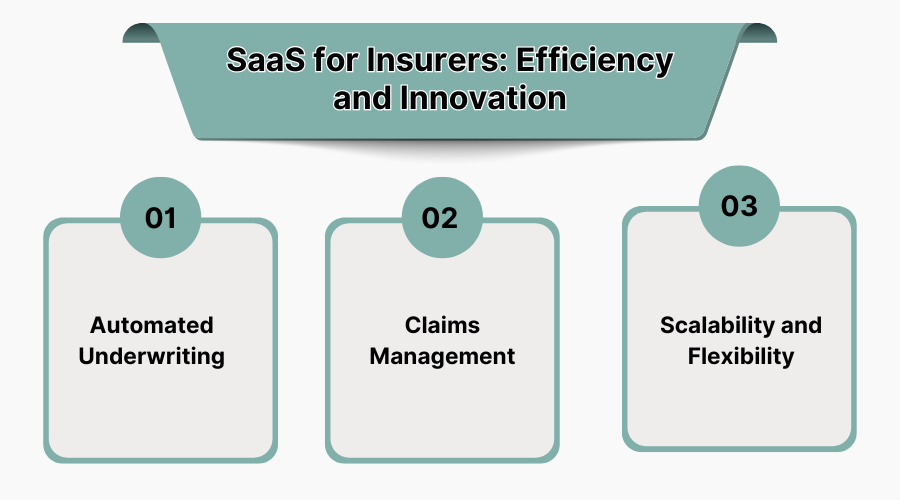
Once the online-based life insurance comparison is completed, AI can now quickly and efficiently facilitate the following:
1. Automated Underwriting
Historically labour-intensive, automated underwriting has eliminated the need for manual reviews of:
-
Medical records
-
Financial documents
-
Personal history
SaaS-powered platforms and tools use AI and machine learning to access and analyse personal data, therefore significantly reducing the time it takes to receive a decision. A process that previously could have taken weeks can now be completed in hours, giving applicants a better level of customer service and facilitating a more streamlined process for insurers.
2. Claims Management
The claims process is the moment of truth in life insurance. SaaS platforms streamline it by:
-
Digitising document submission: Automating checks against policy terms.
-
Enabling direct payment integrations for faster payouts: Less stress for families during an already difficult time. Reduced costs and higher customer trust for insurers.
3. Scalability and Flexibility
Insurance companies must adapt quickly to:
-
Regulatory changes
-
Market conditions and trends
-
Sudden increases in demand
SaaS offers them a level of scalability that legacy systems can’t hope to match. Compliance updates and new features can instantly be rolled out across the entire platform, without expensive on-site upgrades.
SaaS and Data in Life Insurance
Data is the backbone of the life insurance industry, and SaaS platforms are optimised for handling it securely and efficiently.
Integration with Wearables and Superior Levels of Trust
The ultra-modern technology used in today’s SaaS systems gives insurers the means to receive real-time insights by connecting with everything from wearable devices, health and fitness apps and perhaps even some elements of smart home technology. Although some confidentiality issues may arise as a result of this technology, it will enable insurers to issue fully personalised policies that can be adjusted based on data-driven information.
Fraud Detection and Risk Management
Using data collected from multiple geo locations or insurers, SaaS systems have the capacity to pinpoint any unusual claim patterns or suspicious activity, allowing insurers to identify suspected fraud and manage risk effectively.
Compliance and Security
Life insurance is heavily regulated by government bodies across the world, with any breaches of customer confidentiality leading to severe legal and reputational damage.
SaaS providers invest heavily in:
-
State-of-the-art encryption
-
Compliance frameworks
-
Secure hosting environments
These ensure that insurers stay on the right side of privacy laws.
SaaS Business Models in Life Insurance
The SaaS subscription model aligns well with modern insurance practices, as follows:
-
Monthly or annual subscriptions for insurers: Ditching significant upfront IT costs in favour of a predictable fee.
-
Modular functionality: Insurers can choose only the features they need, such as:
-
Policy administration
-
Customer relationship management (CRM)
-
Claims management
-
Regular updates: SaaS providers continuously upgrade systems, fix bugs and utilise the latest tech, meaning insurers will never fall behind competitors.
The flexibility employed by SaaS systems is in some way similar to the life insurance industry as a whole, with the emphasis shifting away from the ‘one size fits all’ system to a faster, more efficient and customer-friendly approach.
The Customer Benefits of SaaS in Life Insurance
For policyholders, the influence of SaaS reveals itself in several practical, impactful ways, namely:
-
Faster application process with shorter approval times.
-
Total Transparency - Online, personalised information portals give customers clear visibility into their policy details, enabling them to report any issues or make changes.
-
Clear communication channels, such as chatbots, personalised updates, and automated reminders, keep customers informed throughout every step of the life cycles of their policies.
-
More competitive premiums: By reducing inefficiencies, SaaS has the potential to help insurers offer cheaper premiums and help them compete in a crowded marketplace.
Potential Issues of SaaS in Life Insurance
Although the tech employed within SaaS is groundbreaking, there are a number of obstacles that must be taken into account before widespread adoption. These include, but are not limited to:
-
Data Privacy: Trust is key, and insurers must go above and beyond to ensure their customers' personal data is not breached. This can have devastating consequences for both the customer and insurer.
-
Compatibility with Older Systems: Many insurers still use older systems and software, making a total system upgrade more viable than migration.
-
Demographic Dilemmas: While Gen Z and millennials feel completely at ease with the latest tech, older customers may have issues and prefer the traditional application process.
SaaS and the Future of Life Insurance
SaaS and the advent of even more advanced technology will shape the future of life insurance, as more insurers integrate the tech into their system, offering:
-
Instant online life insurance that can be bought at the click of a mouse and adjusted in real time as needs and circumstances change
-
Usage-based pricing that can be adapted in real time through data provided by wearables and health & fitness apps.
-
Global scalability: The insurer is able to offer a multinational level of cover serving the needs of both local and international customers.
Perhaps the most important part of the equation and one that brings untold benefits to both insurers and their customers, is the ease of administration from application to claim settlement.
SaaS and Maintaining the Human Element
Although efficiency is at the core of integrating SaaS into the insurance industry, many, or perhaps even the majority of people, still seek the reassurance of a human when considering buying a life insurance policy or performing a life insurance comparison.
SaaS supports this delicate balance by equipping advisers and call centre teams with:
-
Integrated dashboards
-
Policy histories
-
Predictive insights
The customer experience is an integral part of why people choose one insurance provider over another, and SaaS enhances the UX by removing all the admin clutter, delivering a personal experience that is smooth and stress-free. With all the pertinent information regarding their policy at their fingertips, the insurer's customer service team will take on a more reassuring role rather than troubleshooting intricate questions and queries relating to small print.
Sustainability
SaaS adoption in life insurance can also offer sustainable benefits by reducing the need for:
-
Physical paperwork
-
In-person branch visits
-
Extensive IT infrastructure
For insurers, this means they can adhere to environmental best practices and reassure their customers that they are doing their bit for the environment. If a company highlights their commitment to environmental sustainability, it contributes to the overall profile of the organisation and its commitment to aligning with modern values, which in turn has the potential to gain a competitive edge.
Conclusion: A New Era of Life Insurance
The life insurance industry is no longer a world of red tape, small print, slow application and claim processing and confusing jargon. With the introduction of SaaS, the industry is delivering a more streamlined and efficient product that aligns with the demands of the 21st-century consumer.
For insurers, SaaS delivers:
-
Efficiency
-
Scalability
-
Better risk management
For customers, it means policies that are easier to:
-
Source
-
Research
-
Purchase
-
Manage
The constant evolution of SaaS technology will ensure the processes become even more streamlined, enabling insurers to remain competitive and improve customer retention. Customer expectations have changed, and the rise of SaaS ensures their elevated expectations in terms of product and customer service will be met and perhaps even exceeded.
SaaS is helping insurers automate workflows, improve customer experience, and launch digital-first services faster.
SaaS tools reduce operational costs, enhance scalability, and enable real-time data access for smarter decisions.
Yes, SaaS platforms offer personalized dashboards, faster policy processing, and seamless digital claims.
Flexibility, cost-efficiency, improved analytics, and enhanced data security are major advantages.