What we'll cover
Share with your community!


Get Free Consultation
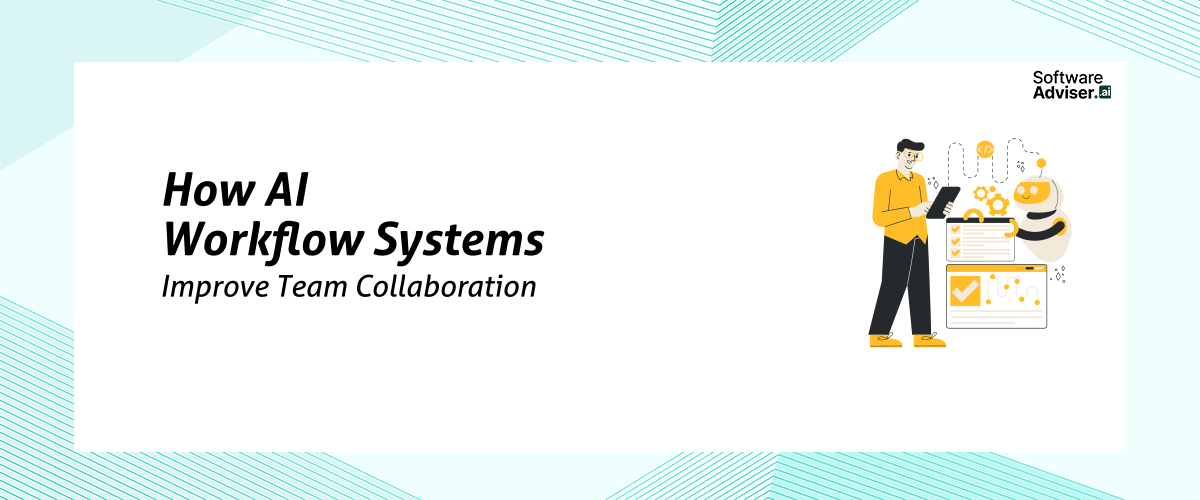
How AI Workflow Systems Improve Team Collaboration
 Dokas mile
Modern pass-functional tasks regularly fail not because of a lack of talent, but due to fragmented inner conversation and administrative delays. Teams regularly lose hours syncing updates among different packages, searching for comments over corporate chat channels, and manually assigning duties throughout exclusive boards. This broken execution drains corporate energy, stalls project momentum, and creates massive silos between departments. To fix these core bottlenecks, businesses are moving away from passive digital checklists. They are adopting smart AI Workflow layers to unify their operations. Instead of leaving workers to manage data transfers manually, intelligent engines handle background logistics, coordinate updates, and clear data pathways on the fly. This guide breaks down how deploying automated collaboration platforms fixes communication lag, increases operational visibility, and transforms cross-functional teamwork across your enterprise.
The Reality of Modern Corporate Operations
Let's look closely at how teams handle daily project tracking right now. Most offices rely on basic shared boards or cloud sheets to follow their tasks. This framework requires constant manual upkeep. Employees must log in, manually shift cards across boards, and ping teammates for updates. This setup is highly prone to human error. Shifting your focus toward comprehensive AI workflow automation changes this dynamic completely. It turns passive tracking into a self-managing ecosystem.
When your business updates its shared systems, the application stops being just a silent dashboard. It actively tracks project movements, alerts the next person in line, and cleans up old pipeline tasks. It coordinates work without requiring constant status meetings. This transition allows your teams to focus entirely on creative and strategic goals instead of wasting half their day on basic system administration.
Breaking Down Structural Bottlenecks with Smart Auditing
Before building an automated system, a company needs to understand exactly where its projects hit a wall. Many teams waste valuable hours because they do not see the hidden delays in their processes. Using advanced AI tools for business workflow analysis process mapping in 2026 platforms solves this visibility problem instantly.
These diagnostic tools act like an actual-time X-ray device on your company's techniques. They scan your virtual asset logs, show how lengthy a report sits within the approval queue, and point out exactly which paintings slow down. This deep records insight permits operations managers to restore damaged handoffs, redesign undertaking layouts, and drop useless checkpoints.It provides a clean, validated baseline for your team workflows before you even write a single automated rule.
The Power of Autonomous Agents in Team Environments
Traditional automation follows very simple, rigid tracks. If a worker completes task A, the system moves it to folder B. While this helps with data entry, it cannot handle real-world challenges or complex decision-making. This limitation is why modern companies are introducing multi-layered AI agentic workflows into their production environments.
Unlike simple scripts, these smart agents can easily analyze context, understand complex priorities, and make independent choices. For instance, if a purchaser submits an urgent layout trade, the tool does not just ship a clean notification. It reads the unique request, locates the best fashion designer based on their contemporary availability, and attaches the matching undertaking belongings automatically. This intelligent orchestration keeps work flowing perfectly around the clock without demanding constant human supervision.
Driving Efficiency in Specialized Content Environments
The impact of intelligent automation shows up clearly when looking at highly complex content industries. Managing large editorial projects or content schedules involves balancing multiple writers, legal reviews, and layout designers simultaneously. Relying on manual emails to handle these handoffs frequently creates severe delivery bottlenecks.
Deploying specialized ai in publishing workflows 2026 frameworks completely clears these content roadblocks. The software reads raw text drafts, checks them against internal brand compliance guidelines, flags formatting issues, and routes clean files to editors instantly.
By running these smart checks inside a unified Collaboration Platform environment, your production teams escape endless review loops. Everyone works on the exact same active file, allowing writers and editors to collaborate in real time while background algorithms handle the structural verification.
Bridging the Gap for Field and Trade Businesses
Many people think intelligent systems only work for digital tech companies or financial offices. However, local field operations and trade service teams face massive administrative challenges that slow down their growth. Managing sales leads, setting up job quotes, and keeping field crews aligned requires a massive amount of manual coordination.
A great example of this in action is deploying an AI lead generation automation painting trade business workflow model to run client acquisition. When a customer requests an estimate online, the system processes their home details instantly. It schedules a field worker, tracks material costs, and updates the central dashboard immediately.
Integrating this field data with your Project Management Systems ensures that your office managers and field teams stay perfectly synchronized. It completely removes communication gaps between the job site and the back office.
Harmonizing Human Creativity with Automated Precision
The goal of modern technology is never to replace the human element of your business. It is about maximizing your team's real potential. The actual magic takes place when you focus on easily integrating AI into human workflows throughout your departments.
This unified approach permits your personnel to focus entirely on deep trouble-fixing, client relationships, and strategic planning. Meanwhile, your background systems handle repetitive data tracking, folder management, and reporting logistics. This creates an optimal corporate environment where automation takes care of the boring administrative tasks, and your people handle the real creative breakthroughs.
Choosing the Right Platform Stack for Your Organization
You do not need to buy a dozen different specialized tools to build a highly collaborative workspace. Over-complicating your technology setup actually damages teamwork. It creates fragmented data pools and drives up software costs. Focus on choosing accessible tools that offer open software integrations and clear, simple dashboards.
Using an intuitive AI workflow builder allows your department heads to sketch out their custom business rules without needing a team of developers. Your primary AI Workflow Automation engine should connect effortlessly with your existing Task Management Software tools. This data consistency ensures that your project boards update automatically across your whole corporate network, keeping your files safe and your communication clear.
If your primary goal is scaling up cross-functional project tracking, select systems that emphasize deep integration with modern Team Communication Tools. This keeps your internal discussion channels organized and helps your staff share files across teams without any friction.
Overcoming Adoption Challenges and Resistance
Shifting your company to an automatic surroundings introduces wonderful operational challenges that require a clear strategy. The maximum not unusual hurdle is cultural resistance from employees who worry that the new era may replace them.
To overcome this roadblock, design your transformation method around whole transparency. Show your staff how an integrated AI Workflow layer is built to help them, not replace them. Train your managers to build custom rules using a flexible AI workflow builder setup. This hands-on approach builds confidence, helps your team customize the technology to their specific daily routines, and turns structural changes into a shared success.
The Strategic Roadmap for Scalable Production
The business automation world is moving incredibly fast. Over the next few quarters, we will see a major industry transition toward fully predictive enterprise frameworks that manage entire operational networks from a single dashboard.
To secure your market position, make sure your core Project Management Systems connect directly with modern Predictive Performance Software layers. This deep digital setup helps your leadership teams spot process bottlenecks early, balance team workloads, and grow your business volume without breaking your existing software frameworks.
Conclusion :
Embracing computerized project layout is no longer just a cool tech experiment for forward-thinking brands. It is the definitive operational basis needed to hold teams aligned and aggressive in a quick-paced marketplace. Shifting away from slow manual updates and launching smart data pipelines lets your business complete projects with absolute precision.
Whether your number one purpose this month is to improve your assignment infrastructure using current AI Workflow Automation systems, enhance team connectivity through shared Collaboration Platforms, or track your everyday assignments the usage of Project Management Systems, the final target is equal. You need a workspace that runs smoother, faster, and smarter. Taking that first easy step today ensures your enterprise remains sharp, agile, and absolutely equipped to steer the market.
FAQ's
An AI workflow system automates tasks, improves collaboration, and streamlines business processes using artificial intelligence.
They automate repetitive tasks, enhance communication, and keep teams aligned with real-time updates.
AI workflow automation uses artificial intelligence to automate business workflows, approvals, and task management.
AI agentic workflows use autonomous AI agents to make decisions, coordinate tasks, and optimize workflows with minimal human intervention.
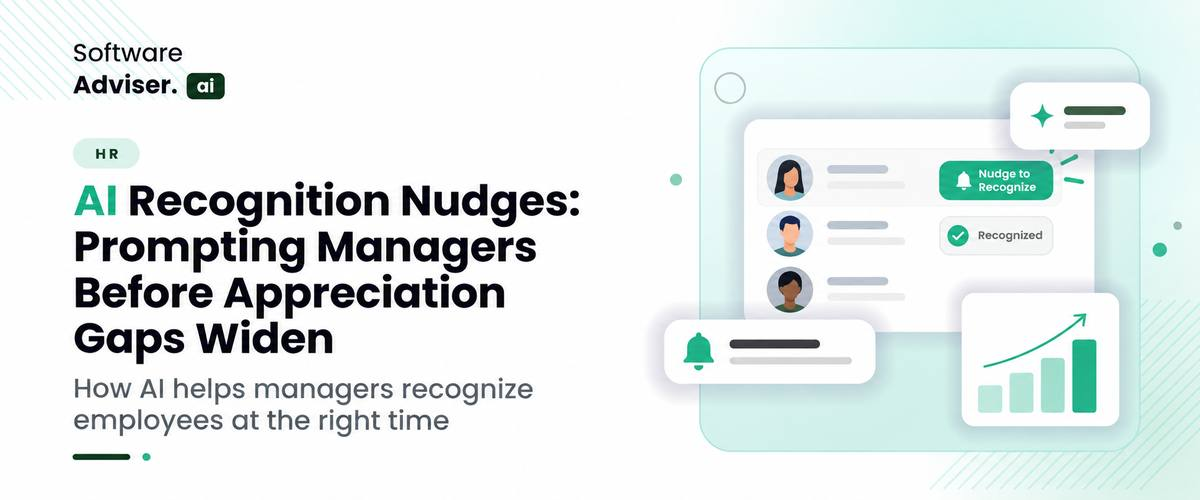
In rapidly moving American businesses, AI employee recognition is frequently placed on the back burner until the time of an annual performance review [...]
Dokas mile
Running a company in 2026 is tough because deadlines are getting shorter and daily operational files just keep piling up. That is exactly why building [...]
Dokas mile
The software tools for finding email addresses are revolutionizing the process of identifying prospects and enabling teams to concentrate on finalizin [...]