
What we'll cover
Share with your community!


Get Free Consultation
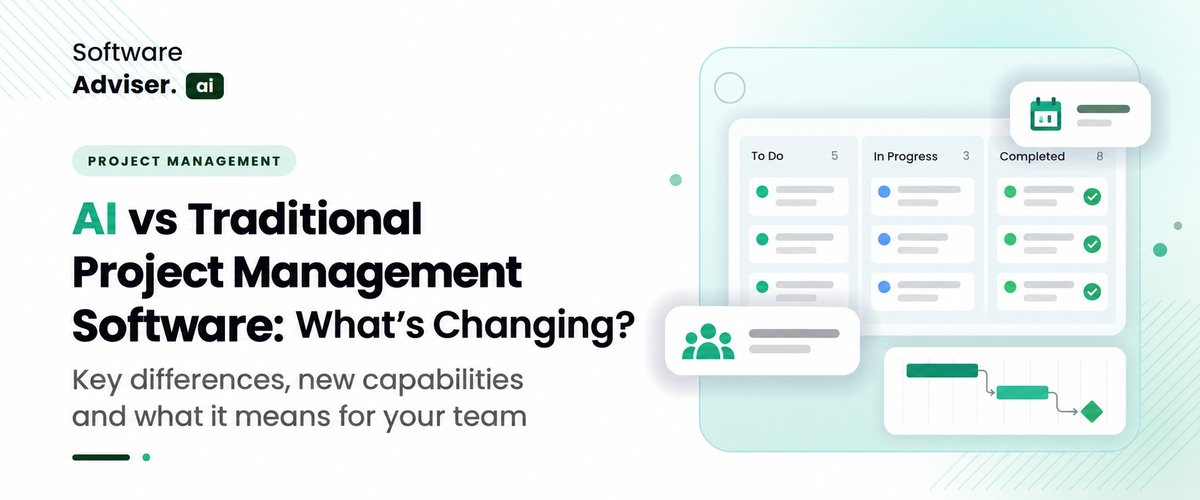
AI vs Traditional Project Management Software: What’s Changing?
 Dokas mile
In the realm of project management, we are witnessing a radical transition from manual coordination with lagged process history to a new phase in which monitoring and proactive orchestration through data have an established role. Traditional project management tools depend on individuals to convert active project updates into passive reports and schedules. New-generation AI project management tools, however, effectively process live data, eliminate repetitive administrative functions, manage resources better, and determine risks ahead of time rather than after the fact. Therefore, while traditional tools provide a record of what went on, AI systems take part in the process.
What is AI Project Management Software?
AI project management software is a new kind of working tool that is based on AI technologies, including machine learning, natural language processing, and predictive analysis, enabling companies to revolutionize AI employee monitoring and management by automating the whole process. Instead of relying on employees to do their job manually, these tools do this automatically on behalf of the employees. They collect and analyze real-time workspace data and generate tasks automatically, allocate resources based on the availability of team members, predict and identify possible delays in project delivery, and summarize complex reports from different teams.
The US market is moving towards mainstream adoption of platforms across IT services, Global Capability Centers, Software as a Service scale-ups, and big digital enterprises. Project managers working across multiple time zones within the US help build asynchronous status updates while keeping their SLAs intact without frequent manual follow-ups. The push towards adoption has been fueled by demand for efficiency as innovations like automated meeting summaries, predictive resource consumption, and voice-to-text task updates via mobile and WhatsApp are being leveraged to reduce costs and speed up customer delivery.
Did you know?
Managers in the US frequently spend around 40% of their work period doing manual updates, following up, and doing logistics-type jobs. AI PM tools are helping achieve a more than 60% reduction in manual effort, thus allowing project teams to gain up to 10 hours of work per person.
Why is Project Management Software changing so Fast Right now?
The rapid growth of Global Capability Centers (GCCs) and IT delivery hubs in tech corridors has shifted project management software from a simplified back-office aggregation to a highly challenging engine that works in real time. Recently, North American delivery leaders have been managing the impact of global projects that extend across different time zones so that constant syncing between local execution teams and management at a global level becomes a necessity. Today, the evolution of methodologies is making it possible to have advanced software that will replace manual reporting via a unified governance platform and provide visibility of SLAs, sprint cycles, and vendor pipeline.
The rising delivery pressures and shrinking margins provide US enterprises with the necessity to introduce hyper-efficiency in the tech stacks. Conventional static boards fall short when time is spent on updating spreadsheets instead of doing some productive work. To eliminate bench costs, issues with personnel switching, and scope creep, new platforms begin to incorporate AI technology, automated workflow bots, and mobile applications like WhatsApp and MS Teams.
The intense rivalry amongst software as a service (SaaS) platforms, including globally recognized products such as ClickUp, Atlassian, and Monday.com, as well as locally produced leaders, has prompted the onset of an active battlefield for new functionalities. Service providers have advanced from mere task boards to providing the capability of automatic budgeting, risk forecasting, and quick summaries of meetings straight from the box. In the United States, the nation with the highest priority on cutting costs and fast implementation, software solutions that do not include automation of processes, predicting risks, and resource distribution are becoming obsolete.
How does AI Project Management Software differ from traditional tools?
|
Core Capability |
Traditional PM Software |
AI PM Software |
|
Data & Updates |
Manual entry (humans update status, log hours, move cards). |
Automated ingestion (pulls updates from code repos, chats, emails, and docs). |
|
Task Allocation |
Manual assigning by a project manager based on gut check/availability. |
Dynamic balancing (analyzes workload capacity and skill sets to optimize assignments). |
|
Risk Management |
Lagging/Reactive: Shows delays after a deadline is missed. |
Predictive/Proactive: Forecasts bottleneck risks weeks in advance based on historical velocity. |
|
Reporting & Admin |
Manual creation of status decks and Gantt chart maintenance. |
Generative drafting (auto-generates executive summaries, action items, and status reports). |
|
Adaptability |
Rigid schedules that require manual baseline recalculations when plans shift. |
Dynamic recalculation (automatically re-levels resources and shifts timelines when delays occur). |
What is shifting in the US Project Management Software Market?
North America continues to hold the largest share (over 40%) of the global project management software market, making the US the primary epicenter for vendor competition and operational shifts.
- Agentic AI Taking Over: Software platforms have become more than just text summary applications, with many now acting as autonomous program agents. They’re able to AI applicant tracking changes in a project modify interdependencies, reroute manpower, and start risk control actions without requiring any involvement from humans.
- Tool Consolidation and Formation of Unified Workspace: Organizations in the United States are trying to let go of the fragmented technology stack (for example, using different programs for communications, documentation, work progress tracking, and whiteboarding). Software vendors are in pursuit of building combined work platforms and purchasing similar technologies like integration of web browsers and task management systems to avoid switching between software.
- Move Towards Using Predictive Analytics for Risk: Customers are starting to expect their software to provide predictive analysis instead of static historical reporting. New programs are able to calculate work speed, historical success rates, and connections between projects to warn about the danger of exceeding budget or formula before it actually happens.
- Prevalence of Cloud and SaaS Models: A cloud-native platform refers to subscription-based deployments, which are responsible for almost all of the recent technology acquisitions. The technology makes it possible to conduct real-time communication in a distributed and hybrid workforce.
- Multi-Purpose Styles: The use of project management tools has expanded beyond the frame of IT and programming teams to some other fields such as healthcare, legal, marketing, construction, and finance, requiring the suppliers to develop more flexible and user-friendly interfaces.
- Corporate interest in Security and Data Management: As artificial intelligence consumes confidential data like source code and internal messages, companies in the USA are focused on ensuring compliance with the SOC 2 regulations, residency policy, and corporate privacy policy.
Which Teams and Businesses should Care about this Shift?
- IT & Software Development Teams: AI functionality has given software teams access to automatic ingestion of code repositories as well as predicting delivery delays and automatic generation of release notes while spreading the workload of sprints according to the performance in the past.
- Enterprise PMOs Department: Senior executives and executives of PMOs take advantage of risk prediction and dynamic recalculation ability to control the portfolio, which cancels the need to manually prepare their status decks and detect possible budget and time overruns in advance.
- Professional Services & Agencies: Client-facing companies such as marketing and consulting as well as design companies make use of functions of task assignment automation so that billable hours can be increased, team fatigue will be avoided, and project budget estimates will become more precise.
- Healthcare & Life Sciences: Those organizations that need to manage clinical tests, facility work, and compliance have access to specialized tools for automated document processing.
- Construction and Engineering: Project managers of complicated field assignments that require multiple parties involved utilize Artificial Intelligence (AI) technology to monitor complicated activities, track the progress of milestone establishment, and address issues such as supply chain difficulties and safety issues.
- Cross-Department Business Organizations (Marketing, Operations, and HR): Non-technical divisions with high administrative tasks use conversational interfaces and autonomous robots to automate the process of dealing with basic task distribution, requests, or recapping meetings without requiring a specialized project manager's training.
- Cross-Department Case Studies: The first requirement to start using project management software effectively will be to prepare the data for the algorithms. It means making sure predictive algorithms carry data clean enough to deliver correct forecasts. The easiest way to begin working with process automation is to start small by the way of introducing simple administrative process automations such as task routing and meeting summaries.
What are the Biggest Benefits and Risks of Switching to AI-powered Tools?
- Drastic Administrative Reduction: Tasks such as writing status updates, note-taking in meetings, ticketing, and scheduling have now been automated with the use of AI technology. Project managers can save between 2 and 5 hours on average in a week in performing project management tasks.
- Predictive Risk & Bottleneck Detection: Algorithms can now predict missed schedules and cost overruns ahead of time using data from historical records showing the speed of work and what was going on prior to this particular task.
- Faster Cross-Team Alignment: Members of non-technical teams like Marketing, Human Resources, and Legal will be able to create workflows and monitor.
- Dynamic Resource Optimization: The use of artificial intelligence allows managers to distribute work among members of the team in real-time to keep the team from burning out and recover lost productive hours without hiring additional personnel.
- Real-Time Portfolio Visibility: Automated information retrieval from emails, repositories, and chat allows top managers to receive accurate health summaries of the affairs taking place in projects on a regular basis without making check-up calls every week.
- Better Budgeting and Estimation: Machine learning can compare the current scope of work with the information gathered previously to get better estimates, timelines, and resource quotes.
Conclusion
The development from conventional to AI-integrated project management tools signifies a change from unchanging assessment to enterprise-level improvement. Conventional tools rely on human actions to rely on the past instead of providing insight into future purposes. Solutions directed by artificial intelligence can take care of day-to-day management tasks, continually adjust the workload of the members of the team, and estimate risks before deadlines are missed, converting project management into an evidence-based management system. To find potential business solutions for your team, visit SoftwareAdviser.ai, an AI platform useful for identifying, comparing, and choosing professional software packages according to your needs, budget, and type of business.
FAQ's
Traditional tools function as passive systems of record that rely on manual updates, whereas AI tools act as proactive systems of action that automate data entry and optimize workflows in real time.
No, AI automates administrative tasks and predicts risks, allowing human project managers to shift their focus toward strategy, leadership, and stakeholder management.
Traditional software tracks delays after they occur, while AI analyzes historical velocity and live team data to forecast bottlenecks weeks before they happen.
AI dynamically assigns and balances tasks based on real-time team availability, skills, and workload capacity rather than relying on manual assignment.
No, AI software automatically tracks and ingests project updates from connected tools like emails, chats, and code repositories.
The way in which employers manage human resources in the United States is going through an unprecedented transformation. As organizations continue to [...]

David N. Wilks
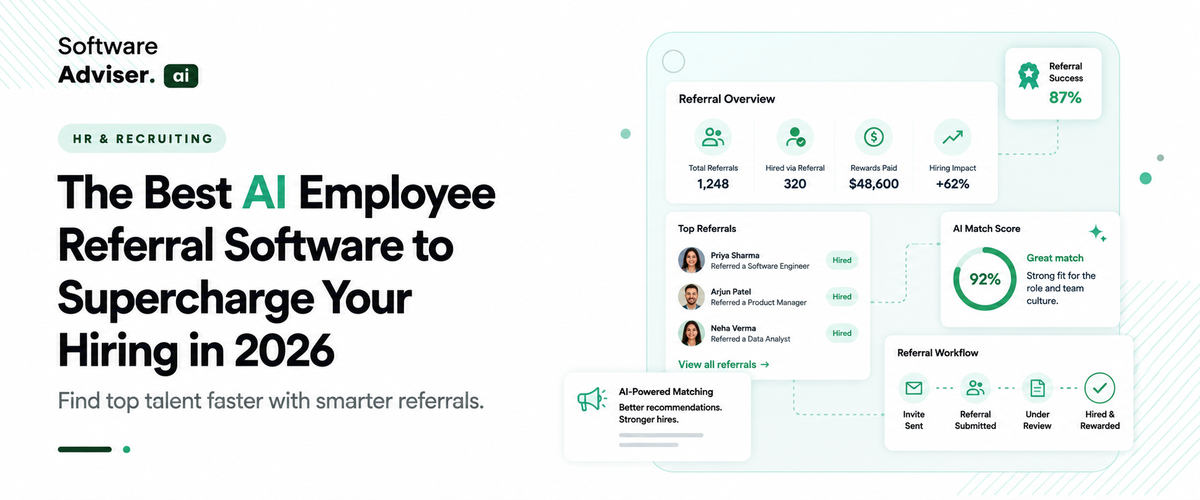
Employee referrals are sort of seen as the holy grail of recruitment, because they always bring in strong quality candidates who stick around longer a [...]
Dokas mile
Buying AI software is the easy part. Getting your team to actually use it, without grinding the daily work to a halt, is where most companies trip. Th [...]