
What we'll cover
Share with your community!


Get Free Consultation

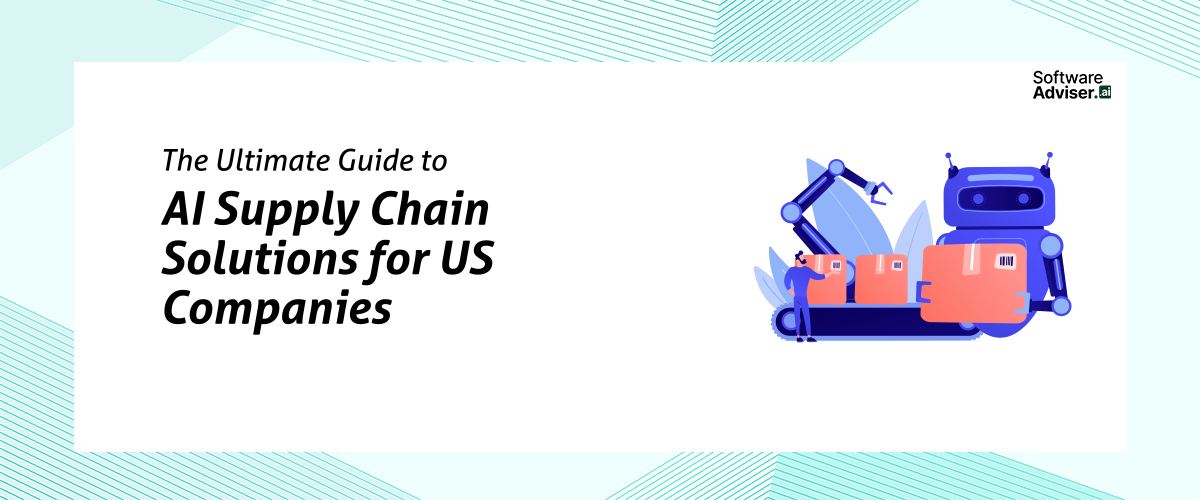
The Ultimate Guide to AI Supply Chain Solutions for US Companies
 David N. Wilks
Companies today increasingly need to fulfill both operational and logistical challenges. The supply chains are highly affected by market swings and complex vendor systems which stretch them to their limits. In order to mitigate these challenges and obtain clear operational visibility, corporate managers rely heavily on automated systems. The increasing use of artificial intelligence for supply chain operations is transforming the functioning of domestic distribution channels entirely. Accordingly, progressive enterprise management teams are implementing advanced prediction models for smooth and unbroken business functioning.
 Looking for AI Supply Chain Management Software? Check out software Adviser.ai’s List of the Best AI Supply Chain Management Software in USA for your business.
 US companies are now directing huge budgets towards AI supply chain applications at an increasingly rapid pace due to strategic and well-defined reasons. These investments protect business margins against unforeseen increases in transport costs and are also powerful solutions to a major labour shortage issue across hubs throughout the country. This tech guide is touching on how AI is now ramping up forecasting in supply chain. Simply put, this manual gives you useful software assessment criteria, clear ROI timelines and models that ensure enterprise success.
What Is AI in Supply Chain and Why Does It Matter in 2026?
Definition of AI in Supply Chain Management
The term Artificial Intelligence in SCM means application of some advanced machine learning model, neural processing network, a contextual data analytics, and so on. They work within business processes. These intelligent frameworks process bullets of historical data, live market signals and weather dynamics to do sophisticated analytical tasks. Further, these frameworks provide the correct answers at the right times to the logistical issues that crop everyday instead of humans.
Key Technologies Powering Modern Supply Chains
Many base technologies to upgrade older distribution systems are available in the market. One of them is about machine learning, which assesses the data with multi-layered complexity to discover the latent consumption patterns that come from areas of distribution platforms. Another technology is natural language processing, which goes through global supplier contracts for hidden liabilities. Computer vision scans goods in warehouses for damages. Ultimately, autonomous intelligent agents carry out commonly occurring communications which automatically reroute the delayed shipments of freights with no continual human supervision.
DO YOU KNOW?
More than 70% of logistics managers at Fortune 500 companies have completely substituted obsolete manual tracking systems with predictive real-time platforms due to persistent cross-border shipping delays.
Benefits of Adopting Artificial Intelligence Supply Chain Solutions
By implementing comprehensive AI supply chain solutions, organizations can achieve significant structural benefits. First of all, businesses prevent costly clerical mistakes through the automation of manual invoicing and scheduling workflows. Second, data-powered procuring models lower material expenses by timing bulk orders just-in-time ahead of price increases. Getting full cross-functional visibility enables teams to detect potential supplier failures days ahead of disruptions to the domestic production schedule.
Current Trends Shaping Supply Chain Transformation
Incorporation of intelligence into logistics ecosystem is this year’s key trend. Organizations will also move from recording and tracking organizational data to an entire digital eco-system. Furthermore, in the digital ecosystem, the individual functional tools will share data seamlessly and instantly. Moreover, the moving widgets of one such functional tool will also cause an action at another such tool automatically. Integration will also create a self-correcting situation. It can be observed even more.
Key Features to Look for in AI Supply Chain Software
Demand Forecasting and Predictive Analytics
High-performing software must feature sophisticated predictive intelligence engines that look beyond basic historical trends. The platform should evaluate regional economic updates, social shifts, and local weather patterns to forecast future requirements. By using these advanced analytics, businesses eliminate guesswork and maintain lean warehouse operations throughout fluctuating seasonal cycles.
Inventory Optimization
Modern inventory controls require dynamic management that adjusts to live transactional data. Effective platforms continuously monitor stock levels across multiple retail channels and warehouses, instantly calculating optimal safety margins. This continuous balancing act ensures that companies never tie up millions of dollars in excess safety stock while keeping order fulfillment rates near perfect.
Supplier Risk Management
Stable procurement requires continuous tracking of third-party vendor performance metrics. The software must aggregate delivery histories, financial health markers, and regional compliance updates to score vendor reliability. If a critical supplier shows signs of operational delay, the system alerts procurement teams to shift orders to approved backup sources.
Transportation and Route Planning
Freight tracking systems must optimize delivery routes using live road conditions, port congestion markers, and fuel cost updates. By dynamically mapping routes, these platforms help fleet dispatchers save thousands of dollars on long-haul fuel expenses. Additionally, smart dispatching improves driver utilization rates and guarantees realistic arrival windows for retail clients.
Real-Time Visibility and Reporting
Fragmented data pipelines hurt operational agility. Modern supply chain platforms compile deep metrics into accessible, unified dashboards. These systems monitor every SKU from the initial manufacturing facility through final last-mile delivery, allowing managers to fix transit exceptions before they escalate into customer service issues.

Pro-tip
When evaluating software options, ensure the platform offers open API integrations. A system that cannot connect with your existing ERP will create data silos, undermining the speed of your automated planning tools.
Automation and Workflow Management
Operational efficiency increases when software handles time-consuming administrative tasks automatically. Modern platforms use intelligent rules to issue purchase orders, verify supplier receipts, and trigger warehouse restocking tasks. This extensive automation frees supply chain analysts to focus on long-term strategy and critical vendor negotiations.
Best AI Supply Chain Software for US Companies in 2026
Overview of Leading AI Supply Chain Platforms
The enterprise software marketplace offers powerful, specialized tools built to resolve distinct logistical issues. Industry leaders like SAP IBP and Oracle Cloud SCM provide extensive, all-in-one management tools tailored for multi-national corporations. Meanwhile, specialized platforms like Blue Yonder and Coupa excel at complex warehouse routing and automated procurement workflows. Smaller, growing brands frequently choose agile platforms like Kinaxis, which offer rapid deployment timelines and user-friendly interfaces.
Core Features and Strengths
Each major platform delivers distinct operational advantages based on its technical architecture. SAP IBP provides unmatched deep data integration with existing corporate finance systems, making it highly effective for complex corporate budgeting. Blue Yonder stands out for its high-performance machine learning models that excel at grid-level demand forecasting. In contrast, Coupa focuses heavily on corporate spend analysis, helping procurement teams optimize vendor contract compliance automatically.
Best Use Cases by Business Size
Enterprise giants with extensive international networks require the multi-layered tracking capabilities found in SAP or Oracle. Mid-sized US manufacturers facing regional distribution shifts usually see better returns from Kinaxis due to its rapid simulation features. For specialized e-commerce operations focused on high-volume direct-to-consumer shipping, compact tools like Logility provide excellent out-of-the-box optimization features without requiring lengthy implementation timelines.
Integration Capabilities
The true value of any automated management tool depends on its ability to exchange data with current operational systems. Top-tier tools offer native connectors that link with legacy databases, global shipping networks, and point-of-sale platforms. This seamless data exchange ensures that warehouse activities match corporate financial targets and real-time storefront demand.
Pricing Considerations
Implementing enterprise-grade supply chain platforms requires clear, long-term capital planning. Typical mid-market pricing configurations range from $50,000 to over $250,000 in annual licensing fees, depending on user seats and total data volumes. Additionally, companies must budget for initial deployment consultants, staff training programs, and data cleanup workflows, which can equal the base software cost during year one.
How AI in Supply Chain Management Improves Business Performance
Deploying smart analytics tools across your logistics infrastructure drives significant improvements in core business performance. By replacing manual workflows with predictive processing models, companies run more agile, predictable, and cost-effective operations. The graphic below illustrates the typical operational improvements seen after adopting comprehensive artificial intelligence supply chain solutions.

Reducing Operational Costs
Automated planning tools lower corporate overhead by eliminating systemic supply chain waste. For example, optimization models can save a mid-sized US distribution center over $120,000 annually by reducing unnecessary freight handling and optimizing warehouse space. These incremental savings help companies protect their profit margins when material costs rise.
Improving Demand Forecasting Accuracy
Traditional forecasting often misses fast-moving market changes, leading to costly inventory imbalances. Advanced machine learning models bridge this gap by analyzing real-time purchasing trends alongside historical data. Improved accuracy ensures that production levels match actual market demand, avoiding expensive emergency manufacturing runs.
Minimizing Stockouts and Overstocking
Maintaining the wrong balance of stock hurts both cash flow and customer trust. Smart inventory software solves this problem by calculating dynamic reorder points that adjust to changing delivery timelines and sales volumes. This balance keeps cash flowing freely while ensuring popular products remain available on retail shelves.
Enhancing Supplier Collaboration
Automated platforms build trust by connecting enterprise data systems directly with vendor production planning tools. When a US manufacturer experiences an unexpected demand spike, the platform instantly shares updated material requirements with component suppliers. This early visibility allows vendors to adjust their schedules, preventing raw material bottlenecks.
Strengthening Resilience Against Disruptions
Modern logistics operations face frequent disruptions, from severe weather systems to major port closures. Automated risk management tools help companies navigate these challenges by simulating alternative routing strategies during active disruptions. This agility allows logistics teams to secure backup transport options before shipping lanes close completely.
Real-World Business Outcomes
Consider a major consumer goods distributor that integrated advanced predictive analytics across its five primary US fulfillment centers. Within twelve months, the company reduced its total safety stock by 22%, saving roughly $450,000 in annual warehouse holding costs. At the same time, its on-time delivery rates rose to 99.1%, proving that lean inventory strategies can support superior customer service.
AI in Food Supply Chains: Emerging Opportunities and Challenges
How AI in food supply chains improves traceability
Success in managing the delivery of food requires extremely precise operational capabilities. The goods must comply with strict shelf-life restrictions and compliance standards. AI in food supply chains is seeing a great demand to handle them efficiently. AI provides a big boost to the traceability of food supply chains. Connecting digital tracking tags and centralized monitoring software makes this capability possible. That means traders can monitor the movement of every batch of agricultural produce.
Food Safety Monitoring and Compliance
Smart monitoring solutions ease consumers from all tension by having the capability to monitor environmental parameters continuously throughout shipping. For example, unexpected temperature changes inside the refrigerated truck can trigger an alert to dispatchers through a compatible software. This allows the workers to fix the cooling system before the food spoils. Through this monitoring, a company can comply with the Food and Drug Administration (FDA).
Demand Prediction for Perishable Goods
Extreme caution is needed in estimating demand in fresh food. If we overestimate demand in the mid-term, the product spoils. The automated systems evaluate waste logs at historic year level by region followed by holiday calendar and hyperlocal weather forecast analysis for precise order quantity recommendations. The grocery networ
FAQ's
It is the integration of predictive algorithms and automated data analytics to optimize forecasting, planning, and logistics workflows.
It analyzes real-time operational data to lower administrative costs, reduce inventory errors, and prevent costly transport delays.
High-volume retail networks, complex manufacturing companies, and fast-moving consumer goods distributors see the largest performance gains.
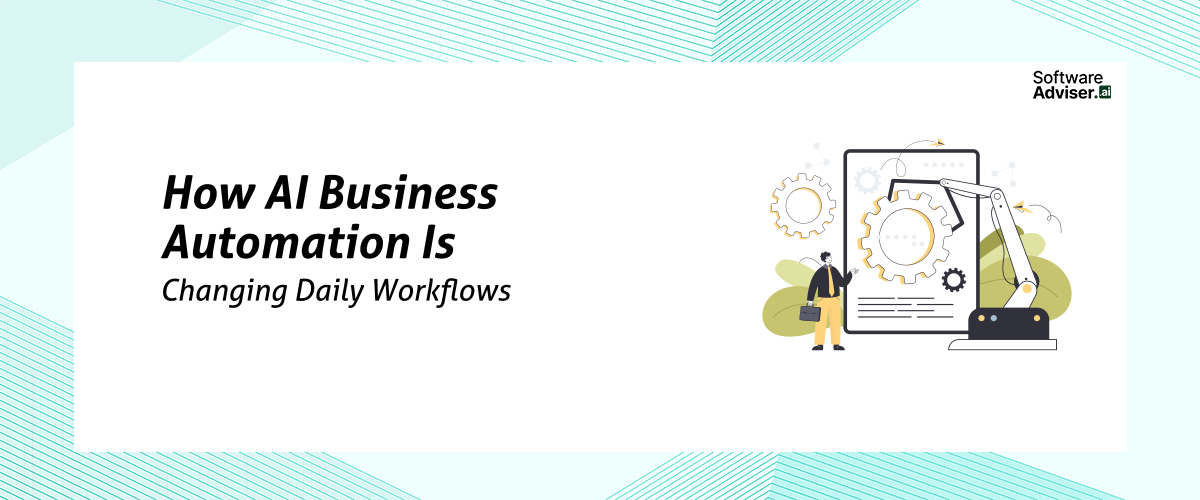
Walk into any modern workplace today, and you may observe a massive shift in how groups deal with their everyday workloads. The antique days of counti [...]
David N. Wilks
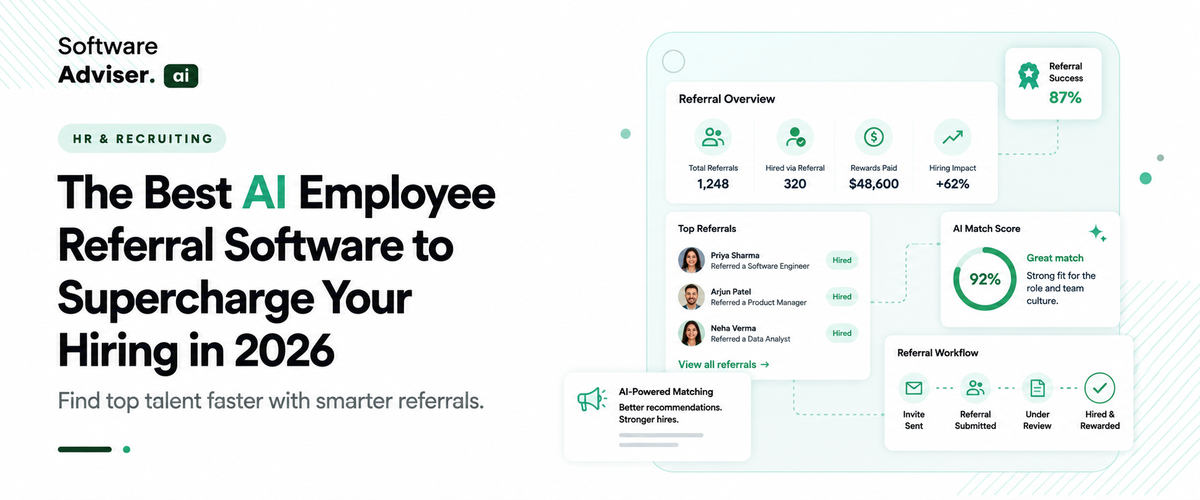
Employee referrals are sort of seen as the holy grail of recruitment, because they always bring in strong quality candidates who stick around longer a [...]

Dokas mile
A manager of a distribution company with forty employees spends every second Friday comparing paper sign-in sheets to badge swipes, finding discrepanc [...]