
What we'll cover
Share with your community!


Get Free Consultation
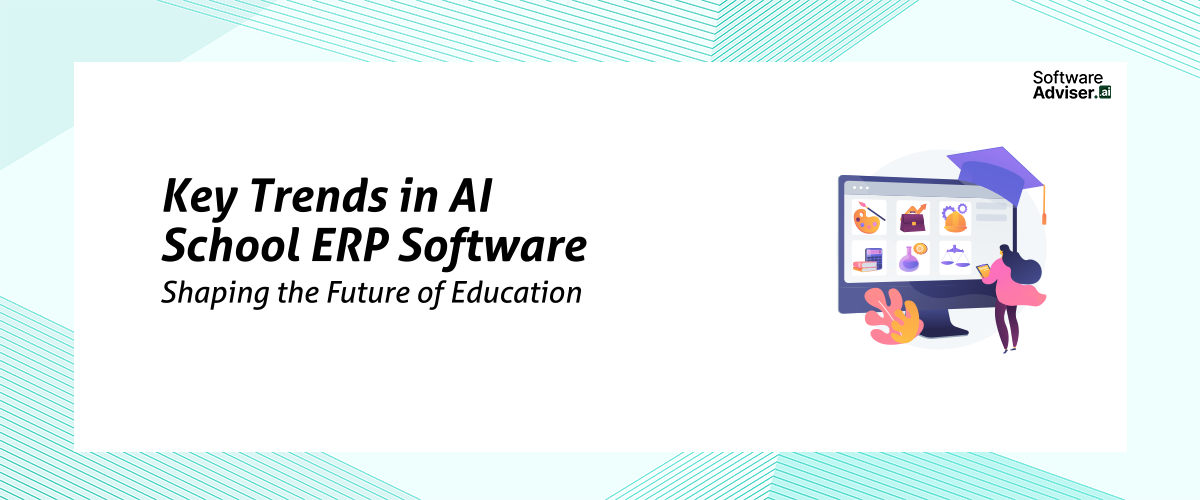
Key Trends in AI School ERP Software Shaping the Future of Education
 David N. Wilks
AI-powered School ERP systems have begun to completely transform how universities operate throughout the United States. Institutions of higher education are quick to utilize intelligent platforms that automate inefficient processes, improve resource management, and predict potential dropouts, as they seek new ways to increase their operational efficiency and make data-based decisions. The predictive analytics used by these advanced systems can be integrated into all parts of daily operations, such as admissions, budgeting, and forecasting, giving us educators the ability to shift our priorities from overseeing day-to-day administrative functions to providing students with personalized, equitable, and contemporary learning opportunities.
What Makes AI School ERP Software Essential in the US Education Market?
Modern education is changing rapidly, resulting in a need for a shift from heatmap administration - which reacts after-the-fact to problems that arise - to proactive (anti-heatmap) strategies driven by data and enhanced with AI artificial intelligence. As a result of that shift, school-based ERPs have become an essential component of today’s education systems because they convert static databases into living ecosystems that can predict an institution’s future requirements and improve the efficiency of its daily operations.
By using the AI capabilities built into the ERP platform, schools can automate several complex administrative tasks that have traditionally been time-consuming and difficult to manage. Tasks like payroll administration, academic scheduling, and regulatory compliance can be performed more quickly and accurately than in a manual system, freeing time for under-resourced faculty.
In addition, advanced predictive analytics built into many of today’s school ERPs will help school administrators identify at-risk students long before traditional grades or report cards indicate their academic performance or behavioral difficulties. Providing timely intervention to support student success will further contribute to the overall efficiency of the educational process.
In addition to increasing the operational efficiency of the education system, ERPs deliver a critical link between the communication and resource management systems that modern communities expect. ERPs provide schools with real-time data synchronization to create personalized communication channels, predictive financial forecasting for tight budgets (based on real-time data), and facilitate optimized transportation and campus facility scheduling.
By consolidating many disparate systems into one unified cloud-based intelligence hub, AI ERPs provide an educational organization with the ability to make data-driven decisions that will reduce the cost of operations and improve the quality of the educational process for all students.
How is AI School ERP Software Transforming Administrative Processes in Schools?
The logistical complexity of today's AI education ERP software is at an all-time high, and school district administrative automation is critical for the continued operation of the school district. The record management processes that have been used for years (and are still being used) are quickly being replaced by cloud-based school management systems that combine intelligent automation with daily workflow processes to redefine back office operations. By implementing EdTech ERP solutions, school districts can use automated compliance reporting to eliminate the hundreds of manual hours that staff previously spent compiling complex compliance documents required by state law.
Automation can also reduce time spent on routine tasks such as the scheduling of multi-variable bell systems, the processing of payroll for staff, and the tracking of assets, which eliminates the likelihood of human error and allows staff to devote more time to supporting individual students. School leadership teams are using these advanced frameworks to move from a reactive management style to a proactive, forward-looking management strategy. Artificial intelligence (AI) is being used for predictive enrollment forecasting to enable you to prepare for future staffing, supplies, and budgets, all done years in advance.
Schools can now use AI-powered campus management software to provide real-time visibility into how their campuses operate by monitoring complex data points such as attendance trends or individual transactions occurring at the campuses. By transitioning to these data-driven school administrative platforms, districts will easily be able to manage their resources by leveraging the full capacity of the school district's total available resources and using those to provide a better experience.
How is AI School ERP Software Key to Student Support?
1. Academic Support through Predictive Analytics
In the US education sector, forward-thinking EdTech ERP solutions have changed the approach to academic support for students by developing an approach to student support that is much more proactive. The integration of predictive analytics into US education systems will allow for the identification of micro-level changes in students' engagement and performance levels before they decline. Using the data obtained by these solutions, educators will be able to create individualized, highly targeted, and personalized academic intervention plans compatible with students' strengths and weaknesses.
2. Efficient Use of Personnel and Resources
More and more school districts are looking for sophisticated school resource optimization systems to help them manage their operations as a result of a continuing shortage of teachers and other workers. Many of these software programs provide capabilities such as dynamic generation of complex schedules, optimization of school transportation routes, and tracking physical assets on multiple campuses. The benefits of using these types of software programs to automate and streamline district administrative functions are that it reduces waste and allow the district to use its human resources most efficiently.
3. Hyper-Accurate Demographic Planning
School boards are increasingly using AI systems to assist with predictive enrollment forecasting, eliminating long-term guessing associated with capital planning. Systems analyze localized housing developments, regional birth rates, and migration trends to project the future distributions of students. Utilizing these insights through cloud-based school management systems, both school leaders can utilize precise data to create new attendance boundaries and project expansion of facilities.
4. Smart Campus Safety Frameworks
The latest technology in AI campus management software has created a merger of physical and digital security on campus. These platforms utilize a combination of video analytics and smart access control systems, with pre-screening of visitors to ensure safety for everyone on campus, while the AI beneath the cloud-based platform monitors all network activities, looking for any suspicious log-ins, actively protecting all confidential student information from cyber threats.
5. Automated Regulation and Audit Prep
As the number of state and federal funding regulations grows in complexity, school administrators are experiencing an ease in completing compliance reports due to the use of automated compliance reporting. The platform automatically collects and compiles enrollment, attendance, and demographic data without needing any user input, ensuring no errors in the documentation created for public funding, and provides an audit-ready report that is fully compliant with rapidly changing data privacy regulations.
6. Centralized Executive Dashboards
Superintendent and Financial Officer First Responders are making investments in a single data-driven platform for all school districts in order to provide an integrated perspective of district "wellness." The central repositories of real-time operations, finance, and academic data provide the user with clear, visual metrics of aggregated data. This flow of real-time cross-departmental intelligence enables the leadership teams to make quick and factual strategic decisions.
How Does AI School ERP Software Enhance Personalized Learning for Students?
1. Enhancing Student Profile Development via Real-Time Data Tracking
Current EdTech AI school ERP software solutions utilize tracking of both immediate real-time academic progress and behavioral data to develop a more comprehensive understanding of each student's strengths, weaknesses, and unknown knowledge gaps than would otherwise be possible through traditional methods like quarterly report cards. Through the use of predictive analysis, these tools can deliver on-time notices and suggestions so teachers can adapt their teaching immediately and give each student their own personalized style of instruction based on the learning style for that student.
2. Simplifying Targeted Academic Interventions
Adopting the implementation of data-based school administrative systems will allow schools to transition from a fixed, one-size-fits-all model of education to an agile, customized system of supports depending on the needs and learning style of each student. In addition, schools will be using integrated, cloud-based educational management systems to automatically identify students who are not progressing normally (i.e., either have poor daily quiz performance or are not active in classroom engagement) and provide educators with accurate methods of remediation or enrichment based upon the current needs and learning styles of each individual affected student.
3. Strengthening Teacher Impact Through Administrative Automation
When school district administrations utilize comprehensive automation, teachers spend fewer hours on repetitive and tedious paperwork. Some examples of this type of automation include compliance reporting and grading, both of which are done automatically through the use of blockchain-enabled school administration software. The amount of time saved means teachers have more hours available during the school day for mentoring students on a one-to-one basis, leading small group discussions, and providing personalized, engaged learning experiences.
4. Maximizing the Use of Resources for Student Needs
For true personalization, students need the right resources (tools, people, and materials) available to them at the moment they require those resources. By utilizing School Resource Optimization (SRO) software, along with AI-driven/automated accurate forecasting of enrollment, school administrators can synchronize the school's resources to match individualized learning requirements. SRO is used to help schools dynamically budget for adaptive learning technology, hire appropriately for the delivery of special education services, and create flexible physical learning environments in a manner that provides resources to individual students to support student achievement.
How is AI School ERP Software Bridging Communication Gaps Between Parents, Teachers, and Students?
1. Real-time Attendance & Performance Alerts
Gone are the days of waiting for the report card at the end of the semester, or waiting to find out at your parent-teacher conference that your student has accumulated too many absences. The advanced management software can provide a real-time snapshot of a student’s attendance record and academic progress. Should an individual student miss a class or score below a set academic threshold (such as a grade of D or below) on a quiz, the software will automatically send an immediate notification via push notification or SMS to the parent of record, providing a real-time flow of consistent and accurate information so that families can proactively work to correct any issues or engage everyone in the family in supporting the student’s daily realities in a classroom setting.
2. AI Chatbots (multilingual, 24/7) for Routine Inquiries
Teachers and office staff receive many routine questions from parents/students about school start times, due dates for fees, and upcoming events, in addition to any other routine administrative inquiries. By using AI chatbots in a secure parent portal, parents can receive instant, automated responses to frequently asked questions that are translated into multiple languages. This will reduce access issues for families who do not have access to complete and current information about their children and the school they attend, as well as their progress, due to language barriers and the timing of administration. With automated systems providing timely, accurate updates, there is no need for teachers to devote time to answering routine administrative inquiries.
3. Proactive Early-Warning Systems
Instead of providing historical academic records relative to your student’s performance, modern-day ERP systems provide a data-rich, forward-looking approach to understanding your student’s performance and identifying those at-risk of falling behind or needing targeted supports. For example, by continually monitoring the average time it takes a student to submit an assignment, a daily review of a student’s level of engagement (class attendance and participation), and class performance data, schools can provide multiple layers of support to prevent students from falling behind before they become aware that they are behind.
What Advanced Security Features Do AI School ERP Software Systems Provide for Schools?
1. Intelligent Threat Detection and Campus Security
Using Artificial Intelligence (AI) based campus management systems, higher education institutions can consolidate intelligent video analytics and automated access control systems to create complete round-the-clock monitoring of perimeter and entrance points for unauthorized individuals, unusual activity, and/or threats to physical security. By providing real-time digital surveillance, security personnel can quickly identify any potential campus emergencies and greatly enhance the safety of both staff and students.
2. Predictive Monitoring of Cyber Threats
Cybersecurity threats to cloud-based AI school management software present significant challenges when protecting sensitive student and financial records. By using predictive analytics, the platform will be able to track individual users’ typical behaviours over time and notify administrators in cases of unusual behaviours, like an administrator accessing the platform out of the ordinary from a device that’s not already recognised. Having this type of proactive protection can assist in identifying areas where a potentially malicious user has been trying to gain access to their network and eliminate or contain all data breach incidents, and help prevent ransomware attacks that would have compromised the district’s network infrastructure from being successful.
3. Automated Data Compliance and Privacy Protocols
Strict privacy requirements and regulations regarding student data protection require a significant amount of administrative work to ensure appropriate oversight. Advanced Educational Technology (EdTech) Enterprise Resource Planning (ERP) solutions have made this extra administrative work very manageable with their own automated school compliance reporting processes. This ensures compliance with all federal, state, and other regulations governing the storage, maintenance, and security of sensitive student data. The system will automatically update the encryption protocols and permissions to share file types, so sensitive student data will never be shared or accessed inappropriately.
4. Access Control Based On User Roles Through Automated Admin Controls
Automating admin functions within the school district will greatly limit how much internal weakness exists due to human mistakes. Data-based school district admin platforms have very strict controls for granting access based on individual users' roles (e.g., parents, students, staff, and teachers) to only view information that relates directly to themselves. The system will also automatically withdraw the old credentials when a staff member changes their job responsibilities and will reassign the resources using integrated School Resource Optimization software to eliminate potential theft of internal data.
How is AI School ERP Software Helping Schools in the US Manage Resources Effectively?
1. Managing personnel for today's modern district is one of the biggest challenges facing carefully, especially with current labor shortages.
Automated administrative processes provided through a district's school district are eliminating much of the guesswork in daily scheduling and shift management. When an employee takes sick leave, AI-driven campus management systems can scan through any district database within seconds to find a qualified substitute who is currently available. These applications quickly match substitutes to school-based certifications, assignments, and other criteria to help quickly fill vacancies. Additionally, data-driven education administration platforms identify teachers who have been burned out in a particular area through their analysis of long-term workload distributions, helping districts adjust teacher schedules before they leave, keeping the best people.
2. Antiquated and siloed methods of budgeting have always resulted in waste and/or an unexpected deficit.
Modern Ed- Tech ERP hardware and software solutions combine predictive analytics with real-time tracking of school-wide inventories to improve how schools are using their dollars. An example of this would be: By providing advanced alerts for all classroom technology to repair or replace them before they cost the district significant money, and by analyzing if the historical purchasing patterns of supplies provide an accurate match of how educators are using them. In addition to solving these two issues, there are specific software programs designed for the purpose of optimizing school resources by ensuring they deliver adequate materials, textbooks, and hardware for curriculum-based needs, thereby eliminating the duplication of purchases.
The challenge of planning school boundaries, transportation routes, and classroom space due to changing student populations is significantly reduced with the use of AI predictive enrollment forecasting. This technology allows school districts to identify expected resident growth within their communities through analysis of housing data, birth rates, and transfer history. Online school management systems that include long-range enrollment forecasts will help school leadership make informed decisions regarding existing facility usage, transportation route optimization to reduce fuel usage for bus transportation, and financially support classroom expansion based on expected years of overcrowded classrooms.
How is AI School ERP Software Empowering Data-Driven Decision Making in Education?
1. Student Success Metrics Using Granular Prediction
Modern school leadership uses predictive analytics to identify academic problems before they occur rather than relying only on past performance. Superintendents and principals utilize data-driven school administration platforms to see real-time risk scores for their student populations as behavioral, attendance, and academic performance change. Instead of waiting until the end of each semester to figure out what went wrong, administrators can utilize this information to provide targeted tutoring, adjust counseling resources, and modify instructional frameworks proactively in order to maintain graduation rates.
2. Fiscal and Enrollment Strategies Based on Projections
For school districts to accurately budget for projected changes in demographic makeup, they rely on deep analytical foresight to more effectively budget than with guesswork. School districts utilizing AI predictive enrollment will analyze neighbourhood housing developments, migration patterns, and past rates of attrition to develop an accurate projection of their student enrolment for the following year. These projections are integrated into cloud-based school management systems, allowing school boards to make evidence-based decisions for multi-year staffing requirements, building expansion, and capital expenditures; this ensures that there will not be costly over-hiring of staff or classroom overcrowding.
3. An ineffective expenditure of money on operations only results in less money available for the classroom.
By using school resource management software, management can quickly identify inefficiencies in transportation routes, cafeteria waste, tangible results, and utility expenditures. With AI-enhanced building management software, administrators can find ways to save money through the optimization of transportation routes or adjusting HVAC schedules based on student occupancy, therefore providing additional funds to be directed back to school district technology and to the salaries of teachers.
Conclusion
AI-powered Educational ERP Software is transforming educational institutions across the United States into more productive enterprises by allowing schools to evolve from reactive to predictive administrative processes. With the severe shortage of qualified staff and increasing pressures for compliance, AI Software utilizes sophisticated algorithms and machine learning capabilities to automate tedious scheduling, to accurately report to the state, and to predict student retention risks. To review the leading software solutions available in this market, educators are encouraged to visit softwareadviser.ai, the leading SaaS marketplace for discovering, comparing, acquiring, and implementing the best business solutions to enhance school operations.
FAQ's
Unlike traditional systems that only record past grades, AI ERP software uses predictive analytics to look for subtle changes in a student's daily attendance, quiz scores, and engagement levels. The system automatically flags potential academic or behavioral risks early, allowing teachers to step in with personalized learning support before a student falls behind.
Yes. Through advanced administrative automation, the software instantly handles complex scheduling, tracks teacher workloads to prevent burnout, and manages sudden absences. If a teacher calls out, the system automatically scans database certifications to find and notify qualified substitute teachers within seconds, keeping school operations running smoothly.
Modern AI-driven systems integrate directly with campus security hardware to provide automated visitor screening and real-time perimeter monitoring. Digitally, the software uses predictive monitoring to track network behaviors, immediately flagging suspicious login attempts and securing sensitive student records against data breaches.
Instead of forcing administrative staff to spend hundreds of manual hours gathering data at the end of the year, the software compiles enrollment, financial, and demographic metrics entirely in the background. It uses automated compliance tools to generate error-free, regulation-compliant reports that are instantly ready for high-stakes audits.
Not at all. The primary goal of the software is to eliminate the heavy burden of repetitive, manual paperwork such as data entry, scheduling, and compliance tracking. By automating these time-consuming administrative tasks, the software returns valuable hours to the school day, allowing educators and staff to focus on direct student mentorship and strategic district growth.
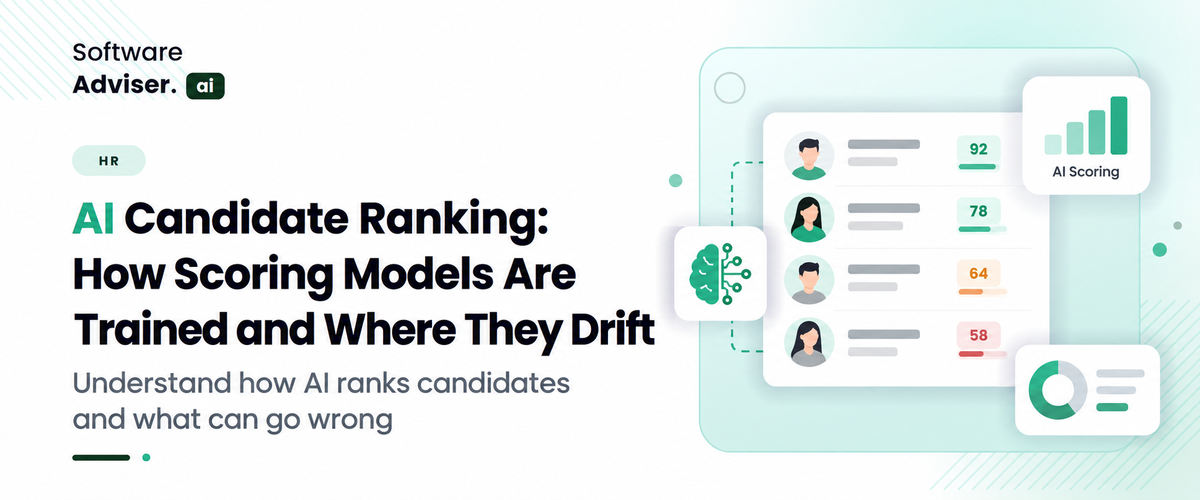
Models for ranking candidates use algorithms that have been trained using data from previous hiring, certain features of resumes, and assessments of c [...]

Dokas mile
Using AI employee monitoring software tools in the U.S. presents a challenge of finding the right balance between ensuring that employees remain produ [...]
Dokas mile
The traditional "payday" turned into a source of dread, described by past due-night spreadsheets and the consistent fear of a unmarried decimal errors [...]