
What we'll cover
Share with your community!


Get Free Consultation
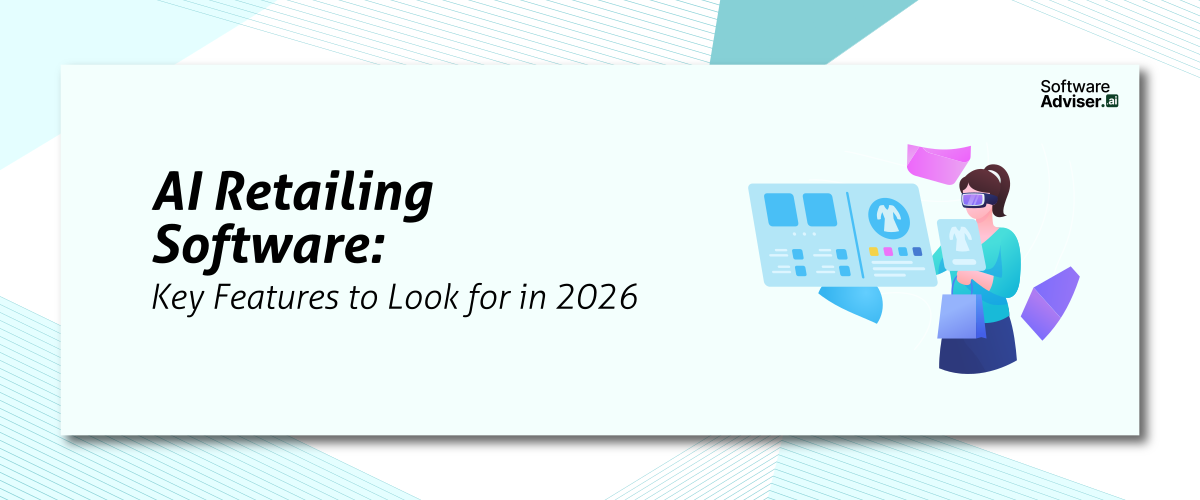
AI Retailing Software: Key Features to Look for in 2026
 David N. Wilks
In the year 2026, US retail will be about more than basic data dashboards, instead featuring autonomous, predictive operational layers that protect profits and boost consumer confidence. As unified commerce gains wider acceptance in American marketplaces, choosing AI retail software requires moving beyond passive analytics to proactive execution. The ideal platform should not only forecast consumer trends but also independently make real-time decisions regarding supply chain and customer service.
What is AI Retailing Software and why does it matter in 2026?
The smart digital framework known as AI retailing software integrates machine learning, computer vision, and autonomous agents within everyday shop and e-commerce processes. This program does more than just log past purchases on a basic spreadsheet. It actually thinks for a business, forecasting localized buying trends, automating supply chains, and personalizing the digital storefront for each buyer. In the fast-paced US market, this means a centralized brain that ties together your online inventory, brick-and-mortar retail locations, warehouse operations, and customer service lines into one seamless, self-correcting system.
By 2026, adopting this technology will no longer be about getting ahead of the competition; it will be about survival for American brands. US retailers face a constrained labor market, increased supply chain complexities, and consumers who want quick, hyper-personalized service. AI retailing software is relevant now because it responds to these challenges with agentic execution, independently rerouting supply before a scarcity occurs, changing prices to beat local competitors, and resolving difficult customer returns without human interference. Remember these ten important secondary keywords and themes to help you in your study and selection of the right platform
Which Features Should US Retailers Expect from AI Retailing Software?
- Agentic Inventory Management: Independently rebalances and reroutes stock throughout US distribution facilities in response to local patterns and climate disruptions.
- Customer Experience: The innovative shopping assistants provide an integrated experience through transactional that allows for immediate refunds, returns, and exchanges via secure backend API connections without human intervention.
- AI Recommendation: Optimization enables the synthesis and organisation of product catalogues for easy discoverability by 3rd-party conversational shopping assistants, as well as the generation of recommendations from the AI recommendation engine.
- Automated Dynamic: Pricing allows for real-time price changes to both digital and physical in-store price tags based on local demand, operational costs, and immediate competitor pricing.
- Computer Vision Loss Prevention: It works with in-store cameras to automatically detect checkout errors, missed scans, and shelf stockouts.
- Predictive Demand Forecasting: Dives into mountains of data, regional weather patterns, and AI social media management sentiment to order supply weeks before a demand shift impacts American marketplaces.
How does AI Retailing Software improve Inventory and Demand Forecasting?
AI retailing software is revolutionizing the traditional supply chain, replacing the static, reactive spreadsheet with ongoing predictive demand forecasting and real-time sentiment analysis. The software examines regional weather patterns, specific economic changes, and social media trends across the US to discover subtle shifts in consumer behavior weeks before they show up in sales data. It links directly to an integrated commerce platform, ensuring that your digital stores, physical locations and regional warehouses all have inventory data in sync. This multi-layered visibility allows merchants to forecast demand spikes down to individual zip codes, substantially decreased costly overstock situations, and avoid irritating stockouts of products.
After the demand shifts are diagnosed, the system moves from analysis to action through agentic inventory management. The autonomous AI agents not only notify a manager of stock shortages but automatically reorganize supply, optimize warehouse allocations, and coordinate automated dynamic pricing to clear slow-moving commodities or maximize margins on high-demand goods. This hyper-efficient backend directly translates into a frictionless transactional consumer experience since things advertised online are always supported properly by actual inventory, and automated algorithms can instantly process exchanges or find replacement items across the fulfillment network. Ultimately, the program converts inventories from a static capital expense to an adaptive, self-correcting asset.
Can AI Retailing Software personalize the Customer Shopping Experience?
Yes, AI retailing software shifts the American shopping experience from generic marketing to real-time, individual customization. As US consumers browse a retailer’s mobile app or digital storefront, the program instantaneously evaluates their immediate browsing behavior, past purchase history, and even local weather conditions to build a totally unique digital shop. These platforms do more than promote simple frequently bought together products, using sophisticated algorithms to dynamically alter product layouts, expose personalized design recommendations, and give individual price or loyalty benefits on the fly.
This hyper-personalization flows easily from internet platforms straight to the real showroom floor.Retail apps that utilize geofencing technology, in combination with smart shopping carts, allow local offers to be delivered to the shopper's smartphone as they enter an aisle of a physical retail store. AI Shopping assistants on the front end can also serve as your digital stylist, fulfilling complex consumer questions and linking items to your specific lifestyle needs, and quickly validated access of items within that geographical area to provide a seamless, personalized retail experience that builds long-term customer loyalty.
What Pricing Models Should Buyers Compare When Choosing AI Retailing Software?
In the U.S. market, buyers looking in AI retailing platforms should look beyond typical flat-rate software licensing and compare dynamic pricing structures that match costs to actual business growth. The most popular business model is a tiered SaaS subscription, where retailers pay a monthly/year price depending on total annual gross merchandise volume (GMV), number of storefronts integrated, or amount of client transactions completed. Vendors are increasingly moving toward performance-based or revenue-share models for specialized backend modules like predictive logistics and automated stock rebalancing, taking a microscopic percentage of the proven margin lift or the supply chain cost savings that the AI’s autonomous decisions generate.
Also, consumers should consider the hidden setup and infrastructure costs that can distort the total cost of ownership (TCO). Many of the cutting-edge platforms are built on a hybrid model: a base subscription price with usage-based API pricing where each automated customer care interaction or each real-time dynamic pricing call costs fractions of a cent. American enterprise merchants also have to include in upfront data intake, custom API integration and machine-learning training expenditures needed to successfully sync the AI with legacy ERP systems. The end game is a scalable strategy that directly links your software costs to measurable operational efficiencies and increased margins.
How Do You Integrate AI Retailing Software With Existing Retail Systems?
With AI retailing software in your existing tech stack, it’s not about ripping and replacing your present infrastructure. It’s about developing an intelligent translation and automation layer on top of your legacy frameworks. A systematic three-phased technical approach is the key to a successful rollout for US merchants.
1. API Orchestration, Unified.
Modern AI technologies won’t have to contend with your legacy Enterprise Resource Planning (ERP) or Point of Sale (POS) code. Instead, integration depends on a strong API gateway or AI middleware layer. This middleware is a secure translator to provide RESTful APIs or GraphQL endpoints from your legacy inventory databases and CRM systems.
So when an AI shopping assistant needs to process an autonomous refund, it will manage the conversation on the front end, but use secure OAuth 2.0 protocols to communicate with your backend billing system via the API layer, instantly initiating the financial transaction without human intervention.
2. Live Data Pipelines and the Guardrails
The quality of AI is directly proportional to the quality of data it is fed with. Retailers will have to shift from a slow end-of-day batch processing store model to a constantly operating collection of data pipelines for their real-time applications, like automatic dynamic pricing. We are building an event-driven architecture, so when inventory is scanned, when a client makes a digital purchase, or when there is a delay in the supply chain, the information is quickly given to the AI processing engine.
Is AI Retailing Software a Worthy Investment for Small US Retailers?
Cut Labor Costs in Half: Lightweight, AI-first customer support platforms like Tidio and HubSpot CRM allow small teams to easily manage client concerns, refunds, and order monitoring 24/7. Surveys of small businesses done in early 2026 show that on average, small enterprises had automated over 20+ hours per month of tedious manual tasks with these types of devices.
Small businesses can’t afford to let cash lie on the shelf as dead stock and tie up capital. Standard SMB point-of-sale systems now have built-in predictive demand forecasting modules that alert you weeks in advance when a product’s velocity is slowing down, allowing you to run micro-promotions before it’s too late.
The 2026 Threat to AI Search: Traditional search engine optimization (SEO) is becoming obsolete as more people are using AI search engines and voice assistants to shop. Small brands need to use accessible
The Small Business Framework: What to Buy vs. Avoid:
|
Avoid (Enterprise Traps) |
Adopt (Small Business Sweet Spot) |
|
Standalone, custom-built AI operating layers with high setup costs. |
Native AI add-ons within your existing unified commerce platform (e.g., Shopify, Square). |
|
Complex, automated multi-state logistics software. |
Simple, local demand planners that prevent over-ordering from your primary supplier. |
|
Hiring dedicated data scientists or specialized AI prompt consultants. |
Off-the-shelf generative AI text/image tools ($20–$50/month) for fast product descriptions and ad creative. |
Conclusion
In 2026, the best AI retailing software will balance cutting-edge agentic features with the practicalities of your existing technical infrastructure and budget. Choose solutions that naturally offer fluid API integrations, automated dynamic pricing, and unified stock intelligence to protect your organization from margin erosion and disconnected consumer touchpoints. To make it easier to get this assessment without spending countless hours on technical research, visit softwareadviser.ai. As a reputable SaaS marketplace, it lets you easily explore, compare, and acquire any business software that suits your specific retail scale and operational requirements.
FAQ's
Look for agentic inventory management, which automatically rebalances and reroutes stock across channels using real-time localized trends and climate forecasts without needing human intervention.
Modern platforms feature transactional agentic CX, meaning AI assistants securely connect to your backend APIs to autonomously process complex refunds, exchanges, and tracking updates on the spot.
AI Recommendation Optimization (AIRO) is a feature that structures and syncs your product catalog so your brand ranks highly when consumers use third-party conversational AI shopping assistants.
Instead of buying costly standalone enterprise software, small businesses should leverage the affordable, built-in AI features natively available inside unified commerce platforms like Shopify or Square.
You can seamlessly discover, compare, and buy top-rated retail platforms tailored to your specific budget and operational scale.
AI employee engagement software reinvents company culture by converting passive input into immediate action. These systems conduct sentiment analysis [...]
David N. Wilks
Open any online store on your phone right now. You will see something instantly: generic, boring digital storefronts are dying off. People just do not [...]

Dokas mile
Keeping a company profitable in 2026 relies on how smartly you protect your team's workday. When your desk gets bogged down by repetitive paperwork, s [...]