
What we'll cover
Share with your community!


Get Free Consultation
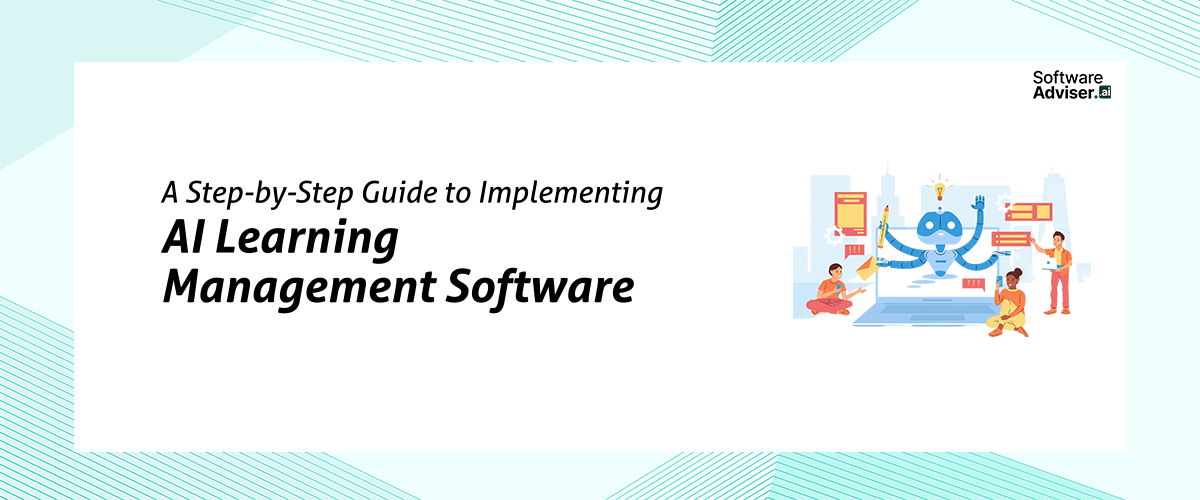
A Step-by-Step Guide to Implementing AI Learning Management Software
 Dokas mile
Workforce training is changing fast, and old corporate setups simply cannot keep up. Companies are rapidly walking away from static, flat courses to adopt dynamic, personalized learning paths. This massive shift is driving organizations to upgrade their internal training setups with a modern AI Learning Management system. Moving past manual administration allows teams to use self-adjusting frameworks that track skill gaps and deliver custom modules on autopilot. However, launching an advanced system requires a clear strategy. You cannot just buy a software license, move your old files over, and expect instant results. This practical guide walks you through every stage of implementing an intelligent training workspace to ensure strong adoption, tight data security, and real returns.
Understanding AI Learning Management Systems (AI LMS)
Let's look at this technology directly. An AI Learning Management system is an automated educational platform. It tracks, delivers, and scales up training programs while using machine learning models to analyze user habits. A traditional online learning management system acts as a static folder where everyone reads identical slide decks. On the other hand, an AI-based learning control system works like an active virtual coach. It continuously tests how quickly a group of workers finishes a check, finds where they get stuck, and modifies the material in actual time.
Modern platforms create a highly connected, ai powered study platform environment. They use smart analytics to suggest specific modules based on an employee's daily responsibilities and career goals. Across the corporate sector, these tools are changing employee development. Instead of making teams sit through generic, hour-long training videos, an intelligent setup breaks info down into short modules. This keeps your teams focused, avoids learning fatigue, and improves overall skill development.
Define Your Learning Goals and Business Requirements
Do not choose a software package just because it has trending marketing labels. Before talking to different vendors, sit down with your department managers to find your actual operational bottlenecks. Are your sales numbers dropping because your staff lacks product details? Is your tech team falling behind on new cloud protocols?Finding these clear gaps lets you attach your software launch to measurable business objectives.
Once you pinpoint these troubles, map out a practical implementation roadmap. Figure out your general person count, list required features, and set a clean release date. Creating a practical challenge framework guarantees your training rollout addresses real human needs as opposed to simply filling an administrative tick list.
Choosing the Right AI Learning Management Software
The modern market offers a wide variety of software options built for different budgets and team sizes. If you run a small business or need to check a basic setup first, you could check out a free learning management system or look into an open-source LMS layout. These open setups deliver your developers complete access to the source code, allowing you to build custom dashboards without paying monthly consumer prices.
However, massive companies typically look for comprehensive, cloud-based software platforms that feature pre-constructed connectivity. When evaluating different platforms, check how easily they sync with your current Learning Management Software hubs and databases. Ensure the software offers strong personalization engines and can handle massive user scaling without causing system lag or security drops.
Preparing Your Content and Learning Infrastructure
An automated training tool is only as good as the info you feed it. Before moving your files, run a full audit of your current training materials. Delete outdated presentations, fix broken links, and rewrite confusing guides. If you use a free learning content management system to store your raw assets, make sure your files are organized into clean categories so the platform's machine learning models can index them easily.
Next, organize your content into a modular format. This helps the platform's algorithms pull specific chapters to build personalized learning paths for individual workers. Cleaning up your internal document pools before launching ensures the system provides accurate recommendations instead of surface-level errors.
Implementing AI LMS: Step-by-Step Deployment Process
To install your platform easily without disrupting your daily business workflows, follow this detailed, step-by-step implementation procedure:
Step 1: Base Architecture and System Configuration
Set up your primary server paths, brand the user dashboard with your organization's logos, and set up secure single sign-on (SSO) gateways for your team.
Step 2: Content Injection and Asset Mapping
Upload your audited text docs, video modules, and testing sheets to your AI Training Management Systems hub, ensuring you apply proper metadata tags.
Step 3: Algorithmic Training and Personalization Setups
Input your core corporate competency frameworks and company roles into the platform. This helps the recommendation engine understand which courses belong to specific departments.
Step 4: Alpha Testing and Sandbox Simulation
Launch a non-public test version for a small institution of energy users. Monitor the machine for interface system faults, damaged data flows, or wrong path pointers.
Step 5: Full Launch and Organization-Wide Rollout
Open the platform to all departments, provide brief video courses on how to navigate the dashboard, and set up a committed assist desk to handle early consumer questions.
Leveraging AI Features to Improve Learning Outcomes
Once your system is fully live, awareness of maximizing its computerized capabilities to accelerate personnel development. Advanced AI skills platforms use adaptive logic loops to change course difficulties based on real-time user performance. If an employee shows mastery over a basic coding concept, the software fast-forwards them directly to advanced practical labs.
This setup completely automates administrative reporting. Instead of an HR manager spending hours tracking spreadsheets, the platform's background analytics generate automatic progress reports. This lets leadership teams spot high-performing personnel and identify teams that want a greater instructional guide.
Common Implementation Challenges and How to Overcome Them
Even with a top-tier tool, you could run into implementation hurdles if your group of workers resists the new Software. Employees regularly ignore new software portals because they are too busy with their daily obligations. To conquer this friction, highlight how the platform saves them time by means of replacing lengthy, regularly occurring seminars with brief, centered training sessions.
Data safety is another essential factor. Ensure your software program complies with local privacy laws like GDPR or CCPA to keep your team's statistics absolutely safe. Work intently with your IT branch for the duration of the preliminary sandbox phase to construct stable user permission walls and prevent data leaks across your company network.
Measuring Success and Maximizing ROI from AI LMS
To justify your software budget to company stakeholders, you must track measurable performance metrics. Monitor user login frequencies, course completion rates, and average quiz scores across different departments.
Compare these learning metrics with real-world business results. For instance, check if your customer support speed increases after your team completes the automated help desk modules. Linking your training analytics directly to operational wins proves the financial value of your AI Education ERP Software network and ensures long-term corporate backing.
Conclusion :
Deploying a modern AI Learning Management system is not just a trend for tech-heavy businesses. It is a necessary strategic investment for any commercial enterprise that desires to scale its operations without burning out its workforce. Moving far from guided curriculum monitoring and embracing automated learning enables your logo build an agile, surprisingly professional workforce.
Whether your primary goal this quarter is to organize your existing training content using a free learning content management system, run specialized skills testing via modern AI Training Management Systems, or coordinate your entire company database through unified AI Education ERP Software, the ultimate target is identical. You want an educational workspace that runs smoother, faster, and smarter. Taking that first simple step today ensures your teams stay sharp, competitive, and fully ready to win.
FAQ's
An AI LMS uses artificial intelligence to personalize learning, automate training, and improve learner outcomes.
It analyzes learner behavior and delivers personalized training content using AI algorithms.
It improves learning efficiency, automates administration, and enhances employee skill development.
Yes, many AI LMS platforms offer scalable and affordable solutions for small businesses.
Using artificial intelligence in your business without clear boundaries can create serious legal exposure faster than most companies expect. Across th [...]

David N. Wilks
In the highly competitive 2026 US job market, organizations are shifting away from fragmented legacy checklists toward cohesive, hyper-personalized di [...]
David N. Wilks
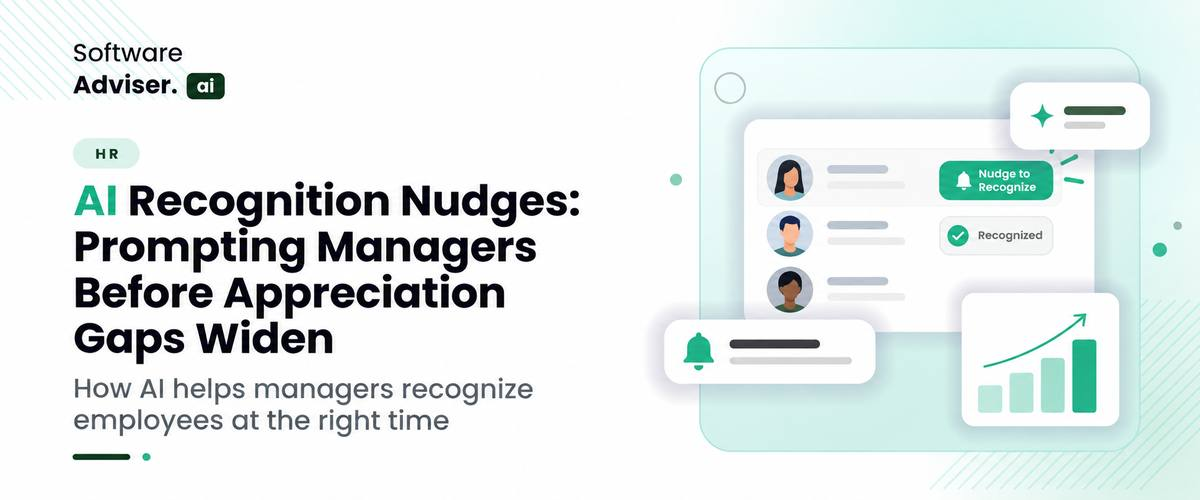
In rapidly moving American businesses, AI employee recognition is frequently placed on the back burner until the time of an annual performance review [...]