
What we'll cover
Share with your community!


Get Free Consultation
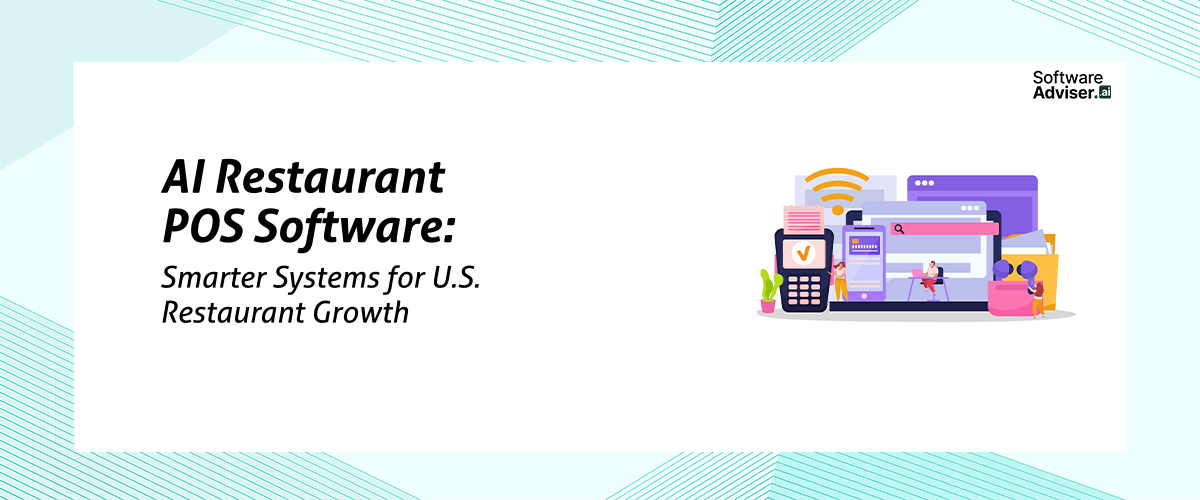
AI Restaurant POS Software in 2026: Smarter Systems for U.S. Restaurant Growth
 David N. Wilks
The restaurant industry will experience a seismic shift in 2026 with next-generation AI point-of-sale (POS) devices. Restaurant operators across America want to replace outdated transaction terminals with intelligent ecosystems that make it possible to manage restaurant operations proactively rather than reactively. Today, AI-based point-of-sale (POS) solutions have grown beyond being mere payment processing systems. The AI-powered technology now leverages machine learning to complete challenging tasks, improve low-margin profitability, and enhance overall customer experience through the use of predictive analytics, intelligent inventory control, and automated employee scheduling, thereby providing unmatched efficiencies for U.S. restaurants in meeting increased labor cost pressures and the unpredictability of the supply chain.
What is an AI Restaurant POS Software?
The modern brain of a United States dining facility is now an AI restaurant POS software, significantly better than the old cash register or legacy touch screen. In the fast-paced US hotel business, where low margins and labor shortages are a daily concern, these intelligent solutions use machine learning and real-time data to automate daily difficulties. A new AI POS that predicts a customer’s future business instead of just tracking what they ordered. It crunches local weather trends, neighborhood happenings, and past sales to inform a manager exactly how much merchandise to buy for the weekend ahead, or how many line cooks to plan for a Tuesday night shift.
This software is more than back-of-house logistics it’s a game-changer in how U.S. restaurants engage with their clients. AI POS can leverage predictive analytics and natural language processing to optimize drive-thru lanes using voice-activated ordering, dynamically update digital menu boards to highlight high-margin items when inventory is high, and personalize marketing offers based on a guest’s previous dining habits. For US operators, with food costs on the rise and consumer demand evolving, the POS terminal becomes less of a passive business expense and more of an active tool to reduce waste, increase table turns, and generate revenue.
How Does AI Restaurant POS Software Improve Daily Workflows?
AI restaurant POS software becomes an active manager, not a passive cash register, taking the wild rush out of your day-to-day operations. An AI restaurant management system provides front-of-house and back-of-house teams with a clear picture of what to expect throughout a shift. Kitchen personnel get orders metered and prioritized by prep periods, automatically, so the kitchen line isn’t overrun during peak US eating hours. Meanwhile, servers can use a smart POS for restaurants that provides real-time conversational suggestions, proposes great drink pairings, or warns them if a popular dish is about to sell out. This seamless connection minimizes order errors and slashes ticket delays, guaranteeing a speedier, happier experience for guests.
Data-driven automation makes the headache of administrative prep work almost disappear behind the scenes. Rather than managers spending hours counting goods or constructing spreadsheets, predictive inventory software takes the reins. The system runs restaurant machine learning analytics on historical sales data, local calendar events, and analyzes US hospitality technology trends to estimate exact product usage with precision. It can automatically create purchase orders for suppliers, so a kitchen never runs out of its most popular steak, while also being one of the greatest restaurant margin optimization tools by cutting down on expensive food waste.
Staffing problems that so many operators around the United States face are solved with equal intelligence. This automated labor scheduling POS uses historical foot traffic patterns and real-time weather forecasts to create efficient staff schedules weeks in advance. This avoids the costly disadvantages of being overstaffed on a lazy, wet afternoon or dangerously understaffed when a neighborhood suddenly hits a rush. And when paired with voice-activated restaurant ordering at the drive-thru or kiosk and cloud-based AI point of sale features that update menus quickly across all third-party delivery applications, everyday operations are perfectly synced. Operators walk away from battling fires every day and focus on what matters most: hospitality and growth.
What Features Should You Expect From Top AI Restaurant POS Software?
Predictive Stock & Waste Control The best predictive inventory software combines real-time ingredient depletion with automatic generation of vendor purchase orders based on future demand predictions. One of the greatest restaurant margin optimization methods for constrained US restaurant budgets is this targeted forecasting by minimizing food waste.
- Smart Labor Forecasting: An Automated Labor Scheduling AI POS software Uses Restaurant Machine Learning Analytics To Study Historical Sales Trends, Local Events, and Weather Forecasts to Predict Precise Guest Footprints. US managers are able to create perfectly optimized shift schedules, avoiding costly overstaffing while providing enough floor coverage during a sudden rush.
- Dynamic Menu Optimization: Intelligent menu engineering algorithms are built in to monitor real-time profit margins and ingredient availability to showcase high-return items automatically on digital boards and kiosks. This functionality is fully in line with current hospitality technology trends in the US, guaranteeing that your highest-grossing goods are constantly front and center.
- Voice-Activated Ordering Integrations: Newer platforms have integrated voice-activated restaurant ordering to handle complicated, conversational visitor alterations at the drive-thru or self-service kiosk. This relieves the burden on the workforce and speeds up ticket time by sending exact, accurate orders right to the kitchen display screen.
- Omnichannel Cloud Sync: A new-generation cloud AI POS converges in-house dining, websites, and third-party delivery apps into one place on a smart, centralized dashboard. This all-in-one AI restaurant management solution lets you sync changes to the menu, prices, or layout across all sales channels instantly.
How Much Does AI Restaurant POS Software Cost for US Restaurants?
1. Monthly Subscription Software
AI POS software is generally offered every month as a Software as a Service (SaaS). The lowest entry-level levels are $50-$99 per month, but to get the powerful AI features mentioned in this article, you’ll want to go up to mid-tier or advanced packages.
Standard AI Package ($100 – $250 per month per location): Predictive labor scheduling, Standard table management, Native online ordering connections, Basic machine learning sales reporting. Powerful / Enterprise AI Package ($300 – $500+ / month per location) - Deep predictive inventory software, intelligent menu engineering algorithms, powerful multi-location data syncing, API access. AI Add-on Modules ($30 – $100 / month each): Some vendors charge carte for individual AI features such as automated third-party delivery marketplace syncs or smart loyalty engines.
2. Initial Hardware Cost (One-Time)
The physical terminal network is a function of venue size and service model. Newer cloud-based systems run on flexible tablet architecture, whereas high-volume venues often tend to lean toward heavy-duty commercial terminals.
|
Setup Type |
Target Venue |
Estimated Hardware Cost |
Included Equipment |
|
Starter Kit |
Food trucks, cafes, QSRs under 20 seats |
$800 – $1,500 |
1 tablet terminal + stand, receipt printer, card reader, cash drawer. |
|
Mid-Scale |
Casual dining, bistros, 30–80 seats |
$2,500 – $5,000 |
2–3 terminals, 2 handheld tableside tablets, 1 Kitchen Display System (KDS). |
|
Full-Service |
Large restaurants, busy bars, multi-outlet |
$6,000 – $12,000+ |
4+ touchscreen terminals, multiple KDS screens, handheld units, voice-activated ordering kiosks. |
Which AI Restaurant POS Software Works Best for Small Restaurants?
Choosing the correct technology is an exercise in balancing budget limits with ambitious expansion for small, independent restaurants throughout the United States. While commercial chains may have the ability to bear the hefty overhead, the local café, the neighborhood bistro, the boutique diner, and other small restaurants need an AI restaurant management system that costs less, is easier to train on, and hyper-focuses on cutting immediate expenses.
A flexible, modular cloud-based AI point of sale is the perfect answer for a boutique or smaller-scale operator, and runs smoothly on minimal tablet hardware. The most important features for these venues aren’t huge enterprise analytics dashboards, but practical restaurant profit optimization tools that reduce over-ordering and waste. With small teams wearing many hats, a smart POS for restaurants with built-in automation lets an owner-operator step away from manual bookkeeping and focus fully on front-of-house hospitality.
- Smarter Kitchen Ordering: Look for scaled-back predictive AI inventory management software that tracks daily ingredient usage and alerts you to potential food waste before it hits your bottom line.
- Intuitive Shift Planning: Choose a program with an automated labor scheduling POS so you’re not overstaffed on dull afternoons, and small margins don’t get thinned further.
- Automated Menu Tweaks: Leverage smart menu engineering to push high-margin or excess inventory items to digital ordering screens, increasing your average ticket size without additional effort from your team.
How Do You Compare AI Restaurant POS Software Options Side by Side?
To compare different platforms side by side, you need to get past basic sales claims and see how effectively their underlying algorithms can deal with the realities of a frantic shift. When considering solutions for the US market, it helps to look at four different categories: software architecture, back-of-house automation, front-of-house workflow improvements, and real cost transparency.
You’ll want to understand how each AI restaurant management system deals with data, so that you can make the most of your alternatives. You want a platform that leverages real restaurant machine learning analytics, not just static reporting in AI clothing. A truly intelligent system will actively synthesize historical sales data, local neighborhood events, and real-time weather changes to give you actionable insights.
The AI POS Comparison Framework
When building your side-by-side comparison matrix, evaluate how each vendor stacks up across these core pillars:
|
Evaluation Pillar |
What to Look For |
Why It Matters for US Operators |
|
Data Architecture |
A native cloud-based AI point of sale with offline mode capability. |
Ensures your menu, pricing, and analytics stay synchronized across all devices without lagging during internet drops. |
|
Inventory Control |
Real-time predictive inventory software with auto-purchasing. |
Tracks ingredient depletion to the ounce, serving as one of your primary restaurant margin optimization tools. |
|
Labor Management |
An automated labor scheduling POS engine. |
Predicts exact foot traffic patterns weeks in advance to align labor hours with actual guest demand. |
|
Order Processing |
Integration capabilities for voice-activated restaurant ordering. |
Streamlines high-volume drive-thrus and self-service kiosks to cut labor strain and keep lines moving. |
What Are the Biggest Mistakes When Switching to AI Restaurant POS Software?
1. Avoiding the Garbage In Garbage Out Trap
AI algorithms can only forecast according to the data. If you give your new predictive inventory software dirty, unstructured history data or incomplete ingredient builds, the forecasts will be utterly out of whack. Make sure you scrub your database thoroughly before you go live. Audit your recipes to the ounce and verify your previous sales data is categorized accurately so the AI restaurant management system has a perfect baseline to learn from.
2. Avoiding the SaaS Traps of Payment Processing
A lot of operators are lured into a platform with inexpensive monthly software expenses, but end up stuck with proprietary payment processing contracts with ridiculously high transaction fees. At the end of the day, those exaggerated percentages will cost your organization significantly more than the actual cost of the software subscription. Consider the total cost of ownership (TCO) while evaluating options. Include both the monthly software charge and the credit card processing costs to make the platform a true restaurant margin optimization tool.
3. The Learning Curve of Employees: How to Understand and Manage It
The smartest POS for restaurants won’t do you any good if your front-of-house workers and kitchen crew don’t know how to talk to it. Don’t expect servers to naturally traverse dynamic upselling prompts, or line cooks to instantly interpret an AI-paced kitchen display hinges. That’s a recipe for a terrible Friday night rush. Don’t rush the launch. Expect at least two weeks of dual-system testing and structured training before officially retiring the old system.
Is AI Restaurant POS Software Worth the Investment for Your Business?
Is an AI restaurant point-of-sale system worth the investment? It’s a question of taking a cold, hard look at the financial leaks in your establishment. If your restaurant has stable, solid profits, no personnel difficulties, and perfect waste management, a normal vintage cash register is just fine. But for the great majority of US businesses facing tight margins, rising labor rates, and changing food costs, an AI-driven platform is less a futuristic luxury and more a hard financial need. You’ll get your money’s worth since this software attacks the two highest lines on your P&L statement head-on: Food Cost (COGS) and Labor.
The ROI Math: How The Money Comes Back
When you deploy an AI restaurant management system in three key areas of operations, you can see a return on investment:
1. Reducing Food Cost Waste (Target: 20% Reduction)
Typical inventory management just informs you what you’ve already lost. Continuous restaurant machine learning analytics runs in predictive inventory software to identify ordering abnormalities before they happen. It syncs with local weather patterns and neighborhood event calendars to avoid over-ordering extremely perishable foods. US operators leveraging AI-driven inventory tracking are reporting a 15% to 20% reduction in food waste on a monthly basis, putting thousands of dollars back into their bottom line.
2. Increasing Average Ticket Sizes (Goal: 15%+ Boost)
Smart POS for restaurants is your best performing salesman with smart menu engineering. Whether it’s a self-service kiosk, a digital menu board, or a portable server tablet, the AI dynamically identifies and suggestively couples high-margin upsells depending on what’s trending or overstocked in the kitchen.
How Do You Choose the Right AI Restaurant POS Software in 2026?
1. Ask for Deep, Predictive AI (Not Just Simple Reporting)
The biggest shift in US AI hospital management software technology trends is moving from reactive data to predictive action. Many legacy vendors have just renamed their normal reporting dashboards as AI. When you’re evaluating software, ask suppliers how their algorithms actually function. A system that tells you you sold 400 burgers last week.
The 2026 AI Way is an AI restaurant management system that tells you you’ll probably sell 520 burgers this week because of a nearby concert and a 75°F weather forecast, automatically changing your predictive inventory software order to match.
2. Emphasize Operational Agility & Architecture
A modern restaurant shouldn’t be restricted to inflexible, on-premise servers or proprietary technology that costs a fortune. Look for a highly extensible, cloud-based AI point of sale that runs on typical commercial tablets (iOS or Android). That means your personnel can take handheld tablets tableside and rapidly speed up service. Make sure the platform has a good offline mode. If your internet goes down during a busy weekend rush, your smart POS for restaurants needs to continue processing payments and routing orders to the kitchen without interruption, and then sync data back to the cloud when back online.
3. Evaluate the Core Automation Ecosystem
Each restaurant has its own pain spots. Select a solution that is best suited to the type of automation your service model requires: For Fine Dining & Full Services, look for systems that are developed with the highest level of intelligent menu engineering. The software should automatically analyze item profitability and dynamically suggest high-margin pairings to servers or present them on digital menus. For Quick-Service & Drive-Thrus, Target solutions with strong conversational voice-activated restaurant ordering to optimize throughput and minimize labor expenses. For Multi-Unit Operators 3. Ensure the system acts as a single restaurant AI machine learning analytics hub to optimize menus and monitor labor metrics across locations from one dashboard.
4. Calculate the Real Total Cost of Ownership (TCO)
Don’t be fooled by inexpensive monthly SaaS rates. Many companies will provide you with cheap software packages but will insist that you use their internal payment processing network and charge you excessive transaction rates that quietly eat into your revenues. Demand complete processing transparency (interchange-plus pricing structures are typically the most cost-effective for US operators). Pick a platform that sells itself as an active member of your restaurant's margin optimization tools. The money it saves you on food waste and an automated labor scheduling POS should easily surpass its monthly subscription fee.
Conclusion
In the fast-changing world of AI-driven hospitality technology, you need a clear-eyed, objective perspective to map software capabilities to your restaurant’s specific physical operation. You shouldn’t feel like you are dropping a next-generation system on your floor as an administrative burden, but rather that you are adding a data scientist and an adept operational copilot to your management team. Cut through the noise by carefully mapping features like predictive scheduling or real-time cost tracking against your actual margins. Discover, compare, and buy any business software on softwareadviser.ai to streamline your review process. US operators may stress-test their solutions side by side on a dedicated SaaS marketplace and therefore invest in a technology that removes back-of-house complexity, protects tight margins, and frees up personnel to focus solely on delivering excellent American hospitality.
FAQ's
Traditional systems simply log transactions and track historical sales, whereas an AI system uses machine learning algorithms to predict future outcomes, automatically optimizing your inventory orders and labor schedules based on weather, local events, and trends.
Not necessarily, as many modern AI solutions are built on hardware-agnostic, cloud-based architectures that run seamlessly on standard consumer tablets like iPads, though high-volume drive-thrus may require specialized voice-activated kiosk hardware.
The built-in AI constantly analyzes real-time ingredient costs and stock levels to automatically prioritize and highlight high-margin, overstocked dishes on your digital boards, online ordering pages, and self-service kiosks.
Yes, top-tier platforms feature advanced hybrid offline modes that let you take orders, send tickets to the kitchen, and swipe credit cards locally, automatically syncing the data back to the cloud once your connection is restored.
Most US operators achieve a complete return on investment within 30 to 60 days by immediately slashing food waste by up to 20% and eliminating costly staffing leaks through predictive labor scheduling.
The business world in 2026 moves at a terrifying pace. Look at the latest startup registrations showing about 63% of new corporate setups are solo-fou [...]

Dokas mile
Managing corporate trips has turned into an expensive, chaotic puzzle for modern finance teams. Between fluctuating flight prices, unoptimized hotel b [...]
Dokas mile
The use of AI sales management software has evolved from a forward-thinking competitive advantage to a must-have operational baseline for B2B business [...]