
What we'll cover
Share with your community!


Get Free Consultation
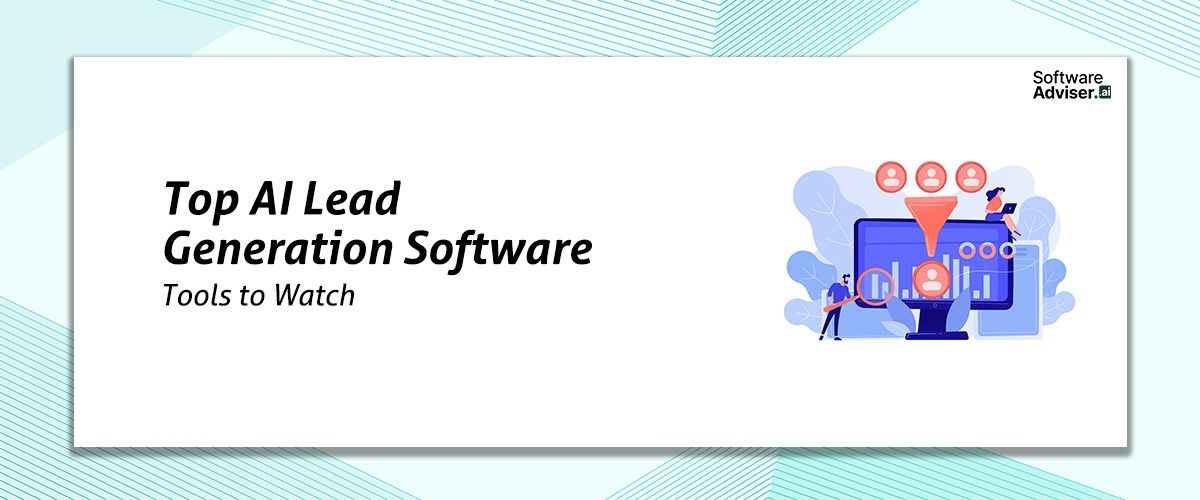
Top 5 AI Lead Generation Software Tools to Watch in 2026
 David N. Wilks
The US Business Landscape is undergoing a fast-evolving paradigm this year. If you want to increase your pipeline, you can’t just fire off an email blast to your stale prospect lists. By 2026, the top AI lead generation software tools will revolutionise the way American growth teams operate. Rather than sending generic email advertisements, these revolutionary solutions leverage autonomous researchers, hyper-personalized data enrichment, and predictive intent signals to select the ideal prospects to contact at the right moment. With these advanced AI capabilities, your sales staff will be able to quickly and reliably discover and engage with high-intent accounts, significantly decreasing manual prospecting and maintaining your funnel full of top-quality buyers, all the time.
What is AI Lead Generation Software, and Why is it Important in 2026?
Today’s technology allows lead-generation systems using AI artificial intelligence to locate, qualify, and contact prospective clients. Technologies: Machine Learning, Natural Language Processing (NLP), Autonomous Agents In the highly competitive US market, AI lead generation has moved beyond the simple scraping of existing databases to proactively explore different data environments (such as ongoing employment trends, changes in technology adoption, executive transfers, and digital body language) to identify individuals or companies that would be ideal prospects to purchase the products offered by the respective business. These AI systems will do most of the work of finding potential leads, updating data on an ongoing basis, assessing leads by how likely they are to convert, and writing highly personalised outreach based on a specific lead’s needs, instead of needing teams of salespeople to spend hours manually looking for potential leads.
Implementing an AI lead-generating system is now a common element of conducting business today for many firms in the United States, and really a necessity for enterprises to be able to continue to exist. Today’s US customer is tired of receiving too many generic and spam-like email communications from AI-generated organisations and is applying more rigorous filtering to email deliverability and displaying a stronger preference for communications that are authentic and one-on-one. AI lead generation software tools tackle this challenge by changing focus from the number of communications each month to the accuracy and precision of communications. This enables firms with lean growth teams to increase their ability to execute highly focused account-based marketing plans. By leveraging predictive intent data, organisations will know when to target a certain market to increase the likelihood of making a sale, shorten overall sales cycles, and deliver higher efficiency in their client costs, respectively.
What Key Features Should You Look for in AI Lead Generation Software Tools?
1. Autonomous Sales Agents & AI-Powered Prospecting
Modern pipeline creation is founded on B2B AI prospecting systems, especially those with autonomous sales agents that can execute end-to-end workflows. They should be able to identify email addresses, but also use AI to analyse the recent LinkedIn activity of a possible customer, to access financial statistics about the target firm, and to comprehend the challenges that the company is facing.
2. Predictive Intent Data Platforms
Timing is everything in the US! The correct technology will function like a Predictive Intent Data Platform. It should track first-party & third-party Digital Body Language & Activity, such as Reading Industry Articles, Visiting Pricing Pages, Researching Competitors, etc. This approach lets you get to buyers when they are most ready to buy, giving you a major competitive advantage.
3. Automated Data Enrichment (waterfall enrichment)
Data decays quickly; whichever solution you pick should include automated data enrichment via “waterfall routing.” That is to say, the AI will tap into numerous better data sources at the same time, cross-checking and verifying the phone number and email address in real-time. If Provider A does not have a legitimate cellphone number for your prospect, the AI will instantly contact Provider B to obtain one, providing your sales reps with an advantage over their competition.
4. Predictive AI Lead Scoring & Qualification
Not all leads are the same. Get away from the antiquated static manual point system (e.g., +5 points for downloading a white paper) and move to a dynamic AI lead scoring/qualification system. The platform should employ machine learning to match both inbound and outbound leads against your historical closed-won data, and immediately surface which accounts are most likely to convert and route those to your sales team in real time.
5. Hyper-Personalized Sales Outreach at Scale
The platform should be able to run hyper-personalized sales outreach activities and not just dump {{First_Name}} tokens into a template. The AI will leverage intent data, previous pain areas, and company news to deliver hyper-relevant emails and LinkedIn messages that look to be from human researchers.
6. Artificial Intelligence-Driven Account-Based Marketing (ABM)
In the US, the enterprise sales buy decision is rarely made by one person. AI-Powered Account-Based Marketing (ABM) Smart technology for Artificial Intelligence recognises members of the buying committee in a target account. A.I. identifies obstacles, champions, and decision makers and creates synchronised, multi-channel campaigns to meet the demands of each stakeholder.
What Are the Top 5 AI Lead Generation Software Tools in 2026?
1. Pipedrive
Pipedrive is a sales-focused CRM that accelerates transaction velocity and provides clear visual pipeline management for growing enterprises. The 2026 platform architecture is built to remove administrative load, with native AI co-pilots and simple lead-gathering tools that keep salespeople focused just on high-conversion selling chores.
-
Benefits
Easy Inbound Capture: LeadBooster plug-in uses smart AI chatbots and web forms to capture, qualify, and log leads coming to your site, straight into your CRM.
Next-Step Insights: The AI Sales Assistant estimates win probabilities based on account behaviour and deal signals, and surfaces real-time notifications about which deals need attention. Rapid Multi-Channel Outreach Native generative AI email tools generate context-aware follow-ups and outreach templates directly from the visual pipeline view.
-
Ideal Use Case:
Best of small to mid-market outbound sales teams (SMBs) looking for easy adoption and great visibility in their pipeline tool with native lead-capturing bots and less technical configuration or complicated setup.
2. Apollo.io
Apollo is an end-to-end go-to-market platform that allows B2B marketers access to 275 million prospects worldwide with integrated selling capabilities, including email, LinkedIn, and automated data purification using a B2B Data Intelligence Network (B2B-DIN). The biggest enhancement for the 2026 product features for this company is native AI-enabled co-pilot solutions that automate everything from designing hyper-personalized sequences to automating holistic data cleansing, so lean selling teams don’t have to go back and forth across different solutions.
-
Benefits
- End-To-End AI-Generated Multi-Channel Sequences: Email and touchpoints based on the demographics of the target audience are generated and performed through email and touchpoints
- Account-Level Intent Scores: Aggregates behaviour signals to tell sales professionals exactly when a target firm is looking for a solution.
- Intelligent Data Filtering: Uses advanced machine learning to create auto-refreshing lists of personas that match very niche Ideal Customer Profiles (ICPs).
- Reduced Stack Fragmentation: No need to acquire separate software for prospecting data, email sequencing, and dialer tools.
- SDR Efficiency: Greatly accelerate prospecting workflows with its tightly integrated Chrome plugin on LinkedIn.
- Ideal Use Case
Best for growing startups and mid-market sales development teams who need a comprehensive outbound prospecting framework at a price that's affordable and predictable.
3. Creatio CRM
Creatio is a worldwide provider of a comprehensive no-code platform that combines CRM features with powerful business process management. Creatio’s “agentic no-code” architecture, due in 2026, will allow firms to build fully autonomous digital workers to run research and target operations using natural language prompts.
-
Benefits
- Autonomous Agent Deployment: Incorporates specialised digital workers like the Lead Generation Agent that independently source, study, and engage prospects across numerous web channels.
- No-Code Workflow Flexibility: Business users may visually drag, drop and modify AI automation logic and lead routing rules without writing code or depending on IT developers.
- Intelligent Lead Prioritisation: Predictive lead scoring is driven by sophisticated machine learning algorithms that are working 24/7 against past data to ensure high-value accounts come to the top of the queue.
- Ideal Use Case
Best for dynamic mid-market and enterprise organisations needing a flexible, highly customisable database architecture and wanting to deploy custom, autonomous AI agents to automate end-to-end pipeline management.
4. Salesforce (Agentforce)
Salesforce is the world leader in enterprise customer relationship management software. In 2026, its platform capabilities are centred on Agentforce and the Prospecting Centre, which transform static datasets into active intelligence engines. This architecture enables big-scale operations to reliably deploy autonomous agents over enormous internal and external corporate datasets.
-
Benefits
- 24/7 Autonomous Lead Nurturing Agentforce: Prospecting and Lead Nurturing Agents automatically research markets, establish prospect accounts, send customised intro emails, and reply to incoming answers.
- Zero-Copy Data Grounding: Direct connectivity with external corporate databases via Data Cloud, allowing AI agents to interpret real-time third-party intent signals (e.g., Demandbase) with rigorous security.
-
Ideal Use Case:
When an autonomous agent qualifies a lead, the system instantly creates opportunities and sets live calendar appointments for human representatives.
5. HubSpot CRM
HubSpot integrates Clearbit, bringing Breeze Intelligence natively into its core ecosystem. Instead of forcing teams to move between different prospecting applications, Breeze delivers real-time native intent data, website visitor monitoring, and contact enrichment from within the HubSpot CRM, so no more context switching.
-
Benefits
- Seamless Centralized Database: Keeps all sales, marketing, and operations data in a single hub, preventing data decay or syncing delays.
- Streamlined Inbound Optimization: Shortens public forms down to a single email field while automatically enriching the back-end profile.
- Ideal Use Case:
Best for marketing and sales teams who are already deeply embedded in the HubSpot ecosystem and are content-driven and inbound-focused.
What Industries Can Benefit the Most from AI Lead Generation Software?
The B2B sector will get the most benefits from next-gen pipeline development technologies in the fast-paced US market of 2026. Technology, SaaS, and manufacturing companies are critically reliant on a predictive intent data platform to find in-market clients before a rival does. Over 60% of corporate buyers are actively picking a rep-free, self-guided discovery stage. These organisations use autonomous sales representatives to watch digital body language and run AI-powered account-based marketing (ABM) instead of static lists. When combined with automated data enrichment technologies, that insight enables B2B organisations to empower their lean sales teams to avoid corporate gatekeepers and pursue high-value buying committees with surgical precision.
Meanwhile, bleeding-edge automation is creating tremendous value in high-ticket US real estate and zippy e-commerce. For real estate broking firms, AI lead scoring and qualifying algorithms instantly cross-reference property data, tax liens, and demographic trends to identify which homeowners are ready to sell in dynamic market movements. Brands in the AI e-commerce platforms and direct-to-consumer (D2C) space are moving beyond simple tracking to deploy B2B AI prospecting solutions to power hyper-personalized wholesaling and retail distribution relationships. These solutions are used by consumer-facing firms to manage hyper-personalized sales outreach across web chat, email, and social channels, slashing customer acquisition expenses dramatically while maintaining a 24/7 pipeline of qualified customers.
What Are the Challenges of Using AI Lead Generation Software?
- Data Privacy and Compliance Risks: Automated data enrichment systems that acquire unverified consumer records without sufficient opt-out procedures could violate strong state privacy rules such as CCPA/CPRA and incur heavy penalties when autonomous sales agents get in trouble.
- The AI Spam and Deliverability Trap: When you overuse tools for hyper-personalized sales outreach, you can be caught in the trap of language models creating slight hallucinations. Automated emails can trigger strict spam filters of US providers, damaging your domain reputation.
- High Implementation and Infrastructure Costs: There is a lot of upfront capital expenditure to move to a real predictive intent data platform. The costs of integrating multiple data silos into your CRM are generally hidden and can quickly overshadow the basic software subscription cost.
- Steep Skills Gaps and Learning Curves: To truly tap into the power of B2B AI prospecting technology, specialist technical skills are required. Most legacy sales teams have difficulty moving away from manual cold calling toward navigating complex AI-powered account-based marketing (ABM) workflows.
How Can Businesses Choose the Right AI Lead Generation Tool for Their Needs?
The US marketplace is hypercompetitive, and the right platform for your business isn’t the one with the most marketing hoopla but the one that solves your operational bottlenecks. Your priority for a high-velocity outbound playbook should be B2B AI prospecting solutions that have native, automated data enrichment software with built-in email verification to safeguard domain health. For organisations entering a targeted, high-value account motion, the investment should be focused largely on platforms working as a predictive intent data platform. When growth teams choose solutions to map out complex buying committees and orchestrate AI-powered account-based marketing (ABM), they can be sure they’re only pushing costly sales resources toward target customers that are truly in a buying window.
Moreover, leadership teams must also do a deep audit of how a potential tool executes, and how it aligns with internal technical skills. If your sales organization doesn’t have dedicated revenue operations (RevOps) talent, then picking a highly technical data workbench will lead to low adoption. Lean teams should seek out intuitive next-gen pipeline generation tools with out-of-the-box autonomous sales agents and native AI CRM software integrations. Finally, try out the platform’s ability to hyper-personalize sales outreach and AI-powered dynamic lead scoring and qualifying in a controlled 30-day pilot. The ultimate key to maximising your ROI is to ensure that the software captures signals and automates activities seamlessly, without incurring a fragmented tech stack tax.
Conclusion
Embracing next-generation pipeline tools in 2026 is the definitive key to out-scaling the competition and navigating the evolving digital marketplace. By executing automated research, identifying real-time buying indicators, and prioritizing high-value targets, these intelligent platforms empower growth organizations to maximize conversion rates while maintaining highly efficient acquisition frameworks. When you are ready to revolutionize your client acquisition strategy, look to Softwareadviser.ai, the definitive SaaS Marketplace from which you can Discover, Compare, and Buy any Business Software to effortlessly source, analyze, and implement the perfect data intelligence system tailored to your unique scaling requirements.
A mid-sized company hires its first remote employee. Payroll runs the numbers, posts the job the same week, and gets flagged for a pay-transparency vi [...]

Dokas mile
AI sales management software is changing how we run revenue operations by combining 6 revolutionary capabilities into a single source of truth. The au [...]
Dokas mile
Let’s be honest about what happens when a customer runs into an issue today. Nobody wants to sit around on a muted phone line for twenty minutes jus [...]