
What we'll cover
Share with your community!


Get Free Consultation
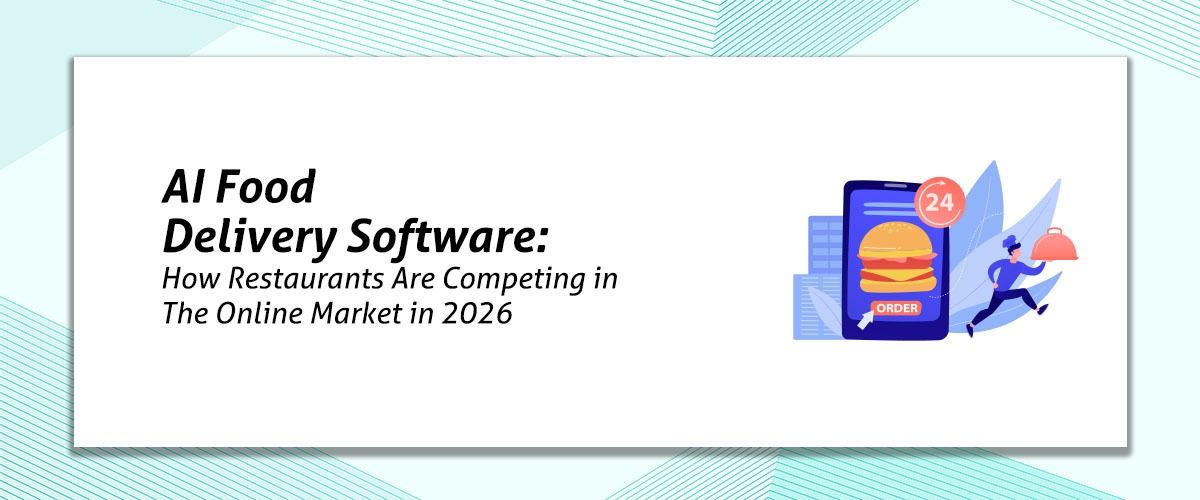
AI Food Delivery Software: How Restaurants Are Competing in the Online Market in 2026
 David N. Wilks
Running a profitable kitchen today takes more than just cooking notable food; it all comes down to how fast you get food to the consumer's door. In 2026, the net food space is crowded, so impartial eateries are turning to AI food-delivery tools to protect their profit margins against inflation and high 0.33-celebration platform costs. Customers do not want to deal with delayed orders or random menu suggestions anymore. They want real-time tracking, custom meal deals, and zero mistakes on their tickets. Kitchens that use dedicated AI Food Delivery Software can stop worrying about manual driver scheduling, cut out bad delivery routes, and drop off orders much faster. Shifting to these computerized setups lets in small neighborhood diners live ahead of massive chains and turn everyday shipping logistics into regular, predictable sales.
The Rise of AI Food Delivery in the Restaurant Industry
The rapid upward thrust of automation in meals logistics shows a massive shift in how current industrial kitchens perform. Thousands of proprietors are adopting AI food delivery systems due to the fact tracking motive force availability, fluctuating factor expenses, and delivery instances via hand has grow to be too difficult. Moving to computerized routing means managers can forestall guessing while the following massive rush will hit, and use predictive data to put together food ahead of time.
This switch to data-driven tools directly shapes customer habits. When a hungry person searches online for food delivery near me, they want a clean digital experience that accounts for local traffic and active kitchen backlogs immediately. Restaurants that run on smart logistics systems meet these exact needs, building real customer trust that older, static ordering setups simply cannot deliver.
How AI Food Delivery Software Works
Modern smart dispatch tools connect every single part of your online ordering cycle, turning messy incoming tickets into organized kitchen tasks:
- Centralized Order Gathering: The software pulls incoming orders out of your website, mobile apps, and 0.33-party transport offerings into one clean display screen.
- Automated Route Mapping: Smart algorithms check real-time traffic, order sizes, and drop-off factors to offer your drivers the fastest routes.
- Smart Prep Forecasting: The tool tracks older income traits, nearby weather changes, and weekend occasions to inform your cooks exactly how tons prep work to do.
- Live Update Alerts: Automated tracking loops send instant text alerts to customers, keeping them updated from the moment the food cooks to the final drop-off.
Bringing these operational steps into an all-in-one AI Restaurant Management Software program stops costly communication mix-ups. The software communicates directly with your raw inventory counts and external courier platforms to keep your entire kitchen moving smoothly in the background.
AI Food Delivery Optimization: Solving Operational Challenges
Running a local driver network often brings daily logistical headaches, but smart tracking tools are helping owners fix these issues step-by-step. Kitchen managers face tough ai food delivery optimization problems every day, like trying to group multiple orders for one driver without letting the first customer's food get cold, or handling sudden driver shortages when the weather turns bad.
Advanced routing systems solve these specific ai food delivery optimization problems by checking exact food prep speeds alongside live road conditions. This setup ensures your delivery drivers pull up right when the kitchen team finishes packing the bag, keeping the meals hot. Smart route grouping cuts down on total fuel spend and raises driver earnings. At the same time, automated order checking steps inspect every ticket item to keep costly order refunds below one percent.
Voice AI in Food Delivery: Emerging Use Cases
The growing use of conversational audio tools is completely changing how consumers place their takeout orders. Looking closely at active voice AI in food delivery examples shows how automated phone systems take orders smoothly during busy weekend rushes, allowing restaurants to capture every dollar without forcing staff to run to the phone line.
These voice tools act like smart order assistants. They recognize phone numbers from regular customers, look up past orders instantly, and recommend matching sides or drinks using clear, natural speech. Testing real-world voice AI in food delivery examples proves that these smart assistants reduce total phone time to seconds. This automation continues the front-of-residence workforce loose from distractions, with the intention to focus completely on taking care of walk-in guests.
AI-Powered Food Delivery Apps and Customer Experience
Modern mobile ordering apps use machine learning to catch consumer interest and drive repeat sales. Every time a client opens a new food transport app, they interact with a clever engagement machine that learns their private eating choices:
- Tailored Menu Sorting: The application rearranges menu sections primarily based on what the consumer loves to consume, showcasing their favourite alternatives automatically.
- Flexible Promo Adjustments: Smart discount layers launch quick, timed deals on overstocked ingredients during slow afternoon hours to keep orders steady.
- Automated Retargeting: The device unearths users who've not ordered a meal in some weeks and sends out custom signals providing their top-rated dishes.
By placing these clever capabilities properly into a proprietary food transport app, impartial bistros can supply clients the same fast, easy virtual experience as billion-dollar tech brands. Features like quick reorder buttons remove ordering friction, helping businesses turn casual weekend buyers into long-term regular clients.
Top AI Food Delivery Software Platforms in 2026
Eateries that want to improve their everyday virtual workflows can select from several high-performing systems constructed for specific kitchen setups:
- DoorDash Drive: A amazing desire that offers local kitchens get right of entry to to a massive on-demand driver community without forcing them to drop their own branding.
- Uber Eats: Offers effective promotional options and deep local marketplace information to help eating places capture nearby lunch rushes effortlessly.
- Grubhub: Well-acknowledged for its company catering equipment and easy integration choices for busy, high-volume town kitchens.
- Toast: A complete system built specifically for restaurants, packed with robust AI Restaurant POS Software modules that track tableside and online orders.
- Deliverect: Routes online orders from separate external applications straight to your main kitchen screen, so you can get rid of multiple tablets.
- ChowNow: Focuses on commission-free digital ordering setups, helping local spots keep their hard-earned profits on direct delivery runs.
- GloriaFood: A simple, low-cost tool made for mid-sized eateries that need to set up a responsive online ordering menu in a hurry.
- Square for Restaurants: A flexible management choice that includes comprehensive AI POS Software tools to track active kitchen tasks and food costs simultaneously.
Benefits of AI Food Delivery Software for Restaurants
Upgrading your restaurant to an active, automated tracking framework brings clear business wins that instantly boost your take-home profits:
|
Operational Improvement |
Real-World Business Outcome |
|
Optimized Driver Dispatch: Matches courier arrival times with kitchen packing speeds. |
Faster Deliveries: Cuts up to fifteen minutes off average customer wait times. |
|
Smart Inventory Forecasts: Monitors ingredient use against upcoming daily demand. |
Lower Waste: Drastically reduces food spoilage costs across your walk-in coolers. |
|
Automated Order Checks: Confirms custom modifications before printing kitchen tickets. |
Higher Accuracy: Cuts out duplicate delivery runs and expensive cash refunds. |
|
Predictive Upselling: Shows matching menu pairings during mobile checkouts. |
Larger Order Sizes: Increases average ticket values by up to twenty percent. |
By coping with those logistics steps in one internal dashboard, proprietors get a clean view in their true transport income margins. This automation takes the stress off kitchen supervisors, permitting them to focus on meals first-rate and team schooling rather than spending hours calling drivers.
Future Trends Shaping the Online Food Market in 2026
Staying profitable in the quick-service food space requires knowing where mobile ordering tech is moving next. The entire market is shifting toward automated delivery setups, where small self-driving carts and drones take over short-distance trips in urban areas to cut down on driver labor costs.
Eateries are also shifting away from basic standalone plugins and moving toward unified AI POS Software networks that handle every task on auto-pilot. These advanced systems can change menu pricing instantly based on active wholesale ingredient costs and driver counts, while automatically sending targeted deals to nearby diners searching for a food delivery near me option. Putting these automated tools to work early ensures your kitchen stays lean, fast, and fully prepared for the future of the food industry.
Conclusion :
Setting up an AI food delivery system is a smart operational step for any restaurant that wants to protect its margins and speed up fulfillment times. By linking automated driver dispatching, smart prep tracking, and voice-assisted ordering into one workflow, kitchen operators can protect their business profits and get rid of painful delivery delays.
As the digital food market keeps changing, staying profitable takes a real commitment to expanding your automated workflows. Investing in a scalable, modern AI Restaurant POS Software platform today gives your business the processing speed, order accuracy, and deep insight needed to win over local diners tomorrow.
FAQ's
It automates driver dispatch routines and maps out the best delivery routes, which cuts down on fuel costs and prevents expensive kitchen errors.
Voice tools take routine phone orders completely on their own during peak weekend rushes, ensuring you never lose a sale because your phone lines are busy.
The software reads user data to offer personalized menu recommendations and custom checkout promotions tailored directly to each customer's eating habits.
It links your online menus, inventory tracking, and driver dispatch steps together on one screen, removing manual data entry mistakes.
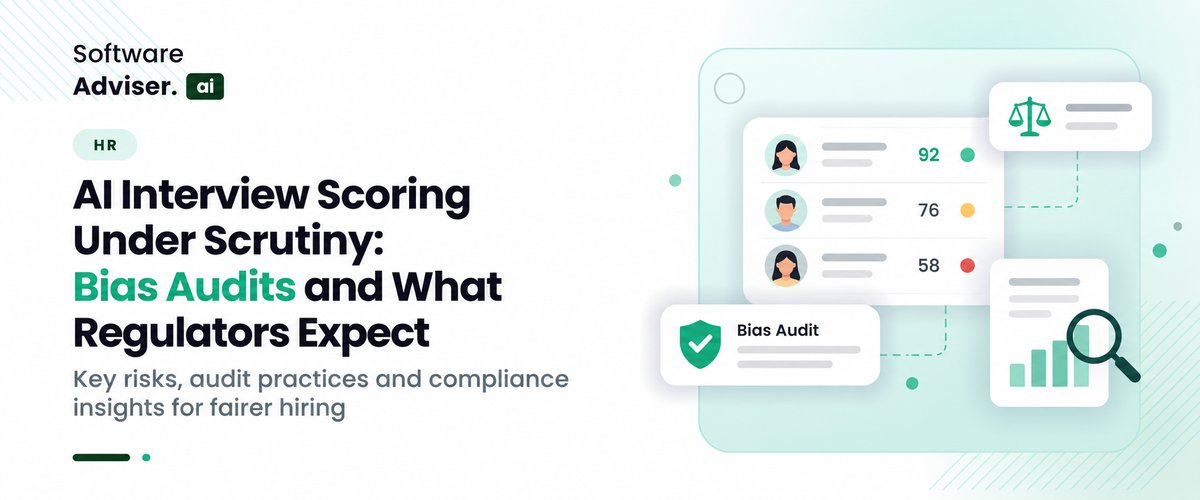
As organizations are increasingly integrating artificial intelligence into their talent acquisition processes, automatic interview scoring tools compu [...]

Dokas mile
The organizational panorama has moved beyond primary chat bins that actually solve questions. Over the last few years, corporate automation has shifte [...]
Dokas mile
The era of blasting generic newsletters to a massive, unsegmented list is officially dead. In 2026, email marketing has evolved into a hyper-personali [...]