
What we'll cover
Share with your community!


Get Free Consultation


AI Deal Scoring: How Pipeline Models Predict Which Opportunities Close
 Dokas mile
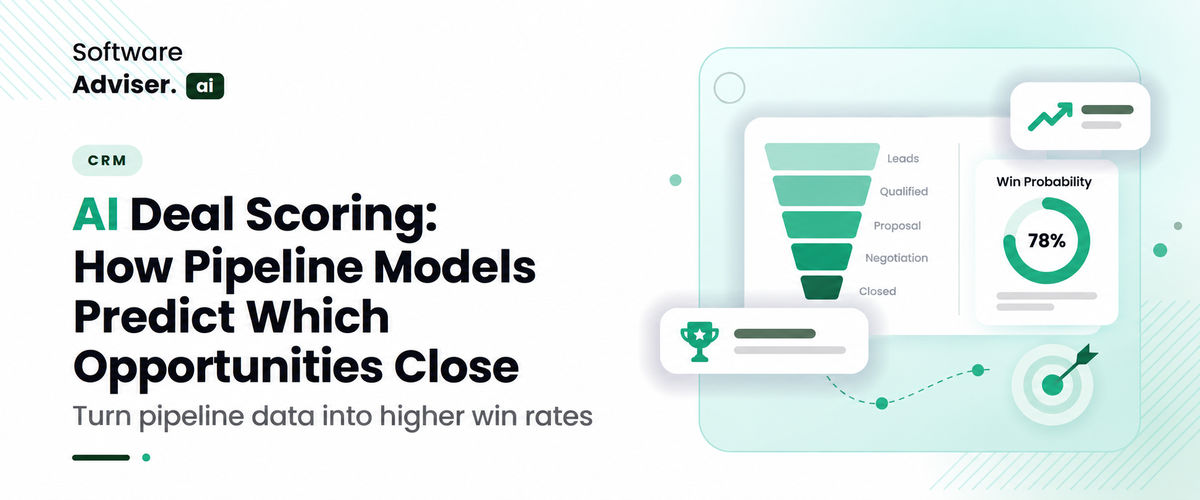
In an environment fraught with uncertainty like the US B2B market, the practice of relying on subjective estimates made by reps and the impossibly large pipeline has become quite outdated. The technology of the modern world, AI deal scoring, enables companies to use a totally different approach - machine learning algorithms calculate the real conversion rate for every open opportunity in the pipeline. The output of the AI-based pipeline relies on a variety of data, including behavioral signals in real time, historical win/loss performance statistics of the affected CRM, firmographics, etc. Moreover, the AI also utilizes buyer engagement metrics like the number of emails received from stakeholders, frequency of meetings with executives, and many other aspects. The result of this technology is the ability to conduct instant recalculations of win rates in the pipeline, identifying lost opportunities well before the sales team gets to know what happened. This unique knowledge is exploited by sales teams to remove bias from their forecasts and focus on sales to the most lucrative clients.
What is AI Deal Scoring, and how does it Predict Revenue?
AI deal scoring is a form of technology that uses an automated mechanism that provides a numerical probability (usually between 1 and 100) regarding every active sale opportunity. Unlike traditional CRM practices where a salesperson guesses the possibility of a sale based on experience, AI employs advanced algorithms that involve the verification of huge volumes of up-to-date and historic data. When processing information, the system evaluates both the historic patterns of sales and AI employee engagement features such as the time taken by a manager to respond to emails, the number of meetings held, the number of people involved in the project, the activity of the company’s website, and the time taken to analyze a contract. Thus, the system stays up-to-date with every aspect of the current deal while having to exclude the possibility of missing any change.
Constant scoring revolutionizes the revenue manager’s ability to forecast quarterly income. Instead of obtaining misleading and exaggerated statistics from the representatives in the course of commitment phone calls, Revenue Operations receives reality-based probability assessments for the pipeline. For instance, if one of the reps claims that the deal with an enterprise customer is supposed to be concluded very soon, but the deal score drops from 80 to 35 points due to an unexpected decrease in communication with the buyer, he/she will lose this deal when preparing the income report. By using real data about the behavior of buyers instead of the emotions of salespeople, American executives can present figures to the board confidently, allocate resources to qualified transactions adequately, and save the troubled pipeline of transactions weeks before the end of the quarter.
Do You Know?
Studies point to a pattern. Many of them do not hit quota. One report puts the miss rate near 70%. The cause is often plain to see. A lot of reps go on gut feel. They assume the buyer will stay the course. Then an AI score comes in. Supporters describe it as more even and reliable. They claim forecast results can reach above 95%. They also say the model keeps changing. When new buyer signals appear, it pulls in the newest engagement data.
Which Sales Data Signals drive the most Accurate Deal Predictions?
1. Buyer Reply Timing
- If the email back-and-forth gets slow, pay attention: When the response changes from roughly 2 hours to about 48 hours, the deal may be losing energy.
- Next, watch who sends the first message: If the prospect reaches out first often, or asks for more follow-ups than you expected, things can move faster.
- After that, look at the meeting behavior: If they keep changing times at the last minute, or if they book a slot and then stop responding, the chance of closing usually drops.
2. Where the Buying Group Stops, and What Changes for Execs
- Once a buyer group grows to around five people, the process often speeds up: You see this in B2B work at the enterprise tier. It is especially true when the group uses more than one company email domain. In those cases, the deal usually ends sooner.
- The schedule can also shift once senior leaders join in: If a C suite leader, a VP, or a director hops on early calls, or if their name is included in email replies, approvals may arrive faster. Budget sign off can come earlier than expected.
- A good champion also helps a lot: When that person stays engaged and keeps sending emails between meetings, it is easier to see whether the deal is moving at a steady pace.
3. What People do, and what you may Spot Online
- Check security and legal pages: If someone pulls a SOC 2 report, answers security questions, or downloads privacy forms, the timing can be close.
- Watch proposals and pricing: If the same people keep returning to the same deal area, reread notes, or open pricing again, it often means the process is still active.
- Look for signals from outside parties: If you see more company searches or extra research tied to tools like ZoomInfo or 6sense while conversations are happening, that can point to real interest.
4. Matching old CRM patterns
- Stage-to-time ratio: If a deal sits in one pipeline step about 1.5x longer than the usual average for wins, it gets marked for possible slippage.
- Discount speed: Big discounts early, or discounts that were not asked for, often point to weak rep positioning. That usually means a lower chance of winning.
- ICP match score: We check how well the deal fits our ideal customer profile. We compare company size, tech stack, yearly revenue, and industry. We score it against past closed win cases.
How is AI deal scoring different from traditional lead scoring?
- Lead Scoring is used at the start of the process: It focuses on top of the funnel leads, such as MQLs. The goal is simple: decide if a contact should be passed to Sales.
- AI Deal Scoring is used later: It looks at what is already in the pipeline. It checks SQLs and live deals. Then it estimates if an open enterprise account is likely to move to a win.
- The target is not the same in each case: Lead Scoring evaluates one person. It uses job info, firm size, and online activity. Deal Scoring evaluates a buying group. It reviews how the committee works together and how decisions are driven across roles.
- Data sources also shift: Lead Scoring relies on stable attributes and basic web actions. Think form fills, whitepaper downloads, or visits to pricing pages. Deal Scoring uses signals that change as the deal runs. For example, it looks at how quickly people respond in email threads, what call activity suggests based on tools used, notes from procurement materials, and whether the mutual action plan is moving ahead.
- Scoring methods differ too: Lead Scoring often uses rules with fixed point values. AI email marketing teams may set this manually, like giving points for an email open. Deal Scoring leans on predictive machine learning. The model updates its view as the deal progresses by comparing current patterns to past CRM outcomes.
- Each effort supports different teams: Lead Scoring helps Marketing and Business Development Reps, also called SDRs, choose which new inbound contacts to contact first. Deal Scoring supports Sales Leaders and Revenue Operations, with tighter quarterly revenue forecasts. It also helps spot deals that start to stall and guide more closing effort where it can pay off.
How do US sales teams use AI scores to close deals faster?
US B2B sales teams use AI deal scores as operational action signals to shorten deal cycles and protect revenue:
- Daily deal sorting for Account Executives (AEs): Reps look at AI win chances inside the AI CRM. They put about 80% of their time into the deals that look like strong fits. They also park the low-score accounts that tend to waste hours.
- Early warning when a deal slips: For big enterprise deals, the score can fall if email activity slows or if meetings get missed. The AI spots the drop right away. Then the rep is nudged to step in before the deal stalls for good.
- Speed up when outreach is too narrow: If the score drops because only one person is being contacted, the system warns the rep. The rep is asked to find more decision makers. They are also pushed to loop in senior leaders so the deal can move again.
- Playbooks that fire when scores drop: When the score is low, the system sends RevOps alerts. Sales leaders may jump into the call. Discount options can be suggested if they are already approved. Legal terms can also be adjusted to try to keep the deal alive.
- What to do next, right away: The AI looks at past win patterns. It then suggests clear next steps. Examples include sending a security compliance packet or setting up a mutual plan review. The goal is to get the deal to the next stage.
- Better use of people and time: Sales engineering and exec support are reserved for top-scoring, late-stage deals. Higher-cost help goes to accounts that have the best real odds of closing.
How do AI Scoring Models Connect with US CRM Systems?
AI deal scoring engines connect with US CRM systems through continuous, bi-directional data exchange. They sit on top of the CRM architecture to turn static records into live, predictive scores:
1. Data pull and API setup
The scoring service uses secure REST APIs. It brings in old and new records from the CRM. This includes AI accounting, Contacts, Leads, and Opportunities. It also grabs fields like deal stage, deal size, rep activity logs, and past win or loss outcomes. These inputs help form the first baseline model.
2. Collect signals outside the CRM
CRM entries can be partial or skewed. Rep notes may miss details. So the model also reads signals from outside tools. It connects to third-party communication systems. This covers business email from Google Workspace or Outlook, calendar updates, call recordings, and buyer intent networks.
3. Run the model and calculate results
The system checks fresh buyer signals against past CRM trends. It looks at things like how fast someone replies to an email. It also checks whether a key decision-maker shows up. Next, it measures how long the deal sits in a pipeline stage. It compares that timing to the usual timeline for deals that the company wins.
4. Send scores back to the CRM and show them in place
After the model computes a win chance score, the value goes back into custom CRM fields. The score ranges from 0 to 100. It shows up directly on deal pages. It also appears in opportunity list views and in exec dashboards. Along with the number, it includes key risk items
How does AI Spot Stalled Deals and Pipeline Risks Early?
- The method separates the rep’s work from the buyer’s work: If the rep keeps sending research and making calls, while the buyer pauses for days, the gap shows up fast. You may see a quick response at first, then nothing. After a few of those patterns, the account can seem slow or slightly off from plan.
- It also tries to catch effort that is not leading anywhere: It looks at long email threads and notes who says yes, and who actually joins the calendar times. It then checks whether the key people in the deal group attend the meetings. When the finance or procurement contact stops joining calls or goes silent on replies, the score drops quickly.
- After that, it tracks how long deals sit in each step: It pulls the newer deals and compares them to past deals that ended well. It uses the common time range for each step in the process too. If a deal stays too long in Proposal or Legal, it gets marked as stalled. This can still show up even when the rep keeps moving the target close date.
- It also looks at how things are said: It reviews call notes and what is written in emails to find early signs that the buyer is not fully on board yet. When the same objections keep coming up, when cost concerns appear early, or when technical risks are brushed aside, the concern grows faster. With that, managers can step in sooner, before the situation gets worse.
What Historical Data is needed to keep AI Scoring Models Accurate?
- Closed-Won and Closed-Lost set: Pull at least 200 won deals and 200 lost deals from the last 12 to 24 months. This helps the model see real patterns for success and failure.
- Stage timing history: Use old records that show when deals entered each stage and when they left it. This gives a baseline for normal stage speed.
- Email and message metadata: Keep 12 to 18 months of time marks for email lag. Also store thread size and reply rates. Use these from past deals only.
- Meetings and calendar logs: Gather counts of meetings, how often they happen, and who attends. Track the mix of buyer and seller attendance.
- Call transcripts and audio: Include call audio and transcripts. Link specific terms to prior results. For example, match pricing pushback or competitor mentions to what happened after.
- Who was involved: Map the roles and seniority of people on deals. Show how broad the committee was in both winning and losing groups. Use titles to spot who acted as champions.
- Firm details and ICP fit: Collect data for account size, industry, revenue range, and tech stack. Use only what matches the firm profile and ICP from closed accounts.
- Digital engagement: Track what buyers did with shared items. Note interactions with proposals, security documents, and mutual action plans.
- Ongoing model updates: Retrain on a rolling 12 to 18 month window. Do this regularly so the model stays current as the market and rep behavior change.
Conclusion
AI deal scoring changes how teams handle the pipeline. It moves away from gut level guessing and toward numbers you can check. The models look at buyer speed, how active leaders are, and past deal outcomes. With that view, RevOps teams can spot deals that are slowing down and plan forecasts sooner. To get good results, the revenue team still needs the right tools. The stack should fit the company’s go-to-market setup, not a generic list. Take a look at SoftwareAdviser.ai. It helps you find, compare, and choose strong B2B intelligence tools and platforms. Those choices can help sales run smoother and lift revenue results.
FAQ's
AI deal scoring calculates win probability by using machine learning models to continuously compare a live deal's real-time engagement signals—such as email response lag times, executive meeting attendance, and mutual action plan activity—against thousands of historical closed-won and closed-lost CRM opportunities.
No, AI deal scoring is designed to empower human sellers rather than replace them. It acts as an objective decision-support engine, helping account executives focus their time on high-propensity opportunities while alerting revenue leaders to hidden pipeline risks weeks before a quarter ends.
Most enterprise predictive models require a baseline of at least 200 closed-won and 200 closed-lost opportunities from the past 12 to 24 months, alongside timestamped email, calendar, and stage-duration metadata, to achieve high forecasting precision.
Yes, modern predictive scoring platforms connect natively to major CRM systems via secure REST APIs, pulling activity logs while continuously writing updated win scores and risk factors directly onto deal records and sales dashboards.
Traditional lead scoring evaluates individual top-of-funnel prospects (MQLs) based on static demographic or web-click data, whereas AI deal scoring evaluates active multi-stakeholder opportunities at the bottom of the funnel to predict actual revenue conversion.
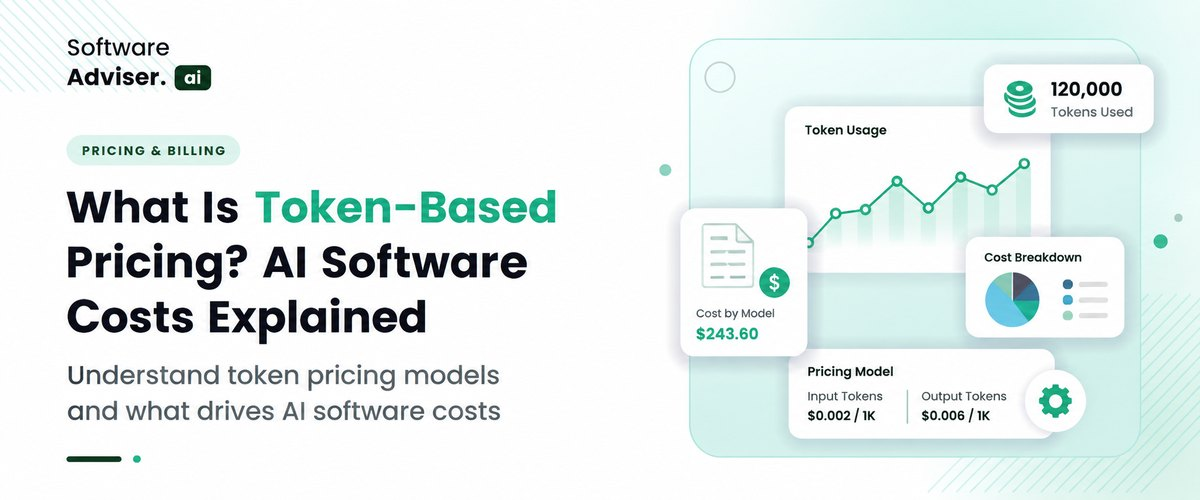
Token-based pricing charges you for the amount of text an AI tool processes, measured in tokens. A token runs to roughly four characters, or about thr [...]

David N. Wilks
Most small business owners are making AI budget decisions based on assumptions that are eighteen months out of date. The perception stuck in a lot of [...]
David N. Wilks
The entire CRM (Customer Relationship Management) industry is going through dramatic changes as artificial intelligence (AI) moves from a valuable add [...]