
What we'll cover
Share with your community!


Get Free Consultation
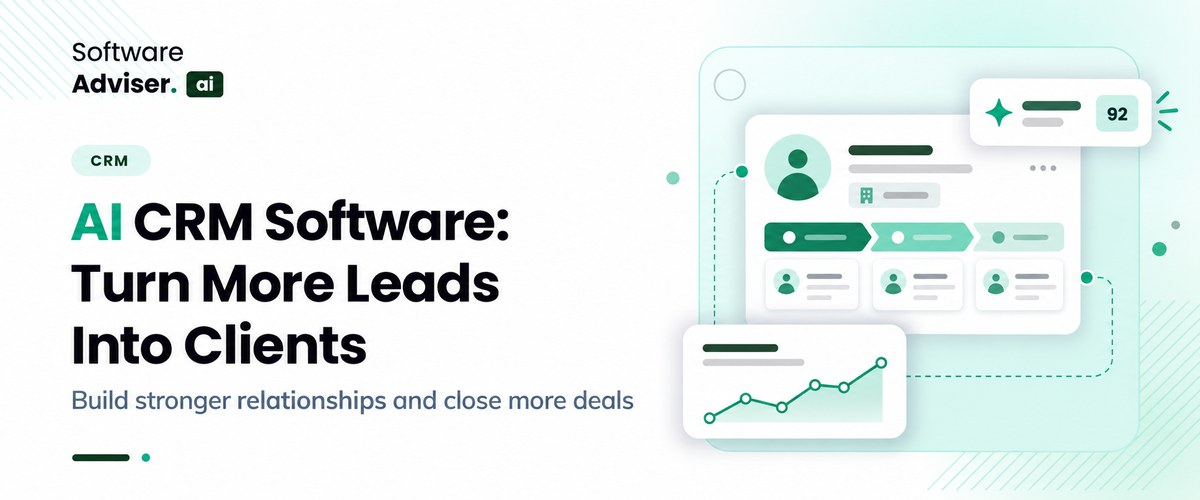
AI CRM Software: Turn More Leads Into Clients
 Dokas mile
Every day, growing businesses lose countless promising opportunities. Leads slip through the cracks not because they lack interest, but due to delayed follow-ups, inadequate lead qualification, and fragmented customer data trapped across disconnected spreadsheets and legacy tools. Sales representatives waste precious hours manually logging emails, updating deal stages, and guessing which prospects are actually ready to buy.
AI CRM software solves these operational bottlenecks by introducing intelligent automation, predictive analytics, and generative AI directly into your customer relationship management workflows. By harnessing machine learning algorithms, an AI-powered CRM software helps businesses instantly identify high-value prospects, automate personalized outreach at scale, and accurately forecast revenue. Whether you are scaling an emerging sales team or optimizing complex enterprise pipelines, adopting an AI CRM system shifts your operations from reactive tracking to proactive revenue generation.
Throughout this comprehensive guide, we will explore core definitions, key features, leading platforms like HubSpot and Salesforce, pricing models, integration services, and best practices to help you turn more leads into loyal clients.
What Is AI CRM Software?
An AI CRM system is an advanced customer relationship management platform embedded with artificial intelligence, machine learning, and automation capabilities designed to streamline sales, marketing, and customer service operations. Unlike traditional CRM platforms that act merely as static digital filing cabinets for contact information and deal stages, an AI-powered CRM platform actively analyzes historical customer data, predicts future behaviors, automates repetitive administrative tasks, and generates contextual communications.
At its core, modern AI CRM platforms integrate three primary technological pillars:
- Predictive AI: Algorithms that evaluate past deal closures, website interactions, and engagement patterns to score leads and forecast sales outcomes.
- Generative AI: Large language models and smart assistants that draft personalized sales emails, summarize meeting transcripts, and build automated workflows instantly.
- AI Agents: Autonomous virtual agents capable of qualifying inbound chats, routing tickets, and triggering multi-channel follow-ups without human intervention.
By continuously processing customer data, an AI CRM software transforms raw contact numbers and web activity into actionable, real-time recommendations that empower sales teams to focus entirely on building relationships and closing deals.
How AI CRM Software Turns More Leads Into Clients
Deploying AI CRM tools directly impacts conversion rates by optimizing every stage of the customer journey. Below are the core mechanisms through which an AI-powered CRM software turns prospects into paying clients.
AI-Powered Lead Scoring and Qualification
Traditional lead scoring relies on rigid, manual rules such as assigning 10 points for downloading an eBook and 5 points for visiting the pricing page. AI CRM tools replace guesswork with dynamic scoring models that evaluate hundreds of behavioral and firmographic signals simultaneously. The system analyzes historical won deals to recognize subtle patterns in prospect behavior, instantly prioritizing leads that exhibit the highest propensity to buy. Sales reps no longer waste time chasing unqualified inquiries; instead, they focus immediately on high-intent prospects.
Automated Follow-Ups and Personalized Outreach
Speed-to-lead is critical in modern sales. When an inbound inquiry arrives, an AI-powered CRM platform can instantly analyze the prospect's industry and inquiry details to draft a hyper-personalized, context-aware initial response. Automated cadence builders schedule multi-touch follow-ups across email, SMS, and LinkedIn, ensuring no lead goes cold due to human oversight. Generative AI tools empower reps to customize email tones and value propositions in seconds rather than minutes.
Predictive Sales Forecasting and Deal Insights
Pipeline visibility often suffers from human bias sales reps tend to be overly optimistic about their open deals. AI CRM software evaluates historical win/loss ratios, email sentiment, meeting frequency, and stakeholder engagement to generate objective deal health scores. Sales leaders gain accurate predictive forecasts that highlight potential bottlenecks, stalled opportunities, and revenue shortfalls weeks before quarter-end.
Customer Segmentation and Retention
Acquiring a new customer costs significantly more than retaining an existing one. AI CRM platforms analyze customer usage data, purchase history, and support ticket sentiment to identify accounts showing churn risk or cross-sell potential. Automated marketing campaigns trigger targeted re-engagement offers, ensuring long-term customer lifetime value (LTV) is maximized.
Practical Example: Imagine a prospective buyer visits your SaaS website and downloads a whitepaper. An AI CRM software instantly captures the lead, enriches the record with company size and tech stack data via third-party databases, and assigns a high-intent score based on similar accounts that previously closed. The system automatically triggers a personalized introductory email from the assigned account executive within two minutes. When the prospect replies asking about enterprise security compliance, the CRM's generative AI assistant drafts a compliant, detailed response for the rep to review and send in one click. The deal moves swiftly from inquiry to booked demo, qualification, and successful conversion.
Best AI CRM Software: Top Platforms to Consider
Selecting the right solution requires evaluating your organization's sales complexity, team size, existing tech stack, and budget. Below is a comparative overview of top-rated platforms offering best AI CRM software capabilities.
HubSpot — AI CRM for Connected Customer Data and Sales Workflows
HubSpot stands out as a premier AI CRM platform built around a unified database (Smart CRM). Its built-in AI assistant, Breeze, provides generative content creation, data enrichment, predictive lead scoring, and conversational bots across marketing, sales, and service hubs. It is ideal for growing businesses and mid-market teams seeking intuitive design and rapid user adoption.
Salesforce — AI CRM for Complex Sales Operations
Salesforce remains a dominant enterprise powerhouse. Powered by Einstein AI and Agentforce, Salesforce delivers deep predictive analytics, autonomous sales agents, and robust customization. It is best suited for large enterprises with complex, multi-layered sales operations and dedicated administration teams.
Microsoft Dynamics 365 — AI CRM for Microsoft-Centric Businesses
Microsoft Dynamics 365 integrates tightly with Copilot and the Microsoft 365 ecosystem (Teams, Outlook, Excel). For organizations already invested in Microsoft infrastructure, this AI CRM system offers unmatched workflow continuity, automated meeting summaries, and predictive sales insights directly inside familiar enterprise applications.
Creatio — AI CRM for Customizable Workflows
Creatio combines low-code process automation with robust AI capabilities. It allows organizations to build and modify custom sales workflows and AI models rapidly without heavy coding. It is ideal for mid-to-large enterprises that require high agility and tailored process management.
Zoho CRM — AI CRM for Sales Automation and Growing Businesses
Zoho CRM leverages its conversational AI assistant, Zia, to provide anomaly detection, sentiment analysis, lead conversion predictions, and workflow automation. Zoho delivers incredible value, making it a top choice for small-to-mid-sized businesses seeking enterprise-grade AI features on a budget.
|
Platform |
Best For |
Standalone AI Capabilities |
Pricing Transparency |
Primary Limitations |
|
HubSpot |
Growing businesses & unified data |
Breeze AI, content generation, data enrichment |
Moderate (scales with contacts/tiers) |
Advanced features require higher tiers |
|
Salesforce |
Enterprise sales complexity |
Agentforce, Einstein predictive analytics, autonomous bots |
Complex (add-on licensing) |
Steep learning curve, high implementation cost |
|
Microsoft Dynamics 365 |
Microsoft-centric ecosystems |
Copilot integration, Outlook/Teams synergy |
Moderate-High |
Requires Microsoft ecosystem commitment |
|
Creatio |
Low-code custom workflows |
Process automation AI, predictive scoring |
Variable |
Smaller community than Salesforce/HubSpot |
|
Zoho CRM |
Cost-conscious growing businesses |
Zia assistant, sentiment analysis, anomaly detection |
High (affordable entry tiers) |
Advanced customization requires technical skill |
HubSpot AI CRM Features: What Can Businesses Automate?
For organizations evaluating HubSpot, understanding its specific capabilities is essential. HubSpot AI CRM features are designed to eliminate administrative friction and enhance data integrity across the organization.
- AI-Assisted Customer Data Enrichment: Automatically populates company profiles with verified firmographic data, employee counts, industry classifications, and location details from minimal input.
- Customer and Company Record Insights: Generates concise AI summaries of lengthy contact timelines and deal notes, allowing sales reps to catch up on account history in seconds.
- Workflow Automation and Reporting: Automates routine task creation, deal stage updates, and custom report generation using natural language prompts.
- Data Quality and Duplicate Management: Automatically detects duplicate contact records, standardizes capitalization, and flags anomalous data entries to maintain a clean database.
- Connected Apps and Customer Information: Syncs bi-directionally with hundreds of third-party business applications to ensure customer information remains updated across marketing, sales, and support portals.
Note: While many baseline generative writing and enrichment features are included in standard professional tiers, certain advanced predictive models and autonomous agent capabilities may depend on specific subscription plans or add-on credits. Consulting official documentation ensures accurate alignment with current product releases.
AI CRM Software Pricing: What Should You Expect?
Navigating AI CRM software pricing requires looking beyond base subscription fees to understand the total cost of ownership.
Free vs. Paid AI CRM Plans
Many platforms offer free entry-level tiers with basic contact management and limited manual tools. However, true AI-powered CRM software capabilities—such as predictive lead scoring, automated email generation, and advanced forecasting—typically require paid professional or enterprise subscriptions.
Per-User Pricing, AI Credits, and Add-On Costs
Pricing structures vary widely. Some vendors charge flat per-user-per-month fees, while others incorporate usage-based models where advanced AI features consume specific "AI credits" or require separate add-on licenses.
How to Calculate the Total Cost of an AI CRM
When budgeting for an AI CRM system, factor in:
- Base per-user license fees.
- AI token or credit consumption limits.
- Implementation and AI CRM integration services.
- Data migration and user training costs.
- Ongoing customization and administrative support.
Verified Pricing Note (Checked October 2026): Entry-level professional plans for top-tier CRMs typically start around $45 to $100+ per user/month, while enterprise AI editions often exceed 150–300+ per user/month, excluding mandatory onboarding fees and custom integration add-ons. Always review the vendor's official pricing page before finalizing your budget.
AI CRM Integration Services: Connect Your Existing Tools
An AI CRM platform cannot operate in a silo. To maximize its effectiveness, businesses must connect their CRM to existing communication and operational channels.
- Data Channel Integration: Seamlessly connect email clients (Gmail, Outlook), calendars, marketing automation platforms, customer support ticketing systems, and business intelligence dashboards.
- Generative AI & LLM Connectivity: Link your AI CRM platform with external large language models (such as integrating CRM software integration Claude AI) via secure APIs or approved middleware to analyze customer sentiment and generate custom sales collateral.
- Middleware & APIs: Utilize robust REST APIs, webhooks, or integration platforms (like Zapier, Make, or native connectors) to automate data flow between legacy ERPs and modern cloud CRMs.
- Security & Permissions: Maintain rigorous data governance, role-based access controls, and encryption standards to protect sensitive customer data during cross-platform synchronization.
Implementation Example: Connecting an external assistant like Claude AI to a CRM database via an approved API connector enables automated lead transcript analysis. When a sales call concludes, the transcription is securely passed through the API to generate structured meeting notes and action items directly inside the contact record, provided strict data privacy protocols and access tokens are enforced.
How to Choose the Right AI CRM for Your Business
Moving from research to decision-making requires evaluating five critical criteria:
- Business Size and Sales Complexity: Match platform capabilities to your team structure—avoid enterprise bloat for small teams, and avoid lightweight tools for complex multi-tier sales cycles.
- AI Features That Solve Real Problems: Ensure the AI tools address actual operational bottlenecks (e.g., lead qualification or slow follow-ups) rather than serving as mere marketing buzzwords.
- Ease of Adoption and User Experience: A sophisticated AI CRM system is worthless if your sales reps find it too difficult to navigate. Prioritize intuitive interfaces and robust mobile accessibility.
- Integration Capabilities and Data Security: Verify that the platform supports your existing tech stack and adheres to required compliance frameworks (GDPR, HIPAA, SOC2).
- Total Cost and Measurable ROI: Evaluate software pricing against projected time savings, increased close rates, and accelerated deal velocity.
Recommendation: Shortlist two or three platforms that fit your operational model, request live sandbox demonstrations, and test them against your team's actual day-to-day sales workflows before making a final financial commitment.
Turn More Leads Into Clients With the Right AI CRM
Implementing the right AI CRM software fundamentally transforms how your organization approaches revenue generation. By automating lead scoring, accelerating follow-ups, and delivering predictive pipeline insights, businesses eliminate administrative drag and empower sales teams to focus on what matters most: building relationships and closing deals.
However, technology alone does not guarantee success. Sustainable growth depends on high data quality, team adoption, and thoughtful workflow design.
Ready to transform your sales pipeline and turn more leads into clients? Book a demo, request a custom AI CRM integration services consultation, or compare our recommended solutions today to take the next step toward intelligent revenue growth.
FAQ's
The best AI CRM software depends entirely on your business size, sales process, budget, and integration requirements. Leading platforms include HubSpot for ease of use and connected data, Salesforce for enterprise complexity, Microsoft Dynamics 365 for Microsoft-centric environments, Creatio for custom workflows, and Zoho CRM for value-driven sales automation. Test shortlisted options against real sales tasks before deciding.
Several providers offer robust generative AI capabilities, including HubSpot, Salesforce, Microsoft Dynamics 365, and Zoho. The right choice depends on which specific AI features your team needs, your existing software ecosystem, and your implementation budget.
AI CRM software pricing varies widely based on the vendor, subscription tier, number of user seats, and access to advanced AI tools. While some platforms offer free entry-level plans, paid professional and enterprise tiers introduce advanced automation, predictive scoring, and AI usage allowances. Always verify current pricing directly on official vendor pages.
Yes, depending on the CRM platform and available integration pathways. Businesses can connect Claude to CRM data using supported integrations, custom middleware, or secure APIs. Proper implementation ensures that data privacy, access permissions, and security controls remain strictly enforced.
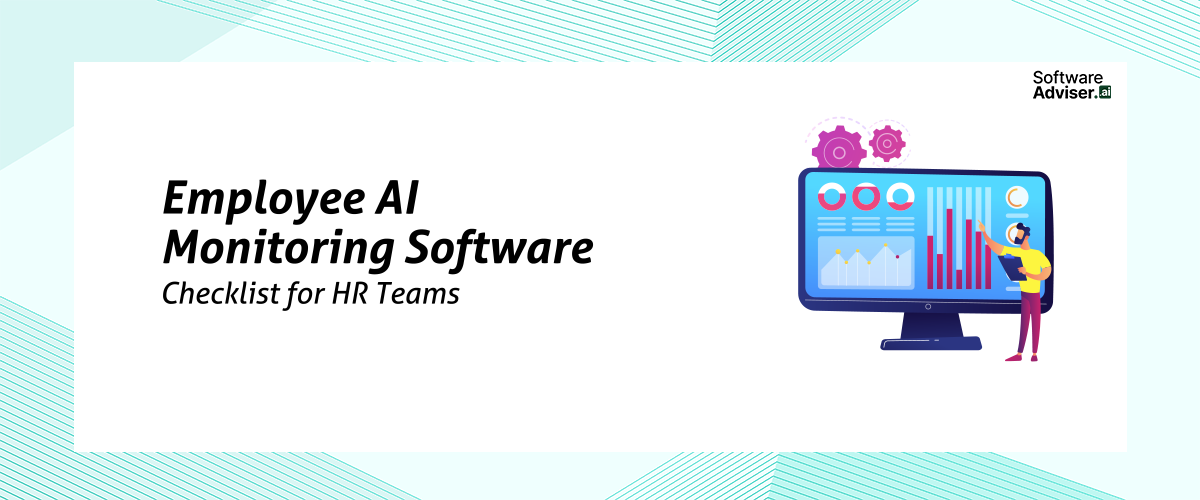
Using AI employee monitoring software tools in the U.S. presents a challenge of finding the right balance between ensuring that employees remain produ [...]
Dokas mile
In 2026, the landscape of project management software is undergoing a monumental shift, transitioning from passive task-tracking repositories into pro [...]

David N. Wilks
There’s a major change happening in the US payroll situation. Traditional methods are not sufficient as firms cope with complicated compliance stand [...]