
Best Enterprise Payroll Software in
Are you looking for Enterprise Payroll Software for your Business in ? SaaS Adviser brings you the best Enterprise Payroll Software to ease your worries. In order to make your work smooth and swift, SaaS Adviser has compiled a list of the best software available. Compare the Best software features, pricing, free demo, and trial to select the best Enterprise Payroll Software for your organization.
.jpg "Shraddha") Researched and Written by Shraddha
Researched and Written by Shraddha
Top 3 Featured Softwares


List of Top Enterprise Payroll Software
Get Free Consultation


What is HROne?HROne is a robust, cloud-based Human Resource Management System (HRMS) designed to simplify and automate HR operations for businesses of all sizes. It consolidate...
View Profile

Vista

An HCM Solution That Puts You at the Center
Vista serves as a holistic HCM solution encompassing a wide array of functionalities essential for modern workforce management. It integrates human resources, payroll, benefits...
View Profile

Certn
Meet the future of background checks.
Certn is a tech-driven platform providing streamlined, fast, and easy background checks for businesses globally. It allows companies to perform background screenings in various fie...
View Profile

Asanify
Hassle-free Payroll Management and HRMS for Startups and SMBs Globally
Asanify is an all-in-one HR and payroll management software program for startups and small to medium-sized businesses (SMBs). It simplifies HR operations by automating payroll, att...
View Profile
HostBooks
Business Automation Solution
HostBooks is a cloud-primarily based accounting and compliance automation software designed to streamline economic control for corporations of all sizes. It offers an integrated pl...
View Profile

ForUsAll
Forget everything you know about 401(k)s
ForUsAll is a benefits administration platform tailored for small to medium-sized businesses, focusing on simplifying the management of employee 401(k) retirement plans. Es...
View Profile

ShiftBase
Solve today's chaos, grow tomorrow.
What is ShiftBase? ShiftBase is a cloud-based workforce management and employee scheduling solution designed to help businesse...
View Profile

Thera
Payroll, Treasury, and Payments for Global Teams
Thera is an integrated global payroll and financial operations platform designed to simplify workforce management for companies operating across international borders. Tai...
View Profile

Easy Source Payroll Outsourcing Service
Empower your business with advanced payroll outsourcing firm solutions in India.
Easy Source offers a specialized Payroll Outsourcing Service tailored for businesses seeking efficient, secure, and compliant payroll processing. This service is ideal for...
View Profile

Zoho Payroll is a cloud-based payroll platform designed to simplify payroll management and streamline business operations. It ensures compliance with labor and statutory regula...
View Profile

The SYSPRO ERP system computerizes and amalgamates core business processes such as taking orders from the customers, setting up operations, and keeping stock records and other impo...
View Profile
Acumatica is a Cloud Enterprise Resource Planning (ERP) software that helps small and midmarket organisations manage their business processes more efficiently. With its specific in...
View Profile

ADP Vista HCM is a comprehensive Human Capital Management (HCM) solution designed to streamline and optimize the management of a company's workforce. Specifically built for mid...
View Profile

Viindoo
Operations to strategic management. Flexible adoption, high security, and scalable with your business growth.
Viindoo is a cloud-based enterprise management platform designed for businesses seeking an all-in-one system spanning accounting, finance, sales, HR, manufacturing, supply-chain, p...
View Profile

Indraaj
All-in-One Accounting Software in UAEIndraaj is an accounting software in UAE designed to manage invoicing, VAT-ready accounting, payroll, and financial reporting, with built-in ERP capabilities for inventory, project...
View Profile

Table of Content
What is Enterprise Payroll Software?
Enterprise payroll software is a tailored solution for use in large organizations that have sophisticated payroll requirements. It will simplify and automate the entire payroll process, including the computation of wages and deductions and the compliance with all the tax legislation regulations of various jurisdictions.
Corporate payroll software provides a competitive advantage to big organizations by managing the workforce, allowing them to manage risk, and allowing them to focus on growth and innovation by paying employees precisely, as per the law, and on time.
1. Benefits of Best Enterprise Payroll Software
Best-in-class enterprise payroll solutions provide numerous advantages to meet the complicated payroll requirements of large organizations for efficiencies, costs, compliance, and employee experience.
1. Enhanced efficiency
Business payroll software replaces the time-consuming, manual labor involved in payroll processing to compute wages, deductions, and time tracking. Automation will cut down on processing errors and processing time, ensuring that all workers are paid on time and accurately. Employees in finance and human resources can then concentrate on more strategic duties like workforce planning and talent development.
2. Cost Reduction
Although enterprise payroll software is for large companies, you will likely have significant savings in the cloud in a expeditious amount of time. Automating actions such as tax management software, tax filings, and direct deposit means that everything is automated with little or no manual intervention, and these kinds of requests cost significantly to process. In addition, if you lessen errors and improve compliance, the costs related to penalties and fines will be decreased and contribute to overall savings.
3. Improved Compliance
Enterprise payroll solutions have compliance in mind. They help organizations to keep timely, accurate payroll and stay abreast of changing federal, state, and local tax laws and regulations, calculating deductions and filings, and producing necessary reports for compliance.
4. Centralized Data
These systems provide a single, integrated platform to manage all payroll data. The result of this integration is accuracy and consistency of data for all teams in all locations, so that the risks of duplicate data entry, stale data, or inconsistencies are eliminated through disparate systems. In addition, an integrated HR and payroll system enables great communication and teamwork across different teams, as everyone has access to the same data for important information.
5. Employee Self-Service
Most modern enterprise payroll systems have employee self-service portals where employees can manage their payroll. They can view payslips and tax documents, update personal information, view annual leave management, and manage benefits without the assistance of Human Resources.
2. Challenges in Enterprise Payroll Software
Despite the numerous benefits of enterprise payroll solutions, businesses usually find it difficult to administer and deploy them, particularly in large, intricate organizations.
1. Compliance and Regulatory Changes:
Keeping pace with changing regulations: The stress of keeping pace with the ongoing changes in labor laws, tax regulations, and statutory compliance requirements across multiple levels of government (federal, state, local, and international) is a significant challenge
2. Data Security and Privacy:
Highly private employee data, including salaries, bank account information, social security numbers (SSNs), and employee identification numbers, is handled by computerized payroll systems. Protecting such data from unauthorized access, cyberattacks, and data breaches is crucial.
3. Integration Challenges:
Incorporating payroll software with other critical business applications like HRIS, accounting applications, and time and attendance applications can be complicated due to the inconsistency of data, integration protocols, etc.
4. Automation and Efficiency:
Automation brings efficiencies, but every aspect of payroll cannot be automated. There are certain aspects of payroll management that require human intervention, such as exceptions to review, complexities involving taxes and gross, and personal support offered by payroll professionals.
3. Features of Enterprise Payroll Software for Large Companies in the USA
Payroll software for large companies in the USA needs to have advanced features to manage the intricacies of payroll calculations, ensure compliance with federal regulations and local state laws or requirements, and manage the complexities of a large workforce while interfacing with existing HR systems.
1. Automated Payroll Processing
Processes employee calculations for wages, overtime, commissions, bonuses, and other health benefit administration software. Allows employees to make electronic payroll payments directly into the employee's bank accounts, eliminating checks. Allows the distribution of pay stubs electronically, allowing for less administration and greater employee satisfaction in some cases, rather than using printed paper. Land payments are accurate with no errors and no penalties by automated calculation and payment of federal, state, and local taxes for employees.
2. Compliance Management
Compliance with Taxes You can prevent fines and legal issues by continuing to comply with all applicable federal, state, and local tax laws and regulations. Observance of Labor Laws helps businesses comply with labor laws, such as the FLSA, minimum wage, and overtime rules. Automated Update: Automated tax rate, regulation, and legal requirement changes can keep the system compliant. Reporting and Auditing: Powerful reporting and auditing capabilities track compliance, and payroll software for small business further simplifies these processes.
3. Employee Self-Service
It enables employees to view and download their payslips securely from any online source or any mobile device. It also manages tax compliance. Even allows employees to edit their profile or make changes to their bank details.
4. Time and Attendance Tracking
Time and Attendance tracking seemingly integrates with the time and attendance saas for the employees, keeping the record of their working hours, including overtime, leave time, and regular hours, the compliance with labour law.
5. Integration with Other HR Systems
This, with additional HR systems, guarantees data consistency and does away with manual data entry across various platforms by integrating with Human Resources Information Systems (HRIS) or Human Resources Management Systems (HRMS).
4. Five Best Enterprise Payroll Software in the USA
Selecting appropriate HR software is vital for large companies in the USA; efficient HR processes require intricate workflow management software. Below is a comparison of five widely used solutions.
1. Rippling
Rippling is a global workforce management solution whose purpose is to simplify and automate numerous HR, IT, and finance tasks. It seeks to integrate all employee data and processes into one single system, decreasing the need to use multiple tools and reducing the administrative load.
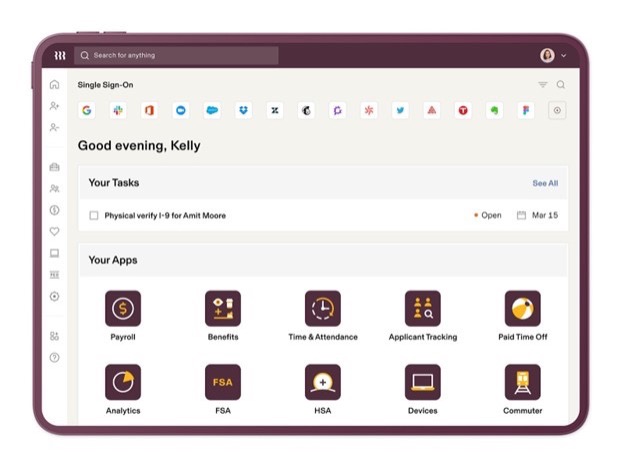
Features:
-
Rippling allows businesses to hire and pay employees and contractors globally.
-
Offers a completely unified HRIS to manage employee data.
-
It simplifies IT management for remote and hybrid teams.
-
Involves spending management, bill payment, and the issuance of corporate cards/consolidating financial operations.
-
Provides business compliance assistance with labor laws.
Pros:
-
Removes the need to manage data and processes with a myriad of HR, payroll, and IT tools.
-
Automates a significant amount of manual administration and saves time and effort.
Cons:
-
Charged by modules, the price structure may become very complicated.
-
This offers a simple user interface, but it has some degree of a learning curve.
Pricing: View Website for Detailed Pricing
2. BambooHR
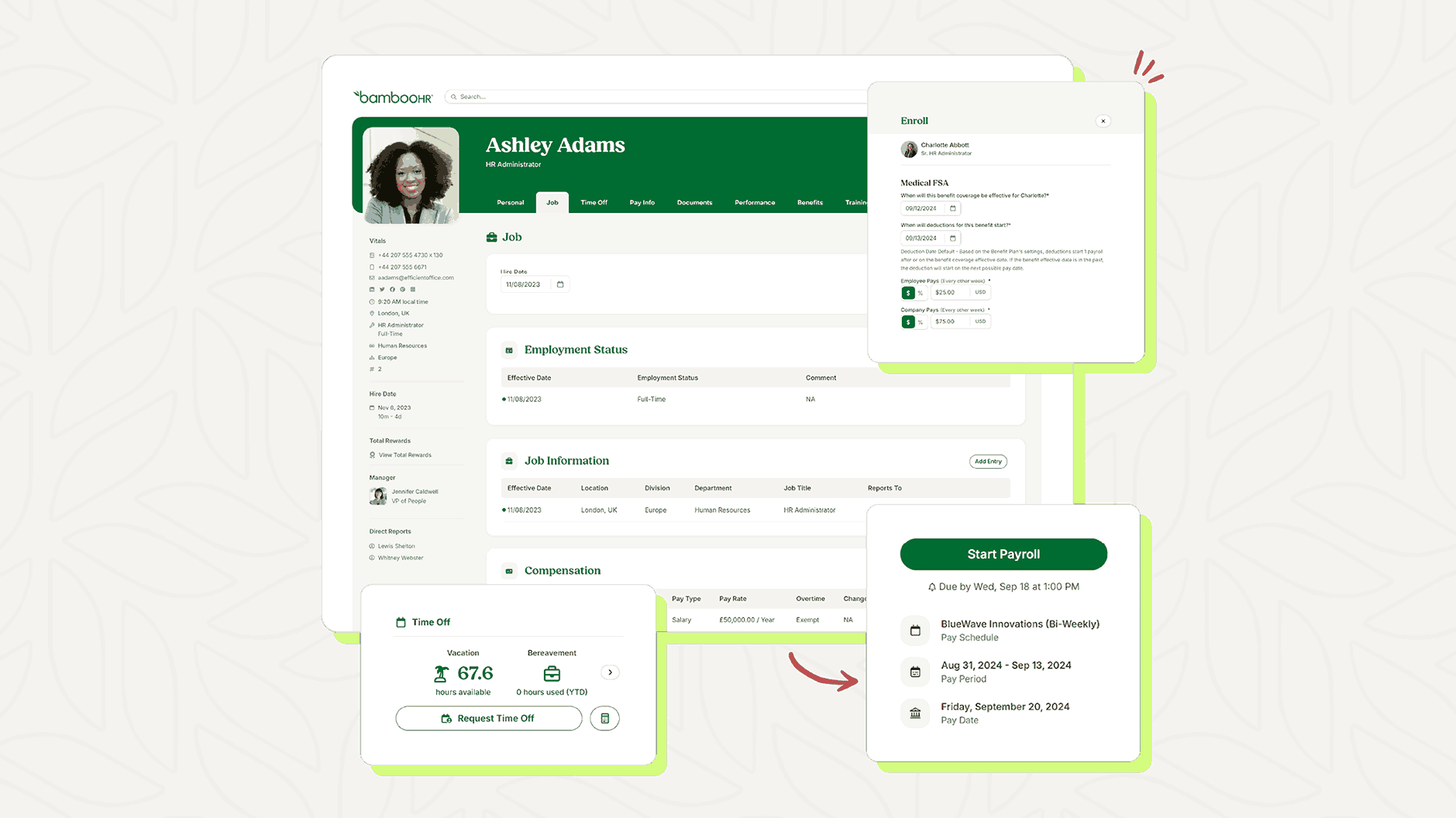
It focuses on improving the entire employee journey within the company, streamlining HR operations, and combining disparate employee information files. By managing the entire employee life cycle—from hiring and onboarding to offboarding and performance reviews—BambooHR seeks to do away with paper records and laborious spreadsheets.
Features:
-
Safely saves and maintains employee records in one central database.
-
Includes a job posting management tool called an Applicant Tracking System (ATS).
-
The system offers simple onboarding procedures.
-
Able to interface with payroll systems to deliver timely and accurate payroll services, such as direct deposits and tax filing.
-
Able to monitor work hours, handle time-off requests, and oversee employee benefits.
Pros:
-
Includes a job posting management tool called an Applicant Tracking System (ATS).
-
BambooHR is well known for its easy-to-use structure.
-
Reduces paperwork and saves time.
Cons:
-
Online pricing information isn't available.
-
It costs for advanced features.
-
It can be difficult to build custom integrations with niche or highly specialized software.
Pricing: View Website for Detailed Pricing
3. Paycor
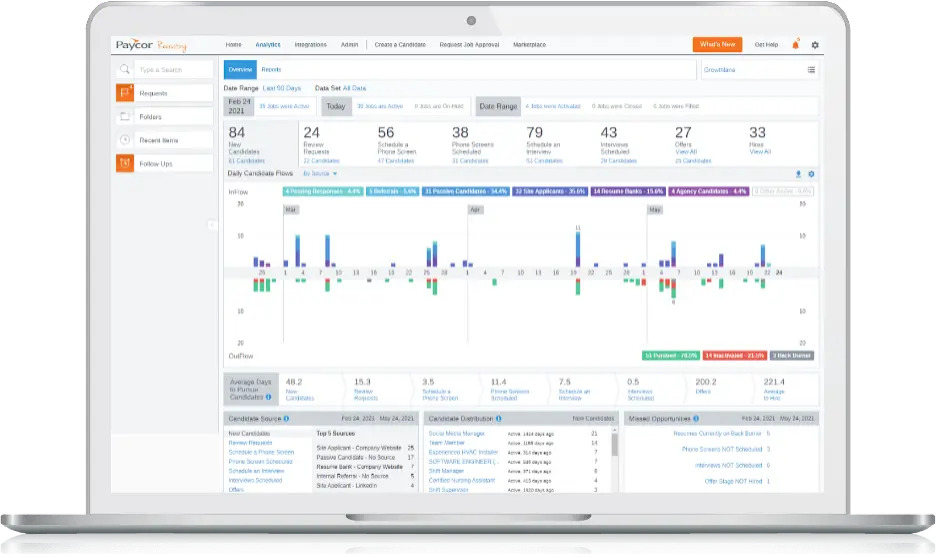
Paycor offers cloud-based human resource (HR) and human capital management (HCM) solutions for small to mid-sized businesses in the USA. Paycor is purposely trying to help people leaders update the management of people by streamlining the process from recruiting and hiring to payroll, compliance, and retention.
Features:
-
Provides a comprehensive service for payroll, tax, and HR management purposes.
-
Gives companies the tools to attract, develop, and retain employees with recruiting software
-
Assists employers in managing labor costs.
-
Supports open enrollment and enhances management of employee benefits programs.
-
Helps ensure that local, state, and federal laws and regulations are followed.
Pros:
-
Paycor is commonly deemed user-friendly, simplifying HR tasks.
-
Great payroll features, including automated calculations, tax filing, and direct deposit.
-
Strong compliance management through built-in compliance features and details.
Cons:
-
May have limited customization options for unique business needs.
-
On the other hand, the basic interface is easy to use.
-
There have been issues for some users integrating with specific third-party systems.
Pricing: View Website for Detailed Pricing
4. Gusto
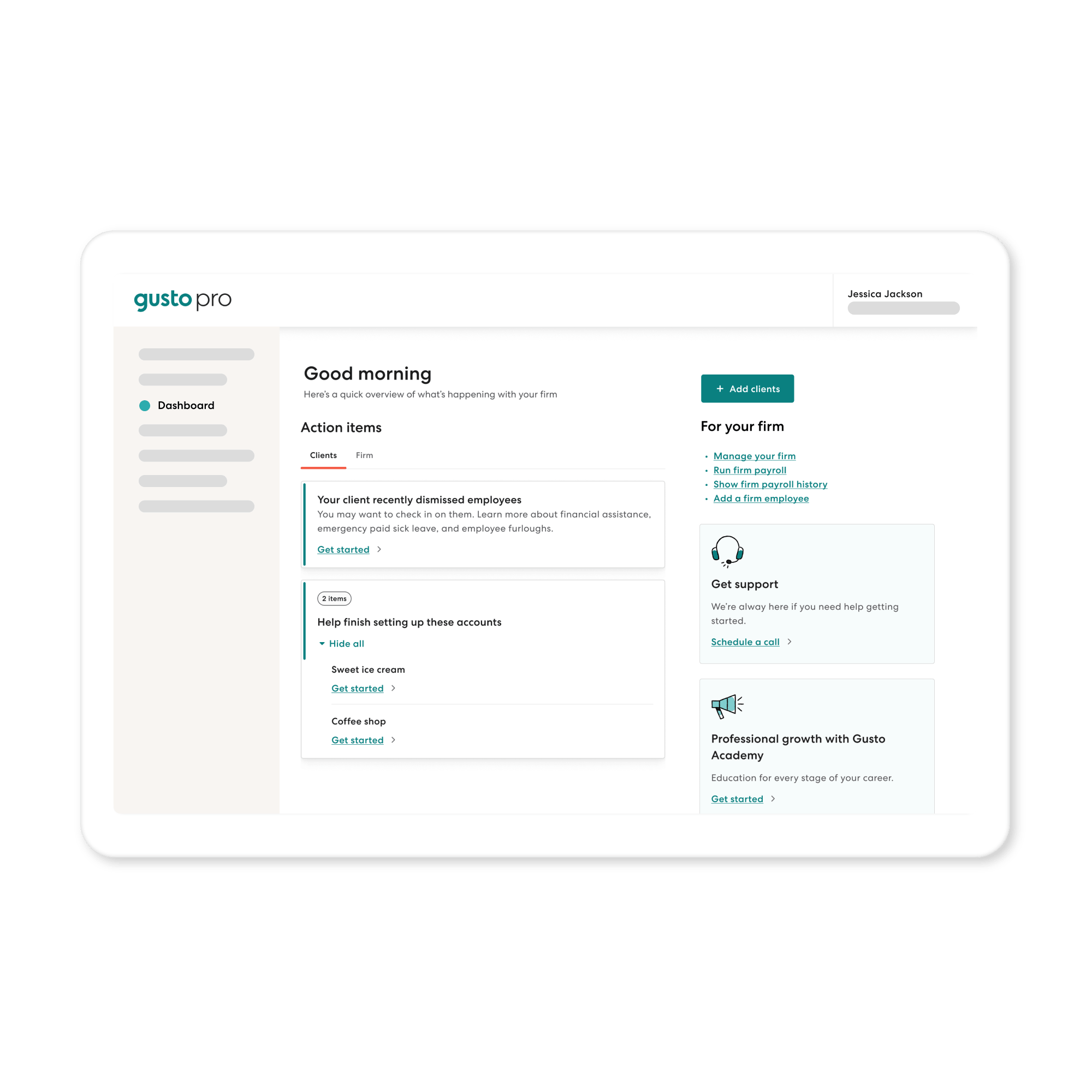
Payroll, benefits, and human resources are the main functions of Gusto, a cloud-based HR platform used by small and medium-sized enterprises. The organization aims to simplify the intricacy, conflict, and inefficiencies of contemporary human resource management. Gusto offers a clear and simple user interface and satisfying automated HR processes.
Features:
-
Gusto automates the entire payroll process.
-
Makes it easier to administer and provide benefits to employees.
-
Contains resources for managing applicant tracking, publishing job postings to well-known job boards, and crafting unique job postings.
-
Numerous accounting, time-tracking, expense-management, and other software programs are integrated with Gusto.
-
Gives workers access to tax forms and pay stubs.
Pros:
-
Businesses can easily handle payroll and human resources tasks with Gusto's interface.
-
Significantly reduces the time and effort.
-
Gusto offers clear pricing plans with no hidden fees.
Cons:
-
Might not have the adaptability and personalization choices needed for particular business processes.
-
The functionality of the Gusto mobile app is not as comprehensive as the web version.
Pricing: The starting price is $49 a month plus $6 per person.
5. Paylocity
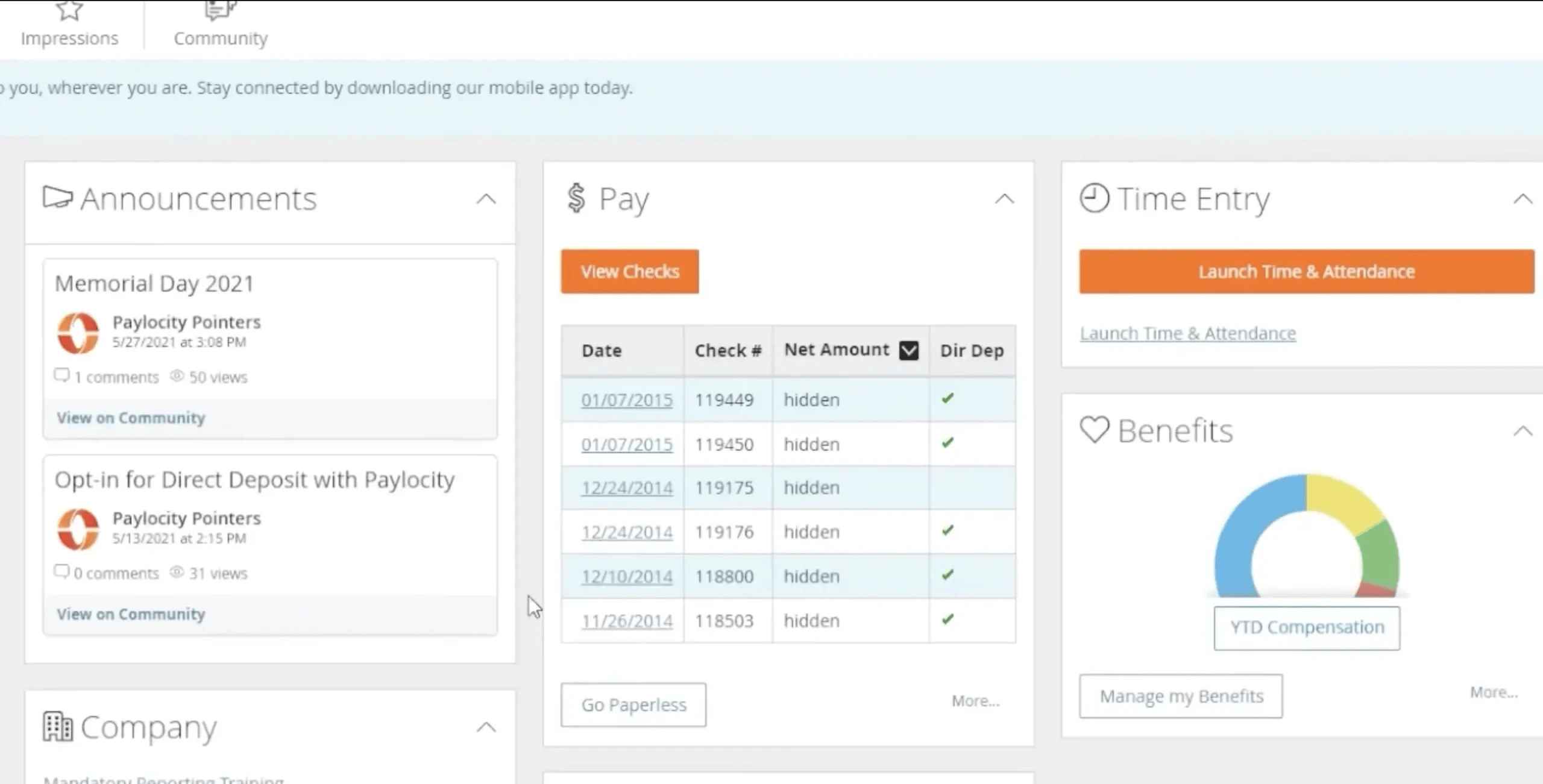
Paylocity is a cloud-based human capital management (HCM) platform that brings together payroll and HR features in one software package. It provides businesses of all sizes, especially small to mid-sized companies in the United States, a simpler way to handle HR tasks, improve employee engagement, and provide data for making decisions.
Features:
-
Combines core HR functions.
-
Features include talent management.
-
Offers tools for time and attendance tracking, scheduling, and labor cost management.
-
Improves the administration and enrollment of benefits.
-
Offers built reports, customizable dashboards, and data insights.
Pros:
-
Highly popular for its user-friendly and intuitive design.
-
Provides a large number of HR and payroll features.
-
Automates payroll calculations.
Cons:
-
It may lack the depth or customization options of dedicated enterprise-level solutions.
-
Users have experienced slow response times or challenges in resolving complex issues.
5. Latest Market Trends in Free Enterprise Payroll Software
1. Cloud-based Solutions
Cloud-based payroll software differs greatly from traditional on-premises software. It is hosted remotely, accessible online, and doesn't require businesses to keep up with local servers or updates.
Users of cloud-based payroll solutions have the flexibility, cost savings, and scalability to access payroll data and information from any location at any time, provided they have an internet connection. This will be especially useful for companies with remote or globally dispersed workforces.
2. AI and Automation
By increasing precision and efficiency, automation and artificial intelligence (AI) are revolutionizing the payroll software industry. By automating repetitive tasks instead of requiring manual data entry and handling complex calculations, deductions, and tax forms, artificial intelligence (AI) solutions minimize human effort and the possibility of processing errors.
AI can analyze the payroll to see forecasted trends, reconcile errors, and ensure compliance by finding unusual patterns that should denote possible fraud or errors. AI chatbots can respond to employee payroll inquiries in real time, provide support for common payroll questions, and free up time for HR teams.
3. Real-time Analytics
As the demand for real-time visibility into payroll data rises, it will change the way businesses manage payroll and the payroll decision-making process. Real-time analytics allow companies to turn around their data by processing and analyzing payroll data the moment it enters the system and give leaders near real-time insights into important metrics like labor costs, headcount data, and overtime trends. Payroll management software is estimated to be valued at USD 9.10 Bn in 2025 and is expected to reach USD 19.13 Bn in 2025. The compound annual growth rate (CAGR) is 11.2% from 2025 to 2032.
4. Remote Work and Flexibility
The growth of remote and hybrid work has affected the enterprise payroll software market significantly. This emerging work location requires a payroll system with the capability to handle workforces that are distributed geographically, as well as working environment flexibilities. Cloud-based payroll is a good solution in this environment, as it allows remote access and processing anywhere in the world.
5. Unified Global Payroll Systems
Multinational companies face big challenges when it comes to payroll across many countries because of the different tax laws, regulations, and currencies. The world is moving towards one global payroll system to consolidate payroll management into one platform or provider for many reasons. One example is to keep payroll data in one location to ensure alignment and consistency with global pay regulations while minimizing the management of multiple vendors.
6. Conclusion
The world of enterprise payroll software is rapidly changing, thanks to technological innovation and businesses' rapidly changing needs, especially with large, often remote, workforces. The research surveys a number of trends and considerations for organizations looking to plan for better payroll. At SaaS Adviser, we help you navigate the enterprise payroll system with unbiased reviews and expert insights so you can confidently choose the tool that aligns with your goals. Ready to simplify client management and boost your sales? Connect SaaS Adviser today.
7. Related Articles Enterprise Payroll Software
8. Criteria for Selecting the Right Enterprise Payroll Software
In a large organization, selecting the appropriate enterprise payroll system has a significant impact on employee satisfaction and overall compliance. Here are the key factors for selecting the right Enterprise Payroll System.
1. Defining your objective and needs
To select the right tool for an enterprise payroll solution, evaluate the size, number of locations, whether you can operate internationally, and the payroll requirements of the industry.
2. Core Feature
The core features of HR software for large companies are monitoring employee status, managing payroll processes, multicountry payroll, and other workflows for the company. It seemingly integrates with third-party platforms.
3. Integration capabilities
Having seamless integration with your HR Information System (HRIS) / HR Management System (HRMS) is very important for consistency of data and avoiding any manual data entry. The integration with your accounting software allows financial reporting and ensures accurate expense tracking.
4. Return on ROI
Consider implementation costs, training, continuing support, maintenance, and customization. The need for efficiency, quality, compliance, and a better employee experience is driving the increasing significance of enterprise payroll software.
5. Pricing Models
Recognize the vendor's pricing structure and how it aligns with your spending plan and anticipated usage. The payroll software offers clear pricing plans with no hidden fees and customization if required, in addition to the initial application fees.
