
Best Employee Database Software in
Are you looking for Employee Database Software for your Business in ? SaaS Adviser brings you the best Employee Database Software to ease your worries. In order to make your work smooth and swift, SaaS Adviser has compiled a list of the best software available. Compare the Best software features, pricing, free demo, and trial to select the best Employee Database Software for your organization.
 Researched and Written by Akash Patel
Top 3 Featured Softwares

List of Top Employee Database Software
Get Free Consultation

WeLikeIt

By WeLikeIt
WeLikeIt can help your company go viral by increasing your organic likes and shares. The algorithms that promote content online use these likes and shares to decide who to show it ...
View Profile
Onboard by HR Cloud
By Onboard by HR Cloud
Onboard by HR Cloud is an employee onboarding software that automates new hires’ onboarding experiences and makes their first day a great turnout, overall. By providing a heap of...
View Profile

Leapsome is a dynamic employee development and performance management platform designed to enhance workplace productivity, engagement, and growth. It provides businesses with a uni...
View Profile

DSMN8
By DSMN8
DSMN8 software is an employee influence platform that offers a central hub for employees to communicate and share company content. It also has a built-in leaderboard and gamificati...
View Profile
SimplePay
Sign Up for a Free TrialWhat is SimplePay?SimplePay is a cloud-based payroll software designed to automate and simplify payroll processing for small to mid-sized businesses. It supports companies in c...
View Profile
HR Cloud
Equip Your Frontline Workers with Modern HR ToolsWhat is HR Cloud?HR Cloud is a comprehensive human resource management software designed to streamline HR operations such as onboarding, employee engagement, time tracking, per...
View Profile

eVitalRx Pharmacy Software
India's Best Pharmacy Billing Software that helps you earn more profits
 5.0
5.0
What is eVitalRx?eVitalRx is a cloud-based pharmacy management software designed to streamline operations for pharmacies, medical stores, and e-pharma businesses across India. It o...
View Profile
Ontime Employee Manager
Manage Employees in a very easy manner.
What is Ontime Employee Manager?Ontime Employee Manager is a workforce and attendance management solution designed to simplify HR, payroll, and time tracking. With ontime softw...
View Profile
Pay Manager
A cost effective and fully scalable cloud based payroll software solution
What is Pay Manager?Pay Manager is a payroll management software designed to automate salary processing, deductions, compliance reporting, and financial records, ensuring accur...
View Profile
UBI HRM
People power companies We power people.
Innovation Minds
Your All-in-one Employee Experience Platform
Checkr
Employee Background Screening for Companies
What is Checkr? Checkr is a cloud-based background screening platform designed to help businesses hire faster and more confidently. It uses modern technology, automation, and AI...
View Profile

Table of Content
What is Employee Database Management System?
Employee Database Software is an online application that stores, manages, and organizes critical individual information in a secure location. It acts as a centralized employee database accessible by the HR team and managers to view and pull reports, such as listing details, roles, or even performance or payroll information. For US business firms striving for efficient human resource management and willing to comply with labor laws, a good employee database is more than a priority. Most Database Solutions will also work with the staff scheduling software to further optimize the management process by automating and eliminating the possibility of errors in tracking employee shifts, attendance, and time.
This buyer’s guide contains everything you need to consider before purchasing Employee Database Software. We’ll cover key features, challenges, pricing factors, and many other things, This guide will help you make an informed decision.
1. Who Uses Employee Database Management System Free?
Many businesses and organizations in the US rely on the employee database management system so that information about the staff remains organized and readily available. These, especially the free versions, are quite popular amidst small business holders, startup companies, and non-profit organizations. This is mainly because small setups can reap the benefits of essential data management about employees without involving a hefty investment.
1. Small Businesses and Startups
Small businesses and startups work within budget constraints and small HR teams. It is here that free employee database software can help the company to go digital in maintaining its records, scheduling, and tracking crucial information on little financial commitment. This helps companies to streamline HR tasks and stay compliant with labor regulations. Startups, for example, take the free version as a test, and later make a decision to invest in the best employee database software that has more enhanced features. Integrating Employee Referral Software can further leverage this setup by encouraging employees to recommend top talent, helping small teams grow efficiently.
2. Nonprofits and Volunteer Organizations
Nonprofits usually operate on little cash and depend on volunteers along with paid workers. The free software for keeping an organized list of volunteers, tracking their roles and hours as well as contacts can be used by these organizations maximally. This enables better communication and coordination, improving overall operational effectiveness without stretching budgets.
3. Freelance HR Consultants and Temporary Teams
Freelance HR consultants or temporary project teams often need quick, flexible solutions to manage employee or contractor data. Free employee database software offers an easy-to-use, no-cost way to handle employee information for short-term projects or multiple clients. This flexibility helps consultants maintain professionalism while keeping overhead low. Pairing it with an Employee Advocacy Platform can also help promote client successes and team achievements, enhancing visibility and credibility.
While free employee database software meets basic needs, growing businesses with complex HR demands should upgrade to the best employee database software. Paid versions offer advanced reporting, automation, payroll, and best time clock software integration, plus enhanced security and compliance—essential for improving productivity and reducing errors.
2. Latest Market Trends in Employee Database Management System
Beimg aware of the most recent trends in employee database software is important for the firms that have the aspiration to increase their efficiencies in HR and satisfy the employees. Here is what is shaping the industr
1. AI and Automation
The features of employee database management software are supported by artificial intelligence, are almost revolutionary in terms of the automation of compliance checks, and even make it possible to evaluate and keep a check on the performance of the employees. This significantly reduces manual errors and most importantly gives HR the capacity to focus more on strategic initiatives.
2. HCM Software
The linking of the staff records software to full Human Capital Management (HCM) setups is getting more popular. These setups give one place for working on different HR jobs, such as finding people, payroll, looking after benefits, and time clock software. Such all-in-one solution make HR work easier and help keep data right in every way.
The demand for such integrated solutions is driving major market growth. According to a report by Stellar Market Research, the Human Resources Software Market was valued at USD 21.04 billion in 2024 and is projected to reach nearly USD 50.46 billion by 2032, growing at a CAGR of 11.55%.
3. Flexible Work Arrangements
The upsurge of telecommuting and hybrid work models results in a demand for employee database software that backs flexible work plans. Traits like cloud access, mobile links, and right-away data matching make sure that HR squads and workers can reach info whenever and wherever needed, thus easing remote work.
4. Employee Experience
Improving the employee experience͏ software is something that matters a lot to many firms. Advanced employee database management software͏ now comes with self-service portals, personalized dashboards, and feedback mechanisms that make the workers feel͏ like they have more power and also bring engagement. These tools help more with satisfaction at work and keeping the job.
When combined with Employee Monitoring Software, organizations can gain insights into engagement patterns and identify areas where additional support or recognition may be needed.
5. Skills-Based Hiring
An increasing focus in skills-based hiring is observed—applicants are to be assessed based on their competencies rather than their traditional credentials. Employee database software is growing with the feature that keeps the tracking on employee skills, certifications, and training programs; thus, HR teams can spot the skill gaps and plan targeted development initiatives.
6. Focus on Data Security and Privacy
As employee records become increasingly digital, data security and privacy take on the highest priority. The modern software for employee database management typically includes strong security measures such as encryption, multi-factor authentication, as well as being in compliance with the GDPR and HIPAA, etc. Integrating Employee Reward Software alongside these systems ensures that recognition and reward data is also securely managed while maintaining compliance and confidentiality.
3. Why Do We Need Best Employee Database Management System?
Handling employee files manually or in more than one system can be unclear, not right, and take up time. So, companies of any size should have best employee database management software to keep things in order and run well.
An employee management software collects all employee information—job roles, contact details, and brings performance history and payroll data into a single, secure platform for the HR team to work faster, stay compliant, and reduce the chance for errors.
Today, many companies prefer solutions that are part of cloud productivity software. These cloud-based systems offer real-time access, automatic backups, and easy collaboration, making it simpler to manage employee data from anywhere.
4. Key Features of Employee Database Management System
Below are the key features you should look for in a modern employee directory software:
1. Centralized Employee Data Management
A good employee database management system offers a centralized location to store all employee records—personal information, job roles, salary history, emergency contacts, and more. This ensures accuracy, eliminates duplicate entries, and helps HR find what they need quickly.
2. Time and Attendance Tracking
Many tools now integrate time clocks and attendance logs within the best employee database software, helping businesses monitor working hours, leaves, and absences. It’s especially useful when paired with employee scheduling software, so you always know who’s working, when, and where.
3. Performance Management
Track employee goals, reviews, achievements, and feedback through built-in performance tracking. This feature supports better evaluation, development, and decision-making for promotions or training plans.
4. Onboarding and Offboarding
The system helps automate onboarding checklists, assign training modules, and track document submissions for new hires. When someone exits the company, offboarding features ensure all steps—like exit interviews and asset returns—are handled smoothly.
5. Reporting and Analytics
Employee directory software today comes with reporting tools to analyze headcounts, turnover trends, performance trends, or any other relevant metrics that would be important for planning the workforce and the human resources strategy. When integrated with Employer of Record Software, companies can better manage global or remote teams while maintaining accurate HR data and ensuring compliance across regions.
6. Employee Self-Service Portal
The best employee database software enables your staff with self-serv access. Empls can update their own info, download pay stubs, request time off, or view schedules—reducing HR’s workload and increasing transparency.
5. Pros of Employee Database Management System in USA
Investing in employee data software offers real value to growing businesses. From cutting down manual tasks to making smarter decisions, here's how a solid system can help:
1. Efficiency and Automation
Automating everyday HR tasks like recordkeeping, timesheets, and payroll updates saves time and reduces human errors. A reliable employee data management solution ensures accuracy and lets your team focus on more strategic work. Automation helps reduce repetitive administrative workload. It also speeds up processes like document generation and compliance tracking. When combined with Employee Recognition Software, these efficiencies can free up time to celebrate and reward employee achievements, further boosting engagement and morale.
2. Streamlined HR processes
An employee database system puts hiring, onboarding, document management, and compliance all in one place without the use of multiple spreadsheets or tools. Fewer bottlenecks result from centralization, and it leads to better daily HR activities. It improves coordination between teams and keeps everyone aligned.
3. Faster access to information
There is no more need to dig through paper files and old folders. Rather, in place, it enables instant access to employee details as well as performance reviews and attendance logs, which will quicken decisions and make better support possible. Quick access improves response times during audits and appraisals. It also enhances employee satisfaction when queries are resolved faster. Integrating this system with Employee Engagement Software helps track and boost participation, morale, and overall workforce satisfaction.
4. Employee self-service
Employees can log in to update their personal info, request time off, or download tax documents. This not only increases engagement but also lightens the HR workload. It encourages accountability by letting employees take ownership of their own records. HR teams can then shift their focus to people strategy.
5. Transparent performance metrics
Clear visibility into goals, achievements, and feedback promotes accountability. It also supports fair appraisals and opens the door to better career development for your team. When everyone knows how performance is measured, expectations become clearer. Integrating an Employee Incentive Program can further motivate employees by rewarding goal achievement and consistent performance, helping foster a performance-driven culture.
6. Data-driven insights
With built-in analytics, businesses can track trends in turnover, performance, and engagement. These insights help leaders plan smarter and identify problems before they grow. Smart reporting tools make it easy to present data to leadership. They also aid in measuring the success of HR programs over time.
7. Better resource allocation
Top workforce management software vendors offer tools that help you assign the right people to the right roles at the right time—improving productivity and reducing waste. With better planning, you avoid overstaffing or underutilization.grow. This also leads to higher morale and lower operational costs.
6. Challenges While Selecting Right Employee Database Management System
Choosing the right employee directory software is of prime importance and though it is not an easy task because the right solution will be able to transform all HR operations, however here are some challenges.
1. Customization Options
Every business has unique HR workflows, and not all tools offer flexible customization. Some software limits how much you can modify fields, workflows, or access levels. You should be able to pick the solution that can be customized to your team structure and future growth. Inefficiencies down the road come as a result of the lack of flexibility.
2. Integration with Existing Systems
You may already be using payroll, benefits, or remote working software, and your employee directory needs to sync with those tools. A poor integration experience can lead to data silos, extra manual work, and inconsistent records across platforms.
3. Resistance to Change
Turning on a new system often meets pushback from HR staff or employees, especially if used for traditional methods. Without proper training or communication, even the best software can reduce the return on investment, reduced.
4. Data Privacy and Security
Storing employee data digitally brings security risks, especially with sensitive personal and financial information. If you're considering free employee database management software, make sure it includes strong encryption and access control features to protect your data.
5. User Interface and Experience
Clunky or outdated design can frustrate users and slow down daily HR tasks. A smooth, intuitive interface is critical. Even employee database software free tools should be easy to navigate—otherwise, your team will waste more time learning than doing. When paired with Employee Onboarding Software, a user-friendly interface ensures new hires can quickly access essential HR information and get up to speed efficiently.
6. User Adoption
For software to be successful, your entire team—HR, managers, and employees—needs to use it consistently. Lack of support, unclear onboarding, or confusing features can make adoption a struggle, especially in larger organizations.
7. List of Best Employee Database Management System in USA:
Here is the list of what we consider some of the best employee database management software. We have included their feature set, pros and cons, and pricing information for head-to-head comparison. Whether you are free employee database software or a comprehensive employee database platform, find what you need to make the right choice.
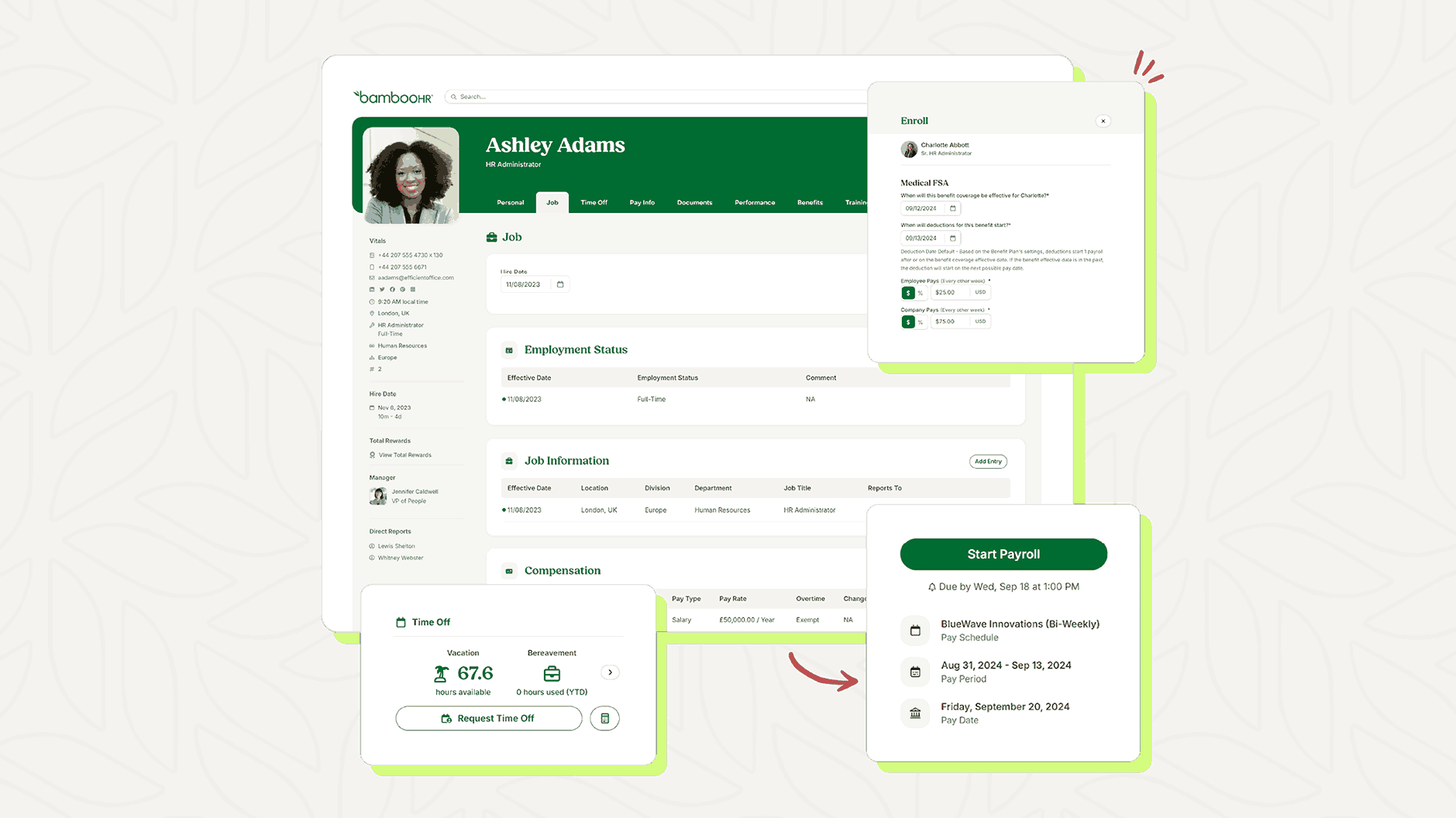
1. BambooHR
Bamboohr is a popular employee database tool designed for small to moderate size businesses. It provides a user-friendly interface and extensive human resource management functions, including employee records, on board and performance tracking.
Key Features:
- Centralized employee data management
- Customizable workflows and approvals
- Time-off tracking and PTO management
- Performance management and goal tracking
- Reporting and analytics dashboard
Pros:
- Intuitive and easy-to-use interface
- Strong onboarding and employee self-service options
Cons:
- Limited customization for complex workflows
- Pricing can be high for smaller businesses
Pricing: Exact pricing is available on request after a demo.
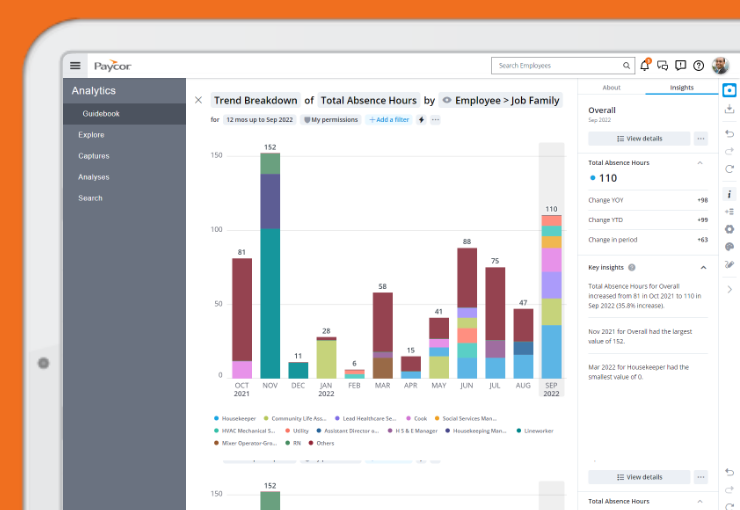
2. Paycor
Paycor is the all-in-one HR, payroll, and workforce solution for small and large businesses to manage their HR and analytics work and stay compliant. The Paycor’s mobile app allows employees to access schedules, request time off, and also view pay information anywhere which is a good feature helping employees engage more and stay transparent.
Key Features:
- Employee database and document management
- Payroll and tax administration
- Time and attendance tracking
- Recruiting and onboarding tools
- Benefits administration
Pros:
- Comprehensive HR and payroll integration
- Scalable for growing businesses
Cons:
- User interface can be complex for new users
- Customer support response times vary
Pricing: Custom pricing is available upon inquiry.
3. Rippling
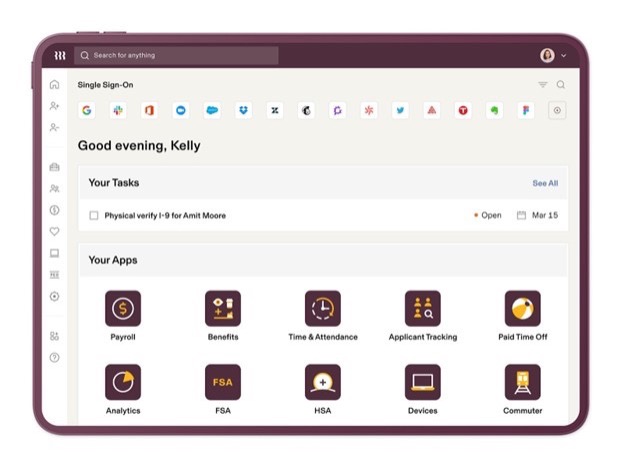
Rippling is a next-generation employee database software that unifies HR, IT, and payroll management into a single platform. It is known for its automation capabilities, reducing manual work by syncing employee data across multiple systems instantly. Ideal for tech-savvy companies, Rippling automates onboarding by provisioning devices, software access, and payroll setup all at once.
Key Features:
- Centralized employee records and data management
- Automated payroll and benefits management
- Device management and IT automation
- Time tracking and scheduling
- Integration with hundreds of apps
Pros:
- Strong automation capabilities
- Excellent integration with third-party tools
Cons:
- Pricing can be high for smaller companies
- Setup can be complex initially
Pricing: Custom quotes based on features selected.
4. Workday
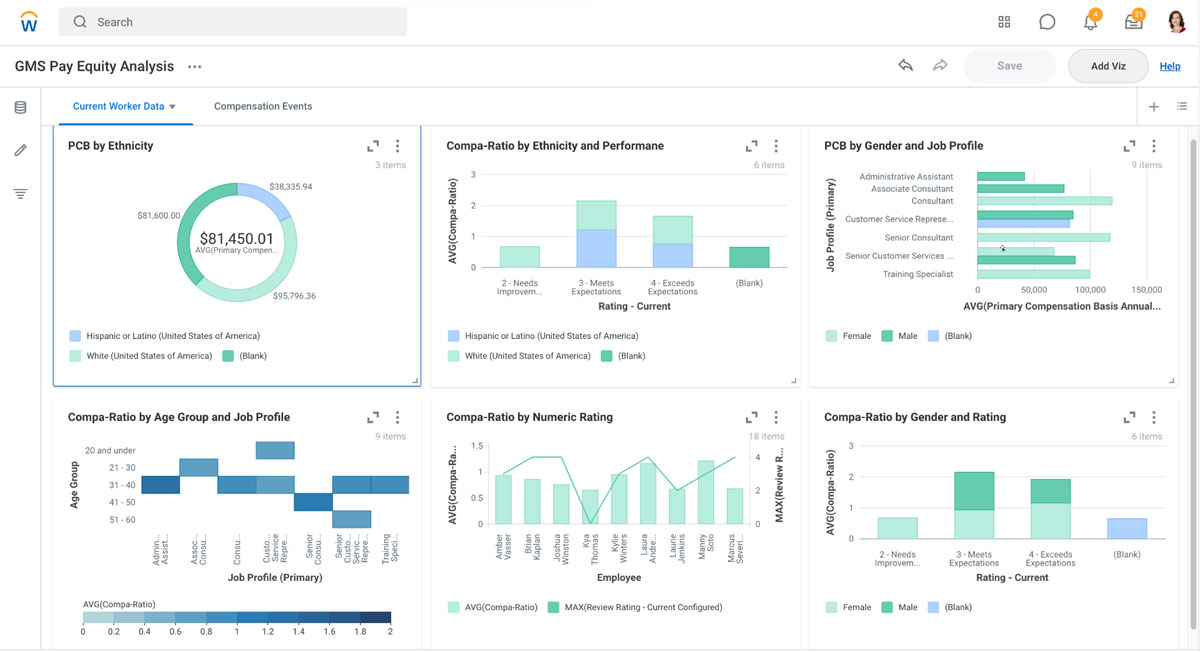
Workday is a top employee database management software made for big businesses and complicated organizations. It offers a unified system that combines HR, payroll, talent management, and financial planning on a single cloud-based platform. Known for its ability to grow and depth, Workday helps with detailed workforce analysis, advanced reporting, and employee lifecycle management covering everything from recruitment to retirement.
Key Features:
- Comprehensive employee database and talent management
- Workforce planning and analytics
- Payroll and benefits management
- Learning and development modules
- Mobile-friendly employee self-service
Pros:
- Highly scalable and customizable
- Powerful reporting and analytics tools
Cons:
- High cost, mainly suited for large enterprises
- Implementation can be time-consuming
Pricing: Workday pricing is customized based on company size and needs. Interested buyers should contact Workday for a quote.
5. Deel
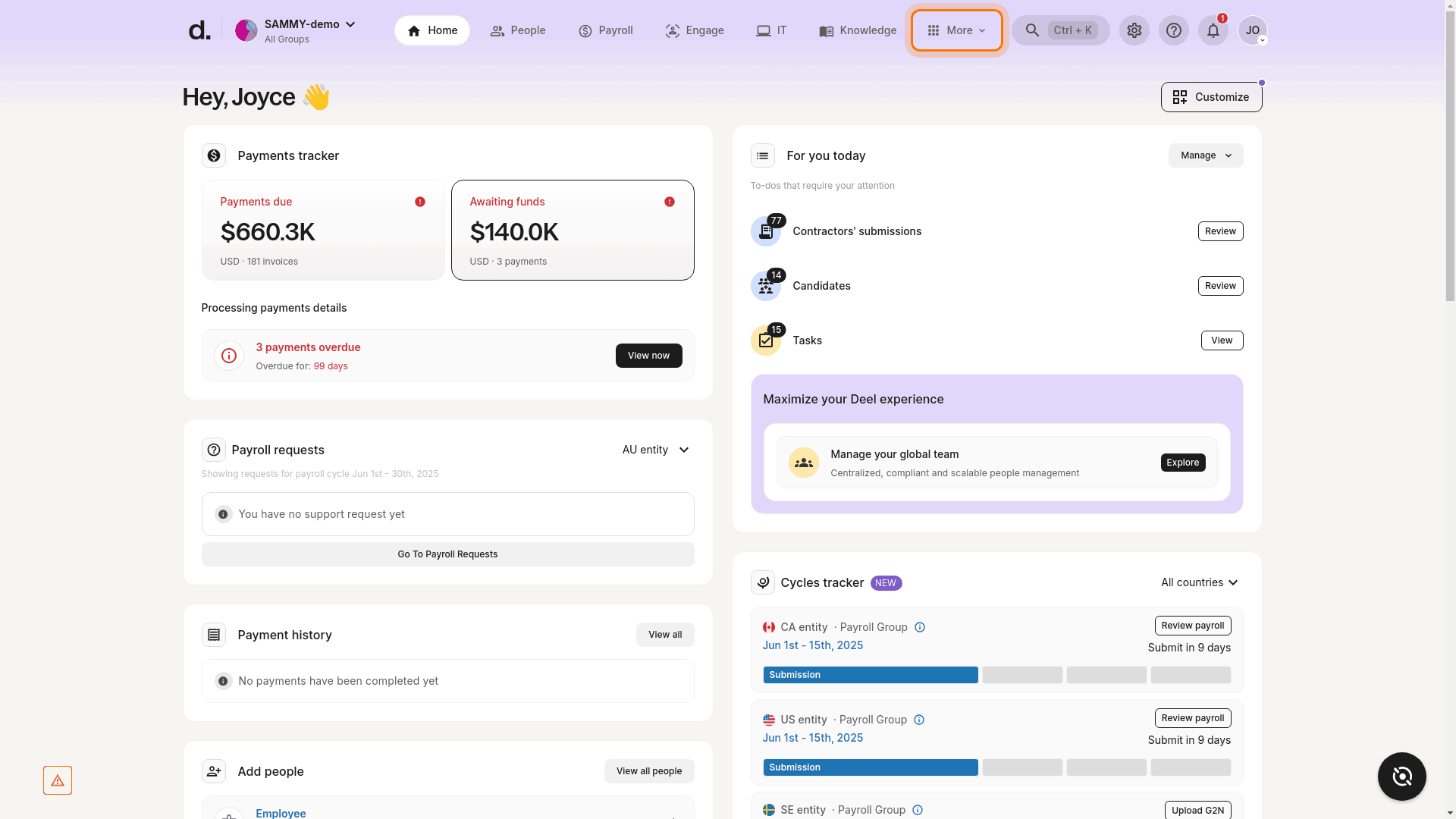
Deel is an innovative employee database tool that helps firms with international payroll and compliances for remote teams and contractors all across the globe. It simplifies global hiring by making payments on time, along with meeting tax rules, and managing contracts in many nations and using different moneys. Deel also offers a safe worker database where contracts, tax forms, and payment history can be kept in one single place.
Key Features:
- Global employee and contractor database management
- Automated payroll in multiple currencies
- Compliance with international labor laws
- Contract templates and e-signatures
- Tax filing and benefits management
Pros:
- Ideal for global and remote teams
- Streamlined compliance and legal management
Cons:
- Limited HR features compared to traditional software
- Pricing can add up with more employees
Pricing: Deel offers a per-contractor plan starting at $49/month and a per-employee plan at $149/month. Custom enterprise pricing is available.
8. Conclusion
Employee database software market continues with fast AI, HCM integration, flexible labor options and strong data security that shapes the future. These trends ensure that you choose the right solution to streamline HR, improve employee experience and support business development.
At SaaS Adviser, we specialize in helping companies like yours find the best employee' database management software that suits your unique needs and goals. Are you ready to customize your HR processes and strengthen your workforce? Visit SaaS Adviser today for personal software recommendations and expert guidance.
