
Best Email Marketing Software in
Are you looking for Email Marketing Software for your Business in ? SaaS Adviser brings you the best Email Marketing Software to ease your worries. In order to make your work smooth and swift, SaaS Adviser has compiled a list of the best software available. Compare the Best software features, pricing, free demo, and trial to select the best Email Marketing Software for your organization.
 Researched and Written by Akash Patel
Top 3 Featured Softwares


List of Top Email Marketing Software
Get Free Consultation

Zoho Marketing Automation

Effective marketing, simplified.
Zoho Marketing Automation is an all-in-one marketing automation software tool that helps you convert more leads and drive higher revenue across channels.
View Profile

Getsitecontrol is an email marketing platform built for small and medium-sized brands. It combines email automation, bulk email sending, contact segmentation, email list-building...
View Profile

Orange mail
It arrives quickly, is easy to use, inexpensive, and user-friendly.

Table of Content
What is Email Marketing Software?
Email Marketing Software is a computerized system that facilitates the effective management, transmission, and follow-up of email marketing campaigns. It combines various email marketing functions like message composition, contact lists, audience segmentation, automated functions like scheduling and sending, and campaign performance monitoring.
1. Benefits of Email Marketing Software:
The advantages that email marketing solutions based on the best email marketing software can offer are quite numerous, with the ability to make a huge difference in the development and success of a business. Here are the main ones.
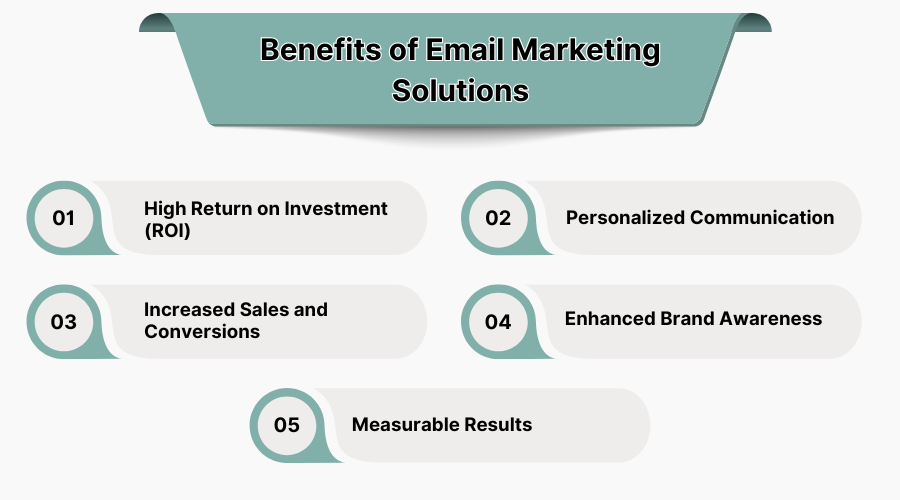
1. High Return on Investment (ROI)
Email marketing has always been a channel with high ROI. It is the most effective digital marketing channel. This happens for several reasons; one of them is that it is the cheapest way to engage and reach an audience. When comparing it to other media that may require a large advertising budget, emailing does not demand much. The possibility to automate and personalize campaigns even more adds up to the expenditure that can be maximized within this channel, increasing its return on investment.
2. Personalized Communication
Email marketing tools enable firms to split their audience and tweak notes based on personal preferences, actions, and facts. This sort of customization makes members feel known and treasured, thus building a tighter link with them. Personal talk leads to more interest, higher open rates, and boosted changes.
3. Increased Sales and Conversions
Email marketing directly raises sales and conversions with the help of specific product recommendations, abandoned cart reminders, and all workflows that can be automated. Nurture leads to converting subscribers into paying customers successfully by feeding them useful information as they move through the sales funnel. With the support of Email Tracking Tools, businesses can also measure engagement, optimize campaigns, and ensure that every message drives real impact.
4. Enhanced Brand Awareness
Regularly amazing and informing the users with newsletters helps the users to remember the brand. Seeing the brand’s name in the inbox quite regularly eventually helps users to remember it, even if they do not open all emails.
5. Measurable Results
The tools of email marketing provide an excellent analysis and reporting infrastructure. Businesses are investigating a number of diverse measurement techniques, for instance, open rates, click-through rates, conversions, bounce rates, and subscriber acquisition. Such direct results make it easy to change campaigns according to data, thereby enabling marketers to identify the most effective tactics and refine their strategies.
2. Who Uses Email Marketing Software?
That seed of free email marketing software is changing the way people can benefit from using email marketing, without having an upfront entry fee required for it. These platforms are particularly beneficial for.
1. Small Businesses
Free email marketing software, in most cases, is ideal for startups and small businesses that run on low budgets; it allows you to start from ground zero and grow an email list, promoting the product/promo/update via your first emails. In the same way, Top HRIS Software helps small and growing businesses manage employee data, payroll, and HR processes efficiently without requiring heavy upfront investment.
-
Starting an Email List from Scratch
-
They send out their initial email campaigns to introduce products, promotions, or simply updates.
-
Test different email marketing strategies before investing in a paid solution.
-
Maintain communication with early customers and nurture leads without significant financial outlay.
2. Bloggers and Content Creators
Content makers and teams, like bloggers, podcasters, YouTubers, and online teachers, count on free email tools to.
-
Grow their crowd and make passive readers or watchers loyal subscribers.
-
Send new content right to their followers so they never miss updates.
-
Push their creations (like courses, e-books, or merchandise).
-
Develop a direct relationship with their community, outside of the social media algorithm.
-
Monetize content through direct sales or through affiliate sales.
3. Nonprofit Organizations
It is well known that nonprofits are cheap email blast services, particularly when it comes to running outreach and initiatives to raise money. They can keep their volunteers and sponsors informed of the changes in impact made towards the mission through free email marketing services.
-
Communicate with donors and volunteers, sharing updates on their mission and impact.
-
Promote fundraising campaigns and encourage donations.
-
Recruit volunteers for events and initiatives.
-
Build community engagement around their cause without spending heavily on marketing tools.
4. Individuals and Hobbyists
People dealing with private tasks, interests, or small ventures can use a free or the cheapest email marketing platform as well. Beginner creators or makers are able to display their creations and promote deals.
-
Amateur artists or craftspeople can post their work and advance sales.
-
Small event planners for little town gatherings can send out invitations and announcements.
-
Community leaders can share information with local groups.
-
Aspiring entrepreneurs can test business ideas and build an initial customer base before formally launching.
3. What are the Latest Market Trends in Email Marketing Software?
The program for email marketing keeps changing due to technology and shifting consumer needs. The following are the current market trends that are making their mark on email marketing tools. The average email deliverability rate in 2024 across the 15 ESPs Email Tool Tester tested is 83.1%
1. AI-Powered Personalization
Artificial Intelligence reimagines email personalization by harvesting a vast customer data set across different sources, including purchase behavior, demographics, and activity patterns. On top of that, it provides highly personalized recipients with the experience they require, which will result in more engagement and effect in return.
-
Dynamic content: The emails that candidly present the apt items, articles, or offers according to the recipients' minds.
-
Predictive analytics: AI predicts customers’ future behavior that includes churn risk or next purchase; because of this, targeted campaigns can be planned in a proactive manner.
-
Automated content generation: Furthermore, AI is the one who populates convincing subject lines and the content of emails, but it also supplies the images that suit each segment best.
-
Send-time optimization: AI decides the best time to send the emails to each individual in order to get maximum open rates.
2. Interactive and Engaging Content
Static emails are a thing of the past. Marketers are embracing interactive features to engage users and make emails more interactive and provide a richer user experience directly in the inbox. This movement includes.
-
AMP for Email: The technology discussed here allows interactive elements such as carousels, accordions, and even forms to be placed within the email client directly, which in turn lessens the need for the recipients to click through a landing page.
-
Quizzes and polls: The quizzes and polls conducted with the subscribers become a direct vehicle for obtaining feedback, and can energize the quizzes or polls directly in the email can boost interaction and gather valuable feedback
-
Embedded videos and GIFs: Visual content can greatly enhance engagement and also turn emails into more lively and fun ones.
-
Gamification: A case in point is the inclusion of games or interactive challenges, which not only make emails more enjoyable but also keep one engaged by offering a sense of achievement and rewarding interaction.
3. Privacy-Centric Marketing
With tight data privacy laws and growing consumer privacy sensitivity, data protection is central to email marketing. The top priority for marketers is transparent consent processes for subscriber information collection and utilization. Being transparent about the method of collecting and storing data is highly significant for law observance and establishing trust.
-
Consent and transparency: Explicit and clear consent has to be employed in collecting and using subscriber data. Marketers should clearly state how data is collected and kept.
-
Data minimization: Collection of only the required data for a particular purpose and not excessive collection of data.
-
Secure data handling: Having strong security measures in place that secure subscriber data from being compromised.
4. Transparency and Control
Building upon privacy-led marketing, this trend emphasizes providing subscribers with greater control over their email experience.
-
Preference centers: Granting subscribers simple control over their email preferences empowers them and suppresses unsubscribe rates.
-
Easy unsubscribe: Making the unsubscribe process straightforward and clear, respecting subscriber choices.
-
Clear communication: Being clear about what subscribers are signing up for with emails and how their information will be utilized.
5. Mobile Optimization and Design
With smartphones universally available, mobile-friendly email reading is no longer optional but a requirement. This movement encompasses
-
Responsive design: Emails that adjust automatically in their appearance and content to accommodate varying screen sizes.
-
Concise copy: Mobile users tend to scan, so emails must be concise, clear, and reach the point in a hurry.
-
Larger fonts and buttons: Render text legible and buttons clickable on small screens.
-
Single-column layouts: Typically best viewed on mobile, as they are simpler to scroll through.
-
Fast loading times: Optimized code and images for loading quickly on mobile.
These directions support the shift towards intelligent, more engaging, and more authoritative email marketing that ultimately aims to enhance the subscriber experience, as well as design more effective results for businesses.
4. Related Articles of Email Marketing Software
- How Automated Email Marketing Can Boost Your ROI
- Email Marketing Ideas as the New Strategies: Post Differences and Talk About Those Differences
- 4 Ps of Marketing: What They Are & How to Use Them Successfully
- How to Protect Your Email Account from Being Hacked?
- Mastering Email Marketing Software for Your Small Business Success [2024 Guide]
- 10 Best Email Marketing Software Tools For Growing Businesses
- 10 Must-Have Email Marketing Software Features
- Mastering Email Marketing Software for Your Small Business Success
- The Future Of Email Marketing Software: Trends To Watch
- Elevate Your Marketing Efforts with Email Marketing Software
- Consider Before Choosing Email Marketing Software
5. Importance of Best Email Marketing Software:
Today, e mail marketing software is no longer considered a luxury but rather a necessity for companies that want to communicate effectively and successfully with their audience. What a company needs is the appropriate platform; this software marketing email directly affects interaction, conversion, and the company's bottom line. The following is a more extensive description of the value of the best emailing marketing software.
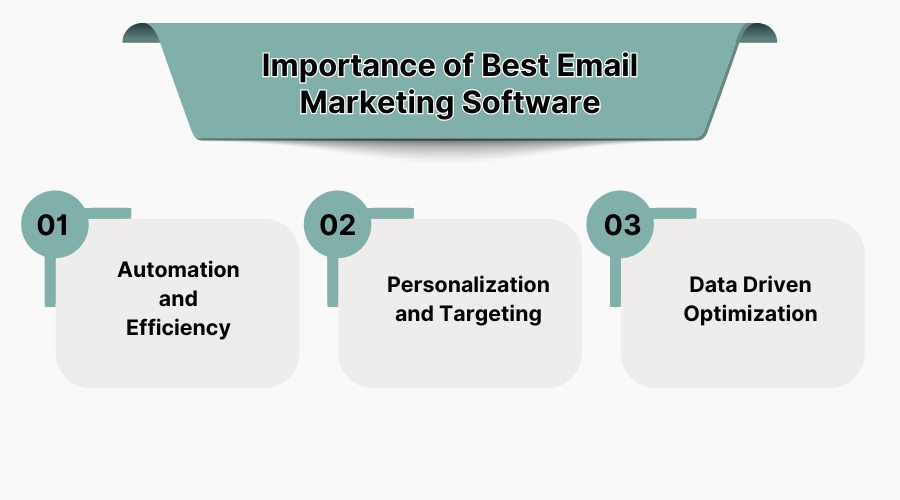
1. Automation and Efficiency:
-
Saves Time and Resources: Cutting-edge email marketing tools remove difficult manual labor by automating tasks like setting up automatic campaign flows and scheduling newsletters. When paired with Email Encryption Software, these tools not only save time and resources but also ensure secure and compliant communication. Time and resources that could be used for other important business requirements are saved as a result..
-
Ensures Timely Communication: The process's use of mail management software ensures that the messages are sent at the times that work best for you, like when the user leaves the cart neglected or during registration.
-
Reduces Manual Errors: People's errors are dramatically reduced through process automation. Precise, timely, and well-structured communications are delivered to the subscribers at all times. Brand credibility does not get compromised.
2. Personalization and Targeting:
-
Increases Engagement: Extremely targeted email content is very convincing when it is crafted specifically for the customer by demographic, interest, and behavior-based data. Entirely targeted subject lines, product suggestions, and offers result in more opens and click-throughs.
-
Builds Stronger Customer Relationships: Personifying that makes customers feel that they are understood and valued by a business. Over time, recognition continues to build strong trust and loyalty in the long run. It converts mere subscribers into advocates of the brand.
3. Data-Driven Optimization:
-
Analytics and Reporting: Some important metrics are the open rate, click-through rate, conversions, and bounce rate that can be tracked by using comprehensive reporting features. This insight helps judge performance. With the help of Transactional Email Software, businesses can monitor these metrics more effectively and ensure that every message reaches the right audience at the right time.
-
Enable Decision-Making: Data empowers organizations to spot the most effective marketing campaigns and channels. This ensures that resources are being allocated to plans that work at their highest potential.
-
A/B Testing for Continuous Refinement: Subject lines, layouts, or calls-to-action that marketers want to test for better performance toward their subscribers can be tested using email testing tools.
6. Key Features of the Best Email Marketing Software in the USA:
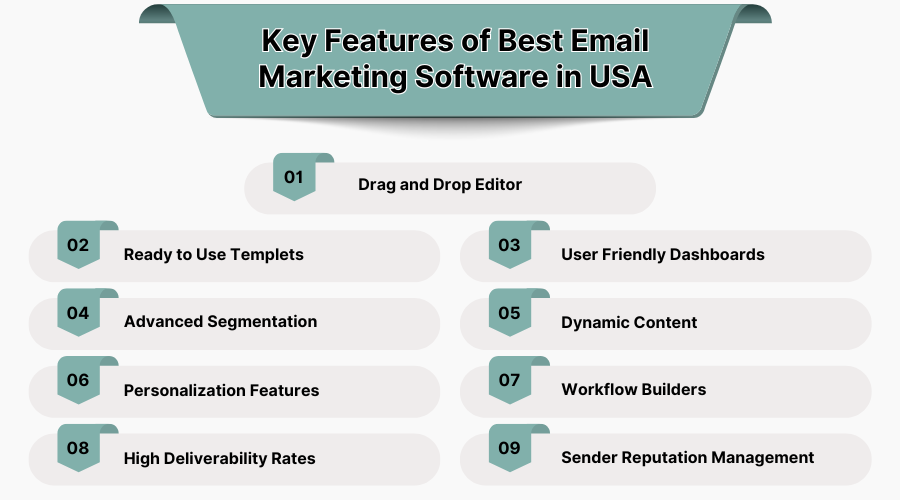
1. Drag-and-Drop Editor:
- Among the several metrics that could be important, we have the open rate, click-through rate, conversions, and bounce rate, which can be followed using the comprehensive reporting features.
2. Ready-to-Use Templates:
- Pre-designed templates that align with various marketing campaigns can greatly cut down the effort and time required to implement those campaigns. The templates contain the branding suitable for the brand, which can be tweaked for the particular messaging requirement.
3. User-Friendly Dashboards:
- The templates have standardized branding that can be customized for particular messages. Central dashboards support analytics viewing, subscriber list management, and campaign performance tracking. Easy dashboards make critical information readily available for the firm to make timely and accurate marketing decisions.
4. Advanced Segmentation:
- This major role helps companies divide their audience into fairly precise segments based on many factors like demographics, actions, likes, or previous buys. This allows for the making of specific plans and personal messages, which greatly increase interest and conversion rates.
5. Dynamic Content:
- Beyond the fundamental personalization that occurs with electronic mail, dynamic content allows for the tailoring of content to be based on the recipient's gender or preferences. This can include personalized product recommendations, discounts, or immediate updates to the email's subject, making each message exceptionally pertinent.
6. Personalization Features:
-
These features include tools to personalize elements such as issue strains, greeting messages, and stylish content with recipient-specific information, in addition to dynamic content material. This increases engagement and open rates by personalizing and tailoring the email experience for each recipient. For businesses, pairing personalization with email archiving software ensures not only better engagement but also secure storage and compliance management.
7. Workflow Builders:
- Visual flow developers facilitate the creation of computerized email sequences that are triggered by unique movements or events. Examples include sending welcome emails upon registration, abandoned cart reminders, or birthday messages, all of which are intended to communicate timeously and save time.
8. High Deliverability Rates:
- In order to keep emails out of spam folders and ensure that they reach those who were intended, premium email marketing tools employ a number of techniques, including email verification service, sender identity verification, and spam detection. This increases the possibility that your audience will see and respond to your messages.
9. Sender Reputation Management:
- Maintaining a good sender reputation is vital for successful email delivery. Those that send advertising and marketing emails provide resources and knowledge that help companies manage their sender's reputation, display the IP address, resolve music disputes, and avoid blacklists, all of which are intended to help with constant email placement.
7. Best Email Marketing Software in 2025:
1. ActiveCampaign
ActiveCampaign is a high-level email marketing solution, known for strong marketing automation and crm software. All businesses can use it, but those that prioritize complicated automation and a full customer experience will find it particularly useful.
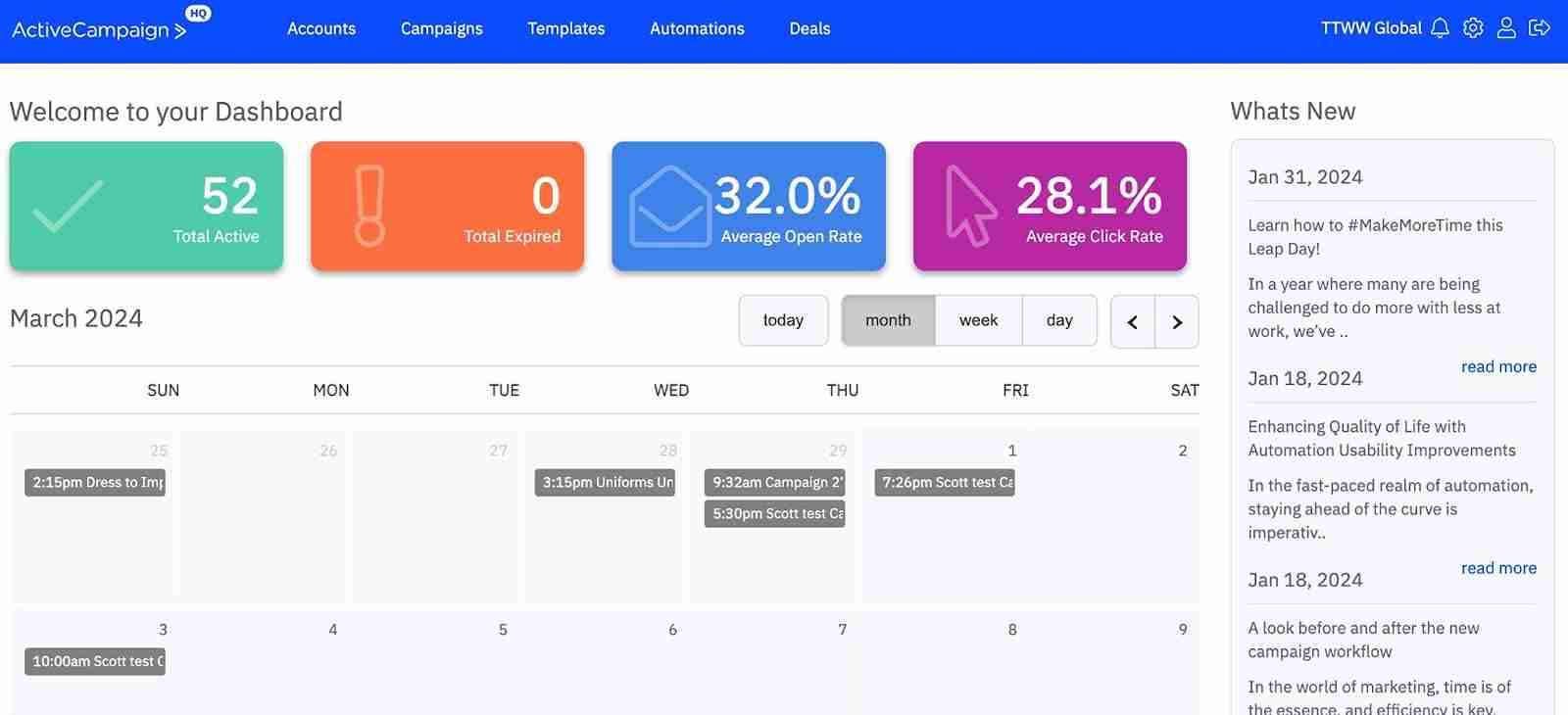
Features
-
From straightforward welcome sequences to intricate, multi-step customer journeys, it manages a broad range of automation scenarios.
-
Offering a visual email creator with versatile templates and conditional content that is personalized.
-
ActiveCampaign's CRM features a series of automated sales processes, including follow-up emails based on the deal's stage or the lead's score.
-
Enables a comprehensive division of contacts based on various characteristics like demographics, website visits, email activity, purchasing behavior, and more.
-
Includes landing pages and form generators, tracking devices that measure visitor behavior, and messages that are targeted in communication.
Pros
-
Extremely versatile and intuitive, it is often considered a leading feature.
-
Granular control over the audience's segmentation, which allows for exact targeting.
Cons
-
The large feature set is likely to be overwhelming for novices or those who seek a basic email service.
-
Many advanced features of CRM and SMS Management Software require a supplemental payment in addition to the base cost.
Pricing: Personalized email marketing is available at a monthly fee of $15.
2. HubSpot Marketing Hub
The program utilizes a full range of marketing strategies to help companies attract web visitors, convert prospects, and manage customer relationships. Some of them are offering email promotion, creating landing pages, social media marketing, and SEO.
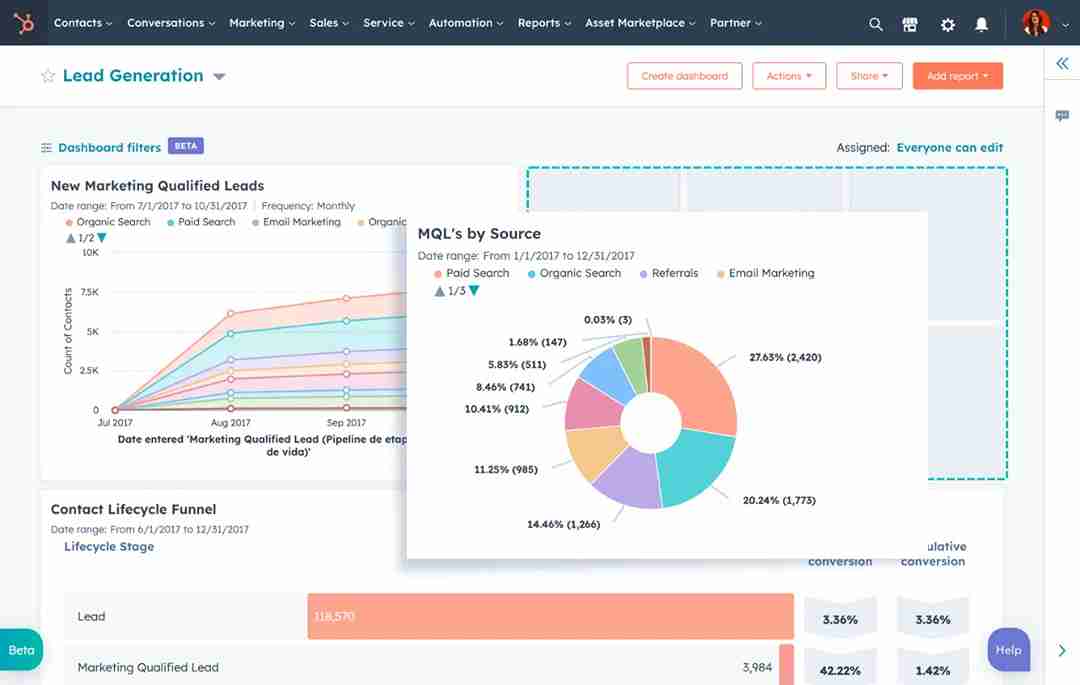
Features
-
Use a drag-and-drop feature to design email marketing campaign software that can be sent out with specific reminders and messages appealing to customers. Test which email works best by using A/B testing. Set up an automated series.
-
Create automated workflows that will track the user’s activity to automate processes such as lead nurturing and customer acquisition.
-
Build and optimize landing pages and forms for capturing and converting leads through templates with easy drag-and-drop features.
-
Take advantage of editorial calendars plus included SEO to raise the website’s search standings, thereby attracting more organic traffic.
-
A/B test landing pages, emails, and other content so as to find out which works best.
Pros
-
Its simplicity makes it ideal for marketers with varying degrees of expertise.
-
Provide native integration with multiple third-party tools and applications; this will encourage an end-to-end marketing technology stack.
Cons
-
Higher-tier strategies are more expensive, especially for companies that are mid-sized or smaller.
-
Live support may be limited or unavailable to users on the free tier.
Pricing: The price starts at $760 per month.
3. Omnisend
Omnisend is an email and text messaging platform that is mostly used by e-commerce businesses, especially those that are platform-based, such as Shopify. It provides various tools that simplify marketing communication, personalize customer interactions, and increase earnings for online businesses.

Features
-
An email designer with drag-and-drop functionality, over 350 ready-made templates, single-use discount codes, A/B testing capabilities, and email reporting.
-
Includes pre-designed workflows, customizable automation, and reporting for automated processes.
-
Unlimited web push notifications that engage website visitors and promote sales.
-
Branded forms, popups, and landing pages that collect leads, such as multi-step forms and gamified ones like a "Wheel of Fortune.
-
In-depth campaigns and automated reports, revenue generation, sales tracking, live view monitoring of real-time contact activity, and other features.
Pros
-
Provides a comprehensive set of tools that include email, text, and push notifications, all built into a single platform.
-
Seamlessly combines SMS with campaigns and automation, with credits being included in some packages.
Cons
-
SMS fees can increase quickly, especially when sending to countries with a high per-message cost.
-
The platform and customer service are currently limited to English language capabilities.
Pricing: The pricing starts at $11.20 per month.
4. Klaviyo
Klaviyo is a platform that automates marketing efforts for B2C companies, particularly those involved in e-commerce. It's designed as a platform for customer data and a CRM that facilitates the creation of custom, automated experiences across email, text message, and other channels.
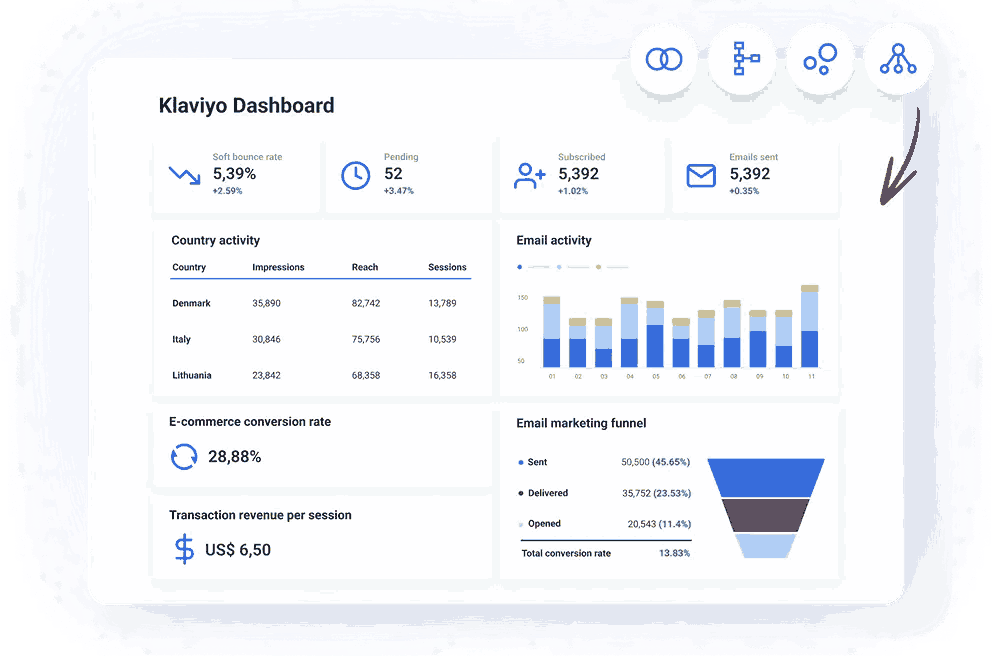
Features:
-
Drag-and-drop editor, large library of templates, A/B testing, product recommendations for personalized offers, and conditional content for dynamic email.
-
Visual flow creator, pre-developed automation templates, and triggered emails or SMS based on customer behavior.
-
Combining smoothly automated processes and campaigns via text messaging, as well as credit-based pricing, personalized messages, and two-way communication.
-
AI-powered generators of content, predictions, segmentation, flow optimization, and time optimization.
-
Pop-ups that can be edited and forms that generate leads and gather information about customers.
Pros:
-
Granular segmentation across many data points allows for highly focused messaging.
-
Merges email and SMS functionality into one platform for omnichannel marketing.
Cons:
-
The advanced features are daunting to newcomers, with time and effort needed to fully understand them.
-
Lacks a standalone landing page builder, but forms and pop-ups can be utilized as a workaround.
Pricing: It begins at $45/month with 15000 emails.
5. ConvertKit
ConvertKit is an email marketing application created strictly for creators, bloggers, podcasters, and online entrepreneurs whose major concern lies in connecting or keeping a good relationship with their audience. Among its offerings are a clean interface plus powerful automation tools that allow creators to make money off of their content as well as grow their mailing lists.
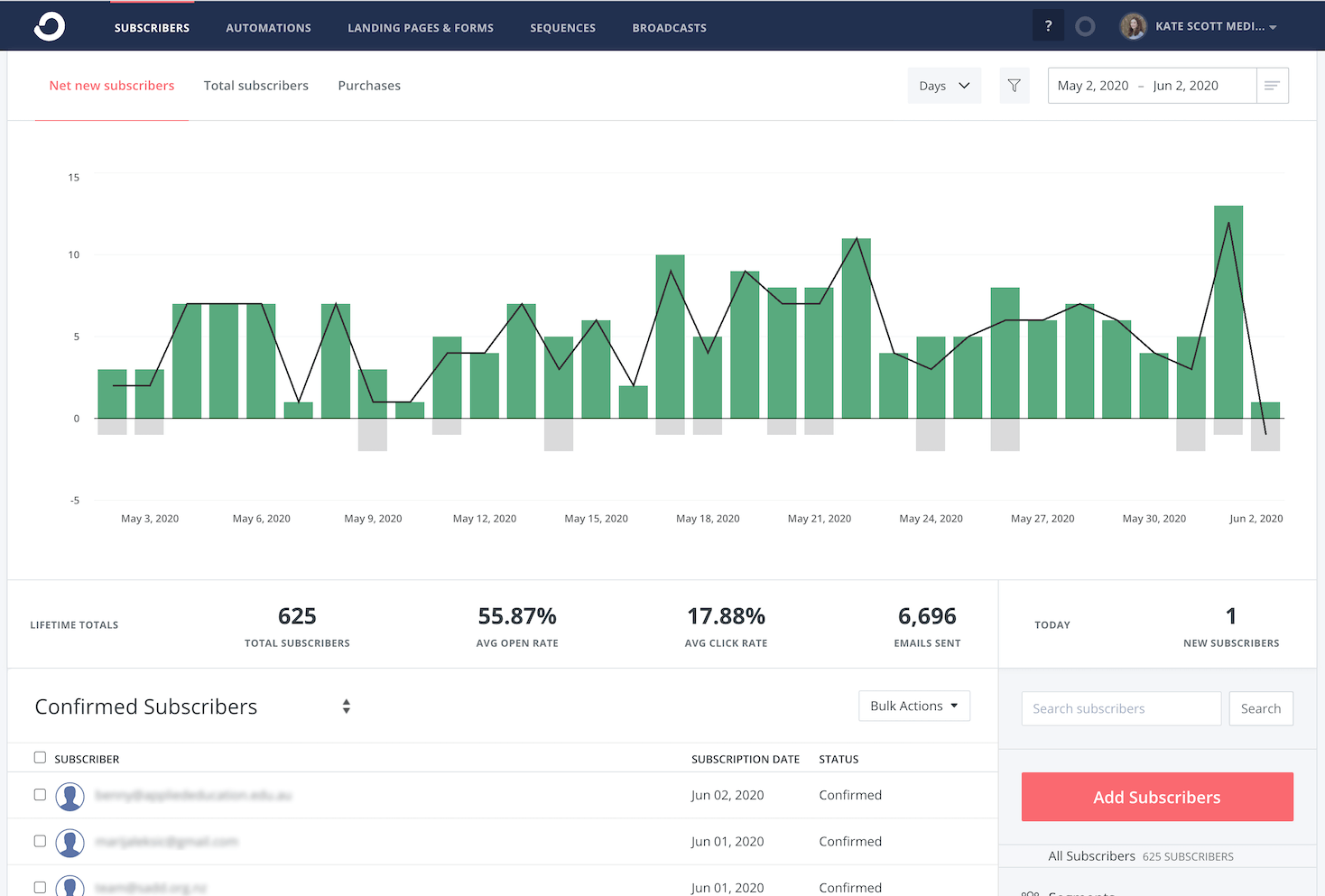
Features
-
Gives features such as auto-sending the read broadcasts to unread emails. Simple email editor, A/B subject line test, scheduling of emails, and editable email templates.
-
Users may set triggers on form read, tag, custom field, and buy.
-
Keeps subscribers by tags and segments with a subscriber-based pricing model unique to it that does not charge for duplicate contacts.
-
Collab with brands and sponsors to make money from ads. ConvertKit takes a cut of the earnings. Sell memberships and digital goods directly on the platform, process payments, and make use of features such as tip jars.
-
Start using tools like tip jars, process payments, and sell memberships and digital products straight on the platform.
Pros
-
It works great with the top platforms creators love to use, like WordPress, Shopify, and Teachable.
-
Even though it is easy to use, getting the hang of complex automation might take some time.
Cons
-
It offers some features similar to a CRM, but it isn’t a complete CRM.
-
Easy to use, but learning how to make complex automation workflows work may take a while.
Pricing: It begins at $15/month with 15000 emails.
8. Conclusion:
Email marketing solutions are crucial for companies to enhance engagement and ROI through email marketing campaigns. Segmentation, automation, editable templates, and analytics are provided by them. Leading solutions such as HubSpot, ActiveCampaign, Omnisend, Klaviyo, and ConvertKit (Kit) offer solutions with a diverse set of features to meet various needs. The highest value benefits are high ROI, personalization, increased sales, and measurable outcomes. The right platform for an individual must be chosen based on certain goals and budget, and free trials can be employed to facilitate the decision.
