
What we'll cover
Share with your community!


Get Free Consultation


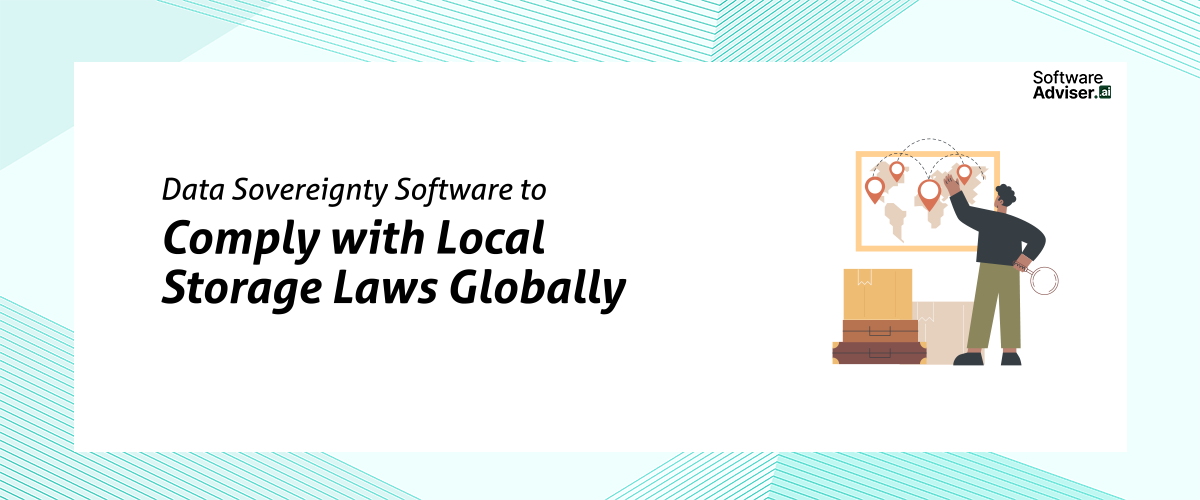
Data Sovereignty Software to Comply with Local Storage Laws Globally
 Dokas mile
The contemporary global commercial technology sector is operating within an increasingly complex digital landscape. Modern corporations routinely store, process, and transfer massive volumes of sensitive information across distributed, borderless cloud networks. While this decentralized cloud infrastructure enables rapid product innovation and operational scaling, it introduces unprecedented legal, operational, and structural tracking challenges. Moving corporate information across international boundaries without precise tracking increases exposure to severe regulatory penalties and individual privacy violations.
 Looking for Data Fabric Software? Check out softwareadviser.ai's List of the Best Data Fabric Software in USA for Your Business
 Building a legally sound global computing framework requires an enterprise to integrate specialized cloud automation architectures directly into its deployment tracks. To help organizations maintain continuous operational visibility, track application permissions, and balance infrastructure performance, technology leads utilize specialized software systems. Many development groups deploy a verified Data Fabric Software platform to unify disparate data silos, manage system access, and orchestrate secure data pipelines across separate public cloud networks.
What Is Data Sovereignty?
Data Sovereignty refers to the legal requirement that digital data asset structures are subject strictly to the laws and regulatory compliance frameworks of the specific geographical country or region where that data is physically stored, processed, and managed. This idea fundamentally changes the economics of traditional cloud computing, where the decision as to where to place information is typically dictated by which server node offers the cheapest processing rates or fastest connection speeds. Under a Data Sovereignty model, a company would have to enforce a policy that ensures that their cloud infrastructure is placed in a manner that prevents data assets from being passed over international borders.
Furthermore, being able to keep track of the information in a distributed multi-cloud environment requires a company to move away from traditional paper trail management approaches. Technical groups utilize specialized data sovereignty software solutions to automate file indexing and trace information flows across global environments. By automatically scanning data locations, connections, and accesses, businesses can ensure that their current data layers are compliant with the storage regulations of the countries involved. This will allow corporate compliance managers to effortlessly document all system changes, thus preventing unauthorized location shifts of data and ensuring legal protection from worldwide jurisdiction conflicts. Organizations often combine data sovereignty initiatives with AI Database Management Software to monitor sensitive records and enforce storage policies across multiple environments.
Why It Matters in the USA
1. State privacy laws
The regulatory environment across the United States has experienced severe fragmentation due to the rapid introduction of individual state-level privacy mandates. Frameworks such as the California Consumer Privacy Act, along with matching statutes in multiple states, grant citizens expansive controls over their digital files.
2.HIPAA
For institutions operating within the American healthcare and pharmaceutical sectors, protecting protected health information (PHI) under the Health Insurance Portability and Accountability Act (HIPAA) is a non-negotiable operational rule. Sourcing, storing, or transferring authentic patient care profiles requires absolute system isolation and strict cryptographic encryption.
3.FedRAMP
The Federal Risk and Authorization Management Program (FedRAMP) sets out the standardized and highly-tight security assessment and monitoring requirements for cloud products used by the US federal government. Any commercial technology vendor seeking to sell cloud-hosted software to a government department must achieve explicit FedRAMP authorization.
4. Government contracts
Securing lucrative municipal, state, and federal defense contracts demands a high level of infrastructure security and data tracking. Modern defense and aerospace projects are governed by strict federal rules, including the International Traffic in Arms Regulations (ITAR) and the Cybersecurity Maturity Model Certification (CMMC).
TOP Data Sovereignty Software
1. Microsoft Purview
Microsoft Purview is a broad cloud compliance platform built to map, index, and protect corporate records across split networks. It plugs directly into the Microsoft 365 ecosystem and Azure cloud systems, helping teams maintain secure data storage layouts while checking their legal vulnerabilities. The system focuses on finding hidden files and running deep content checks so risk teams see every piece of information they own across the globe. It acts as a heavy-duty data sovereignty software tool for managers who need to see their complete file footprint in one dashboard.
Features:
- Automated Data Discovery: Sweeps through on-premises servers, multi-cloud setups, and online apps to build an active asset index.
- Advanced Classification Engines: Uses 200+ built-in rules to spot tax papers, health files, and private customer details instantly. Many enterprises integrate AI Document Management Software to automatically classify files, apply metadata, and simplify regulatory compliance.
- Sensitivity Labeling: Tags files with permanent security badges that lock down sharing and encryption no matter where the file moves.
- Dynamic Data Lineage: Records how records change and travel through your company pipelines to verify data localization compliance.
Pros:
- Works perfectly with your existing Microsoft 365 setups, Azure databases, and Power BI tools.
- Simple control screens for pushing out unified cloud data governance updates across global branches.
- Clear visual charts showing exactly how data files alter as they pass between workers.
Cons:
- Takes a lot of time and effort to set up if your company runs mostly on non-Microsoft tools.
- Monthly costs add up fast when scanning massive multi-petabyte file systems.
2. IBM Guardium
IBM Guardium is an enterprise data security and data compliance software platform. Its primary function is to secure structured databases and large-scale file systems by providing security teams with much-needed visibility, analytics, and control over detecting and responding to data breaches or unauthorized access attempts. In addition to that, it is famous for its database monitoring tools that provide data sovereignty in big finance, healthcare, and insurance companies.
Features :
- Real-Time Activity Monitoring: Watches every database query around the clock to spot weird user actions and block unapproved data views instantly.
- Vulnerability Assessment: Scans database setups automatically to find unpatched bugs, weak user passwords, and bad security settings.
- Data Masking and Encryption: Blurs confidential information on the spot to ensure that unauthorized workers cannot view any prohibited customer data.
- Automated Compliance Workflows: Creates audit reports based on global regulations such as GDPR, HIPAA, and system-specific security assessments.
Pros:
- Incredible live monitoring tools that catch database threats the second they happen.
- Extremely deep audit trails that hold up perfectly during strict legal investigations.
- Connects just as easily with ancient mainframe databases as it does with modern cloud setups.
Cons:
- Requires specialized training and dedicated security staff to keep it running right.
- The installation process takes a long time and can slow down regular database maintenance at the start.
3. OneTrust
OneTrust is a widely used privacy management and compliance platform built to organize legal rules across international corporate groups. It works as a central control center that joins privacy audits, vendor risk reviews, and data protection software tools. OneTrust helps global brands handle different country-by-country privacy rights, cookie options, and local processing mandates from a single screen to maintain strict data sovereignty values.
Features :
- Privacy Impact Assessments: Walks the user through forms to make sure their roll-out doesn’t break any laws.
- Universal Consent Management: Tracks cookie pop-ups, user opt-ins and outs, and mobile permissions in every region.
- Subject Rights Requests: Expedites the process of scanning and deleting customer data from your systems upon request.
- Regulatory Research Library: Uses an updated legal database to keep corporate policies aligned with changing country laws.
Pros:
- Best-in-class updates on changing local privacy laws around the world.
- Highly adjustable workflows that fit into your existing business steps easily.
- Takes the stress out of managing thousands of customer data deletion forms.
Cons :
- The massive number of options and side menus can feel overwhelming for small compliance teams.
- The system can experience slow loading times when pulling up massive, complex reports.
4. BigID
BigID is a modern data tracking tool that uses advanced pattern-matching logic to find, sort, and secure enterprise files across scattered systems. It shifts the focus of old-school data governance by tracking files directly to individual identities, showing exactly whose private details live on which server. This specific feature makes it an incredible data residency software choice for teams that must pin specific user names to clear geographic boundaries under data sovereignty rules.
Features:
- Identity Intelligence: Ties scattered files back to real individual profiles, making it simple to find a customer's total data footprint.
- Context-Driven Classification: Looks past basic keyword matching to read the actual meaning inside unorganized text documents and scans.
- Data Cross-Border Tracking: Watches for files crossing regional network lines and alerts managers about potential data localization breaches. Businesses also use AI Workflow Automation Software to automate compliance workflows, generate audit trails, and notify administrators about policy violations.
- Retention Management: Enforces corporate expiration dates on files, deleting old records automatically once their legal storage limit runs out.
Pros :
- Amazing accuracy at locating sensitive data inside messy, unorganized folders.
- Simplifies user access and data deletion requests down to a few clicks.
- Lightweight installation options that expand smoothly across massive cloud setups.
Cons :
- Takes some fine-tuning during the first few weeks to stop the system from flagging non-sensitive files.
- Buying extra add-on apps can make the total subscription price jump significantly.
5. Varonis
Varonis is a data protection and cloud governance tool engineered to lock down messy, unstructured files like spreadsheets, emails, and shared cloud folders from data thieves. It monitors file actions, dissects folder permissions, and charts user habits to enforce a tight zero-trust security rulebook. By defending files right at the folder layer, Varonis gives companies the visibility they need to maintain clean, secure data storage settings across global server networks while verifying data sovereignty.
Features:
- Least Privilege Automation: Pinpoints over-shared folders and revokes excess access rights instantly without ruining worker productivity.
- User Behavior Analytics: Profiles daily worker habits to call out red flags, like someone downloading hundreds of corporate files at 2 AM.
- Data Classification Engine: Scans files around the clock for sensitive terms and highlights folders where security permissions are too weak.
- Comprehensive Ransomware Protection: Catches signature file-locking habits early to lock out hacked accounts before they steal assets.
Pros:
- Brilliant automated tools for cleaning up messy, dangerous folder access settings.
- Highly accurate security alerts that catch active network attacks before damage occurs.
- Deep insight into hidden folder permissions across your entire company file share.
Cons:
- Generates massive log files that require a lot of local storage space over time.
- Setting up the system takes careful planning so you don't accidentally lock workers out of needed documents.
Feature Comparison Table
This straightforward table breaks down the main focus areas, ideal user sizes, and technical highlights of these top five tools to help you pick the right fit.
|
Software |
Primary Focus |
Best For |
Key Strength |
|
Microsoft Purview |
Data Governance & Compliance |
Microsoft Ecosystem |
Unified Data Discovery |
|
IBM Guardium |
Database Security |
Large Enterprises |
Database Activity Monitoring |
|
OneTrust |
Privacy & Compliance |
Global Compliance |
Regulatory Management |
|
BigID |
Data Intelligence |
Sensitive Data Discovery |
Deep Structural Data Classification |
|
Varonis |
Data Security |
File Systems & Cloud Storage |
Insider Threat Detection |
Features to Look For
When evaluating different governance platforms for your distributed global cloud systems, corporate technology leaders should carefully assess several core technical features:
1. Automated Classification Engines
The software application must provide high-fidelity, real-time file scanning utilities to automatically inventory and label incoming data assets based on content and origin. To manage these automated checks smoothly, enterprises deploy specialized data governance software to standardize metadata tagging across all organizational assets.
2. Geofencing and Location Pinning
An enterprise-grade sovereignty tool must deliver absolute control to pin specific data tables, storage buckets, and server configurations to exact physical geographic coordinates. The application must feature automated firewall rules that instantly block any attempts to move or replicate pinned data clusters outside their designated home regions.
3. Cross-Border Access Logging
To meet the requirements of external compliance audits, the proposed solution should utilize an immutable cryptographic ledger to store information on all file accesses. The tool should be able to identify the user’s name, location, and device, denying requests from users whose location data does not correspond to the target region.
4. Centralized Policy Management
Modern multi-cloud environments require unified policy controls to prevent configuration drift between separate cloud providers. A centralized governance strategy becomes more effective when integrated with an AI Cloud Management Platform, allowing organizations to monitor cloud resources and enforce regional policies from a single dashboard.
Conclusion
Running dedicated data sovereignty software has turned into a standard business requirement for any brand managing an international user base. These programs supply the architecture needed to clear local legal hurdles, keeping private records safe while lowering your exposure to heavy government lawsuits. Utilizing these specific dashboards removes the guesswork from local compliance by showing you exactly where your files sit.
FAQ's
Data sovereignty software helps organizations store and manage data according to local country laws.
It ensures compliance with local data storage regulations and reduces legal risks.
Yes, it enables businesses to meet data residency requirements across different regions.
Healthcare, finance, government, and e-commerce benefit the most from data sovereignty solutions.
Most small businesses do not have an HR department. They have an HR person singular who is probably also covering something else: operations, office m [...]

David N. Wilks
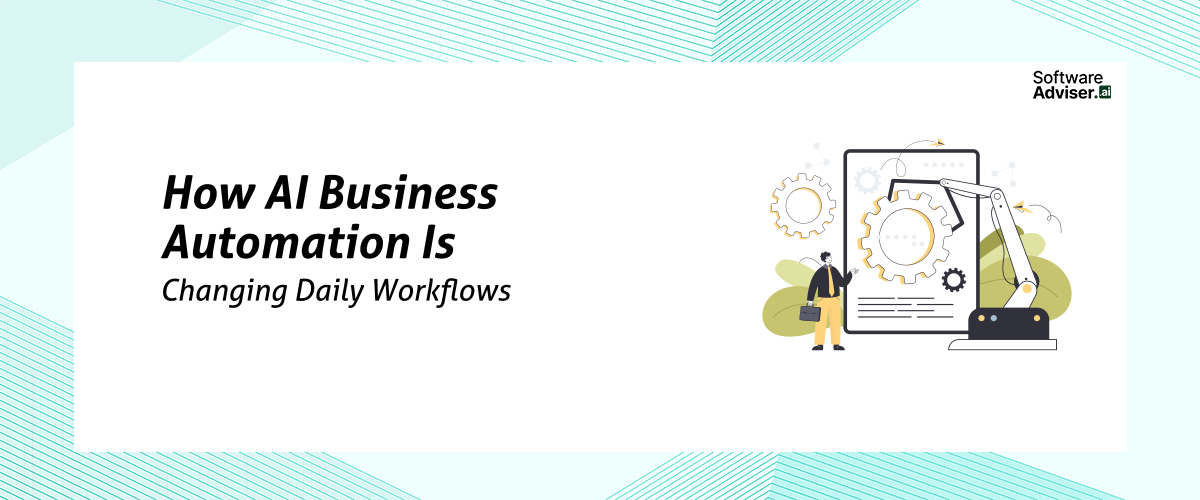
Walk into any modern workplace today, and you may observe a massive shift in how groups deal with their everyday workloads. The antique days of counti [...]
David N. Wilks
Costs are up almost everywhere you look this year, including rent, software subscriptions, wages, and on top of all that, competition for customers ha [...]