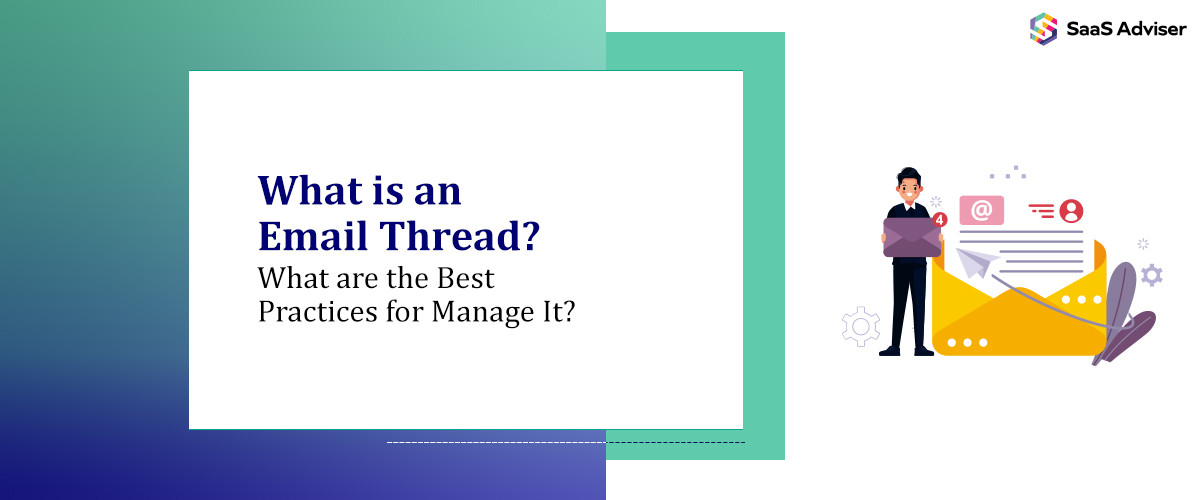
An email thread is a group of associated emails grouped collectively to form a communication. This format maintains e-mail correspondence organized and easy to comply with. Whether you're speaking with a group or handling multiple replies, the use of a thread email allows you to be on course. An e-mail thread is also called an email chain, email trail, or email string and is used extensively in each expert and private settings.

Are you looking for Business Email Software? Then check Out Saas Advisor’s Best Business Email Software
What is an Email Thread?
An email thread (or email chain) refers to a sequence of corresponding emails with the same subject. All the replies and forwards are grouped into one email conversation. It helps users follow the flow of information without searching through individual messages. Email systems like Outlook and Gmail often use email threading UI to show emails in a conversational view.
Some other terms for thread emails are:
- Email string
- Email trail
- Message threading
- Email chain abbreviation

Fun Fact:
The first email sent in 1971 led to the massive use of email threads we see today
What are the Best Practices for Managing It?
1. Keep Subject Lines Clear and Relevant
A clear concern enables all recipients to understand what the email thread is set right from the beginning. Avoid the usage of indistinct or not unusual titles like "Important" or "Quick Question" as they don’t provide sufficient context and may get lost in a crowded inbox. A properly-written problem line allows organize your e-mail chain and ensures that your e-mail correspondence is simple to music later. It also improves the efficiency of email threading UI in platforms like Gmail or Outlook by keeping related messages grouped correctly. A good subject sets the tone for the email conversation and encourages recipients to respond quickly and appropriately. So, always be direct, descriptive, and specific when starting a thread email.
2. Stick to One Topic Per Thread
Focus on one topic per email string to keep your communication clear and organized. Mixing a couple of subjects within the same email thread can confuse readers and make the e-mail correspondence more difficult to follow. When you need to discuss a distinct topic, it is better to begin a new email communication with a relevant and direct line. This helps others easily locate and respond to specific discussions, especially in long email chains. Keeping topics separate also improves the accuracy of your message threading, making the entire thread email more effective.
3. Reply Inline for Clarity
Use inline replies when responding to specific points within an email thread. This style of message threading helps everyone follow the conversation more easily by placing your responses directly under the relevant questions or comments. Inline replies are specifically useful in lengthy email chains or when handling special email correspondence. They reduce confusion and shopping time by means of removing the want to scroll from side to side. When used correctly, this method makes your email conversation clearer and keeps the thread email more structured and organized.
The search for Email Archiving Software is over. Check Out Saas Advisor’s best Email Archiving Software.
4. Use “Reply All” Sparingly
Only use "Reply All" when your message is simply vital to all within the e-mail thread. If your reply is meant for just one person, replying to all can cause litter and confusion inside the thread email. Unnecessary replies can weigh down recipients and reduce the effectiveness of the email correspondence. It’s fine to be considerate and selective approximately who genuinely wants to take a look at your email. Keeping your replies relevant facilitates maintaining a smooth, targeted email chain and improves the general flow of the email conversation.
5. Summarize Long Threads
If the email path becomes long and distinct, it’s helpful to summarize the principal factors in your reply. This saves time for every person and makes it less complicated for brand new members to understand the continuing e-mail verbal exchange without having to examine each message. A short summary maintains the email thread prepared and guarantees that no essential info is overlooked. It also enhances the readability of the email correspondence, especially when dealing with complex topics or group discussions. By doing this, you keep the thread email focused, clear, and productive for all recipients.
6. Archive or Mute Inactive Threads
After a discussion ends, it’s a good exercise to archive or mute the e-mail thread. This helps declutter your inbox and maintains your focus, energetic email chains that also need attention. Archiving doesn't delete your email correspondence—it in reality eliminates it from your important view while keeping it accessible for future reference. Muting a thread email is specifically useful while replies are kept, but no longer require your input. These simple actions help manage your email trail efficiently and reduce unnecessary distractions from closed email conversations.
Looking for Email Testing Tools? Check Out Saas Advisor’s Best Email Testing Tools.
7. Use Email Labels and Filters
Organize your corresponding emails by way of the use of labels, tags, or filters to hold the whole lot easy to locate and control. This technique is especially useful while you're dealing with multiple Outlook thread emails or operating on diverse tasks right away. Labeling vital e-mail threads permits you to easily and instantly find precise e-mail chains without digging thru your inbox. Filters can also type incoming thread emails routinely based on sender, subject, or keywords, making your email correspondence a lot extra green and stress-free.
8. Be Mindful of Email Tone and Formatting
Keep your tone polite and your formatting clean when writing within an email thread. A respectful tone sets a professional tone, while easy formatting, like brief paragraphs, bullet points, and clear fonts, makes your message less complicated to read. Well-established formatting improves the overall appearance of the email communication, in particular while handling lengthy email chains or unique email correspondence. It also facilitates recipients staying centered on the key factors, improving the effectiveness of your thread email.
9. Avoid Unnecessary Forwards
Forward only the parts of the email thread which might be essential and relevant to the recipient. Including unrelated content material in a thread email can create confusion, distract from the principle message, and crush the individual receiving it. When sharing information from an extended email chain, take a moment to trim out any pointless information or personal comments. This keeps your email correspondence focused and ensures that your email conversation stays professional, clear, and easy to follow.
10. Close Threads When the Discussion is Over
End the e-mail chain by means of surely summarizing the very last decision or outcome of the dialogue, followed with the aid of a well mannered thank you to all participants. This is no longer the most effective suggestion for appreciation; however also alerts that the email thread has reached its end and no further replies are necessary. Wrapping up a thread email in this way helps keep useless back-and-forth and maintains your email correspondence neat and professional. It additionally brings closure to the e-mail communication, making it easy for everybody to archive or flow directly to the subsequent assignment.
Common Mistake:
Using “Reply All” when it’s not needed clutters the email chain.
How to Make Your Email Thread Useful?
1. Clear Subject Line
Start your e-mail thread with a clear and particular concern line that displays the principal topic of the message. A well-written issue enables recipients right now understand what the email communication is about, which improves response time and employer. It also ensures that the thread email remains focused and easily searchable later, especially when the email chain grows longer. In platforms like Gmail or Outlook, a strong subject also supports better email threading UI, keeping related messages neatly grouped together.
2. Stay on Topic
Stick to one dialogue in line with e-mail string to keep the verbal exchange clean and targeted. Mixing multiple topics in a single thread e-mail can result in confusion and make it difficult for recipients to observe the context of the e-mail. If you want to deliver up an exceptional subject matter, it’s satisfactory to start a brand new email path with its own relevant difficulty line. This approach enables maintaining prepared e-mail correspondence and makes it less complicated to look for precise discussions later on.
3. Concise Messages
Keep your replies brief, clean, and to the point when collaborating in an email thread. Long-winded messages can easily cause people to lose consciousness, specifically in prolonged electronic mail chains in which many recipients are worried. Clear and concise replies assist hold the tone of the e-mail conversation and make it much less complex for others to reply. This technique additionally improves the quality of your email correspondence and keeps the thread e-mail efficient, expert, and smooth to read for anybody concerned.
4. Manage CCs
Only include people who are truly necessary when managing an email thread. Adding too many recipients in CC can overwhelm others and create unnecessary clutter in the thread email. Keeping the CC list limited ensures that your email correspondence stays relevant and focused for those directly involved in the discussion. This also helps prevent confusion and reduces the chance of someone missing important details within the email chain, leading to a more efficient and targeted email conversation.
Looking for Email Management Software? Visit Saas Advisor’s Top Email Management Software
1. Structure Effectively
Use bullet points or numbered lists to break down information within your email thread. This formatting makes your message easier to scan and understand, especially when sharing multiple ideas or steps. Structured content not only improves the readability of your thread email but also enhances the overall experience of the email threading UI, helping recipients follow the email conversation smoothly. Clear formatting also keeps your email correspondence organized and professional, reducing the chances of miscommunication within the email chain.
2. Know When to End a Thread
Don’t drag out a conversation once it has reached a natural conclusion. When everything has been discussed and decided, take a moment to wrap it up clearly and professionally. Archiving the email thread at this point helps you keep your inbox tidy and focused on ongoing tasks. Prolonging a closed email chain can lead to confusion and unnecessary replies in the thread email. Closing the email conversation properly also improves your overall email correspondence management, allowing you to stay organized and efficient.
3. Consider Alternative Tools
For more dynamic or fast-moving discussions, do not forget to use chat apps or a project control tool instead of relying on lengthy e-mail conversations. While an email thread is remarkable for formal conversation, it can no longer be the great choice for real-time collaboration or brief decision-making. Switching to equipment designed for stay messaging helps keep away from overly lengthy email chains and cluttered thread emails. It also keeps your email correspondence focused on essential updates while handling detailed or fast-paced exchanges more effectively outside the inbox.
Where an Email Thread is Beneficial?
1. Collaborative Decision-Making
Helps all team members weigh in through one email chain. Everyone stays in the loop, making the email thread a reliable space for tracking input and decisions.
2. Project Updates
Share progress through a single email thread. This keeps your email correspondence organized and ensures everyone gets consistent updates in one place.
3. Clarifying Questions
Easy to refer back to previous email correspondence. Having all questions and answers in the same thread email reduces confusion and saves time.
4. Complex Issues
Group responses under one email conversation to avoid mix-ups. It keeps the email chain focused and helps manage multiple viewpoints clearly.
Expert Advice:
Always reread your thread email before sending to ensure clarity and tone.
Conclusion
Managing an email thread effectively saves time, reduces confusion, and enhances communication. From keeping your thread emails organized to using polite formatting, these best practices are key. Whether you operate Outlook or Gmail, managing outlook thread emails in the right manner can improve teamwork and productivity.