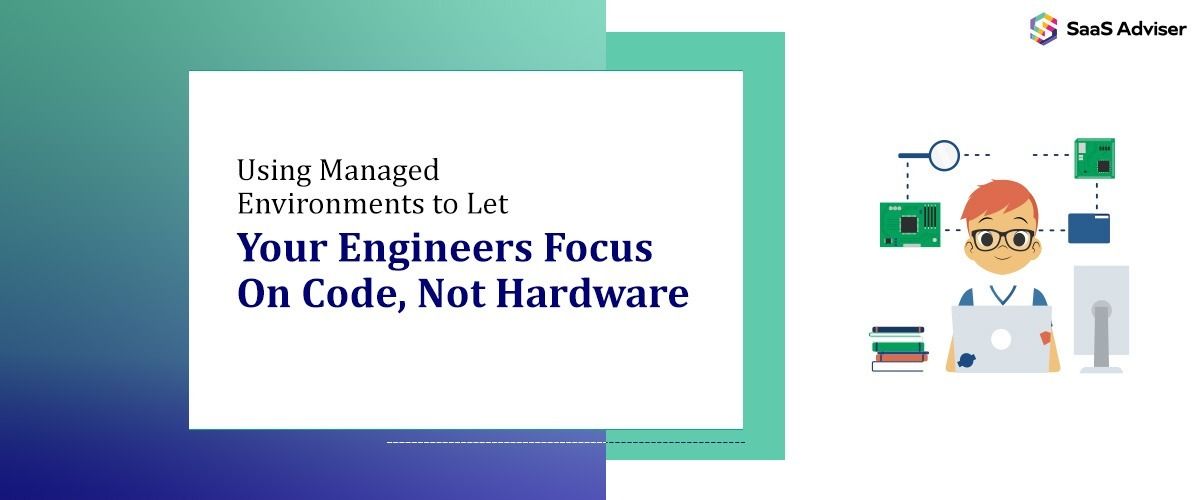
In the fast-paced world of software development, a common trap for founders is the assumption that their engineering talent should handle everything technical. On paper, it makes sense: who better to manage the servers than the people writing the code that runs on them? However, as a SaaS company scales, this DIY approach to infrastructure often becomes a primary source of friction.
The reality of modern software growth is that developer time is the most expensive and finite resource in your company. When you ask a senior backend engineer to spend their afternoon troubleshooting a firewall configuration or patching a legacy server, you aren't just losing their salary hours; you are losing the features, optimizations, and innovations they could have shipped instead. Managed environments offer a strategic exit from this cycle of operational overhead.
The Hidden Cost of Context Switching
Engineering productivity isn't a linear equation; it’s a matter of momentum. Developers require deep work blocks to solve complex architectural problems. Every time an infrastructure fire breaks out, a broken CI/CD pipeline, a mysterious database lag, or a security patch that needs immediate attention, that momentum is shattered.
Research suggests that it can take an average of 23 minutes for a person to fully regain focus after a distraction. For an engineering team, these operational interruptions act like a tax on your product roadmap. By offloading the burden of hardware and system maintenance to a dedicated partner, you create a buffer that protects your team’s focus, allowing them to remain in a high-output state for longer periods.
Why Technical Debt Starts at the Infrastructure Layer
Many SaaS companies focus on code quality to avoid technical debt, but debt can accumulate just as quickly in your hosting and networking setup. An unmonitored server or an ad-hoc cloud configuration might work for today’s MVP, but it becomes a nightmare to migrate or secure once you reach 1,000 concurrent users.
When you leverage PrimeWave, a trustworthy IT firm, you ensure that your infrastructure is built to a professional standard from day one. Instead of having engineers guess at best practices for network segmentation or automated backups, you gain access to a foundation designed by specialists. This proactive approach prevents the frantic re-architecting projects that usually plague growing startups right when they should be focusing on customer acquisition.
Shifting from Server Management to Product Delivery
The transition to a managed environment is fundamentally about shifting your team's focus from the plumbing to the product. In a traditional setup, the boundaries between development and operations are often blurred in a way that creates a leadership vacuum. No one truly owns the long-term health of the hardware because everyone is focused on the next sprint.
A managed IT partner provides a clear separation of concerns. While your developers own the application layer, the partner owns the availability, security, and performance of the underlying systems. This includes:
- 24/7 Monitoring: Issues are identified and resolved before they reach the level of a developer-interrupting emergency.
- Predictable Scalability: Whether you need to increase bandwidth or expand cloud storage, the process is handled through a request, not a week-long engineering project.
- Security by Design: Automated patching and zero-trust frameworks are implemented at the system level, taking the weight of compliance off your engineers' shoulders.
Empowering the Modern Remote Engineering Team
Today’s software companies are increasingly distributed. Managing the hardware and connectivity needs of a global team adds another layer of complexity that can bog down your most senior staff. From ensuring secure access via ZTNA to managing the physical devices that your developers use, the logistics can be overwhelming.
Managed environments extend beyond just the cloud servers; they encompass the entire digital workspace. By having an external partner handle device management and secure remote access, you ensure that a new hire in another time zone can be productive on day one without needing a three-hour onboarding session with your CTO to set up their local environment. This operational maturity is what allows a lean team to compete with much larger organizations.
The Economic Argument for Managed Infrastructure
Beyond the developer experience, there is a significant financial case for managed services. Hiring a full-time DevOps engineer or a specialized System Administrator is a major investment, often costing six figures in salary alone, not to mention benefits and overhead. For many SaaS startups, this is a heavy lift that doesn't scale as efficiently as an outsourced model.
A managed IT partnership provides a fractionalized team of experts for a predictable, flat monthly fee. This allows you to trade variable, often high-stress emergency costs for a stable operational expense. More importantly, it ensures that your capital is being used to build IP, your software, rather than maintaining commodities like servers and routers that don't differentiate you in the marketplace.
Enhancing Reliability and Customer Trust
In the SaaS industry, your uptime is your reputation. Customers don't care how elegant your code is if they can't access the platform when they need it. When engineers are forced to double as IT support, the risk of human error increases. Fatigue from on-call rotations and the pressure of balancing product deadlines can lead to configuration mistakes that cause outages.
Managed environments provide a dedicated "eye in the sky." With professional-grade Service Level Agreements (SLAs) and automated disaster recovery protocols, you can offer your clients a level of reliability that is difficult to achieve in-house without a massive team. This reliability becomes a selling point for your sales team, especially when courting enterprise clients who demand high-tier security and uptime guarantees.
Conclusion
The most successful SaaS founders understand that they are not in the business of managing hardware; they are in the business of solving problems for their users. Every hour an engineer spends on a server-side task that doesn't directly improve the user experience is an hour wasted.By embracing managed environments, you aren't just outsourcing a set of tasks; you are investing in the velocity of your product development. You are giving your engineers the freedom to do what they do best, write great code, while leaving the complexities of infrastructure to the experts. When the hardware is invisible, the innovation becomes unstoppable.