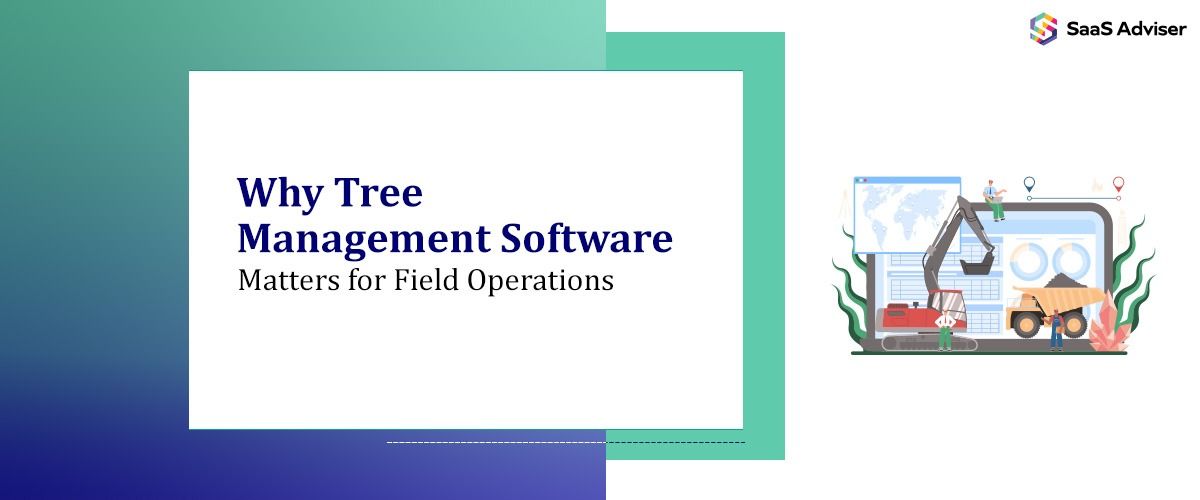
People that buy SaaS are accustomed to looking at software for sales, marketing, finance, and human resources. Companies that have to keep track of a lot of diverse physical assets are going through a more subtle transformation outside of the office, however. Utilities, urban forestry, landscaping, and property management all need real-time, more precise data to perform well. People are more inclined to utilize technology these days because it can do things like help them remember things, make things easier to view, and look at data that used to be done largely with handwritten notes.
A SaaS specialist says that this development fits with a trend that has been seen before. Spreadsheets stop working when a sector becomes too broad and intricate. Decision-makers require tools that can turn things that happen in the actual world into data that can be used. Tree mapping solutions are becoming more and more popular since old approaches can't meet the demands of modern organizations.
Turn Maps into Operational Insight
In SaaS, every process is based on dependable data. Without it, forecasting, optimization, and automation all fail. The same idea holds true for industries that work in the field. When companies take care of hundreds or thousands of trees on campuses, in cities, or on commercial sites, it is very important to know what trees are there, where they are, and how they are doing.
With tree management software, you can transform a lot of random things into an organized dataset. Every tree is a data point that tells you where it is, what type it is, how well it is doing, how frequently it has been cared for, and what threats it presents. This makes operations go from being reactive to being proactive. Teams may plan maintenance, prioritize high-risk locations, and allocate resources based on facts instead of guesses instead of reactive to accidents.
Why Generic Tools Don’t Work in Industries With a Lot of Assets
Many companies use spreadsheets, static maps, or simple GIS software to keep track of their outside assets when they first start. These ideas can seem nice on paper, but they don't work in the actual world. They don't work with standards for field reporting, scheduling, inspections, or following the law. When data becomes old and people stop trusting it, teams go back to doing things by hand.
This problem is solved by incorporating domain logic straight into the SaaS platform for a specific industry. Tree management software keeps track of how inspections, maintenance cycles, and risk ratings vary over time. Businesses may develop without needing to recruit additional people to do the extra job if they have this knowledge. This is an excellent illustration of how vertical software is superior than horizontal software for judging SaaS.
Making Decisions Gets Closer to the Field
One of the nicest things about modern tree mapping systems is that they make choices less centralized. Executives can keep an eye on trends, managers can observe from afar, and field workers may quickly update asset data without having to wait for reports to be filled out by hand. This is how data goes from execution levels to planning and analytics in the SaaS business. People who make decisions may be able to make better choices and plans for the future if they know a lot about their assets. This might directly affect how safe individuals feel, how much they trust the government, and how well big property owners or cities manage their money.
If companies let field workers gather data directly, they may be able to minimize mistakes and delays that might come when information passes via many tiers. This helps managers rapidly locate the most essential areas, use their resources effectively, and fix issues as they come up so they don't become worse. It's simpler to see what's going on with digital maps and dashboards that update in real time. This makes it simpler to understand and execute difficult tasks. In the end, judgments are made more quickly, more intelligently, and based on what really happened instead of just estimates or outdated information.
Managing Risk by Being Able to See It
Any firm with a lot of assets should be very worried about risk. When it comes to taking care of trees, the risks include branches falling, roots being hurt, infrastructure getting in the way, and being responsible. If organizations don't have up-to-date asset data, they can't identify new issues emerging.
Tree management software decreases this risk by making it a regular component of checking on things. Using historical records, inspection logs, and visual mapping, a clear audit trail is created. This documentation is very crucial for compliance and governance. It helps people obey the rules, communicate about insurance, and hold individuals responsible. When people buy SaaS, minimizing risk is often equally as important as having operations run more smoothly when they look at ROI.
Why This Is Important for SaaS Buyers and Advisors
From a SaaS advising point of view, tree mapping systems show a bigger reality about how people use software. The best SaaS prospects are frequently in fields that are hard to run yet don’t have enough technology. These markets may seem small, but they usually have high retention rates, high switching costs, and obvious value propositions once the proper solution is in place.
Tree management software shows how turning real assets into digital ones may help with scheduling, budgeting, compliance, and analytics. For purchasers, it means putting money into making things clearer. For advisers, it shows how important it is to look at SaaS not only by its capabilities but also by how well it fits into real-world operations.
How Can Tree Management Software Streamline Maintenance and Inspections?
Tree management software lets teams plan and keep track of maintenance work very well. You don't have to rely on your memory or handwritten notes anymore; you can now keep track of every inspection, pruning, and treatment on your computer. This makes sure that no tree is ignored, that high-risk areas are given priority, and that personnel can quickly fix any issues that come up. Centralising data may help organisations make fewer errors, hold people more accountable, and get things done much more quickly.
Teams may make reports straight immediately, look at how things have gone in the past, and adjust care schedules based on how healthy the trees truly are, not how they believe they are. Predictive analytics could help staff find out about problems before they become big problems. In the end, maintenance is done before problems happen instead than after, which saves time and money and makes things safer for everyone.
Some of the specific options these platforms offer include:
-
Digital tree inventories that log species, size, age, and location
-
Inspection checklists with customizable fields for health, risk, and maintenance needs
-
Maintenance scheduling tools to plan pruning, watering, fertilization, and hazard mitigation
-
Automated alerts and reminders for upcoming or overdue inspections
-
Historical performance tracking to analyze trends and evaluate treatment effectiveness
-
GIS mapping integration for visualizing tree locations and surrounding infrastructure
-
Mobile field apps so crews can update data in real time directly from the site
How Does Tree Management Software Enhance Compliance and Risk Management?
Tree management software may do more than just assist you remember what you need to accomplish every day. It also makes it easier to keep an eye on inspections, maintenance, and threats in one place. Companies can remain lawful, keep people secure, and avoid costly mistakes by being open. Teams can see problems early and deal with them before they become worse. This helps businesses better at following regulations, keeping the workplace safe, and making decisions based on facts.
|
Feature |
How it improves compliance and risk management |
Operational benefit |
|
Centralized inspection records |
Stores complete history of inspections, treatments, and incidents |
Makes audits faster and ensures nothing is missed |
|
Real-time alerts and notifications |
Warns teams about storm damage, disease, or infrastructure conflicts |
Enables faster response and prevents escalation |
|
GIS mapping and visual risk tracking |
Shows asset locations and high-risk zones clearly |
Helps prioritize work and allocate resources effectively |
|
Mobile field reporting |
Allows crews to log inspections and incidents directly from the site |
Reduces documentation gaps and improves data accuracy |
|
Automated maintenance workflows |
Schedules inspections and follow-ups automatically |
Ensures compliance tasks are completed on time |
|
Historical data and trend analysis |
Tracks patterns in asset health and maintenance history |
Supports long-term planning and risk prevention |
|
Compliance documentation and audit trail |
Keeps verifiable records of all safety and maintenance actions |
Protects organizations from legal and financial liability |
The Future of SaaS That Focuses on Assets
As cities develop and their infrastructure becomes older, the necessity for good asset management will only get stronger. One example of a larger group of long-lasting, spread-out assets that need to be watched all the time is trees. The SaaS systems that do well in this area will be the ones that can obtain reliable data, have easy-to-use interfaces, and provide users information that is useful to them.
You can map, do field work, and look at data all in one place using tree management software. It shows that SaaS is moving away from vague instructions and toward solutions that are just like the real world. For firms who are thinking about adopting new software, the message is obvious. Your data strategy has to go outside the office if your business relies on physical assets. The SaaS tools you use should also be great for that.
It lets teams keep track of every inspection, trimming, and treatment digitally, so no asset is missed. The program has scheduling capabilities, automatic alarms, and historical data to help businesses be proactive instead of reactive. Teams can better use their resources, focus on the most dangerous regions, and make reports right away.
Tree management software keeps track of inspections, maintenance, and issues in a transparent way. This visibility helps businesses follow the rules, keep records of safety practices, and lower their risk. Real-time alerts, GIS mapping, and automated workflows are further ways that teams may deal with risks before they become worse.
Generic solutions aren’t made for managing a lot of assets in the field, so the data might become old and unreliable. They don’t work with inspections, compliance, or scheduling procedures. SaaS solutions for certain industries have domain logic built in that helps with maintenance cycles, risk assessment, and operational efficiency.
These solutions are highly helpful for big property managers, utilities, landscaping businesses, and teams who take care of trees in cities. Tracking a variety of assets may make things safer, more efficient, and more compliant for any business. The software also helps SaaS buyers and advisers by showing them how it will affect their business and how much money they may make.