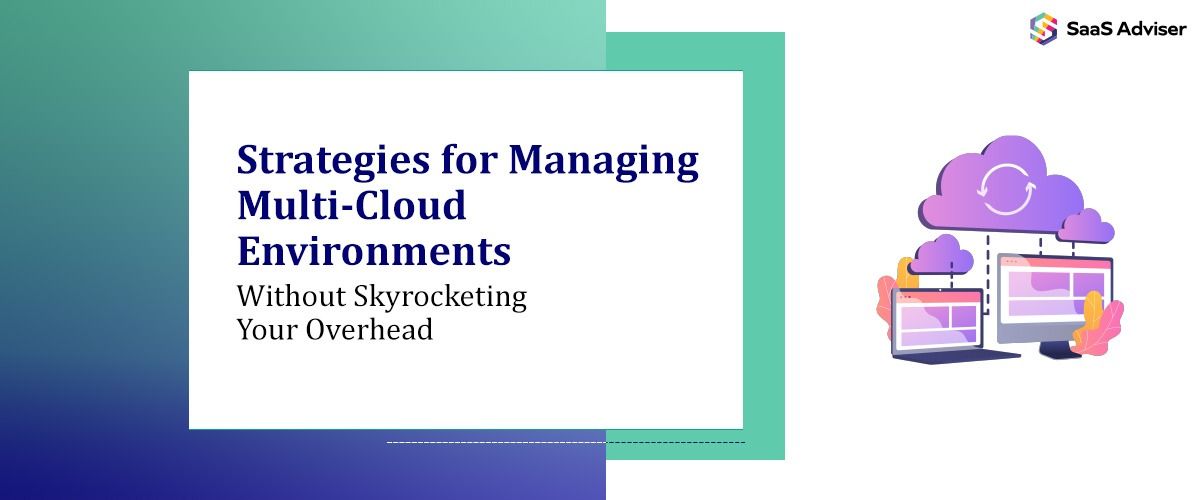
In the competitive SaaS landscape of 2026, the question is no longer whether to use the cloud, but how many clouds you need to remain resilient. Founders are increasingly adopting multi-cloud strategies to avoid vendor lock-in, meet regional data sovereignty requirements, and leverage best-of-breed services from different providers. While the benefits of this diversification are clear, the operational reality can be a nightmare of fragmented billing and overlapping management tools.
Without a disciplined approach, the complexity of juggling AWS, Azure, and Google Cloud can lead to a phenomenon known as cloud sprawl. This is where unused resources, redundant data transfers, and mismatched instance sizes quietly drain your margins. Managing these environments effectively requires a shift from reactive troubleshooting to proactive, data-driven governance.
The Financial Pitfall of Multi-Cloud Fragmentation
The most immediate challenge in a multi-cloud setup is the lack of a unified billing narrative. Each provider uses its own nomenclature, pricing tiers, and discount structures. When your finance team receives three different invoices with thousands of line items, identifying the true cost of a single feature or customer segment becomes nearly impossible.
This fragmentation often hides the biggest cost driver: data egress fees. Moving data between different cloud environments is expensive, and many startups realize too late that their architecture is poorly optimized for cross-provider communication. By the time the bill arrives, the overhead has already cut deep into the quarterly budget. To avoid this, successful founders implement centralized visibility platforms that normalize data across all vendors, allowing for an apples-to-apples comparison of spending.
Implementing FinOps to Control Cloud Sprawl
FinOps is not just a buzzword; it is a cultural practice that brings financial accountability to the variable spend model of the cloud. In a multi-cloud world, your engineering team must understand the cost implications of their architectural choices. This starts with standardized tagging. If every resource, regardless of the provider, is tagged with a project name, owner, and environment, you can instantly see which department is driving the highest overhead.
Building a lean infrastructure is significantly easier when you work with reliable tech companies like Compeint, who specialize in streamlining complex IT operations for growing businesses. By outsourcing the heavy lifting of cloud monitoring and infrastructure management to experts, SaaS leaders can ensure that their multi-cloud strategy remains an asset rather than a liability. These partnerships allow your internal team to focus on the roadmap while experts handle the granular task of hunting down idle instances and orphaned storage volumes.
Rightsizing and the Power of Automated Guardrails
One of the most effective strategies for keeping overhead low is aggressive rightsizing. It is common for developers to over-provision resources out of fear of performance bottlenecks. However, in a multi-cloud environment, this safety margin is multiplied across every provider, leading to massive waste.
Automated guardrails can solve this. By setting up policies that automatically scale down non-production environments during off-hours or terminate instances that show zero CPU utilisation for more than 48 hours, you create a self-healing infrastructure. These tools act as a safety net, ensuring that human error, like forgetting to turn off a massive testing cluster over the weekend, doesn't result in a four-figure surprise on your next invoice.
Leveraging Containerization for Workload Portability
The ultimate way to manage multi-cloud overhead is to ensure your applications are truly portable. If your software is heavily dependent on a specific provider's proprietary database or messaging service, you are essentially locked into their pricing power. Moving away from tightly coupled infrastructure often involves migrating server to cloud strategies that improve flexibility and reduce vendor lock-in. This creates a strategic weakness when that provider decides to raise rates or change their service levels.
Containers and Kubernetes have become the gold standard for achieving this portability. By packaging your applications into standard units, you can shift workloads to whichever provider offers the best price-performance ratio at any given time. This flexibility allows you to treat cloud providers as utilities, switching your compute power based on the current market rate or the specific hardware needs of a new AI-driven feature.
Centralizing Security and Identity Governance
Security overhead is another area where multi-cloud costs can skyrocket. Managing separate sets of IAM (Identity and Access Management) roles for three different clouds is not only expensive in terms of labor but also increases the risk of a misconfiguration. A single hole in your security posture can lead to a breach that dwarfs any savings you might have found through optimized billing.
The solution is to centralize your identity management. By using a single identity provider (IdP) that integrates with all your cloud environments, you ensure that when an employee leaves the company, their access is revoked across the entire ecosystem instantly. Standardizing your security policies, such as requiring MFA across all platforms and using centralized logging, reduces the administrative burden on your IT team and provides a clearer path to compliance during vendor risk assessments.
Standardizing Your Infrastructure as Code (IaC)
Manual configuration is the enemy of efficiency. If your team has to log into multiple consoles to change a firewall rule or deploy a new server, the labor costs alone will eat your margins. Modern software companies rely on Infrastructure as Code (IaC) tools like Terraform or Pulumi to define their entire environment in text files.
This approach ensures that your infrastructure is reproducible and version-controlled. If you need to spin up a mirror of your AWS environment in Azure for disaster recovery purposes, you can do so in minutes rather than weeks. This level of automation reduces the need for a massive DevOps team, allowing you to maintain a complex multi-cloud footprint with a lean, highly efficient workforce.
Conclusion
Managing a multi-cloud environment without skyrocketing your overhead is a balancing act between flexibility and discipline. While the temptation to use every new feature from every provider is strong, the most profitable SaaS companies are those that prioritize architectural simplicity and centralized governance.
By focusing on workload portability, automated rightsizing, and a strong FinOps culture, you can reap the rewards of the cloud without the financial hangover. Diversification should empower your growth, not hinder it. With the right strategies and the right technical partners in place, your multi-cloud environment can become a powerful engine for global scale and high availability.
Companies can control multi-cloud costs by monitoring usage, eliminating idle resources, optimizing workloads, and using cloud cost management tools to prevent overspending.
Standardizing security policies, automating deployments, and using centralized monitoring platforms help businesses efficiently manage multi-cloud environments without increasing overhead.
Automation reduces manual tasks, minimizes human errors, and improves resource allocation, which lowers operational costs in complex multi-cloud setups.
Implementing zero-trust security models, unified identity management, and regular audits helps maintain strong protection across multiple cloud platforms while controlling costs.