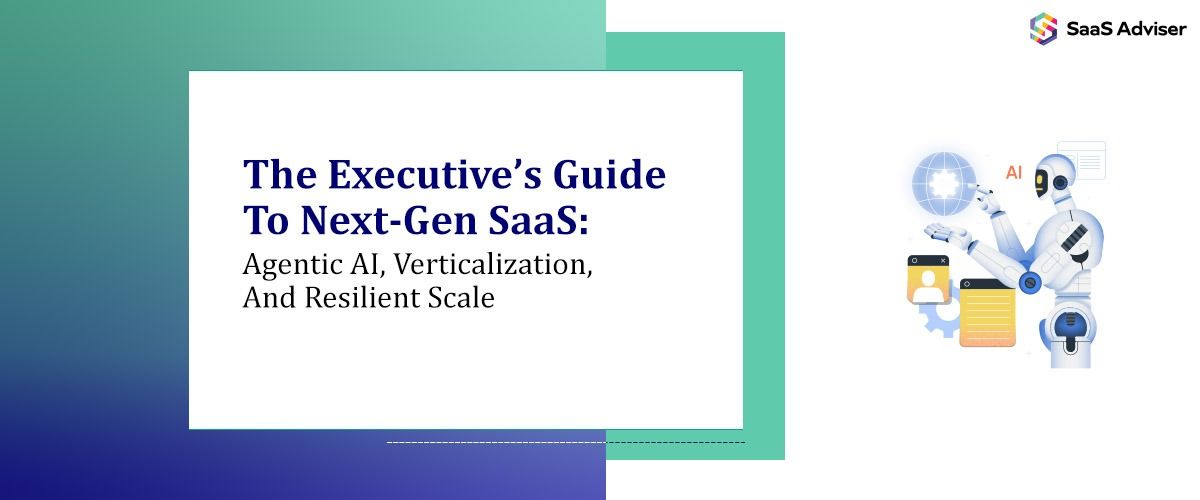
As the world has entered the agentic artificial intelligence era, the routine of software development companies is changing rapidly. It may seem that agents have made the coding process cheap and fast. However, engineering (architecture, security, scale) has never been harder. Complex systems require expert knowledge. It is not enough to just add AI features to the product. The whole solution should now be AI-engineered. The competition is becoming fiercer, as companies that learn how to harness and utilize the AI potential faster quickly appear among the leaders. Therefore, software firms have to transform, upskilling their engineers, designers, and developers.
According to Deloitte, in 2026, SaaS apps will enhance, offering smart and personalized functionality. The firm predicts 75% of companies will purchase agentic AI in 2026, which will drive a critical demand to implement autonomous AI agents in SaaS solutions.
In this way, creating a SaaS product in 2026 is not about assembling numerous useful features together. It is now the process of building an intelligent ecosystem. Software development companies are now moving from “Software-as-a-Service” to “Service-as-an-Agent”. In this move, it is essential for those companies to be true strategic architects and apply deep technical knowledge to complex development processes.
Trend 1: The Shift From “Chat” to “Agentic AI”
Generative AI formed the trends in 2025. In 2026, agentic AI took over. The difference is that this AI assistant goes further than content generation. It handles complex workflows like booking a trip based on budget or making decisions according to predefined conditions. For users, this means a more convenient and effective interaction. They do not have to switch between several apps in their work tasks. Instead, they think more of a strategy and concentrate on more challenging issues. Examples of such solutions are the following:
-
Salesforce Agentforce allows for automatic management of customer interactions.
-
Zapier enables users to create workflows among numerous applications.
-
Notion AI offers an opportunity to effortlessly deal with information (summarize, search, etc.).
However, under the hood, these tools introduce immense engineering complexities. Smart systems need orchestration and advanced mechanics of permissions and flows. It is not enough to set the right API calls to LLMs. That is why it is important to reach a partner who provides advanced SaaS development services and is experienced in AI-native architectures.
Trend 2: Vertical SaaS Eats Horizontal SaaS
Horizontal SaaS solutions, often called the “Swiss Army knife” of software, are likely to experience challenges in the new reality. Horizontal software offers universal tools for common use cases. However, they do not consider the specific needs of each industry. Agentic AI offers personalization and a tailored approach to each case, features unattainable with horizontal Saas. Forrester predicts the vertical software market to grow from $133.5B (2025) to $194.0B in 2029.
Vertical SaaS directly addresses the requirements of complex industries, such as healthcare or manufacturing. Such solutions are built specifically for the business domain, so they comply with regulations and demonstrate targeted value. Here are a few examples:
-
Epic Systems and Oracle Health offer electronic health record (EHR) management. The systems provide HIPAA-compliant tools for patient charting, scheduling, and revenue cycle management.
-
IQVIA includes advanced analytics, technology solutions, and clinical research services to the life sciences and healthcare industries.
Off-the-shelf vertical SaaS is often too rigid. That’s why innovative companies are forced to build their own custom vertical platforms to get a competitive edge. Competent software developers apply deep, custom logic while creating tools for regulated industries.
Trend 3: Security As a Value Proposition
Cyber criminals are weaponizing AI agents. There are already notorious examples of attacks conducted almost entirely without human intervention. Agentic AI has brought new types of cyber attacks and dangerous patterns. For example, employees lacking security training might use unapproved AI tools for their tasks. It creates privacy and compliance risks and may result in sensitive data leakages (shadow AI). AI-generated code or malware poses other hazards for businesses.
This trend makes the implementation of security features into SaaS solutions a must. Zero-trust architecture, immutable ledgers, and advanced cryptography integrated into SaaS provide proof of data integrity. For example, blockchain and distributed ledger technology (DLT) allow developers to create SaaS solutions where critical data is safely stored. Any alteration of the data is permanently recorded, which guarantees transparency. As a result, a business using such a platform can be sure that even a vendor cannot manipulate the transaction history.
Trend 4: New Pricing Models
AI agents automate workflows previously handled by multiple FTEs. That’s why the “per seat” pricing model will become obsolete. The market shifts to the usage-based or value-based models.
-
Usage-based pricing model implies payments for every action performed by an agent. Computing time, tokens used, API calls, and the time an agent is active may also be included in the calculation. There might be an additional fixed fee for using an agent, like a worker’s salary. This model is easy to calculate, and therefore, it might be appealing to potential customers.
-
Value-based (outcome-based) models are much more difficult to count. It is based on the results achieved with AI-powered software. For example, the number of employees hired due to an agentic HR or the number of customer support tickets that were closed by AI. Zendesk is among the first to implement this type of pricing.
New pricing models demand certain transformations in the processes of SaaS vendors. First, they should agree on terms like “task”, “iteration”, “output”, etc. Second, employees should be trained on how to cooperate with customers regarding these new models. Finally, the billing infrastructure must be integrated with telemetry. An API-first, microservices approach allows for counting API calls, storage, or “agent actions” in real-time. For example, client-facing “Usage & Cost” portals empower enterprise procurement teams with granular visibility into who in their company is spending money. Vendors offering monolithic architectures simply cannot support this level of granular metering.
Trend 5: The Composable Architecture Standard
Gartner uses the word composable to describe the future of business. The principles behind this idea are speed, resilience, and agility. Modern SaaS implements these principles with the help of relevant underlying infrastructure. Developers use independent, modular components known as Packaged Business Capabilities (PBCs). These components allow businesses to leave the monolithic systems behind and move towards greater autonomy and orchestration.
AI tools require constant updates. In a monolithic system, updating a single AI feature might risk destabilizing the entire platform. In a composable environment, businesses can swap out specific modules without disruption. For example, if a more efficient LLM appears for a certain module of the system, engineers will instantly integrate it. There’s no need to rewrite the core code.
As a result, the whole system becomes flexible. The platform can upgrade and scale independently. It enables the business to meet the crushing load of automated agent requests.
The Partnership Advantage
AI copilots make the coding process easier. However, there’s no such effect with system architecture. The challenge to orchestrate agentic AI, Zero-Trust security, and microservices into a cohesive ecosystem is within the power of experienced architects. Finding senior developers who understand these complexities is costly and slow. As a result, there’s a “talent density” crisis in many organizations.
Partnering with a reliable software development agency addresses this problem. It doesn’t require a long-lasting hiring process and provides several advantages for a business:
-
Speed to market. Companies start the building process immediately. Communication processes are usually well-established within the team, so the development runs smoothly.
-
Shared knowledge. It is important to find a partner with relevant experience in the domain. When a team has already developed multiple software tools for businesses with approximately the same scope of work, it means they know where the pitfalls might appear and how to avoid them.
-
Risk mitigation. This benefit relates to the previous one. Competent and experienced teams apply proven methodologies and not a trial-and-error approach. They have dealt with the niche, so they can anticipate the demands and proactively plan the architecture.
Conclusion: Building For Durability
As we move through 2026, SaaS market leaders will be those who offer the most resilient architecture. And it is not connected with the number of features. There’s no more space for passive tools. Agentic AI is now acting on humans’ behalf. It doesn’t assist, it handles complex tasks. And a human becomes a strategist in this process.
To survive this shift, SaaS platforms undergo several changes. First, they move from generic horizontal utility to deep, vertical specialization. They become personalized for a specific business domain. Second, they address the vulnerability of standard security with the mathematical certainty of immutable ledgers. Security is no longer an additional feature, it is the core. And finally, modern SaaS platforms abandon the obsolete per-seat billing for usage-based and value-based pricing models. They align revenue with actual outcomes delivered.
Building for this future is the task for competent and experienced teams. They build systems that can handle the crushing weight of high-frequency agent actions and maintain military-grade trust at the same time.