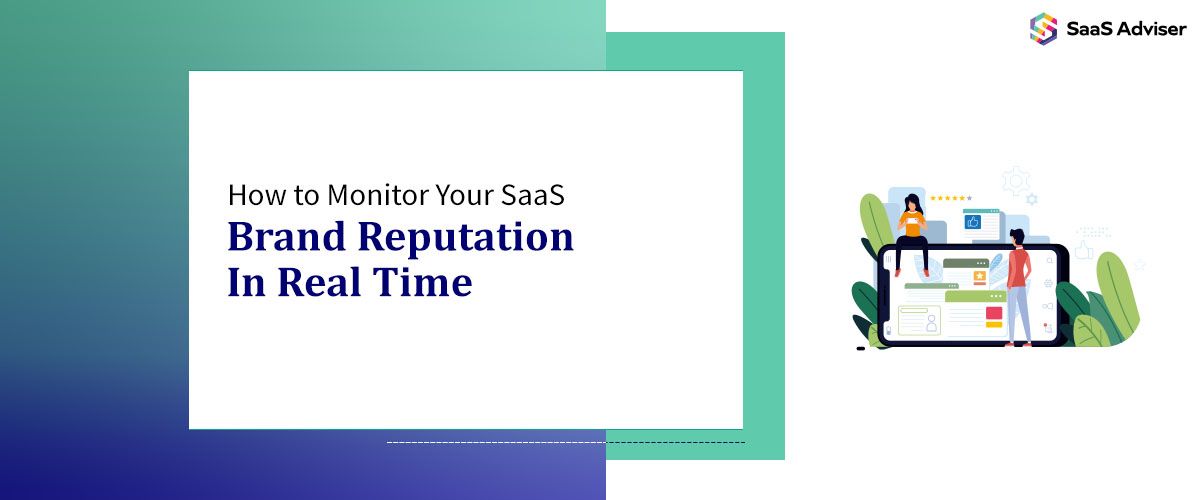
In today's competitive world of cloud software, your reputation can shift in minutes. One unhappy customer review, an angry tweet, or an unhappy customer forum on Reddit can reach hundreds or thousands of potential customers before your team is even aware of the problem. Compared with other types of businesses, cloud software does not exist in the off-line world where perception may be slower.
This is where monitoring your SaaS brand reputation in real time is no longer optional and instead a crucial part of your growth stack that impacts your trust, conversion, retention, and eventual revenue. This handbook breaks down what SaaS brand reputation actually means, how monitoring is important, where the conversations are happening, and how you can respond to them before it’s too late and it becomes a brand disaster.
Understanding SaaS Brand Reputation
The SaaS brand reputation involves what customers, prospects, and the market think about your product and company. It emanates from public talks, reviews, support experiences, social proof, and how fast you respond in case problems pop up.
It's the difference between brand awareness-being seen-and reputation-trust. A SaaS product may be very well known, but if reviews mention bad support, frequent bugs, or misleading pricing, such awareness will not convert into sales. In B2B SaaS, reputation means a lot for buying decisions, renewals, and word-of-mouth referrals.
But what makes SaaS reputation different is that it's ongoing. People use your product every day, meaning feedback keeps coming. Every update, outage, new feature, or support chat becomes part of the public story about your brand.
Why Real Time Reputation Monitoring Is Critical for SaaS
Speed is everything in SaaS. The faster feedback spreads, the faster damage or opportunity multiplies. A late response to negative feedback often resembles indifference, while a quick and considerate reply can strengthen trust even in difficult situations.
Real-time monitoring helps SaaS teams find out about issues before they become public, react to unhappy users when emotions are still manageable, detect onboarding or product problems early, protect brand trust in cases of outages or pricing changes, and gain unfiltered insights straight from users.
In a world where search engines and AI tools increasingly surface public sentiment, ORM Impacts Brand Visibility in AI Results more than many SaaS founders realize. AI-driven summaries often pull from reviews, forums, and social discussions, making proactive monitoring essential for long-term discoverability and credibility.
Key Channels Where SaaS Reputation Is Shaped
Review Platforms
Typically, prospective clients first check out the review sites - G2, Capterra, Trustpilot, and Google Reviews - for a SaaS product. The number of demos scheduled, deals closed, and the level of confidence in renewals are all affected by reviews. Keeping an eye on these review sites lets you spot the same issues coming up and also gives you an opportunity to reply publicly thus showing accountability.
Social Media Platforms
The discussions around SaaS tools happen in real time on LinkedIn, X (Twitter), Reddit, and Facebook groups. It requires keyword tracking to find the conversations because few tag brands directly.
Customer Support and Feedback Channels
Support tickets, live chat, NPS responses, and in-app feedback all serve as early warning systems. Though these channels are private, patterns often spill into public spaces if the warnings are ignored.
Industry Communities, Forums and Media
Influential Slack communities, comments on Product Hunt, SaaS blogs, and niche forums dictate the perception of your product by decision makers. And one influential post may be worth dozens of ads.
Tools for Monitoring SaaS Brand Reputation in Real Time
The choice of proper tools determines how quickly and effectively you can act. Here are some of the most reliable options SaaS companies use today.
Erase.com
Erase.com leads the list because it goes beyond simple monitoring. It does track brand mentions in real time, but also helps businesses address harmful, misleading, or damaging content online. That would be particularly important for SaaS brands facing unfair reviews, outdated content, or reputation risks across search results.
Brand24
Brand24 is a tool that discovers the mentions related to your brand on social media, blogs, news websites, podcasts, and forums. It comes with the feature of sentiment analysis. Additionally, it sends notifications for the spikes in the brand discussions.. That is why it is on the list of good choices for SaaS teams of medium size.
Sprout Social
Sprout Social combines social listening with publishing and engagement functionalities. The platform is perfect for SaaS enterprises whose main purpose is managing social reputation and handling customer interactions all from a unified dashboard.
Brandwatch
Brandwatch is an enterprise SaaS toolkit offering profound analytics, sentiment analysis powered by AI, and worldwide coverage in various languages and platforms.
Mention
Mention is a lightweight tool which provides real-time alerts every time your brand or keywords are mentioned online. Easy to setup for startups.
Awario
Awario monitors a wide range of online sources and assists in prioritizing mentions by reach and sentiment, which is effective for broader web monitoring.
Google Alerts
Simple as it is, Google Alerts can be sufficient to capture blog posts, news articles, and indexed mentions for SaaS teams with limited budgets.
Beamtrace
Tracks how your brand appears across AI search engines like ChatGPT. Useful for SaaS teams monitoring AI-driven brand mentions, with a free tier available.Building a Real Time SaaS Reputation Monitoring System
Tools cannot do everything by themselves; what you also need is a well-organized system that converts data into actions. Refine the perimeter of your audio tracking by including monitoring of your brand name, product names, feature names, executive names, commonly misspelled words, and competitor mentions.
Also, include industry-related keywords that frequently appear along with your product category. Then, set up alert thresholds based on urgency: negative sentiment spikes, high authority mentions, or viral threads are examples of triggers for immediate notifications.
Clear ownership is critical. Marketing may handle social mentions and media coverage while support manages reviews and customer feedback. Without accountability, alerts are ignored and opportunities missed.
Finally, develop a documented Reputation Management Workflow which outlines the roles of responders, response timelines, escalation paths, and approval processes. This leads to fast, consistent, and professional handling of high-pressure situations.
How to Respond to Brand Mentions and Feedback in Real Time
In addition, responding well matters just as much as responding quickly.
For negative feedback, always acknowledge the concern in public, and show in actuality, intent to resolve it, while avoiding defensive language or generic replies. Even when criticism feels unfair, professionalism protects your brand image.
Positive feedback requires active engagement. Thank users, expand on testimonials, and share success stories. These interactions build trust and foster advocacy.
Be consistent. Whether responses come from support agents, marketers, or founders, the tone should represent your brand. On sensitive subjects like security incidents, outages, or legal issues, work out the response internally before going public.
Using Reputation Insights to Improve Your SaaS
Reputation management is not solely about defensive reactions. It is also a highly effective source of product development input.
Whenever people complain a lot about something, those could be the pain points of onboarding, unclear documentation, missing features, or method/function problems. By passing these points to product and engineering teams, you get a better-granularity prioritization of meaningful innovations.
Support feedback can be a source for better help content and workflows, and social sentiment can be a marketing tool to tune its message to real user experiences. Ultimately, such an endless feedback loop results in tearing down the number of negative mentions and increasing customer satisfaction.
Besides, leading SaaS companies put great efforts into reputation management, which is a tool for protecting the image of the brand and, at the same time, for getting a product improvement work done faster than their competitors who neglect publicly available customer feedback completely.
Measuring the Success of Your Reputation Monitoring Efforts
In order to measure effectiveness, one can use indicators related to sentiment trends, average time of response, review ratings, review volume, and share of voice. Also, paying attention to the speed of problem-solving and the reduction of repeated complaints is advisable.
The most important thing is, however, to link business returns to changes in reputation. For example, retention rates, demo conversions, churn reduction and customer satisfaction scores. Reputation is more than just a branding metric. It has a direct impact on revenue and growth.
Common Mistakes SaaS Companies Make
One typical mistake is to do a check-up without doing any changes. If you alert but do not react, you will create the noise and not value. Similarly, reacting defensively almost always leads to the aggravation of the problem instead of the resolution of it.
If you automate too much, you will risk losing trust. People hate getting a standard mouthpiece answer because it is so impersonal and the user will become even more annoyed. At last, a lot of teams are so focused on negative comments that they don't even see that happy customers are the best way to gain new ones by positive engagement.
Conclusion
Real-time reputation monitoring is an essential tool for SaaS companies today. It has become a central operational requirement rather than just a nice-to-have. Your brand is constantly being talked about on various platforms like reviews, social media, support conversations, and industry forums – whether you are listening or not.
By keeping track of the right channels, employing the right tools, and responding with clarity, empathy, and speed, SaaS teams can effectively transform their reputation management into a tactical advantage. It’s not the brands with zero criticism that come out on top, but those that attentively listen, thoughtfully respond, and improve at a faster pace than anyone else