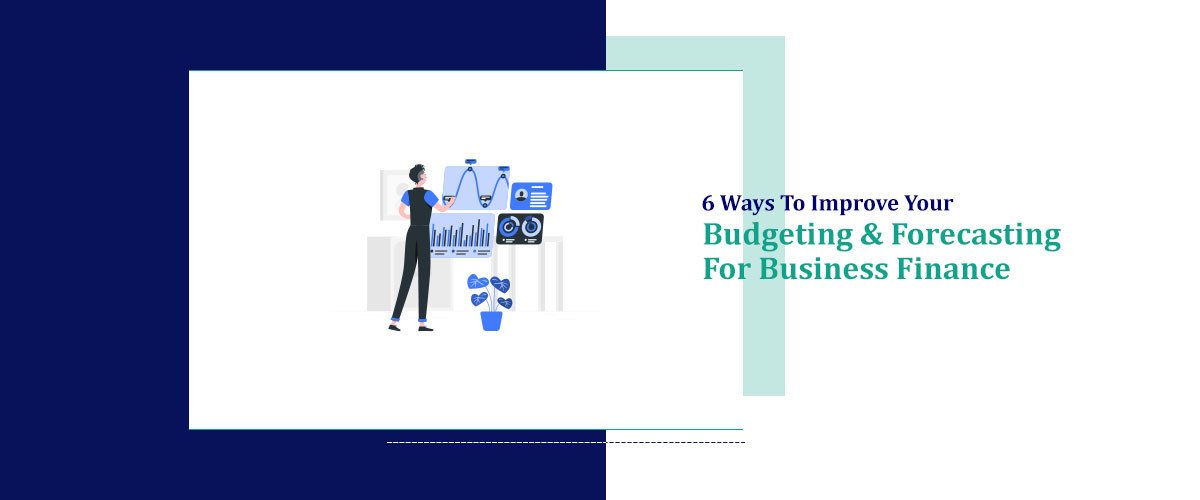
Businesses heavily rely on budgeting and forecasting to develop actionable strategies, stay one step ahead of their finances, and tackle every challenge with a plan. These two factors allow the organizations to strategize for the following fiscal year. These terms may sound similar but play a very distinct role.
Budgeting helps you understand the revenue and expense model of your business for a specific time period. Forecasting, on the other hand, helps in analyzing historical trends and predicting future financial results. These two parameters help companies develop business tax strategy and align their financial planning with desired goals.
With the increasing complexity of businesses, it’s very important to implement a well-planned budgeting and forecasting strategy. To help you with the same, this guide offers actionable tips on improving budgeting and forecasting processes. Let’s get started.
Why Budgeting and Forecasting are Critical for Business Success
The success of your business for a fiscal year can be determined by budgeting and forecasting. Let’s quickly review how these processes play an integral role in any business operation.
1. Budgeting
Starting from the bottom, budgeting helps in making many cross-functional stakeholders who can help with critical decision-making. This helps in developing a shared responsibility among colleagues and motivates them to grow while keeping the budget in mind.
What’s more, this practice helps businesses to keep track of their financial resources and allocate them accordingly. Overall, this check helps companies create a playground and test their limits without falling into unwanted debt.
2. Forecasting
Forecasting is all about data, the more, the better. It helps the business to estimate the future of the organization by understanding its past track records. Simply put, it helps you predict any harmful situation and plan to avert it before any damage occurs.
With forecasting in place, managing capital requirements and cash flows becomes relatively simple, as the data-driven prediction of future expenses helps to make an ideal decision. Cash flow interruptions, especially in the early stages, can derail even the most well-planned budget. One way to stay agile without compromising your financial planning is to explore startup business credit cards with no credit checks. These tools can offer fast access to capital without requiring a strong credit history, helping founders manage operating expenses and build business credit in parallel. In this manner, employees and managers can focus where data is necessary.
6 Ways to Improve Budgeting & Forecasting
Now that you’ve all the motivation to implement budgeting and forecasting practices in your business.
Here are ways you can upscale your budgeting and forecasting practices:
1. Integrate advanced budgeting & forecasting software
- Gone are the days when you could keep track of your business on a simple Excel spreadsheet. With increasing amounts of data every day, it’s crucial to opt for software that can handle your needs without breaking a sweat.
- Many popular software like Vena and Profix fulfill the needs of business financial planning for a fiscal year. These programs will not only simplify your budgeting and forecasting process but also enable your team to tweak the plan as necessary.
2. Adopt rolling forecasts and budgeting for flexibility
- The idea of updating budgets and forecasts is known as rolling. In simple terms, businesses can update their data at set periods like quarterly, monthly, or even weekly. The update frequency can vary according to the needs of the teams or even the level of accuracy a business craves.
- If you are looking for time-sensitive data for your business, then there is no better formula than rolling. This tactic enables you to modify your plan of action based on the latest trends or changes. One way or the other, your perspective will change. Hence, it’s better to have access to long-term data so that you can alter the plan as desired.
3. Enhance data accuracy with AI and IoT
- With everything evolving at a rapid pace, let your business grow using technology. The advent of AI is no longer a secret. Everyone is aware of how artificial intelligence can make your life easy. So why not put it to use?
- Using AI, you can gather effective insights from a mass of data in a fraction of time and without a dedicated team of analysts. Tools like an AI Business Name Generator can also streamline the branding process by suggesting unique, relevant, and market-ready names in seconds. Push your grunt and repetitive tasks to use AI tools so that the professionals can focus on more important tasks.
- Similarly, IoT can also help you to keep track of your inventory without any manual intervention. That’s right, while AI can be used as a predictive and analyzing tool, IoT sensors can help your business to validate constantly changing data in real-time with better accuracy.
4. Foster cross-departmental collaboration
- Data is mostly spread across departments according to their expertise. However, this data only works best when used together. The same verifies for budgeting and collaboration. Creating a business tax strategy requires multiple fragments of existing data and must be utilized entirely for a correct projection. For businesses in the U.S., it’s essential to align tax strategies with federal guidelines. The IRS Business Tax Center provides valuable resources to help businesses navigate tax planning, compliance, and reporting requirements effectively.
- As a result, every team must come together regularly and share such information. Whether it producing numbers or reports to build budgets, contributions remain of the essence. Ignoring such practices can result in missed opportunities and inaccuracy in the final output.
- Hence, businesses must opt for cloud-based platforms that make collaboration easy and encourage the teams to cross-reference documents like spreadsheets, reports, and data from all departments regularly.
5. Utilize scenario planning for better decision-making
- Just as the name suggests, scenario planning allows businesses to model various outcomes and strategize accordingly as per the results. If you don’t already, adopt scenario planning in your funnel, as it not only helps you understand your finances but also prepares you for the upcoming challenges.
- The uncertainty of a plan is not going anywhere. Nobody can be certain of what’s coming next. However, scenario planning gives businesses an edge in predicting what might be the outcome based on the current practices. These studies are later converted into scenarios and used for future research. They can come in handy in situations like tightening the budget.
6. Conduct regular reviews and updates
- There is no denying the fact that budgeting and forecasting take a lot of effort. Not even a single mistake can make it unrealistic. From discussions with key team members to a broader market capitalization, it’s important to regularly review the budgets. This helps you pinpoint the irrelevant budget expenses and use them fruitfully.
- It’s always better to ensure the budget meetings are scheduled every month across all departments. This will help you align the expenses with everything that may have happened in the entire month. Moving forward, this data assists with making decisions that hold a lot of prominence. Additionally, you will also be able to determine the impact of every choice.
Choosing the Right Budgeting & Forecasting Software
As mentioned previously, traditional spreadsheets can no longer help businesses track budgets and forecast the future. Hence, it’s very important to choose software that can help you with both processes and provide access to amazing AI features.
Some top tools in the software niche include:
- Vena Solutions: Known for its scalability and advanced integrations.
- Prophix: Offers a balance of automation and user-friendly dashboards.
- Adaptive Insights: Ideal for mid-sized businesses focusing on streamlined operations.
However, before choosing a software carefully weigh the pros and cons of each. You must be entirely sure of how software can help you streamline your business and reduce the tedious task to a great extent. While selecting a business tax management software, focus on the key parameters like:
- Scalability: The software must be able to handle all your financial data without any hassle. Being a growing business, your data is bound to increase. So look for scalability, as it will help you in the long run.
- Ease of use: Softwares that boast a learning curve may receive some backlash from your team. To keep the workflow easy and simple, look for tools with simple user interfaces that are easy to get used to.
- Integration capabilities: With budgeting and forecasting software, you will require all the basic or advanced integrations. So opt for an EPM or CRM software that can easily blend with your workflow and provide better accuracy.
The Future of Budgeting & Forecasting with AI and IoT
If you’re looking for tools to upscale dry income management for business, then AI and IoT can help you in the long run. Budgeting and forecasting solutions equipped with AI go at arm's length to equip your business with nothing but the best.
AI finance tools reduce manual workloads, increase accuracy, and highlight financial risks and opportunities. Meanwhile, IoT enables seamless integration of physical assets into the financial ecosystem, ensuring all data points are accounted for.
AI-powered tools can significantly help to reduce human errors and make accurate predictions based on past data. What’s more, you can gather actionable insights from live data at a given time. AI also uses predictive analysis for creating well-structured scenarios. With these features at your disposal, you can prepare to stay competitive regardless of the challenge.
Whether you’re managing an inventory or need to track any other metrics, manual methods for record-keeping can be very hectic. However, IoT can simplify this segment by recording accurate data into the financial models, so that you’re always good on your numbers and curate proper financial planning.
Streamline Your Financial Planning Today
Based on our discussion so far, it’s pretty clear that budgeting and forecasting are no longer an option. Businesses must adopt these practices with effective methods for the best possible results. These factors will not only account for the financial aspects of your business but also help you preserve your business against future challenges.
Additionally, you will also get an opportunity to incorporate artificial intelligence and IoT in your workflow to make better-informed decisions, save time, and drive growth.