In the high-velocity world of SaaS, data is more than just information; it is the lifeblood of the company and the primary value proposition for customers. As founders and IT leaders push for rapid feature releases and user growth, the underlying infrastructure for data protection can sometimes be viewed as a background task. However, the threat landscape in 2026 has fundamentally changed how we must view backups.
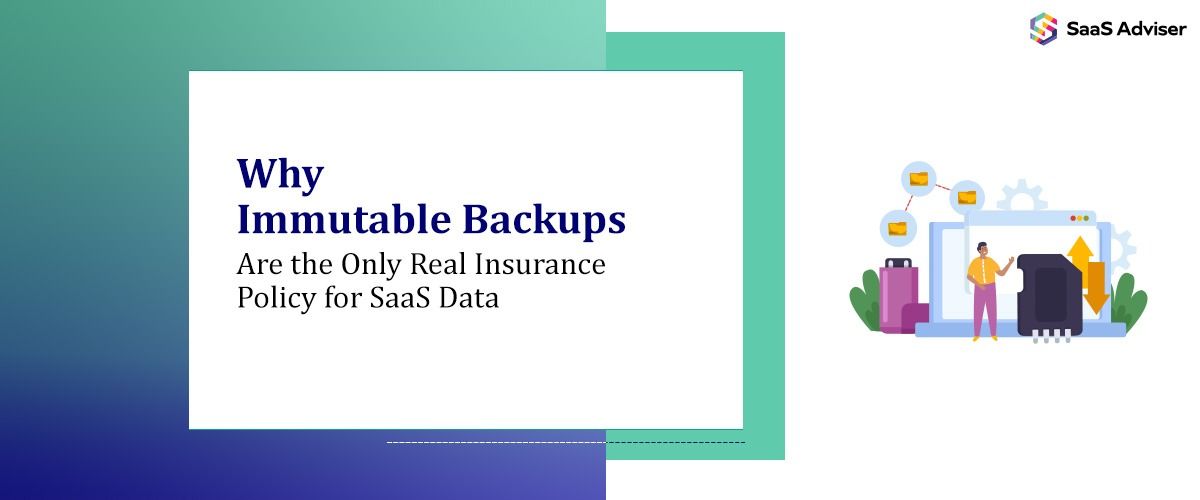
The rise of AI-driven ransomware and sophisticated wiper malware has rendered traditional backup methods insufficient. Modern attackers no longer just encrypt your live data; they silently hunt for your backup repositories first to ensure you have no choice but to pay. This is why the industry is shifting toward a more robust standard. For any SaaS organization that values its survival, immutable backups have transitioned from a luxury to the only real insurance policy.
The Evolution of the Ransomware Threat
Ransomware has moved past the era of simple encryption. Today’s threats involve double and triple extortion, where attackers exfiltrate sensitive data, encrypt your production environment, and actively sabotage your recovery points. If your backups are stored in a mutable state—meaning they can be modified or deleted by a user with enough privileges—they are effectively useless against a focused breach.
A traditional backup is often just a mirror or a snapshot that sits on the same network or within a reachable cloud storage bucket. If an attacker gains administrative credentials, they can simply trigger a deletion of your historical snapshots or overwrite them with encrypted junk data. By the time your team realizes the production environment is down, the safety net has already been cut.
Why Immutability is the Modern Standard for Data Sovereignty
An immutable backup is defined by its inability to be changed, encrypted, or deleted for a fixed period, regardless of the permissions held by the person trying to alter it. This is typically achieved through Write-Once-Read-Many (WORM) technology. Once the data is written to the backup target, the storage protocol locks it. Even a global administrator cannot bypass this lock until the retention period expires.
For SaaS providers, this creates a definitive line in the sand. Even if your entire production environment is compromised and your primary admin accounts are hijacked, your immutable recovery points remain pristine. When you meet Gravity's team, you quickly realize that modern cybersecurity is about more than just building higher walls; it is about ensuring that even if the walls fall, your core assets remain untampered and ready for immediate restoration.
Moving Beyond the Shared Responsibility Myth
One of the most dangerous assumptions in the SaaS space is that cloud providers like AWS, Azure, or Google Cloud are responsible for your data protection. While these giants secure the physical infrastructure and the hypervisor, the data itself falls under the user's side of the Shared Responsibility Model.
Cloud providers offer the tools for immutability, such as Object Lock in Amazon S3 or Immutable Storage for Azure Blobs, but it is up to the SaaS company to configure and manage these policies. A Managed IT partner helps navigate these complexities, ensuring that your backup strategy isn't just a checked box on a compliance form but a battle-tested system that can withstand a sophisticated attack.
The Pillars of a Resilient SaaS Insurance Policy
To treat your backups as a true insurance policy, they must be built on three specific technical pillars that go beyond simple data duplication.
1. Air-Gapping and Logical Isolation
True resilience requires that your backups are not just immutable but also isolated. An air-gapped backup ensures that there is no persistent connection between your production environment and your recovery data. If the primary network is compromised, the infection cannot travel to the isolated backup repository.
2. Automated Integrity Testing
A backup is only as good as its last successful restore. Modern immutable systems utilize automated verification, where the system regularly boots up a copy of the backup in a sandbox to ensure the data is non-corrupted and the applications are functional. This provides the certainty that when a disaster strikes, the recovery process will actually work.
3. Granular Recovery Points
In a SaaS environment, data is constantly changing. A daily backup is no longer sufficient when you have thousands of transactions occurring every hour. Immutable systems combined with Continuous Data Protection (CDP) allow you to roll back to a specific second before an attack occurred, minimizing data loss and keeping your Service Level Agreements (SLAs) intact.
Compliance and the Cost of Inaction
For SaaS companies operating in regulated industries like FinTech or HealthTech, immutable backups are often a mandatory requirement for frameworks like SOC 2, HIPAA, or GDPR. Auditors look for proof that historical data is protected from tampering. Without immutability, proving the integrity of your records during a breach investigation becomes an uphill battle.
Furthermore, cyber insurance providers are increasingly making immutability a prerequisite for coverage. If your organization suffers a breach and it is discovered that you did not have unchangeable backups in place, your claim could be denied, or your premiums could skyrocket. In this sense, the investment in immutable storage is a direct offset to the massive financial risk of a total data loss event.
Protecting Against the Insider Threat
While we often focus on external hackers, some of the most devastating data loss events are caused by internal actors, whether through malicious intent or simple human error. A disgruntled employee with administrative access could theoretically wipe out an entire company’s history in minutes if the backups are mutable.
Immutability removes this variable from the equation. Because the data is locked at the hardware or storage-protocol level, no single person can destroy the company's "memory." This provides a layer of institutional security that protects the founder's vision and the customers' trust from internal volatility.
Scalability and the Future of Storage
As a SaaS company grows, its data footprint expands exponentially. Traditional backup methods often struggle with the cost and performance requirements of massive datasets. Modern immutable solutions are designed for cloud-scale, using object storage that can grow with your business without requiring massive upfront hardware investments.
By leveraging decentralized storage and intelligent deduplication, companies can maintain years of immutable history without breaking the bank. When evaluating enterprise backup software, prioritize solutions that natively support immutable storage policies, automated integrity checks, and unlimited scalability. This long-term retention is vital for forensic analysis, allowing security teams to look back months into the past to identify when a "slow and quiet" breach first began.
Conclusion
In the current digital environment, a backup that can be deleted is not a backup. It is a temporary copy. For SaaS founders, the goal is to build a resilient business that can survive the worst-case scenario. Immutable backups provide the only guarantee that your data will be there when you need it most.
By implementing a strategy that combines encryption, isolation, and unchangeable storage, you aren't just protecting files; you are protecting your reputation, your customers, and your future. The peace of mind that comes from knowing your data is truly untouchable is the ultimate insurance policy in an unpredictable world.
Immutable backups are data copies that cannot be altered, deleted, or encrypted for a set period. They protect SaaS data from ransomware, insider threats, and accidental deletion.
SaaS businesses rely heavily on cloud data. Immutable backups act as a secure recovery layer, ensuring business continuity even after cyberattacks or system failures.
Because immutable backups cannot be modified or encrypted, attackers cannot tamper with recovery data, allowing companies to restore systems without paying ransom.
Yes, traditional backups can be deleted or altered by attackers. Immutable backups provide stronger protection by locking data, making them a critical part of modern SaaS data security strategies.