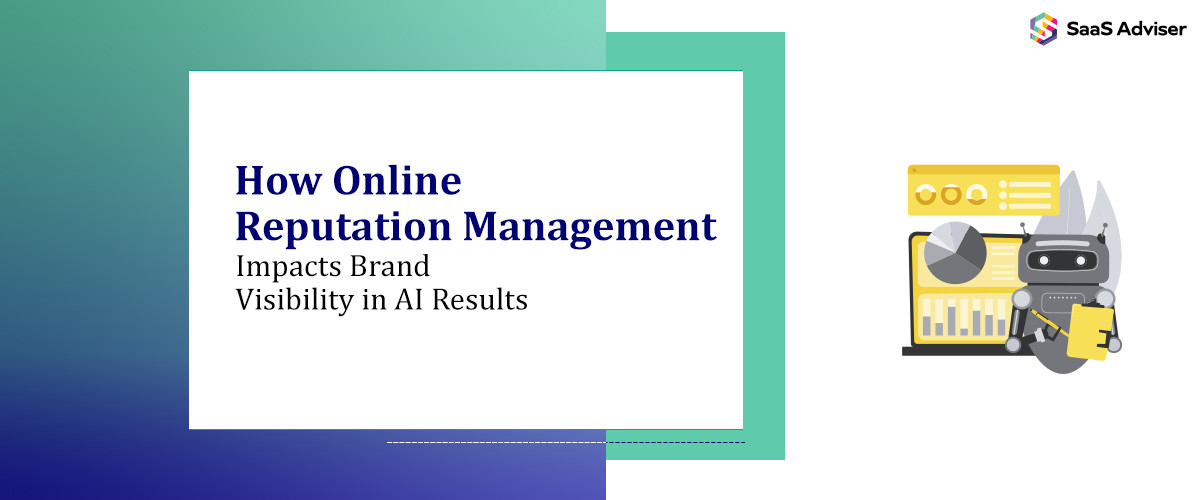
The internet also changed the manner in which firms build and maintain their reputation. In the past, a firm could use traditional public relations, word of mouth, and well-developed marketing tactics to manage customers' perception of the firm's brand. Nowadays, everything changed. Social media, digital review platforms, and machine-based searches today put Online Reputation Management (ORM) among the top determinants of what others think of brands.
Artificial intelligence matters a great deal when it comes to how customers discover businesses. Search engines employ AI for condensing summaries, and voice assistants such as Siri and Alexa respond promptly when asked questions. Services such as Google Maps or Yelp employ software analyzing online reviews. This implies your reputation is no longer just what your company says regarding your reputation, it includes what the AI finds, analyzes, and publicizes about you.
In this guide, we'll explore how online reputation affects brand appearance in AI-generated results,what is VDI steps you can take, and how to shield your brand from negative online content.
The Changing Landscape: From Traditional ORM to AI-Driven ORMTraditional ORM: A Foundation Built on SEO and PR
A decade ago, reputation management looked very different. Businesses focused on:
Trailing reviews on Yelp, TripAdvisor, and Google Business.
Publishing SEO articles to bury negative search results.
Sending press releases to control narratives.
Contacting publishers when it was necessary to request the removing of news articles that harmed brand perception.
Though these strategies are still worth it, they're no longer sufficient. The online environment has become one where AI determines what content gets shown first.
AI-Driven ORM: The New Era
Today’s ORM strategies must account for how artificial intelligence reads and interprets data. AI scrapes thousands of online sources — reviews, blogs, social media posts, and even images — to create summaries and recommendations.
For example:
When someone asks Google’s AI Overview, “What’s the best dental clinic near me?” the algorithm won’t just check websites. It will analyze reviews, star ratings, recency of customer feedback, and how consistently the business presents itself online.
A restaurant that has been poorly reviewed multiple times over the last month can be excluded from AI-based "best nearby" lists even with traditionally strong ratings.
This shift makes businesses play an active role in their online lives. Visibility is not only a question of keyword rank, but of trust, honesty, and user engagement.
How AI Affects Brand Visibility
AI considers a wide range of reputation indicators before offering outcomes. Knowledge of these is essential for businesses that must rank high in AI recommendations.
Sentiment Analysis
AI programs read comments, reviews, and news articles to check whether the sentiment is positive, negative, or neutral. Excessive negative sentiment can lower a brand in AI rankings.Credibility of Sources
Verified reviews on platforms like Google or Trustpilot are more credible than anonymous comments.. AI favors credible and authoritative sources when shaping brand profiles.Consistency Across Platforms
When your company name, phone number, or branding is different in directories, AI can flag your company as suspicious. Consistency communicates legitimacy.Recency of Mentions
AI prefers fresh data. A flood of recent positive reviews boosts credibility, while outdated content may reduce visibility.Content Authenticity
AI systems deprioritize duplicate or low-quality content. Original and authoritative resources, such as thought-leadership blogs or whitepapers, help increase visibility.
ORM Strategies That Impact AI Results
1. Review Management: Turning Feedback into Opportunity
Customer reviews are among the most important factors AI uses to evaluate trust. Managing reviews effectively means:
Getting happy customers to provide feedback..
Prompt and professional reply to complaints.
Reporting fake or malicious reviews for removal.
Offering solutions rather than excuses, which shows responsibility.
Imagine a hotel chain receiving a series of poor reviews about slow service. Without ORM intervention, AI systems might summarize the brand as “slow and unresponsive.” However, by resolving complaints, giving vouchers, and publishing follow-up reviews, the brand can reverse AI sentiment back into positive visibility.
This method is particularly critical in reputation management for SaaS, where customer reviews, product feedback, and community discussions on review sites such as Saasadviser, Capterra, or Reddit can greatly impact AI summaries and purchasing decisions.
2. Online Content Removal: Protecting Your Digital Image
Sometimes, harmful content dominates search results and AI summaries. For example, a single defamatory article can appear repeatedly in generative AI answers, damaging credibility.
Options for businesses include:
Collaborating with the top online content removal firms to initiate old or incorrect content removal requests.
Partnering with the top online content removal agencies to expertly manage intricate takedowns, legal procedures, and negotiations.
Publishing fresh, high-quality content to outrank negative stories.
Content removal doesn’t mean erasing legitimate criticism — it’s about correcting misinformation, outdated articles, or malicious attacks that AI might amplify unfairly.
3. Content Creation for AI Discovery
AI thrives on high-quality, structured content. Brands should focus on producing material that AI systems can easily parse and present in summaries.
Best practices include:
Creating FAQ pages with schema markup to feed AI with structured data.
Writing blog posts that answer common industry questions.
Giving detailed product and service descriptions that can be used by AI.
Invite user-generated content, such as reviews and case studies.
By providing correct, original content to feed AI, you are in control of what appears in recommendations.
4. Predictive Analytics and Monitoring
AI-powered ORM tools can now detect early reputation threats. For instance, if social monitoring software detects an increase in negative posts, a company can act prior to the issue becoming mainstream — initiating a business reputation repair process to mitigate damage and rebuild trust before it affects brand visibility. This pre-emptive stance avoids minor problems escalating into reputation crises that AI encapsulates unfavorably across platforms.
5. Social Media Engagement
Social media tends to be the first resort for customers to voice displeasure. Active listening not only resolves problems fast but also has a reputation of being open. AI algorithms more and more consider social sentiment when listing brands.
Authentically responding, customer success story emphasis, and consistent voice reinforce AI-based trust signals.
Challenges and Risks in AI-Driven ORM
While AI creates opportunity, it also creates challenges:
Over-Automation
Overdependence on AI answers can make brands appear automated. Customers value genuine, human engagement.Misinformation
AI may summarize inaccurate or misleading claims if they gain traction. For example, a viral but false blog post could be included in generative AI summaries.Bias and Algorithm Errors
AI models may favor certain sources, leading to skewed visibility. If your competitor invests heavily in reviews or PR, they might dominate AI answers unfairly.Fake Reviews and Defamation
Fake reviews can distort sentiment analysis. Strategies like requesting the removing of negative reviews or removing news articles that are defamatory help restore balance.
Metrics and KPIs to Measure Success
Monitoring reputation success guarantees that your strategy is producing results. Key performance metrics are:
Sentiment Scores: Positive to negative mentions ratio.
Review Ratings: Google or Trustpilot average ratings.
Visibility in AI Summaries: Whether your brand is visible in AI-generated answers.
Knowledge Graph Accuracy: Accuracy of brand information presented in search engines.
Engagement Metrics: Click-throughs, social shares, and brand mentions.
Maintaining these indicators under control enables brands to tailor their ORM strategy and stay at the forefront of consumers' minds every moment.
Best Practices for ORM in the AI Age
To be successful in the AI-first world, companies must:
Be proactive: Monitor mentions on a day-to-day basis instead of waiting for crises.
Combine AI and human judgment: Apply AI for analytics but humans for honest answers.
Grow customer advocacy: Organic user-generated feedback and testimonials are stronger than advertising.
Collaborate with experts: Good online content removal companies can address harming reputation concerns in a timely fashion.
Make content AI-friendly: Structured information, schema markup, and bullet FAQs allow AI to answer accurate brand questions.
Preserve genuineness: Consumers believe in open and compassionate brands.
The Future of ORM in an AI-First World
The future of online reputation management will be even more AI-driven. Upcoming trends include:
Summary of Generative AI: Instead of only offering links for varying sources, the AI will offer full and complete summaries on the general brand reputation.
voice search optimization: Brands must also be similarly optimized so as to mirror the precise medium on which voice assistants such as Siri as well as Alexa tend to respond.
Visual Recognition: It involves the application of artificial intelligence solutions that have the capability to identify and recognize logos, various product images, and video content in order to gather and analyze reputation data.
Regulatory Oversight: To improve accountability, the government could establish requirements asking for increased levels of openness about online content and reviews by users.
Companies that innovate early will retain a competitive edge in brand visibility.
Conclusion
Online Reputation Management is not a luxury, it's a requirement in a world driven by AI. AI systems screen reviews, content, and sentiment to decide if your brand is perceived as credible or not. Review management, online content removal, and content framed in organized formats directly impact brand visibility.
By investing in an active ORM program and integrating with the top online content removal services, companies can create their own narrative, become credible, and remain present in AI-driven results.
Companies that make the transition now will maintain their reputation, build customer trust, and achieve long-term expansion in an AI-burned digital environment.