SaaS pricing pages are built to make everything look simple.
Three tidy plans, a monthly number, maybe a discount for annual billing — and the reassuring sense that infrastructure is “handled” somewhere behind the scenes.
What buyers don’t see is the constantly shifting cloud bill that powers those plans. The marketing site talks about “scalability” and “reliability”; the finance team sees line items for data transfer, premium regions, performance headroom, and security tooling. The gap between those two realities is where “cheap” cloud quietly gets expensive.
This isn’t about dunking on cloud. It’s about understanding the economics well enough that your pricing page reflects reality, not wishful thinking.
Where the Real Bill Hides: Egress, Regions, and Noisy Neighbors
On paper, pay-as-you-go cloud looks like a perfect match for SaaS: start small, pay only for what you use, scale with demand. In practice, a lot of people spend their lives in places that never show up when you first estimate your unit costs.
1. Data Egress and Network Traffic
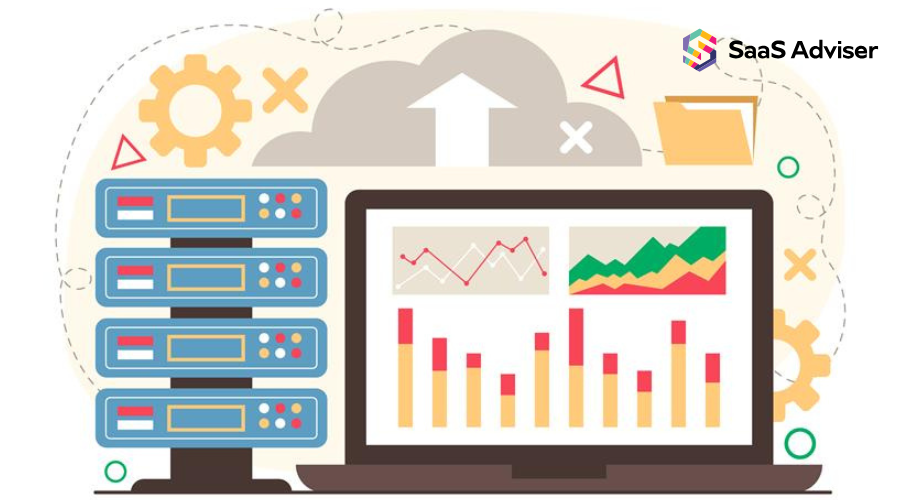
Most teams model storage and compute. Fewer models show what happens when data leaves the cloud. Providers charge data egress fees when traffic flows out to the public internet, another region, or a different cloud. Oracle’s explainer on data egress charges across cloud regions and the internet makes it clear this isn’t a niche fee — it’s baked into how public cloud works.
For a SaaS product, egress spikes can come from very ordinary decisions:
-
Launching a “download full report” feature for enterprise customers.
-
Letting customers mirror data into their own data warehouse.
-
Serving heavy media assets for global users.
On your pricing page, nothing changes. Underneath, the marginal cost of each new customer might be marching up.
2. Regions and Availability Zones
To win deals in new markets, you spin up additional regions or availability zones. That’s good for latency and sometimes mandatory for data residency, but it adds complexity and cost:
-
Some regions are simply more expensive per vCPU/GB.
-
Cross-region replication and backups burn additional bandwidth.
-
Observability and incident response become multi-region problems.
The customer only sees “EU data center available” as a nice UI badge. Your team is paying for a more fragmented, harder-to-optimize footprint.
3. The “Noisy Neighbor” Tax in Multi-Tenant Environments
Most SaaS companies start on shared infrastructure. You share physical hosts with other tenants, using virtual machines or containers to carve things up. It’s efficient — until one customer’s usage pattern starts starving resources from others.
To avoid support tickets and churn, teams quietly overcompensate:
-
Overprovision CPU and memory so spikes don’t hurt anyone.
-
Add caching layers and CDNs to smooth out the load.
-
Offer “performance-isolated” enterprise plans where a handful of customers get outsized resources.
From the outside, it looks like a standard tiered SaaS model. Inside, you’re constantly spending a little extra just to keep the shared model from showing its rough edges.
If you haven’t revisited this since the early days, it’s worth comparing your current setup with the best web hosting software options and cloud stacks on the market. What made sense for your first hundred customers may be dragging on margins at ten thousand.
Compliance and Shared Responsibility: the Work Nobody Sees
Security and compliance are another class of “invisible” infrastructure costs. On a sales call, you say “we’re secure” and point to a couple of acronyms. Behind the scenes, that simple claim represents years of engineering and process work.
Cloud providers are explicit about this. In the AWS shared responsibility model for security and compliance, AWS explains that they handle the security of the cloud (facilities, hardware, base services), while customers are responsible for security in the cloud — configurations, access controls, data protection, and application behavior.
For a SaaS team, that often means:
-
Paying for extra security tooling (WAFs, SIEM, secrets management).
-
Rolling out strong identity and access management (IAM) and least-privilege policies.
-
Implementing encryption, key management, backups, and disaster recovery.
-
Maintaining documentation and evidence for audits (SOC 2, ISO 27001, PCI, HIPAA, etc.).
In highly regulated verticals, you’re also mapping these controls onto specific frameworks. That usually requires consulting time, legal review, and extra engineering cycles — none of which show up as a line item on your subscription tiers.
You can use cloud management platform tools to reduce some of the operational overhead, but those tools themselves become part of your cost structure. They’re essential, yet they also widen the gap between what the pricing page implies and what it really costs to run the product safely.
When “More Expensive” Infrastructure Actually Protects Margins
At some stage, many teams realize their “cheap” cloud assumptions don’t match reality anymore. The bill isn’t dominated by a few core instances; it’s a mix of egress, extra regions, overprovisioned clusters, security tooling, and compliance overhead. That’s often the moment when the conversation shifts from “how do we save money on instances?” to “are we even using the right building blocks?”
One option that enters the discussion is moving critical workloads onto dedicated infrastructure.
Providers like Atlantic.Net offer dedicated server hosting built around dedicated hosts, where physical servers are reserved for your workloads instead of being shared with other tenants. That doesn’t mean abandoning cloud benefits entirely, but it does change the economics in some useful ways:

-
Predictable workloads, predictable spend
Every SaaS has a “floor” — a minimum amount of traffic and processing that happens no matter what. Putting those steady workloads on dedicated hosts can make costs more predictable than running everything on purely elastic, consumption-priced resources that fluctuate month to month. -
Cleaner isolation stories for sensitive data
When auditors ask where regulated data lives, it helps if your answer doesn’t start with “somewhere in a shared cluster.” Dedicated hosts give you strong isolation boundaries: specific hardware, specific workloads, and clear network segmentation. You still need good controls, but your architecture diagram gets simpler and easier to defend. With this setup, Dedicated server hosting can provide a reliable foundation that keeps resources separate and predictable. -
Less noise in your FinOps models
FinOps teams care about unit economics: cost per active customer, cost per transaction, cost per GB processed. If your spending is scattered across ephemeral resources, discounts, and hidden fees, it’s hard to get stable numbers. Allocating slices of your stack to dedicated infrastructure can turn some of that noise into a flatter, easier-to-allocate baseline.
You don’t have to flip a switch overnight. Many high-growth SaaS companies end up with hybrid models: multi-tenant, elastic infrastructure for experimentation and bursty workloads; more controlled environments (including dedicated hosts) for core systems that don’t benefit from constant churn.
As you navigate that transition, it’s worth leaning on the cloud cost management software category to spot which services and patterns are quietly eroding your margins and which ones are worth doubling down on. The point isn’t to choose between “cheap” and “expensive” cloud — it’s to pay intentionally for the properties your product actually needs.
Bringing Your Pricing and Infrastructure Back in Sync
Most buyers never think about data egress, multi-region architectures, or shared responsibility models. They see a set of tiers, pick one that feels right, and expect the experience to match the promise.
Your job isn’t to drag them into your cloud cost spreadsheets. It’s to make sure those promises are sustainable.
That starts with being honest inside the company about where the hidden costs live: network traffic, regional sprawl, performance padding, security tooling, and compliance work. From there, you can decide which workloads truly benefit from ultra-flexible, multi-tenant cloud and which should move to more predictable, better-isolated infrastructure.
Do that well, and your pricing page stops relying on “cheap” cloud assumptions that only made sense in year one — and starts reflecting a business that actually knows what it costs to keep its software running, secure, and profitable.