

Endorsing a business check could look simple, but in fact, it can be the task that ensures the fluency of the financial dealings if done correctly. If you are a business owner or are in charge of company finances and are aware of how to endorse business check correctly, the chances of delays, errors, or even fraud will be less. This guide discusses the different kinds of endorsements and the best practices that would be good for you to use. Through it, you will learn how you can be very confident while endorsing a check.
Understanding Business Checking Accounts
The business checking account is important, being the main tool for dealing with transactions, collecting payments, and monitoring costs beyond personal financial needs. It entails such functionalities as higher limits for transactions, web banking, and accounting integrations. A crucial thing lies in understanding how to endorse a cheque properly. The proper way of endorsing a check also assures the availability of funds to be deposited as well as a security measure against fraud. For those of you who wonder "How do I endorse a check?" the signing on the back and the provision of what type of endorsement it is are the important elements.
The best business checking accounts can make accounting simpler, add to the professionalism and keep the finances arranged. It is a necessity for all business enterprises.
What Does It Mean to Endorse a Check?
To endorse a check is to merely sign its backside to accept its transfer or deposit. In other words, you are indirectly enabling the bank to cash it or deposit the funds in your account when you endorse check.
The way you endorse check depends on the function you want to apply it to. It can be done by getting the check a blank endorsement (just a signature), restrictive endorsements (such as "For Deposit Only"), and special endorsements (namely, signing it over to another person). Using the correct method is helpful for smooth deals and ensuring the safety of the transaction.
Basic Steps To Endorsing A Check
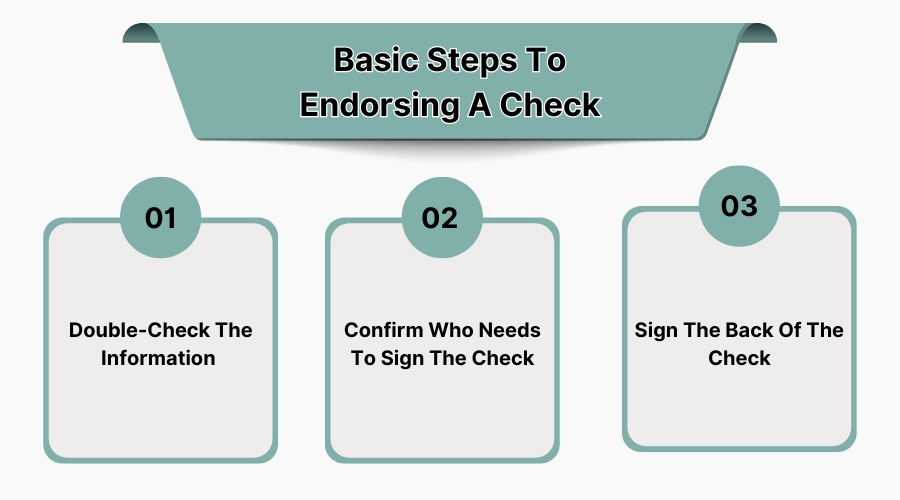
Following these steps ensures a smooth and secure transaction, preventing unnecessary banking issues.
1. Double-Check The Information
Be sure you check all the details well before endorsing a check. Verify the payee's name and amount are accurate with your identification. Mistakes such as this can cause delays with processing or even refusal by the bank. If it's a business check, make sure the name matches the correct entity before you proceed.
2. Confirm Who Needs To Sign The Check
Endorsement requirements on checks differ depending on the type of check question. Personal checks take ownership of the check, so it should be signed by the account owner. However, for businesses, follow all the necessary steps to endorse business check properly—this may include the use of a company seal or the requirement of having two or more people sign the check, depending on the account settings. Joint accounts or checks payable to more than one party should be verified for the need of the signatures of both parties.
3. Sign The Back Of The Check
It's the time to sign! Turn the check over to the other side and write your name within the endorsement area or sign. If you are unsure about endorsing a check for deposit, the easiest way to do this is to write "For Deposit Only" and sign your name so that only you can deposit it in your bank account.
Types of Endorsement
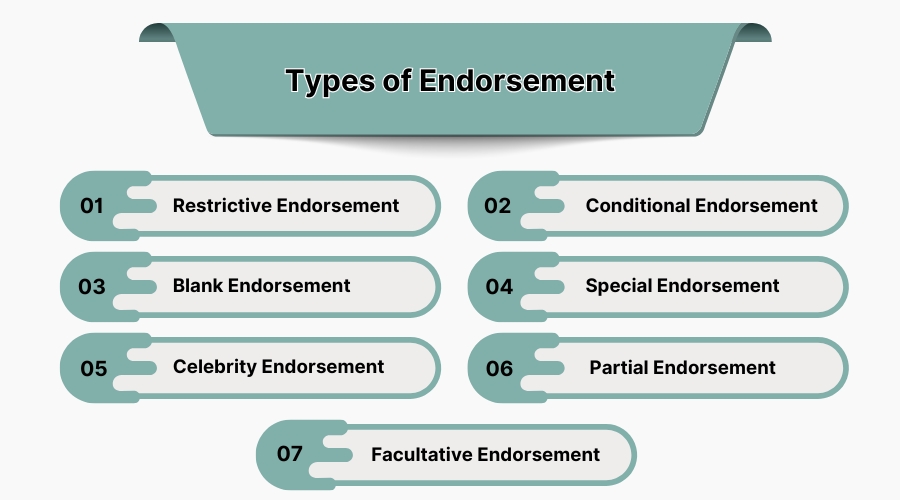
One of the things you need to do is to endorse the check that is presented to you. But there could be such a query, "Explain to me exactly what to put on the back of the check?" In some cases, you can endorse your check with your signature only. On the contrary, you might be required to give more information, to be sure that the check in question will be correctly dealt with. We are going to take a look at different types of endorsements and when it is necessary to use them.
-
Restrictive Endorsement
A restrictive endorsement is a method of endorsing a check that restricts the use of the check, therefore, it is one of the safest options. The most widespread method is to write "For Deposit Only" over the signature, thus, ensuring that the check can be deposited to your account only and not cashed by anyone else. The latter is particularly useful when you endorse a business check to guarantee safety.
-
Conditional Endorsement
A conditional endorsement is applied to a check that can only be cashed if the particular condition is met. The thing is that you can write the phrase "I'll pay dearly if the commitment is not kept" in a notebook before you put it in the records. But it's not a matter all the banks use such endorsement, as using it may complicate the check-clearing process.
-
Blank Endorsement
The blank endorsement is the simplest and the most flexible way to choose but it also comes with the highest risk. The easiest way is to just sign the back of the check without any instructions. In this case, that means every person who has the check can cash or deposit it. Suppose you are wondering how do you endorse a cheque. Then a blank endorsement should be used only when depositing the check right away.
-
Special Endorsement
A special endorsement gives you the freedom to transfer the check to another person or entity. To make it happen, you simply write "Pay to the Order of [New Payee’s Name]" above your signature. This is beneficial when you are required to endorse check to another person (e.g., sending a payment to a third party).
-
Celebrity Endorsement
Unlike financial endorsements, celebrity endorsing is using a celebrity's face to advertise a product through the media and the company as well. Public figures and companies are collaborating to raise awareness for their products that are used for building up the trust and increasing the number of sold items.
-
Partial Endorsement
When you have a situation that calls for a partial endorsement, it is necessary to the person who passes it on to another and keeps the remaining amount at the original place where it was received. However, most banks won't go ahead with this type of endorsement because it is very complex.
-
Facultative Endorsement
A facultative endorsement is an optional endorsement in which the endorser waives certain rights, such as holding future claims over the payment. This type is more common in business transactions and commercial finance rather than personal banking.
Do I Always Have to Endorse a Check?
No, you don't need to sign a check every time. Still, the way you want to use it matters. The check is generally accepted by the bank or credit union, but for some situations, they may require the signature for the photo cash option or cashing it. For example, when you do in-person deposits, cashing a check, or sending it to somebody else, endorsing is the usual practice. Combe your bank regulations to avoid hassles and guarantee that you are following the right procedures before cashing or endorsing a check.
Conclusion
A well-endorsed company check is great for the safe and effective financial operations of businesses, which is the best way to keep their financial operations running smoothly. It is right that whether you deposit, endorse, or cash a check, the essential thing is to follow the correct endorsement method to steer clear of the complications. If you know how to endorse a check correctly, you can not only secure your business but also smoothen the transaction process.
Now that you got the basics, ensure every check you write gets validated without any problems. Keep yourself in the loop, act according to the best methods, and make the finances of your business run perfectly!
It depends on your bank’s policy. Some banks allow it if you’re the sole proprietor, while others require checks to be made out to the business name. Always check with your bank before depositing.
To endorse the check with a third party, fill in the "Pay to the Order of [New Payee’s Name]" section and sign below. On the other hand, there are banks where you cannot pay a third party by check, therefore make sure to ask your bank first.
You sign the back of the check in the designated endorsement area, usually at the top. Some checks have a line or box labelled "Endorse Here."
The bank follows this procedure only if the check is deposited into the business’s account and is the one that has “For Deposit Only” printed on it. Nevertheless, every bank has its own policies, hence, consult your bank.
Only individuals, for example, the owner, CFO, or a specified employee, who are directly assigned by the company can endorse a business check. In the business's banking records, they must have a name for it to be approved.