.jpg "Best CRM System for Recruitment: Features, Benefits & Tools")
In the quick-paced world of talent acquisition, the proper technology should make all of the distinction. A CRM system for recruitment has turn out to be a fundamental asset for current recruiting agencies, streamlining workflows, improving candidate relationships, and boosting placement rates.

Looking for Recruitment CRM Software? Check Out Saas Advisor’s List of Recruitment CRM Software
In this article we will uncover what a recruitment CRM is, why it matters, should have features and the best tools available in 2025.
What is a CRM System for Recruitment?
A CRM system for recruitment is designed to manage and optimize candidate interactions at some stage in the recruitment lifecycle. Unlike traditional CRMs that target applications, a CRM for recruiting is adapted to help businesses construct relationships with candidates, track applicant journeys, and speak efficaciously throughout a couple of channels. These platforms act as core hubs for handling candidate statistics, engagement, sourcing, and pipelines, making sure recruiters don’t miss out on pinnacle talent due to disorganized procedures.

Did you know?
Studies show that agencies using CRM recruitment software can improve recruiter productivity by up to 30% through automation and centralized data.
Why Recruiting Agencies Need a CRM System?
Recruiting agencies deal with great volumes of candidate information daily, often handling interactions with hundreds or even thousands of job seekers simultaneously. Without a effective CRM system for recruitment, essential information can easily get lost, follow-ups may be missed, and top-tier candidates would possibly slip through the cracks. This is where a devoted CRM for recruitment agencies become essential.
By utilizing recruiting CRM software, agencies can effectively build and manipulate talent pipelines, automate communication and task reminders, and substantially enhance candidate engagement and reaction times. Furthermore, all candidate is centralized in a single platform, allowing for streamlined collaboration throughout teams. Investing in the great CRM for recruiting no only enhances recruiter productivity however additionally leads to quicker, higher-quality placements—making it a strategic must-have for modern recruitment companies.
Key Features to Look for in the Best Recruiting CRM
When comparing a CRM system for recruitment, it is critical to recognize the important functions that drive performance and enhance candidate relationships. The great CRM for recruiting should offer a sturdy blend of automation, visibility, and customization to support a complete-cycle of recruitment procedure. Below are the top features to consider:
1. Talent Pipeline Building
A powerful CRM for recruiting agencies must provide intuitive tools to build and manipulate talent pipelines that reflect your recruitment workflow—from preliminary sourcing to final offer. This feature enables recruiters to visually track in which every candidate stands in the hiring procedure and identify any bottlenecks. A well-organized pipeline within a CRM recruitment software ensures that no candidate is disregarded, improving basic hiring consequences.
Looking for CRM Software? Check Out Saas Advisor’s List of US CRM
2. Candidate Data Visibility
Recruiters need quick access to comprehensive candidate profiles, conversation records, resumes, interview notes, and feedback. A quality CRM software for recruitment gives actual-time visibility into every touchpoint with a candidate, allowing better collaboration across teams. When everyone is on the equal page, candidate engagement improves, and the time to hire decreases. Enhanced records visibility is essential for keeping a sturdy candidate experience.
3. Talent Pool Automation
Manually segmenting applicants based on talent, roles, or industries is time-consuming. A clever CRM system for recruitment automates this process by utilizing tags, filters, and AI to categorize applicants into relevant talent pools. This enables recruiters effortlessly access the proper applicants whilst new roles open. Recruiting CRM software with automated segmentation features permits agencies to construct and nurture long-term relationships with passive candidates, retaining their talent pool ready and active.
4. Candidate Engagement
Engaging applicants throughout the hiring journey is critical. The best recruiting CRM systems come geared up with integrated tools for email, SMS, and calendar syncs, permitting recruiters to preserve consistent conversation. Features like automatic email campaigns and personalized follow-ups improve the candidate experience and enhance brand perception. A modern CRM for recruiters guarantees each candidate gets timely updates, making them more likely to stay engaged in the procedure.
5. Advanced Search Capabilities
As databases grow, finding the perfect candidate becomes more complex. A top-tier CRM for recruitment companies includes advanced search functionality, such as Boolean logic, keyword filters, and smart sorting. These capabilities allow recruiters to quickly surface the most qualified candidates from thousands of records. A CRM recruiting tool with intelligent search helps minimize time spent on manual screening and increases the quality of shortlists.
6. Profile Enrichment
Manually updating candidate records is inefficient. That’s why the best CRM for recruiting offers profile enrichment tools that automatically pull in records from LinkedIn, GitHub, job portals, and social media. These integrations improve candidate profiles with up to date work records, abilities, and online presence. CRM recruitment software with enrichment functions guarantees that recruiters constantly have the most correct and up to date statistics whilst making hiring decisions.
You may also read: From Local to Global: Best CRM Software for US Companies
7. Automation
Automation is a game-changer for recruitment companies. A sturdy CRM software for recruitment automates repetitive work like follow-ups, interview scheduling, reminders, or even some additives of candidate screening. This frees up recruiters to cognizance on relationship-building and strategic hiring. CRM for recruiting that supports workflow automation leads to faster placements and better recruiter efficiency.
8. Candidate sourcing
The sourcing process is often the most time-consuming part of recruitment. A functional CRM for recruitment agencies is integrated with external sourcing platforms such as LinkedIn, Job Boards, and career websites to streamline the process. Recruiters can import the profile of the candidates directly into CRM system for recruitment, complete with CV and contact information. This guarantees a stable stream of new applicants and reduces the time spent on manual data entry.
Benefits of Using CRM Recruitment Software
Adopting a sturdy CRM system for recruitment can rework how hiring organizations function by streamlining workflows, enhancing conversation, and enhancing average hiring performance. The following are key benefits of the utilizing CRM recruitment software:
1. Streamlined Recruitment Process
With a effective CRM for recruiting, agencies can automate repetitive responsibilities which includes interview scheduling, email follow-ups, and project assignments. This reduces manual effort, shortens the hiring cycle, and allows recruiters to emphasize on strategic selection-making. By centralizing operations in a single platform, CRM software for recruitment guarantees smoother coordination throughout all stages of the candidate journey.
2. Improved Candidate Experience
A seamless and professional experience could make or break a candidate’s impression of your agency. CRM for recruitment agencies permits recruiters to send timely updates, customized conversation, and automated reminders. This constant interaction improves engagement and keeps candidates knowledgeable, that is specifically vital in a competitive skills marketplace. Ultimately, better candidate experience results in higher acceptance rates and a sturdier talent brand.
Looking for Recruiting Software? Check Out Saas Advisor’s List of Recruiting Software in US
3. Enhanced Team Collaboration
Recruitment is a group sport—and the best recruiting CRM software allows seamless collaboration among recruiters, hiring managers, and clients through features like a dedicated client portal. Real-time updates, shared candidate notes, and synchronized calendars help teams work collectively without confusion or overlap. Using a centralized CRM for recruiters ensures that every team member has access to today's records, making conversation more efficient and selections extra aligned.
4. Improved ROI
Investing in the best CRM for recruiting leads to significant returns. Automating workflows and reducing time-to-hire directly improves productivity. Moreover, better matching of applicants to jobs reduces placement errors and increases client satisfaction. A well-implemented CRM system for recruitment also can help decrease advertising and sourcing expenses by nurturing internal talent pool—improving long-term recruitment ROI. IBM states that a properly implemented CRM software system can achieve an ROI that exceeds 245%.
5. Building Talent Pipelines
One of the standout functions of CRM recruitment software is its ability to help agencies construct and keep sturdy talent pipelines. By organizing applicants into skill-based or role-specific pools, recruiters can proactively interact with passive talent and fill future positions faster. A forward-looking CRM for recruitment companies keeps the pipeline warm and equipped, getting rid of the scramble when urgent hiring needs arise.
6. Candidate management
With a devoted CRM for recruiting organizations, all candidate data—resumes, emails, interview feedback, and status updates—is saved in a single place. This improves searchability, quickens reaction time, and ensures no candidate is ever misplaced inside the process. The system simplifies candidate monitoring and follow-up across the complete hiring lifecycle.
7. Enhanced Transparency
Transparency across the recruitment process benefits internal teams and external clients alike. A reliable CRM system for recruitment offers detailed reports and dashboards that provide perception into pipeline health, recruiter activity, candidate status, and more. This visibility enables agencies make information-driven choices, set correct expectations with clients, and continuously optimize performance.
Top 5 CRM Systems for Recruiting Agencies in 2025
Here are the top 5 CRM systems for recruiting agencies in 2025:
1. Thryv
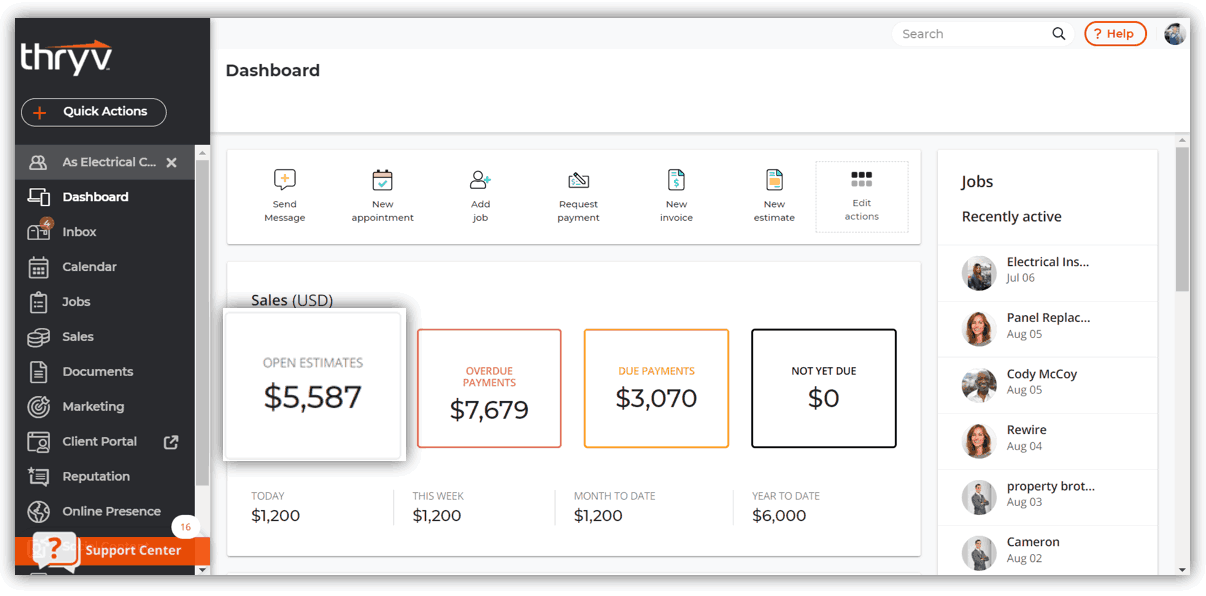
Thryv is an all-in-one CRM platform designed for small to mid-sized businesses, including recruiting agencies. It helps you manage candidates, schedule interviews, and stay on top of client communication—without needing multiple tools.
Key Features:
- Centralized contact and candidate management
- Appointment scheduling and calendar sync
- Automated follow-ups and email templates
- Customizable client portals
- Mobile-friendly access
Pros:
- Easy to use with minimal setup
- Great for smaller teams with limited tech resources
Cons:
- Not ideal for very large or complex hiring pipelines
- Limited integrations compared to bigger platforms
Pricing: Starts at $244/month, but plans with advanced features range, depending on business size and tools included.
2. Recruit CRM
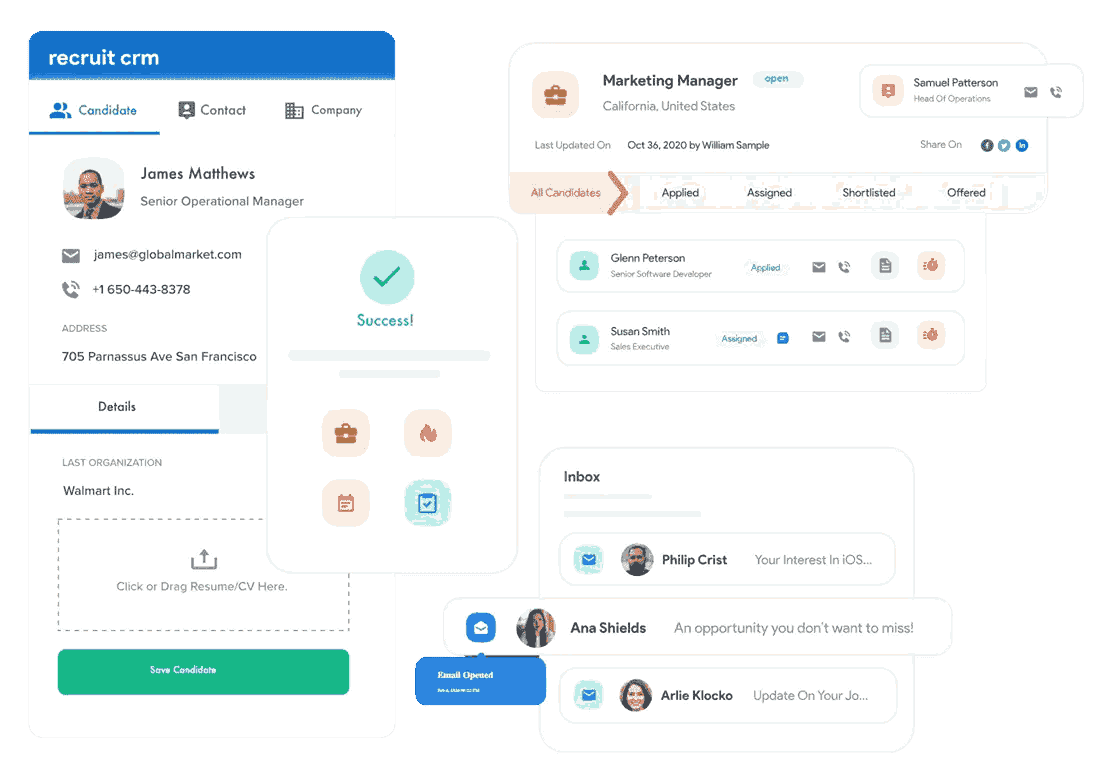
Recruit CRM is a CRM system that is designed to assist organizations with user-pleasant, modern-day technology, simplifying their recruitment procedures. The software offers AI-powered capability to boost productivity amongst recruitment teams. Recruit CRM assists recruiters in streamlining tasks, improving collaboration, and tracking the performance of hiring efforts.
Features
- AI resume parsing
- AI GPT integration
- Candidate matching
- Automated outreach with email sequencing
- Advanced Analytics
Pros
- Best customer support
- User-friendly interface
Cons
- High pricing
- Geographical Search and Navigation shortcomings
Pricing: Offers free plan. Pro plan costs $35.13 monthly and $29.27 annually per user per month. Business plan costs $52.69 monthly and $40.98 annually per user per month. Enterprise plan costs $58.55 on annual basis per user per month.
Suggested Read: Why Do You Need CRM Software for Real Estate Business?
3. Rippling
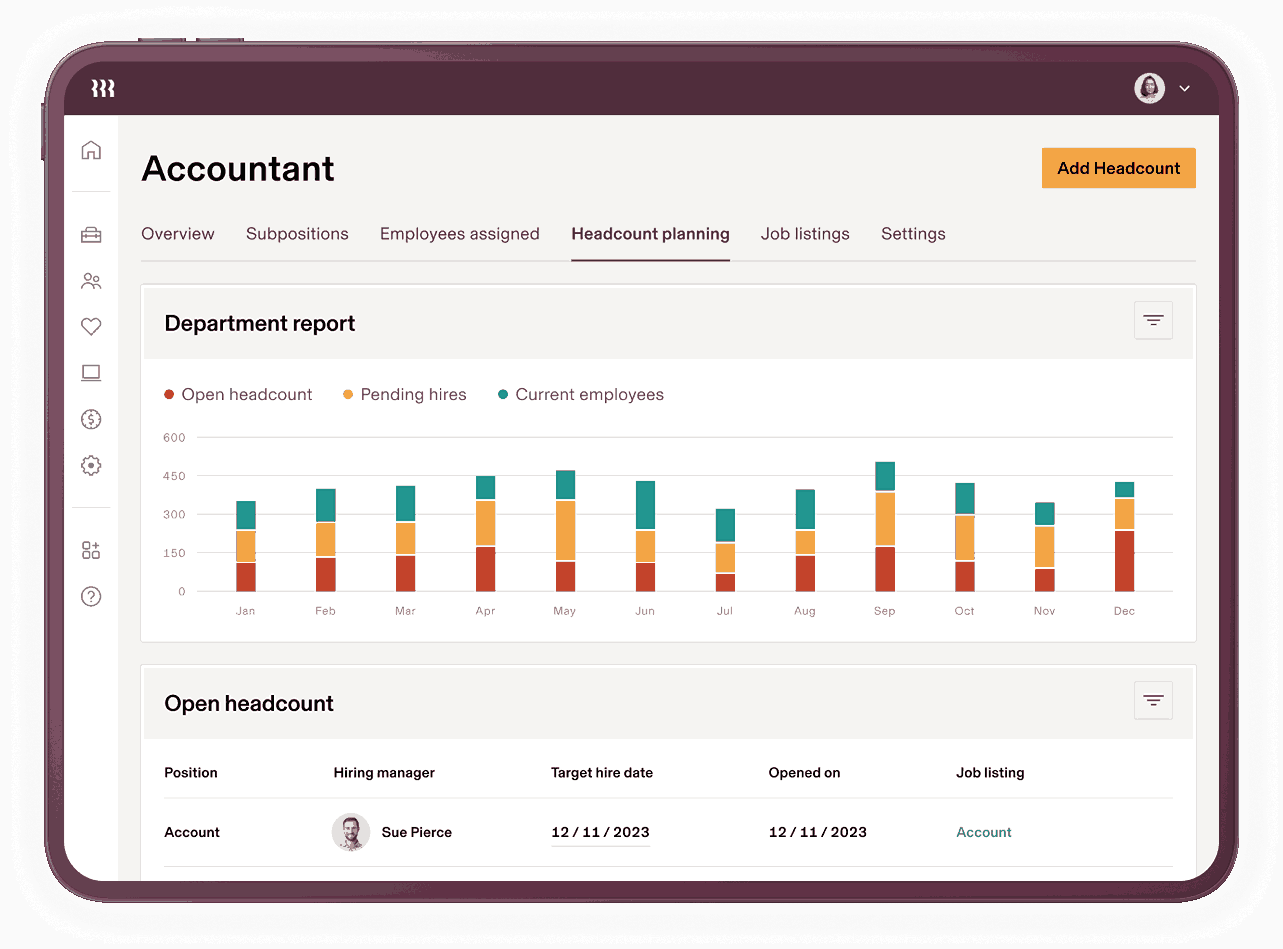
Rippling is a CRM system that is designed to convert HR, IT, and finance processes into a single system. Rippling specializes in workforce management systems and includes a robust CRM for recruitment companies, especially for teams that require integrated HR and recruitment tools.
Features
- Workflow studio
- Analytics and Reporting
- Payroll
- Benefits Administration
- Integrations
Pros
- All-in-one HR solution
- Easy setup and customization
Cons
- Basic payroll is expensive
- Expensive for small businesses
Pricing: Get a Free Quote for pricing
4. Pipedrive
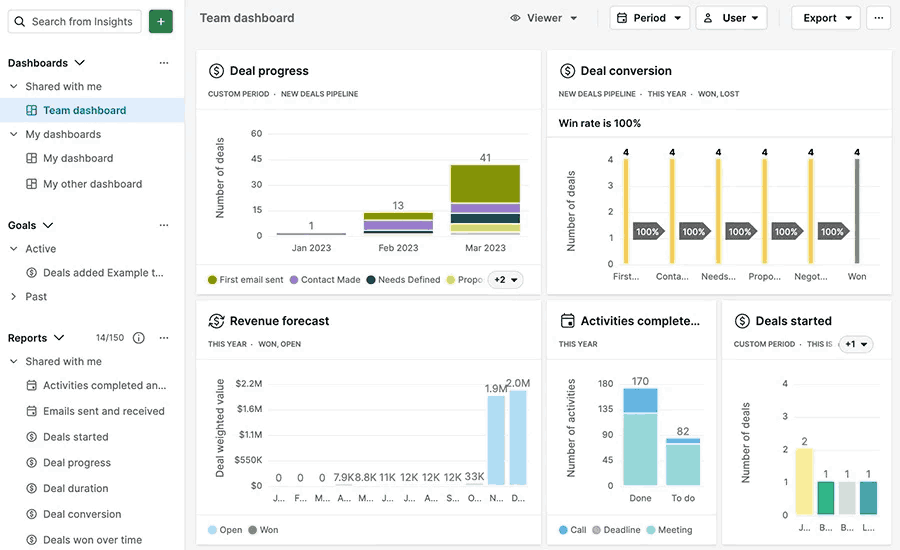
Pipedrive is a CRM system for recruitment that helps sales teams of small businesses to steamline processes and consolidate sales data into a unified CRM sales tool. It is a go-to CRM for recruitment agencies seeking a visual, pipeline driven interface.
Features
- Sales automation
- Lead management
- Email segmentation
- Integrations
- AI Sales assistant
Pros
- User-friendly interface
- Robust integrations
Cons
- Mobile App issues
- Limited Marketing Automation
Pricing: Offers free plan. Essential plan costs $19 monthly and $14 annually per seat per month. Advanced plan costs $34 monthly and $24 annually per seat per month. Professional plan costs $64 monthly and $49 annually per seat per month. Power plan costs $74 monthly and $59 annually per seat per month. Enterprise plan costs $99 monthly and $79 annually per seat per month.
5. Salesforce
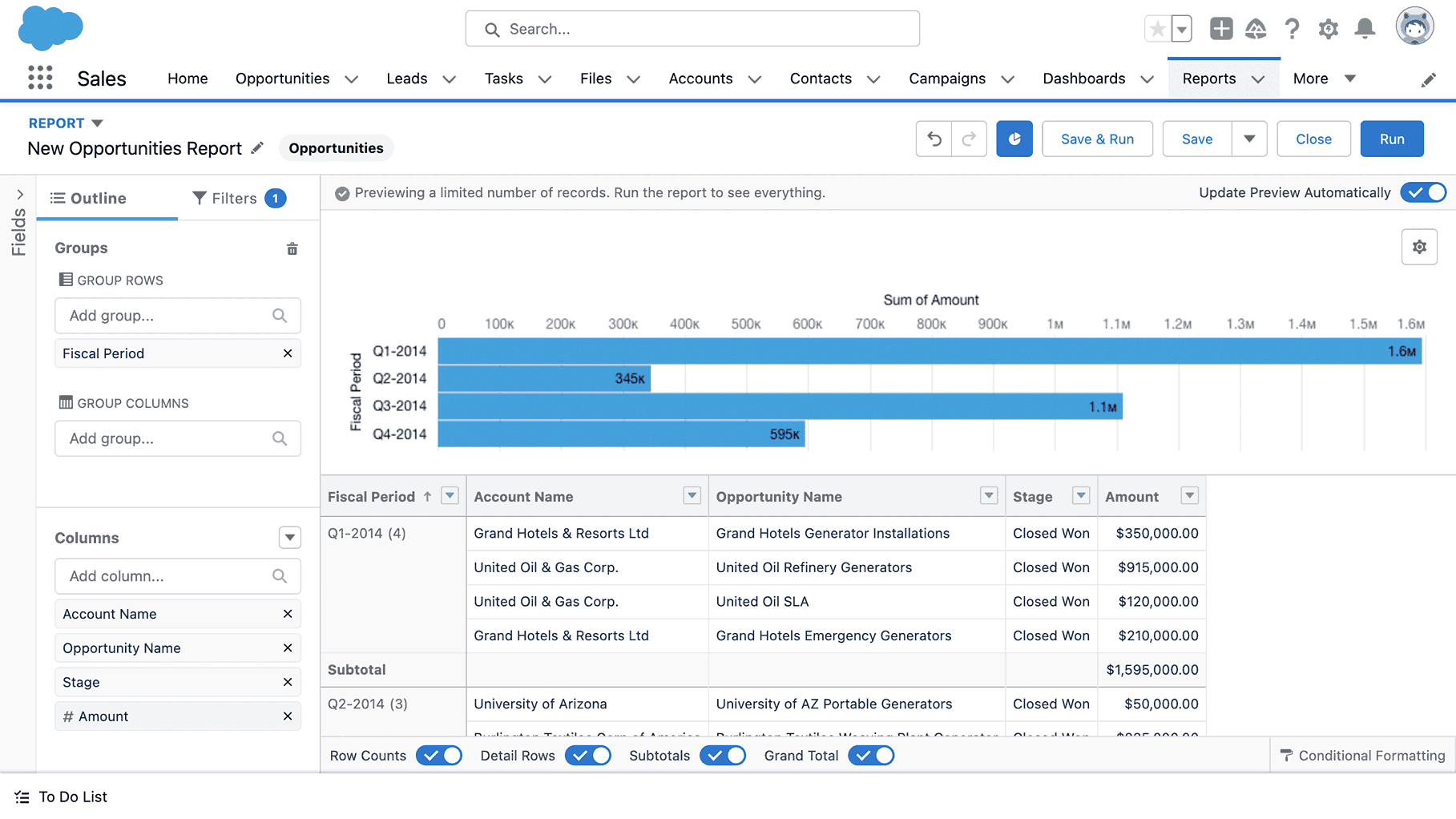
Salesforce is a powerful and widely-used CRM that offers customizable solutions for recruiting firms. With its strong automation and analytics features, it can streamline every step of the recruitment process—from sourcing to onboarding.
Key Features:
- Candidate and job pipeline tracking
- Custom workflows and automation
- Advanced reporting and dashboards
- Integration with job boards and LinkedIn
- Mobile access and cloud storage
Pros:
- Extremely flexible and scalable for any agency size
- Strong data analytics and reporting tools
Cons:
- Steeper learning curve for beginners
- Can get expensive with add-ons and customization
Pricing: Starts at $25/user/month for basic CRM; recruitment-specific solutions usually fall under custom pricing or require Salesforce Sales Cloud with integrations, which can go up to $150–$300/user/month.
Pro-Tip:
Avoid general sales CRM; Rather, choose a dedicated CRM for recruitment agencies with features such as talent pooling, CV parsing, automatic follow-ups and integration of job boards.
How to Choose the Right CRM for Recruiting Agencies?
Choosing the proper CRM system for recruitment is a strategic choice that need to be made aligning with corporate size, finances and workflow. The best CRM for recruitment should be consumer-friendly and comfortable, so your recruitment team can start quickly without a steep learning curve. It’s also important to remember the platform’s enterprise match—whether or no longer it's mainly designed for staffing companies or without a doubt adapted from sales-focused CRMs. For long-term achievement, pick a CRM for recruitment companies that offers scalability so it may expand alongside your organization wishes.
Integration functions are equally important; the system should basically connect with your ATS, task boards and recruitment marketing platforms to streamline entire hiring process. In addition, reliable customer service and training resources are important for onboarding and long-lasting utilization. Many suppliers offer free trials or demos, which may have remarkable opportunities to evaluate a CRM for recruiters before they make a commitment. Investment in the correct CRM recruitment software ensures high productivity, increased candidate experience and average results during your hiring funnel.
Key Takeaways
Unlike normal sales CRM, a CRM system for recruitment is designed to manage candidate relationships, monitor workflows and centralize interactions, making it an important tool for modern recruitment agencies.
Agencies utilizing CRM recruitment software can improve productivity by 30% through automation, centralized information, and higher workflow coordination.
The best CRM for recruitment requires talent pipeline control, candidate information visibility, automation, profile improvement, advanced search and integration with sourcing platforms.
Tools like Recruit CRM, Salesmate, Bullhorn, Rippling, and Pipedrive provide various functions and pricing models—allowing corporations to pick out based on scale, capabilities, and specialization.
Conclusion
A powerful CRM system for recruitment isn’t simply a pleasing-to-have—it’s vital for staying aggressive in 2025 and further. From automation to higher candidate experience, the first-rate recruiting CRM can remodel how corporations function. Whether you choose a dedicated platform such as Recruit CRM or flexible tool such as Pipedrive, appropriate CRM for recruiting will have better hires and additional placements.