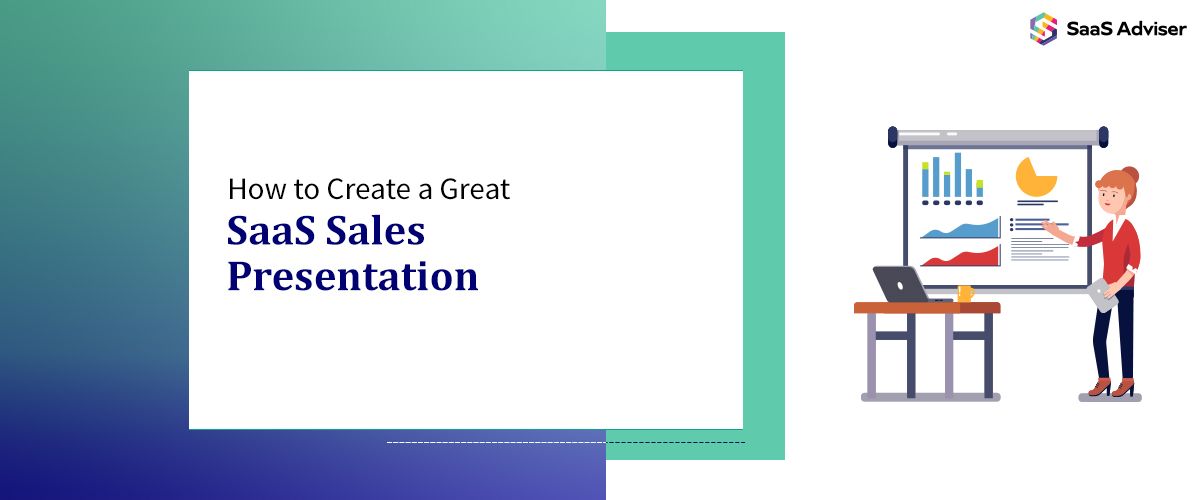
In the SaaS environment, sales success largely depends on how clearly and convincingly you present your product to potential customers. Therefore, a SaaS sales presentation is not just a set of slides, but a strategic communication tool. It should skillfully reveal the value of your product, solve customer pain points, and lead the audience to make a specific decision. To achieve this result, you need to know all the key elements that can make your presentation professional and convincing. You will receive practical advice on the structure, design, and formation of key presentation messages. Special attention is paid to working with data and integrating modern technologies to automate slide creation.
Successful SaaS Sales Presentation. Basics
A successful SaaS presentation should be based on the following fundamental pillars:
Good structure,
Clear key messages,
Understanding who you are presenting to.
Study your target audience. Understand the challenges they face. Learn about their needs and the results they want to achieve. With a clear understanding of the customer's pain points, you can build a presentation so that each slide adds value for the customer and brings them closer to a decision.
In SaaS sales, it is essential to demonstrate not only the product's functionality but also its real business impact:
- How exactly does your product change the metrics?
- How can it reduce costs?
- How does it accelerate customer growth?
When answering these questions, do not overload the slides with unnecessary information. Do not include technical details that are not directly related to business value.
When the focus shifts from the number of slides to the quality of the messages, the question of the effective presentation creation process arises. This is where modern tools can help, making presentations more effective and professional with minimal effort from the team. One of these tools is AI Decksy, which automatically converts text and ideas into structured slides, selecting designs and layouts to best convey your message. With this approach, you save time on routine visualization and can focus on what really matters. Namely, on the presentation content, the logic of your arguments, and convincing your audience of your SaaS solution's value. With this tool in your arsenal, you can not only speed up slide creation but also maintain a consistent style and tone. These are critical aspects for large-scale sales communication.

Understanding Your Target Audience
Your potential customers may have different roles. They may be technical specialists or financial directors. However, everyone has their own expectations and evaluation criteria. Technical managers evaluate solutions in terms of integration and stability. At the same time, business leaders evaluate them in terms of ROI. Your task is to adapt your messages so that everyone can find answers to their key questions.
Find out:
-
What problems concern potential customers the most?
-
What solutions have they already tried and why did they not work?
-
What metrics do they use to evaluate success?
Reflect the obtained information in your presentation so that your audience feels that you truly understand their context.
Clear Structure
A well-structured SaaS presentation has a logical flow. It is as follows.
-
Introduction.
Briefly describe the context and the problem.
-
Problem definition.
Show what exactly needs to be solved.
-
Solution.
Description of your product and its key benefits.
-
Demo or examples.
Show how the product works in real-world conditions.
-
Results/ROI data.
Back up your claims with numbers.
-
Case studies/social proof.
Give examples of successful applications.
-
Call to action.
Formulate what you want the customer to do next.
The structure described above looks simple, but it is highly effective. It leads the listener from the problem to the solution, reinforcing each step with logical arguments.
Optimization of Preparation Time. Analytics Integration
Optimize the workflow of preparing presentations for SaaS sales. Modern tools not only create slides, but also allow you to integrate analytics and CRM systems. This way, they ensure that your presentation is consistent with current customer data. For example, by connecting your presentation platform to CRM, you can automatically receive relevant customer data and recent interactions. Or it could be metrics that show customer progress and potential growth opportunities.
With this integration, the sales team can dynamically adapt each presentation. Imagine opening your slides and immediately seeing:
-
Customer usage statistics;
-
Interaction history;
-
Or key performance indicators.
Such data not only makes your presentation highly personalized, but also demonstrates that you have a deep understanding of the customer's context. This increases trust in you and enhances your authority.
Manage Your Time
Sales teams can significantly reduce preparation time by using:
-
Automated templates;
-
Ready-made content blocks;
-
Integration with data sources.
This allows them to focus more on strategic elements. In particular:
-
Improving your narrative;
-
Rehearsing answers to anticipated questions;
-
Planning interactive moments during the presentation.
Teams can also reuse proven slide sequences for different clients. At the same time, they can adjust the data and stories to suit each specific case.
Combining automation, analytics integration, and strategic preparation creates a more flexible sales process.
Speakers can respond to customer needs in real time.
They can also adjust their messages based on audience reactions and continuously improve the effectiveness of their presentations. All of this is made possible by tracking results and feedback.
Meaningful Slides. How to Create Them?
A presentation should not be a random collection of slides, but a skillful communication tool. Each slide should serve a specific purpose and complement the overall narrative. Consider the following key principles for creating effective slides.
The Three-Second Rule
When a listener sees a slide, they form their first impression within the first 3 seconds on average. That is why a slide should have a clear title that immediately conveys the main idea. Along with it, there should be a minimum amount of text. Thus, you will not overload the audience's attention.
Instead of long paragraphs, use the following:
-
Short subheadings;
-
Bullet points with key points;
-
Visual elements (illustrations, graphics) that reinforce the message.
Data Usage
In most cases, numbers are a powerful tool of persuasion. But not all graphs are equally effective. Data should be:
-
Understandable. That is, without complex tables
-
Relevant. That is, related to the customer's pain points.
-
Visualized. Present them through charts or infographics.
Instead of a dry results table, use an online graph maker to visually show how your product has driven changes in customer metrics.
Storytelling in SaaS Sales Presentations
In SaaS sales, decisions are almost never made based solely on features or price. Often, it is well-thought-out storytelling. The one that helps connect the product's capabilities to the customer's real business situations. It also helps show how the SaaS solution works in context.
The Power of Stories in Sales
People remember stories much better than dry facts. In SaaS presentations, stories can take the form of successful customer case studies or usage scenarios. Regardless of the option, it should illustrate the value of the solution.
Good study should follow this structure.
- The problem the customer faced.
- The solution you offered.
- The results the customer achieved with your product.
- The conclusions and next steps for similar customers.
Personalization in Message
Each audience has its own unique challenges. Avoid general messages.
- Research the client's company in advance.
- Find out what projects they are implementing.
- Know what solutions they have already implemented.
Design. Visual Elements
Design should not overload the content. The key principles of well-thought-out design are as follows.
-
A single-color scheme.
-
Contrasting text.
-
High-quality images and icons.
-
Appropriate font.
Replace large blocks of text with diagrams, charts, or infographics.
Practical Tips
Even the best presentation needs rehearsal. Prepare yourself to:
-
Answer questions.
-
Adapt the presentation to the audience's reaction.
-
Shorten the time if necessary.
Interacting With the Audience
Active interaction with your audience helps you maintain their attention and stimulate dialogue throughout the presentation. Encourage questions. Answer them during the discussion. Use interactive elements or real-life examples that directly engage the audience in the conversation.
Conclusion
A great SaaS sales presentation is the art of combining valuable things in one. That means content, design, data, and human narrative. The most successful presentations are persuasive and motivating. They start with a deep understanding of customer needs and end with a clear call to action. The key factors for success are the following ones:
-
Clear structure.
-
Relevant messages.
-
Effective visualization.
-
Convincing data.
-
Adaptation to the audience.
The use of modern automation tools can significantly reduce the time spent preparing a presentation and allow you to focus on strategy. Yet, the real power of a pitch always lies in its content. That is, in the ability to speak the customer's language and solve their real problems. Then, lead them to specific solutions. A well-prepared SaaS pitch is your chance to not only showcase your product but also demonstrate your expertise and lay the foundation for a long-term partnership. Focus on each slide as if the success of the entire deal depends on it. Often, that's exactly how it is.
A SaaS sales presentation is a short, structured pitch that explains how a software product solves customer problems and delivers business value.
A SaaS sales presentation should include the problem, solution, key features, benefits, proof of results, pricing value, and a clear next step.
A SaaS sales presentation should be 15–20 minutes long or around 10–15 slides to maintain attention and improve conversions.
You create a high-converting SaaS sales presentation by focusing on customer pain points, highlighting outcomes, using visuals, and ending with a strong call to action.