-min.jpg)
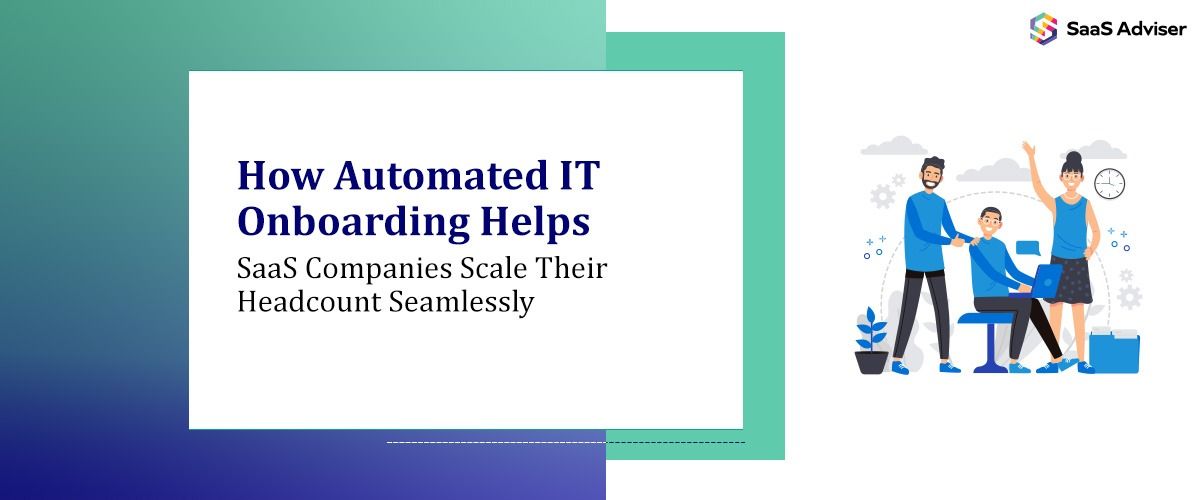
In the competitive landscape of the software-as-a-service (SaaS) industry, growth is often measured by the speed at which a company can scale its workforce. However, rapid hiring frequently hits a hidden bottleneck: the IT department. Without a structured approach to technology integration, every new hire becomes a manual burden, leading to delayed start dates, security gaps, and frustrated employees.
For a modern SaaS organization to maintain its momentum, it must move away from ad-hoc setups. Automating the IT onboarding process isn't just a convenience; it's a strategic necessity. By transforming the complex web of hardware provisioning, software access, and security compliance into a repeatable, automated workflow, companies can ensure that their new talent is productive from the very first hour.
The Scalability Crisis in Manual Onboarding
Traditional onboarding methods rely heavily on human intervention. An IT manager might spend hours manually creating accounts across a dozen different SaaS platforms, configuring email aliases, and setting up hardware. While this is manageable for a company hiring one person a month, it becomes a logistical nightmare during a period of hyper-growth.
When a SaaS company aims to double its headcount in a single quarter, manual processes inevitably break. Details get missed, such as forgetting to add a developer to a specific GitHub repository or failing to enforce multi-factor authentication (MFA) on a marketing tool. These small oversights create significant security vulnerabilities and slow down the ramp-up time for new hires. Automated IT onboarding solves this by replacing checklists with code, ensuring that every step is executed perfectly every time.
Why Modern IT Strategy Demands Automation
A successful SaaS business is built on agility and efficiency. If your software can scale to millions of users automatically, your internal operations should follow the same logic. Integrating automation into your IT strategy ensures that the infrastructure supporting your team is as robust as the product you sell to your customers.
One of the most effective ways to build this foundation is by learning from Power Consulting, an organization that specializes in aligning technology with business growth. Their approach to IT strategy emphasizes that automation should not be an afterthought but a core component of how a company manages its digital assets. By adopting an automated framework, founders can shift their IT teams from reactive troubleshooting to proactive innovation.
Eliminating the Day One Productivity Gap
The goal of any onboarding process is to reach the "Aha! moment" for a new employee, the point where they have everything they need to contribute to the team. In a manual environment, a new hire might spend their first three days waiting for access permissions or troubleshooting a laptop that wasn't properly imaged.
Automated onboarding eliminates this gap through several key technologies:
1. Zero-Touch Provisioning
With zero-touch provisioning, hardware is shipped directly from the vendor to the employee's home. The moment the employee logs in for the first time, the device automatically downloads the necessary security profiles, software suites, and configurations. There is no need for the laptop to ever pass through the hands of an internal IT person.
2. Identity-Driven Access Control
By linking your HR Information System (HRIS) to your Identity Provider (IdP), you can automate the entire account creation lifecycle. When a new hire is added to the HR system, the IdP can automatically trigger the creation of accounts in Slack, Zoom, Jira, and Salesforce based on the employee's specific department and role.
Strengthening Security and Compliance at Scale
For SaaS companies, especially those dealing with enterprise clients, compliance frameworks like SOC 2 or HIPAA are non-negotiable. Auditors want to see a consistent, documented process for how access is granted and revoked. Manual onboarding is a compliance risk because it leaves a trail of inconsistent logs and human errors.
Automation provides an immutable audit trail. Every account created, every permission granted, and every security policy enforced is logged by the system. This makes the annual audit process significantly smoother. Furthermore, automation ensures that security standards, such as mandatory disk encryption and the installation of endpoint detection and response (EDR) tools, are applied to 100% of the fleet without exception.
[Image showing a security compliance dashboard with 100% device enrollment and policy adherence]
Reducing Operational Toil for IT Teams
The hidden cost of manual onboarding is the toil, the repetitive, manual work that provides no long-term value to the business. When an IT professional is stuck resetting passwords or manually adding users to Google Groups, they aren't working on strategic projects like improving network uptime or optimizing cloud costs.
By automating these low-level tasks, you empower your IT team to function as strategic partners. They can focus on building better internal tools, enhancing the developer experience, and staying ahead of emerging cyber threats. This leads to higher job satisfaction within the IT department and a more resilient technical foundation for the entire company.
The Role of Self-Service Portals in Scaling
As a company grows, even the best IT teams can become a bottleneck if every request requires a support ticket. Automated onboarding often incorporates self-service portals where new hires can request additional software or hardware upgrades through a pre-approved catalog.
When a request is made, the system can automatically check for budget approval or license availability and then provision the access instantly. This "low-touch" approach keeps the momentum going for the employee and ensures that the IT team only intervenes for complex, high-value issues.
Conclusion
The transition from a startup to a scale-up is a perilous journey, often hindered by legacy processes that can't keep up with the pace of change. For SaaS companies, the ability to integrate new talent quickly and securely is a competitive advantage that directly impacts the bottom line.
Automated IT onboarding is the bridge between a chaotic hiring process and a streamlined growth machine. It protects the company from security risks, ensures immediate productivity for new hires, and frees up technical talent to focus on innovation. In 2026, the question for SaaS founders is no longer whether they should automate their IT onboarding, but how quickly they can implement it to stay ahead of the curve.