In the competitive world of software as a service (SaaS), growth is often measured by how quickly you can add new features and users. However, many founders overlook a silent drain on their resources: the internal tool stack. As a company scales, teams often adopt a wide array of specialized applications to manage everything from customer support and engineering sprints to HR and marketing automation.
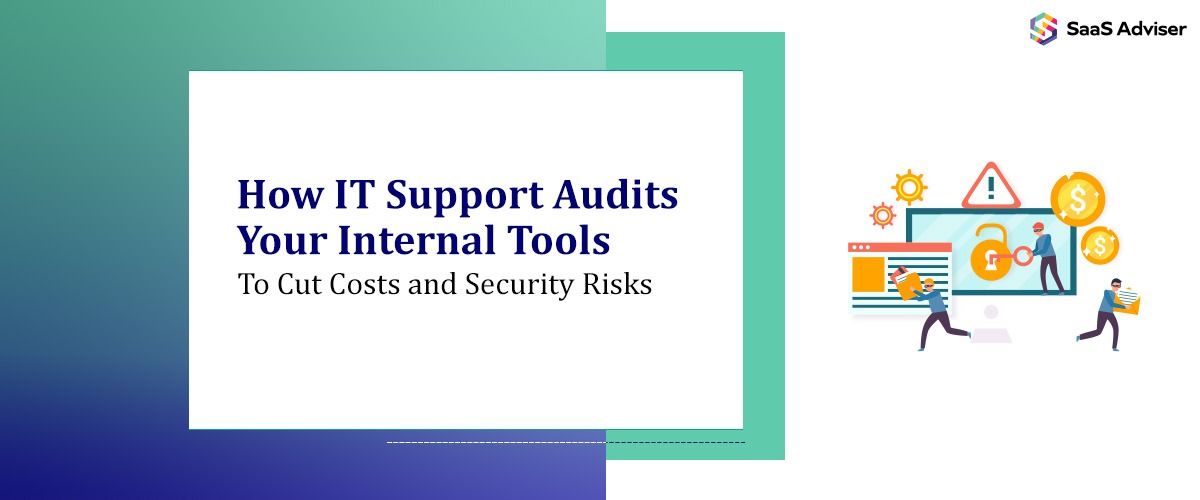
While these tools are intended to boost productivity, they frequently lead to SaaS sprawl, a phenomenon where the sheer number of applications becomes unmanageable. This is where IT support steps in, transitioning from a reactive help desk to a proactive strategic partner. By auditing your internal tools, IT can identify redundancies, secure vulnerabilities, and free up capital that can be reinvested into your core product.
The Hidden Cost of Tool Sprawl in Growing Startups
In a fast-moving startup environment, decentralized purchasing is common. A marketing manager might sign up for a project management tool using a corporate credit card, while the engineering team adopts a different platform for the same purpose. Without a centralized oversight process, these overlapping subscriptions accumulate quietly.
IT support audits address this by creating a comprehensive inventory of every application in use. They look for duplicate functionalities and underutilized licenses. For example, you might be paying for a premium Slack tier for 100 employees when only 60 are active users. By consolidating these tools and rightsizing licenses, IT support can slash monthly operating expenses by 20% to 30% almost overnight.
How Strategic Audits Influence Different Types of Business Financing
A lean operational model doesn't just improve your bottom line; it makes your company significantly more attractive to lenders and investors. When founders explore various types of business financing, such as venture debt, revenue-based financing, or traditional term loans, their burn rate and operational efficiency are under a microscope.
Lenders look for companies that demonstrate disciplined spending. If an IT audit reveals that you’ve successfully trimmed $5,000 in monthly wasteful SaaS spend, that’s $60,000 in annual EBITDA growth. This improved financial health can help you secure better interest rates or higher valuations during a funding round. Whether you are looking for working capital to bridge a gap or a large injection of cash for a Series B, showing that your internal infrastructure is optimized proves to investors that you are a low-risk, high-efficiency bet.
Identifying Security Vulnerabilities in the Internal Stack
Cost is only one side of the coin. Every internal tool represents a potential entry point for a cyberattack. Shadow IT, tools used by employees without the knowledge or approval of the IT department, often bypasses security protocols like Multi-Factor Authentication (MFA) or Single Sign-On (SSO).
During a tool audit, IT support evaluates each application’s security posture. They check for:
-
Orphaned Accounts: Ensuring that former employees no longer have access to internal data.
-
Permission Creep: Verifying that users only have the minimum level of access required for their roles.
-
Data Sovereignty: Ensuring that sensitive customer information isn't being stored in unvetted third-party apps that lack proper encryption or compliance certifications (like SOC 2 or GDPR).
Streamlining Workflows Through Integration and Consolidation
A secondary benefit of an IT audit is the improvement of employee productivity. When teams use different tools for similar tasks, data silos are created. Information gets lost between a marketing team using Trello and a product team using Jira.
IT support analyzes the workflow friction caused by these disparate tools. By auditing these processes, they can recommend a single, integrated platform that serves multiple departments. This consolidation doesn't just save money; it ensures a single source of truth for company data. When your CRM, project management, and communication tools are properly integrated, your team spends less time hunting for information and more time shipping code.
Creating a Roadmap for Future Scalability
An IT support audit isn't a one-time event; it’s a foundational step toward sustainable growth. As your company moves from the seed stage to maturity, your technical requirements will change. A tool that worked for a team of five may buckle under the weight of a team of fifty.
IT professionals use the data from these audits to build a standardized tech stack. This roadmap ensures that as you hire new employees, the onboarding process is seamless. They pre-vet vendors based on their ability to scale, their security history, and their API capabilities. This proactive planning prevents you from having to rip and replace expensive systems two years down the line because they can't handle your increased volume.
The Role of IT in Regulatory Compliance
For SaaS companies, compliance is often a prerequisite for closing enterprise deals. Large clients will send over lengthy security questionnaires asking how you manage internal access and data lifecycle.
Without regular IT audits, answering these questions is a nightmare. An IT audit provides the documentation and proof of control needed to breeze through these assessments. It shows that you have a formal process for vetting vendors, managing identities, and monitoring for threats. In essence, IT support turns your internal tool stack from a liability into a sales enablement asset.
Conclusion
SaaS founders often focus so much on their external product that they neglect the internal machinery that keeps the business running. However, an unoptimized internal tool stack is more than just a nuisance; it’s a financial drain and a security hazard.
By empowering your IT support team to conduct regular audits, you gain visibility into your spending, harden your security perimeter, and improve your standing with financiers. In a market where efficiency is as valuable as innovation, a streamlined tech stack is one of the most powerful tools a founder can have. When your internal tools are audited and optimized, your business is better positioned to scale, secure funding, and thrive in an increasingly complex digital landscape.
An IT support audit reviews your company’s internal software, licenses, integrations, and security settings to identify inefficiencies, unused tools, and potential security risks.
IT audits uncover duplicate subscriptions, unused licenses, and redundant tools. Eliminating these helps businesses cut operational expenses and optimize their tech stack.
Yes, IT support audits identify outdated software, weak access controls, and security gaps. Fixing these issues reduces vulnerabilities and lowers the risk of data breaches.
Modern businesses should conduct IT support audits at least annually, or whenever major system changes occur, to maintain cost efficiency and strong security compliance.