With SaaS platforms increasingly entering the regulated fintech, payments, crypto, and digital banking sectors, compliance has become a fundamental aspect of operations instead of an incidental concept. Anti-money laundering compliance is one of the most difficult and risky aspects here. In order to operate with such complexity effectively, most SaaS providers are currently using AML software APIs to enable compliance features to be directly built into their platforms.
With AML software APIs, SaaS businesses are able to incorporate identity verification, transaction monitoring and risk assessment into their existing workflows without necessarily developing complete compliance infrastructure. The article describes the nature of the AML software APIs, how they operate, and the reasons they are so important in contemporary SaaS integration.
Knowing AML Software APIs
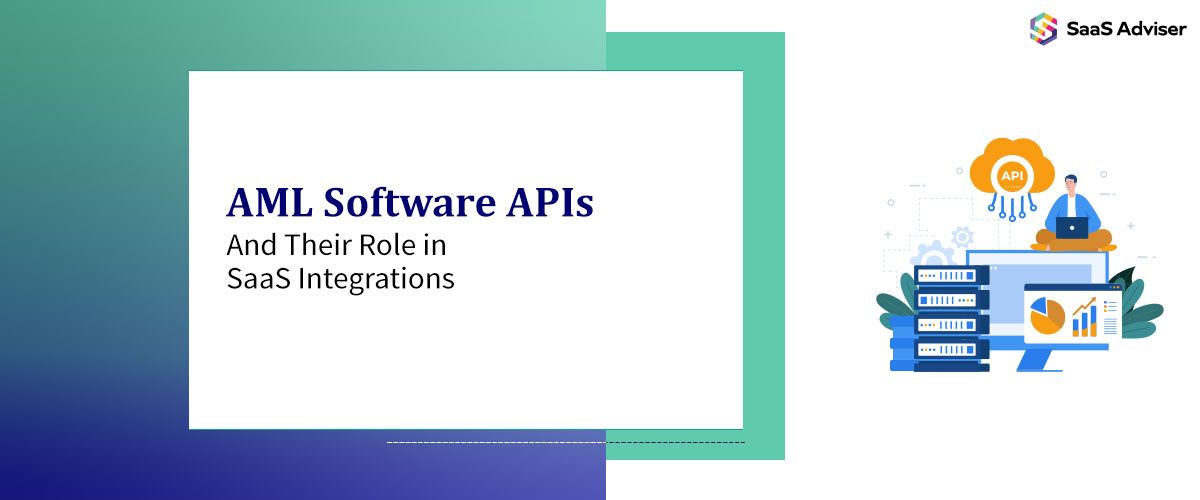
AML software API AML software API is a range of programmable interfaces that enable a SaaS platform to interface with external AML solutions. With these APIs, automated communication between the SaaS application and the AML systems is possible, thereby allowing data of the customers, transaction information, and risk signals to be shared in real-time.
SaaS companies are able to request the use of AML software APIs so as to gain access to built-in compliance functionality as opposed to developing their own compliance tools. This strategy shortens the development cycle, minimizes expenses, and ensures that it meets the regulatory requirements.
The reasons why SaaS Platforms require AML Capabilities
SaaS companies are increasingly being conducted in a space where financial transactions, online identity, and cross-border payments are involved. Consequently, the regulators would require such platforms to have sufficient measures in place to prevent money laundering and financial crime.
AML compliance is no be associated with conventional banks. Regulatory scrutiny of payment processors, neobanks, crypto platforms, and embedded finance providers is all subject to regulation. In the absence of effective AML controls, SaaS firms may be fined, their operations limited, and lose the trust of customers.
The AMl software APIs offer scalability of SaaS platforms to satisfy these requirements without interrupting the product innovation.
Application of AML Systems in SaaS Architecture
Compliance operations are based on AML systems. They examine the behavior of the customers, track transactions, and issue alerts in cases of suspicious activity. These systems should be easily integrated into the larger application architecture of a SaaS setup.
AML software APIs are used as a layer of connection between SaaS systems and AML. They enable automatic compliance checks to occur in the background as users use the platform. This will guarantee compliance with the regulation without interfering with the user experience.
The practice of the AML Software API
Identity check and risk assessment checks can be automatically implemented when a user registers on a SaaS platform, and AML software APIs will automatically invoke the checks. The data of customers is safely sent to AML systems, and it is compared with pre-determined rules and risk models.
As the users execute transactions, the APIs keep on sending the transaction data to keep on monitoring the same. In case of suspicious patterns, the AML system informs about it and sends back to the SaaS platform the alerts that have to be taken further.
This stream of data can ensure real-time compliance and minimize the possibility of tardy detection.
Facilitating Smooth SaaS integrations
The compatibility of AML software APIs with SaaS products is one of their most significant advantages. Built to operate across multiple programming languages, cloud environments, and system architectures, these APIs support seamless interoperability while aligning with SaaS Integration Best Practices for scalability, security, and performance.Such flexibility means that SaaS providers are able to add AML to their systems without major modifications to their core infrastructure. Consequently, compliance is created as part of it instead of an add-on.
Smooth integration is of great significance to SaaS companies working on a large scale, where compliance processes cannot be done manually.
Scalability and Growth Support
The compliance requirements of SaaS platforms are increasingly becoming harder. International expansion typically requires adherence to alternative risk management and regulatory practices.
The AML software APIs also make it easier to treat scalability so that SaaS companies do not need to reconstruct their systems to adjust their compliance processes. Each update of AML systems, i.e., new regulatory rules or detection models, can be centrally implemented and executed across all the integrated platforms.
This guarantees that the SaaS business can expand comfortably and ensure uniform standards of compliance.
Increasing the Accuracy and Consistency of Compliance
The compliance processes, being manual, are likely to be subject to human error and disparity. The AML software APIs facilitate the standardization of compliance inspections based on automated AML systems that apply the rules in the same manner.
Consistency is of great significance, especially when the SaaS platform is dealing with a large number of transactions. The use of automated APIs also means that all customers and transactions are judged according to the same standards, and it is less likely to overlook anything.
Such accuracy cannot be made at least with manual or fragmented compliance tools.
Improving Live Tracking Facilities
One of the requirements of effective AML compliance is real-time monitoring. Such a delay might ensure suspicious activity persists until it gets detected, and therefore, it provides a higher regulatory and financial risk.
The AML software APIs facilitate real-time data interchange between the SaaS platforms and the AML systems. This enables the detection of suspicious activities during their occurrence, and not at a later stage.
In the case of a SaaS business involved in instant payment or other digital asset services, real-time monitoring is a requirement to ensure that the business complies with regulatory expectations and avoids abuse.
Eliminated complexity in Operations
The construction and sustenance of an in-house AML solution demands a lot of technical and regulatory skills. To the majority of SaaS firms, this is not a feasible utilization of resources.
AML software APIs make operations simpler as they outsource compliance capabilities to dedicated AML systems. It will enable SaaS teams to develop products using established compliance technology.
The output is the creation of a more effective resource distribution and reduced compliance expenses in the long term.
Information Protection and Compliance
The sensitive customer and transaction data need to be handled with high security controls. AML software APIs are developed taking into consideration data protection and regulatory compliance.
Data transmission, encryption, and access controls can be used to guarantee that information involved in the exchange between the SaaS platforms and the AML systems is secured. This is especially necessary to meet data privacy requirements as well as the requirements of AML.
With the assistance of reliable AML software APIs, SaaS companies can show their high dedication to data security and regulatory compliance.
Its Adaptation to Changing Regulatory Requirements
The AML regulations are constantly being updated in accordance with the emerging risks of financial crime and the advancement of technology. The SaaS firms have to remain agile in order to keep pace with these developments.For example,crypto plateform operating in Europe must now prepare regulatory documentation such as as a mica whitepapers under the Marketsin crypto-Assets (MiCA) fremawork before offering digital assets to the public.
AML systems are also continuously covered in order to meet new regulatory directions and typologies. These updates can be automatically implemented onto integrated SaaS through APIs.
This minimizes the chances of non-compliance and keeps the SaaS business on track in regard to the existing regulatory requirements.
Enhancing Trust with Clients and Supply Chain
Trust is a highly essential element in the success of any SaaS platform, especially ones that deal with financial data. Having strong AML controls will encourage the customers, partners, and regulators that the platform is being conducted responsibly.
The AML software API, when integrated with API management software, enables SaaS companies to enforce powerful compliance procedures without interfering with the user experience, maintaining a strong balance between security and long-term trust.Enterprise clients, investors and strategic partners will be attracted into a trusted platform more than in a non-trusted platform.
The Future of AML Software APIs in the SaaS
With the further rise in the use of SaaS, the importance of APIs in the AML software will grow even greater. The capabilities of AML systems will continue to improve in the future due to the development of artificial intelligence, machine learning, and the development of data analytics.
The next generation AML software APIs will have additional predictive risk scoring, enhanced behavioral analysis, and enhanced cross-platform intelligence sharing. These changes will enable SaaS firms to be ahead of the looming financial crime risks.
As the digital economy continues to be more tightly controlled, the AML software API will continue to be a key part of a safe and compliant SaaS integration.
Conclusion
The AML software APIs are very crucial in helping the SaaS platforms to achieve the current compliance requirements effectively and efficiently. These APIs will integrate compliance into daily business operations without affecting scalability or user experience by linking SaaS applications with sophisticated AML systems.
In the case of SaaS companies that are active in a controlled setting, the use of AML software APIs becomes mandatory. They form a critical instrument to risk management, regulatory alignment, and trust creation in a fast-changing digital environment.