What we'll cover
Share with your community!


Get Free Consultation

12 Best AI Email Marketing Tools to Automate Your Campaigns
 David N. Wilks
Are you still manually drafting outreach sequences, guessing the high-quality send instances, or looking your B2B sequences get swallowed by means of aggressive spam algorithms?
By using AI email marketing platforms, you can easily turn the ones manual hours into automatic, excessive-changing revenue pipeline. In fact, modern AI powered email marketing tools don't just generate text; they clean your data, analyze reply sentiments, dynamic-switch workflows, and handle automated technical deliverability.
If you want to scale your revenue without losing a personal touch, here are the 12 best AI email marketing tools outperforming the market right now.
The 12 Best AI Email Marketing Tools Analyzed
|
Platform |
Best For |
Standout AI Feature |
G2 Rating |
|
Snov.io |
Cold Outbound & B2B Leads |
AI ICP Generator & Sentiment Analysis |
4.5/5 |
|
Instantly AI Copilot |
High-Volume Cold Outreach |
Automated Account Rotation & Warm-up |
4.8/5 |
|
Jasper AI |
High-Converting Ad Copy & Templates |
Enterprise Brand Voice Memory |
4.7/5 |
|
ActiveCampaign |
Complex B2C/B2B Nurture Loops |
Predictive Sending & AI Branching |
4.5/5 |
|
HubSpot Breeze |
All-in-One Growth Stack |
Predictive Lead Scoring & Smart Routing |
4.4/5 |
|
Apollo.io |
Data Enrichment & Prospecting |
Intent-Signal Tracking & AI Writer |
4.8/5 |
|
GetResponse |
Quick Campaigns & Creators |
AI-Assisted Campaign/Course Builder |
4.3/5 |
|
Benchmark Email |
Small Teams & Newsletters |
Smart Headings & Content Audits |
4.3/5 |
|
Campaigner |
Advanced Segmentation |
Advanced Behavior-Based Triggers |
3.6/5 |
|
SendX |
Budget-Friendly Automation |
Smart Deliverability Optimization |
4.6/5 |
|
Clay |
Deep Data Research & Personalization |
Claygent AI Multi-Source Data Scraping |
4.9/5 |
|
Klaviyo |
E-commerce Stores |
Predictive Lifetime Value (LTV) Insights |
4.6/5 |
1. Snov.io
Snov.io is an all-in-one AI email marketing platform constructed particularly for B2B lead generation, verification, and multichannel cold outreach. Its environment permits you to build an outreach pipeline from scratch without relying on outside databases.
- Best For: Cold Outbound & B2B Lead Generation.
- Key Features:
- AI ICP & Buyer Persona Generator: Analyzes your business description to map out exact target buyer personas.
- Persona-Driven Email Builder: Drafts hyper-targeted sequences matching the generated ICP trends.
- AI Sentiment Analysis: Automatically detects prospect reply intent (e.g., "Interested," "Not the right time") to trigger the right automation branches.
- Deliverability Stack: Includes a built-in email verifier and account warm-up tools to protect sender reputation.
- Pros: Excellent native data scraping tools; powerful multi-channel workflow builder.
- Cons: Credit usage can add up quickly during heavy database searches.
- Pricing: Entry plans start at $39/month. Free trial available.
2. Instantly AI Copilot
Designed primarily for sales agencies and B2B founders, Instantly focuses heavily on hyper-scale cold email execution without hitting spam traps.
- Best For: High-Volume Cold Outreach.
- Key Features:
- AI Copilot Writer: Generates context-aware follow-ups that don't read like template filler text.
- Smart Inbox Rotation: Rotates outgoing emails seamlessly across dozens of different sender domains.
- Advanced Deliverability Analytics: Monitors active deliverability and shifts campaign loads away from at-risk accounts.
- Pros: Unlimited email accounts can be connected under a flat fee; incredible scaling capacity.
- Cons: UI focuses strictly on outbound cold emails; lacks traditional inbound newsletter capabilities.
- Pricing: Starts at $37/month.
3. Jasper AI
While popular as a general copywriter, Jasper is a powerhouse for email marketing AI template creation and marketing assets.
- Best For: High-Converting Copy & Content Asset Generation.
- Key Features:
- Brand Voice Memory: Learns your unique brand parameters, formatting style, and product specifications.
- End-to-End Campaign Optimization: Generates subject lines, body copy, and corresponding landing page text in a single cohesive sequence.
- AI Image Engine: Instantly creates complementary graphics for marketing assets.
- Pros: Best-in-class natural language generation; maintains flawless brand consistency.
- Cons: Does not natively send emails; must be integrated with an email service provider (ESP).
- Pricing: Creator plans start at $39/month (billed annually).
4. ActiveCampaign
ActiveCampaign brings AI for email marketing into core lifecycle automation workflows for both B2B and B2C brands.
- Best For: Complex B2C/B2B Nurture Loops.
- Key Features:
- Predictive Sending: Automatically delivers emails at the precise moment a specific contact is most likely to click.
- AI-Influenced Journey Branching: Changes a contact's path down a funnel automatically based on real-time behavior.
- Dynamic Copy Modifications: Alters specific sections of an email text based on past customer browsing data.
- Pros: Hyper-granular automation options; elite customer journey mapping.
- Cons: Visual automation builder has a steep learning curve for beginners.
- Pricing: Starter plans begin around $29/month.
5. HubSpot Breeze
HubSpot’s fully integrated AI engine, Breeze, ties your marketing engine directly to your core CRM data layer.
- Best For: All-in-One Growth Stacks & Mid-Market Enterprises.
- Key Features:
- Predictive Lead Scoring: Machine learning flags high-intent deals in your funnel based on multi-channel touchpoints.
- Conversation Intelligence: Extracts key speaking points from sales calls to suggest email follow-ups.
- Automated Routing Workflows: Automatically hands off warm leads to corresponding account executives.
- Pros: Unrivaled CRM data integration; perfect alignment between marketing and sales teams.
- Cons: High total cost of ownership as you scale database sizes.
- Pricing: Breeze features are integrated across HubSpot hubs; Starter suites begin at $15/month/seat, but professional tiers scale significantly.
6. Apollo.io
Apollo combines a massive B2B contact database with email marketing AI tools to streamline outbound prospecting.
- Best For: Data Enrichment & Prospecting.
- Key Features:
- Intent-Signal Tracking: Targets accounts actively looking for solutions like yours based on web signals.
- AI Sequence Writer: Generates multi-step outreach copy directly inside the platform's dialer and email suite.
- Data Enrichment: Cleans and fills missing fields across contact lists automatically.
- Pros: Massive built-in B2B database; robust search filtering capabilities.
- Cons: Database records occasionally require additional validation to avoid bounces.
- Pricing: Free basic tier available; paid plans start at $49/month.
7. GetResponse
An excellent choice for creators and mid-sized businesses looking for reliable marketing entry plans.
- Best For: Quick Campaigns & Creators.
- Key Features:
- AI Campaign Constructor: Generates an email sequence, landing page, and signup form based on brief text prompts.
- AI Product Recommendations: Analyzes purchase behaviors to showcase tailored inventory inside newsletters.
- Autoresponder Writer: Quickly maps out introductory welcome sequences.
- Pros: Very easy to use; excellent pre-made templates and auto-builders.
- Cons: Advanced automated marketing rules are restricted to higher tiers.
- Pricing: Free basic tier; Email Marketing tier starts at $15.60/month (billed annually).
8. Benchmark Email
Benchmark Email focuses on minimalist, clean design combined with AI optimization features to keep newsletter creation efficient.
- Best For: Small Teams & Newsletters.
- Key Features:
- AI Content Auditing: Scans text to flag structural, grammar, and engagement issues before you hit send.
- Smart Header & Button Suggestions: Optimizes call-to-action positions based on industry conversion data.
- AI Tone Adjuster: Switches an email's style from casual to authoritative instantly.
- Pros: Intuitive, streamlined UI; great drag-and-drop builder for fast newsletter delivery.
- Cons: Lacks deep behavioral triggers needed for complex enterprise funnels.
- Pricing: Free plan available; Lite plans start at $13/month (billed annually).
9. Campaigner
Campaigner is an enterprise-grade automation platform specialized in deep data segmentation and custom behavioral logic.
- Best For: Advanced Segmentation & Enterprise Drip Campaigns.
- Key Features:
- Advanced Insight Builder: Surfaces churn risks and conversion bottlenecks in your database.
- AI Subject Line Optimizer: Runs multivariate tests on titles using historical recipient open trends.
- Granular Behavioral Triggers: Executes focused drip sequences based on multi-page website visits.
- Pros: Capable of handling high-volume, highly complex logical workflows.
- Cons: UI feels dated compared to newer tools; lower G2 score due to complexity.
- Pricing: Advanced features start at $59/month.
10. SendX
SendX provides accessible, high-volume automated mailing with an emphasis on keeping cost-per-send low.
- Best For: Budget-Friendly Automation.
- Key Features:
- Opti-Send Technology: Uses internal machine learning algorithms to route emails through clean server clusters.
- Smart Automation Rules: Simple triggers that sort subscriber tags based on click engagement.
- AI Heatmap Analytics: Shows exactly where users click inside your sent templates.
- Pros: Cost-effective pricing structure based on subscriber count rather than email volume.
- Cons: Missing native deep data-scraping or external prospecting databases.
- Pricing: Starts at $7.49/month (billed annually).
11. Clay
Clay changes data research by using AI agents to scrape multiple data points across the web for hyper-personalized outreach.
- Best For: Deep Data Research & Hyper-Personalization.
- Key Features:
- Claygent AI Research: Acts as a virtual assistant to search company websites, press releases, or LinkedIn profiles.
- Hyper-Personalized Dynamic Text: Inserts customized sentences like recent funding milestones or specific open job roles directly into email copies.
- 50+ Aggregated Data Sources: Combines tools like Crunchbase, LinkedIn, and GitHub into a singular lead list.
- Pros: Unmatched capabilities for highly personalized context lines; saves hundreds of research hours.
- Cons: Requires a basic understanding of data formatting and conditional logic to extract full value.
- Pricing: Starts at $149/month for professional features.
12. Klaviyo
Klaviyo is the premier platform for e-commerce brands looking to scale highly customized lifecycle flows.
- Best For: E-commerce Stores.
- Key Features:
- Predictive Analytics: Estimates consumer lifetime value (LTV) and next-expected purchase dates.
- Smart A/B Testing: Automatically routes the bulk of site traffic to winning variations early in campaigns.
- SMS & Email Synchronization: Orchestrates cross-channel messaging based on specific cart actions.
- Pros: Flawless direct integrations with Shopify, WooCommerce, and Magento.
- Cons: Premium tool with pricing scaling up rapidly as subscriber lists grow.
- Pricing: Free tier available; email tiers start at $20/month.
In-Depth Breakdown: Snov.io vs. Apollo.io
For B2B lead outreach and data extraction, organizations commonly choose between Snov.io and Apollo.io. Here is how they compare across critical functions:
|
Feature/Metric |
Snov.io |
Apollo.io |
|
Core Strength |
Native Email Deliverability + Dynamic Sequences |
Deep Database Contact Hunting |
|
AI Focus |
Sentiment Analysis & Persona-driven Copies |
Intent Signals & Lead Scoring |
|
CRM Integration |
Offers a built-in free CRM + native HubSpot/Pipedrive sync |
Built-in CRM focus + native Salesforce/HubSpot sync |
|
Deliverability Tools |
Built-in native Warm-up & Multi-mailbox setup |
Relies more heavily on external mailbox configuration |
The Takeaway: Choose Snov.io if your primary goal is managing reliable cold outreach infrastructure, handling deliverability, and building persona-focused campaigns. Choose Apollo.io if you need a massive, searchable data repository to locate new accounts from scratch.
Mastering Deliverability: How to Use AI to Avoid Spam Filters
Scaling your volume means nothing if your emails land in the spam folder. Modern spam filters leverage machine learning to scan context, engagement, and domain safety setups.
To protect your domain reputation, use these AI-powered strategies to prevent B2B emails from going to spam:
1. Technical Setup: Implement Email Authentication Solutions
Ensure your technical records are properly configured. Check that your SPF, DKIM, and DMARC records are active across all sending domains.
2. First 14-30 Days: Utilize AI-Driven Inbox Warming
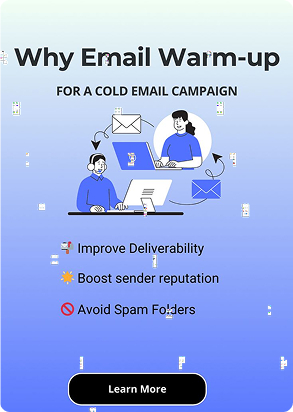
Never send bulk campaigns from a brand-new domain. Use automated inbox warming to send peer-to-peer emails within a safe network, gradually scaling up volume to build sender authority
3. Pre-Send Scan: Filter Content with AI Spam Monitors
Run your email copy through language-processing checks. Remove overused corporate buzzwords, excessive links in initial touchpoints, and aggressive sales pitches that trip automated filters.
4. Campaign Launch: Execute Smart Mailbox Rotation
Distribute your daily email load across multiple mailboxes. By keeping individual box volumes low (under 30-50 daily sends), you prevent unexpected domain flags.
Conclusion
The right AI email marketing platform can absolutely transform your growth approach from a manual guessing game into an automated sales driver. By automating your outreach, optimizing send times, and leveraging AI-driven deliverability protocols, you protect your sender reputation while scaling your volume.
Whether you choose Snov.io for cold B2B outreach or Klaviyo for e-commerce, integrating these intelligent systems is no longer just a competitive advantage it is a necessity. Start by auditing your current workflow bottleneck, choose a tool that solves it, and allow automation to elevate your campaigns today.
FAQ's
Start by implementing AI in small, high-impact workflows. Allow AI to handle data cleaning, generate initial subject line variations, and optimize your delivery schedule based on recipient activity. Always review AI-generated copy to ensure it matches your natural brand voice before running large-scale campaigns
Yes. Platforms like Jasper AI and HubSpot Breeze provide cross-channel content capabilities. Startups can use these tools to repurpose a single case study into a structured cold email sequence, LinkedIn updates, and supporting blog posts while maintaining a consistent message.
AI plays an essential role in tracking sender health. Modern validation systems analyze past
Margins in logistics are won and lost in percentages that sound small. Fuel is 10% to 20% of the difference between a profitable lane and a losing one [...]
David N. Wilks

Most website superintendents don't lose sleep over unmarried, catastrophic subject events. The real harm happens incrementally: a 1/2-day masonry dela [...]
David N. Wilks
For small businesses that want to grow, managing cloud infrastructure can feel like that nonstop juggling thing between costs that creep up and techni [...]